Ancient Chinese Education: The Imperial Examination System and Beyond
Walking through the grounds of any Chinese university today, you might not realize that you’re standing on soil soaked with nearly two thousand years of scholarly tradition. The modern Chinese education system, with its rigorous testing and intense focus on academic achievement, didn’t appear out of nowhere. It evolved from one of the most sophisticated educational systems the world has ever seen—one that shaped not only China but influenced neighboring countries across East Asia.
The story of ancient Chinese education is really the story of how a civilization decided that knowledge, discipline, and literary mastery were the highest virtues a person could possess. It’s a tale that begins in modest village schools and culminates in the grandest halls of imperial power.
The Birth of a Meritocratic Dream
Long before China had its civil service examination system, the country was ruled by aristocratic families who handed down positions like family heirlooms. If your grandfather was a duke, you’d be a duke. If your father was a minor official, that’s probably where you’d end up too. It was a system that kept power concentrated in the hands of a few noble clans, and it had gotten quite stale by the time of the Sui Dynasty (581-618 AD).
Then came a revolutionary idea: what if we chose our government officials through competitive examinations? What if any talented young man—regardless of his family background—could prove his worth through rigorous testing?
The Sui Dynasty first introduced imperial examinations as a way to break the power of the aristocratic families. The Tang Dynasty (618-907 AD) expanded and refined this system, creating the foundation for what would become one of the most enduring institutions in Chinese history. By the time of the Song Dynasty (960-1279 AD), the examination system had become the primary path to government service, and the culture of scholarly pursuit had spread throughout Chinese society.
What made the Chinese system so remarkable was its scale. At its peak during the Ming and Qing dynasties, hundreds of thousands of candidates would descend on provincial capitals each year to take examinations. The competition was fierce—perhaps more intense than anything we see today in college admissions. Only a tiny fraction of examinees would pass, and those who achieved the highest honors would find their names announced in imperial edicts and celebrated throughout their home provinces.
The examination system created a genuinely meritocratic path to power. Unlike in Europe, where government positions were typically bought or inherited, in China anyone—理论上—could rise through the ranks by demonstrating scholarly achievement. This was a radical idea for its time, and it fundamentally shaped Chinese society in ways that persist to this day.
The Guozijian: China’s First Imperial University
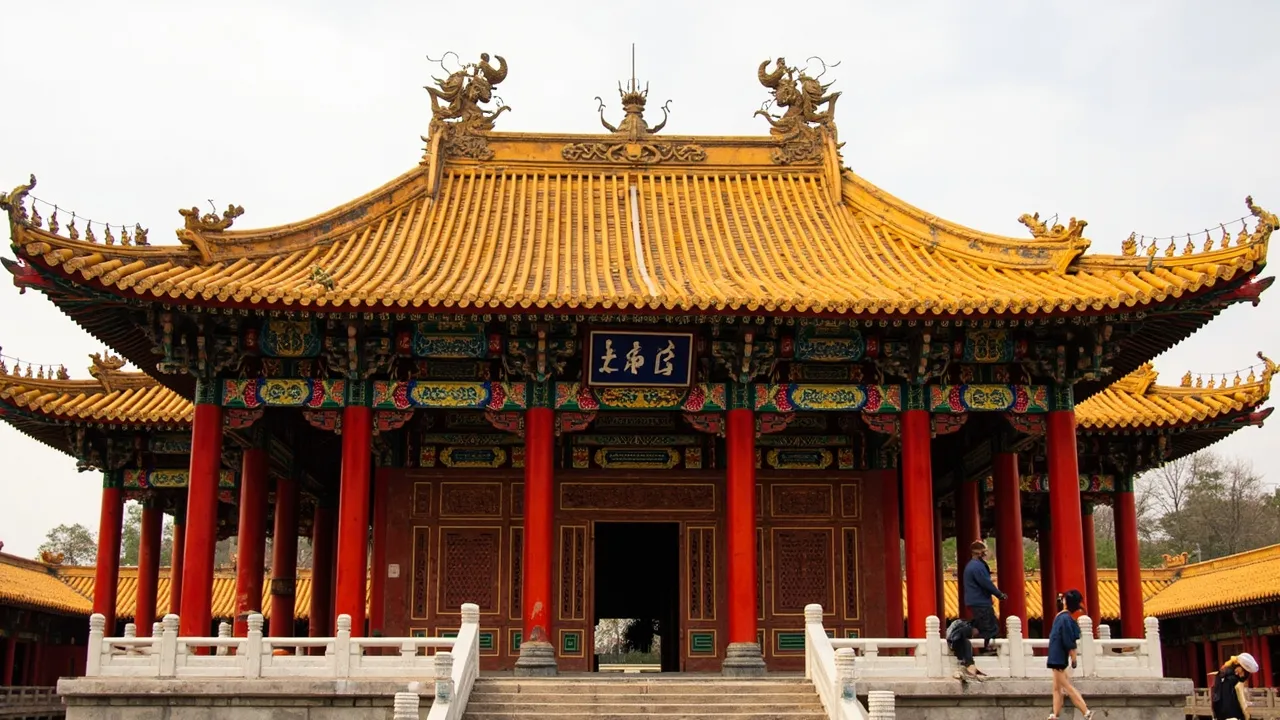
If the examination system was the gateway to power, then the Guozijian—often translated as the Imperial Academy—was the training ground where future leaders were shaped. Founded during the Tang Dynasty and reaching its peak during the Song Dynasty, the Guozijian was China’s premier institution of higher learning.
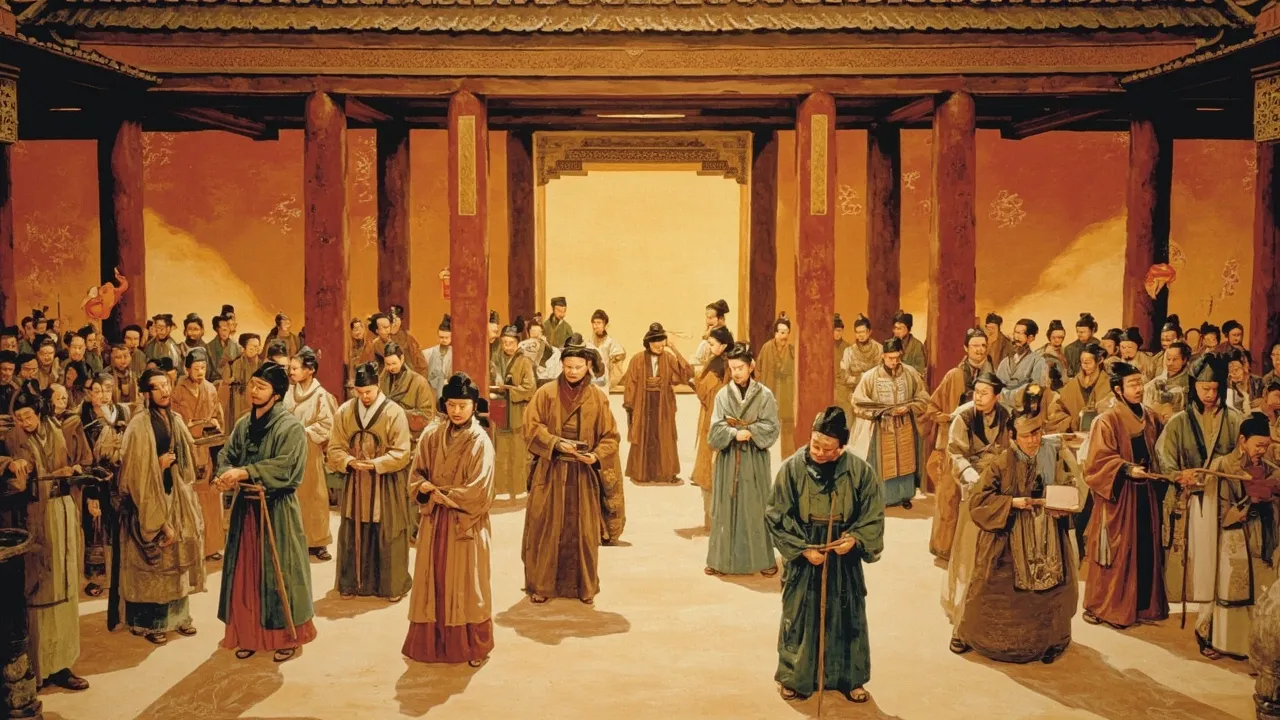
Located in the capital city, the Guozijian accepted only the most promising students from across the empire. These weren’t ordinary pupils—they had already passed preliminary examinations in their home provinces and demonstrated exceptional talent in the classical Confucian texts. Once accepted, they would study under some of the most learned scholars in the land, devoting themselves to mastering the Four Books and Five Classics that formed the core of Chinese literary education.
The curriculum at the Guozijian was demanding. Students spent years memorizing thousands of characters, learning to compose elegant essays in strict classical prose forms, and internalizing the moral philosophy of Confucius. They studied history, poetry, mathematics, and ritual—everything a cultured gentleman needed to know. But the ultimate goal was always clear: to pass the imperial examinations and earn a position in the government.
What made the Guozijian special wasn’t just its academic rigor—it was the culture of scholarly devotion that permeated every aspect of campus life. Students rose before dawn to recite their lessons. They formed study groups to discuss difficult passages. They competed fiercely but also supported each other in their mutual pursuit of excellence. The bonds formed in the Guozijian often lasted a lifetime, creating networks of influence that would shape Chinese politics for generations.
Beyond the Guozijian, private academies called shuyuan flourished throughout China. These institutions, often founded by wealthy families or local scholars, provided education to students who hadn’t made it into the imperial academy. Some shuyuan were modest village schools; others were prestigious institutions that attracted students from far away. The famous White Deer Grotto Academy, founded in 940 AD, produced generations of eminent scholars and remains a symbol of Chinese scholarly tradition to this day.
Many of these private academies were located in beautiful natural settings—mountain retreats, lakeside pavilions, quiet gardens—reflecting the Chinese belief that proper learning required a peaceful environment. Students would often travel for months to attend lectures by famous scholars, living in simple quarters and devoting themselves entirely to their studies.
The Examination Halls: Where Dreams Were Made
The imperial examination itself was an ordeal that tested not just knowledge but character, endurance, and psychological fortitude. Candidates entered small individual cells—often nothing more than a cramped cubicle with a hard bench—and could not leave until the examination was over, typically after several days.
The examination papers were anonymously graded, copied by clerks to prevent identification, and evaluated by panels of examiners. The highest scores were submitted to the emperor himself for final review. It was a system designed to be as fair as possible, eliminating nepotism and corruption as much as humanly possible.
The content of the examinations evolved over time. Early exams focused heavily on literary composition and poetry. Later, under the Song Dynasty, the format became more standardized, with emphasis on essays interpreting classical texts and discussing political issues. By the Ming Dynasty, the famous “eight-legged essay” format had become mandatory—a highly stylized form of writing with specific rules for structure, argumentation, and literary elegance.
This focus on formal essay writing has been criticized by some historians as fostering rigidity and creativity-killing conformity. It’s true that the examination system valued classical forms over innovative thinking. But it’s also true that it created a shared literary culture that unified China across vast distances. A scholar from Guangdong and a scholar from Beijing could meet and immediately have a common framework of reference, a shared vocabulary of classical quotations and historical allusions.
The pressure on examination candidates was enormous. Families invested tremendous resources in their sons’ education, sometimes spanning decades. Failure meant not just personal disappointment but the collapse of family hopes and investments. Some candidates attempted suicide after failing. Others spent their entire lives trying to pass, growing old in the examination halls while their hair turned white.
But for those who succeeded, the rewards were extraordinary. Passing the highest levels of the imperial examinations—becoming a juren (elevated scholar) or even a jinshi (doctor of literature)—opened doors to positions of immense influence. These men would become ministers, governors, generals, and advisors. They would shape imperial policy and guide the empire through crises. Their names would be recorded in history, and their families would enjoy tax exemptions and social prestige for generations.
The Everyday School: Education Beyond the Elite
While the Guozijian and the examination halls capture our imagination, the reality is that education in ancient China was far more widespread than these elite institutions suggest. Village schools, temple schools, and private tutoring formed the foundation of a literate society.
Even small towns often had schools where children—mostly boys from families that could afford it—learned the basics of reading, writing, and arithmetic. These village schools were modest affairs, often little more than a single room in a teacher’s home. But they introduced young minds to the world of characters and classical texts, planting seeds that might one day blossom into scholarly achievement.
The content of elementary education was standardized across China. Children began by memorizing the Thousand Character Classic, a text containing exactly one thousand unique characters, each used only once. They learned to write these characters with brush and ink, practicing strokes on rice paper until their handwriting became graceful and automatic. Only after mastering basic literacy would they move on to more advanced texts.
What made this widespread basic education possible was the Chinese writing system itself. Unlike alphabetic systems where you learn a few dozen letters and can then read anything, Chinese requires learning thousands of individual characters. But once mastered, a person could read virtually any Chinese text—the same characters were used throughout the empire, regardless of local spoken dialects. This meant that education in the written language automatically conferred access to a pan-Chinese literary tradition.
Girls, of course, were largely excluded from formal education. While some elite families educated their daughters in literacy and cultural refinement, the examination system was strictly male. This gender disparity is one of the most significant limitations of ancient Chinese education, a shadow that falls across an otherwise remarkable achievement.
The Global Influence
The Chinese examination system didn’t just influence China—it spread throughout East Asia. Korea adopted a similar examination system in 958 AD, which it maintained for nearly a thousand years. Vietnam instituted its own imperial examinations in 1075, and the system continued there until 1919. Japan, though it never fully adopted Chinese-style imperial examinations, was profoundly influenced by Chinese educational ideals.
Even in Europe, the Chinese examination system attracted attention. Jesuit missionaries in the 16th and 17th centuries reported with admiration on the Chinese meritocratic system, and some historians have argued that these reports influenced Western thinkers who were developing ideas about civil service and competitive examination for government positions. The British civil service examination system, established in the 19th century, is sometimes cited as a case of indirect Chinese influence on Western governance.
The Enduring Legacy
The imperial examination system was finally abolished in 1905, replaced by modern schools modeled on Western institutions. But its legacy persists in Chinese society even today. The intense focus on education, the respect for scholarship, the belief that examination performance reflects personal merit—these cultural values have deep roots in the examination system that dominated Chinese life for over a thousand years.
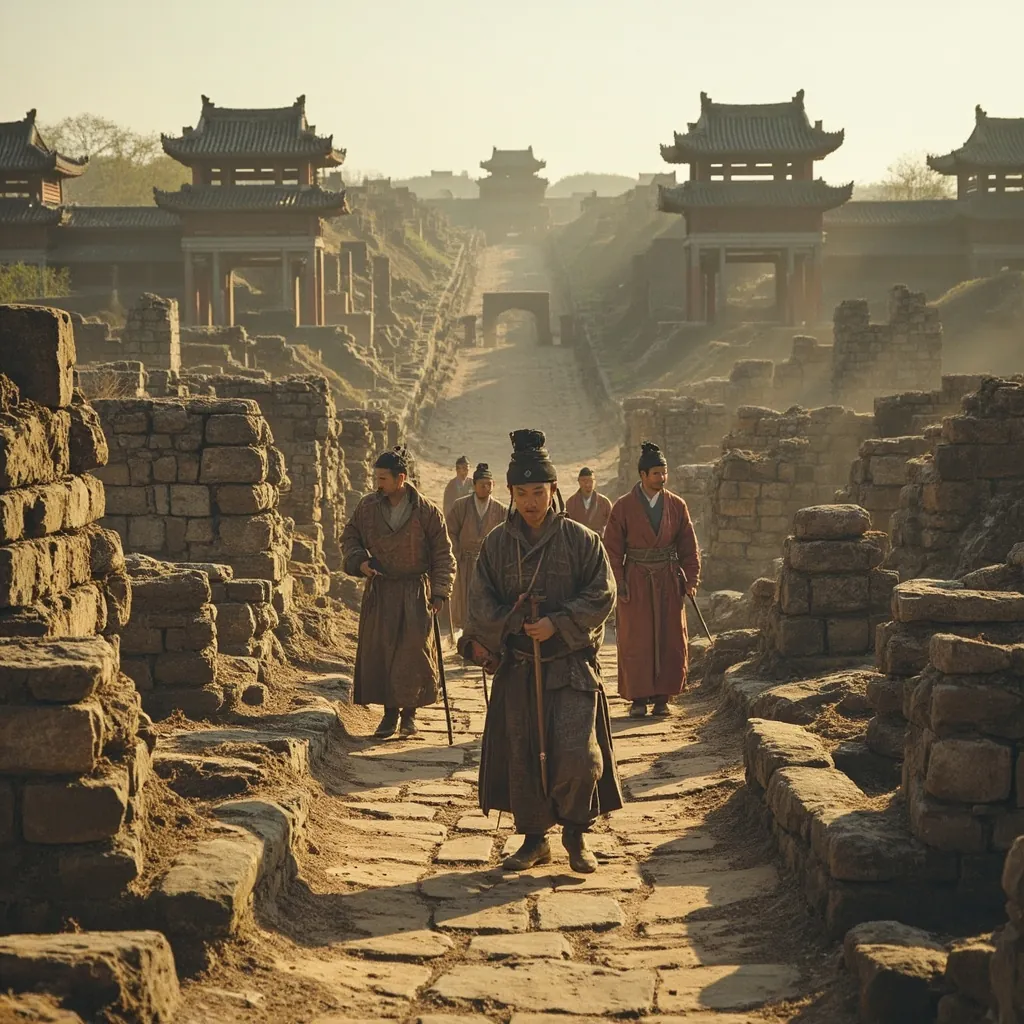
The old academies have mostly disappeared, their buildings repurposed or allowed to decay. The examination cells exist now only as historical monuments, curious artifacts of a bygone era. But every year, millions of Chinese students still sit for high-stakes examinations that will determine their futures, just as their ancestors did for centuries.
There’s something almost poetic about this continuity. The specific content has changed—no one now writes eight-legged essays on Confucian classics—but the underlying belief remains: that through diligent study and demonstrated mastery, anyone can rise. It’s a meritocratic ideal that the ancient Chinese educators would surely recognize, even if they’d be astonished by the scale of modern education.