Have you ever watched someone field questions effortlessly, responding to each one with precision and grace, never pausing, never stumbling, never seeming to search for words? It’s an impressive thing to witness. The answers just seem to flow out of them, smooth and continuous, like water running downhill — never stopping, never hesitating, always moving forward. That image of speech that moves like a river is exactly what the Chinese idiom 对答如流 (duì dá rú liú) captures. It describes someone who answers questions fluently, smoothly, without hesitation, with an ease that makes the whole exchange feel almost choreographed even when it isn’t.
The idiom has been part of the Chinese linguistic repertoire for centuries, appearing in historical records going back to the Tang Dynasty. It’s generally used as a compliment — and a significant one, because it implies not just verbal facility but genuine depth of knowledge. Not everyone who talks a lot can 对答如流. The idiom praises something specific: the ability to engage with whatever question comes your way and respond appropriately, immediately, without visible effort.
The expression shows up constantly in Chinese conversations, essays, and media. A student who aces a oral examination is said to 对答如流. A spokesperson who handles a press conference without a single fumble is said to 对答如流. A job candidate who navigates a panel interview flawlessly is said to 对答如流. The phrase is a mark of genuine competence, not just verbal showmanship.
The Origin: A Scholar’s Remarkable Imperial Performance
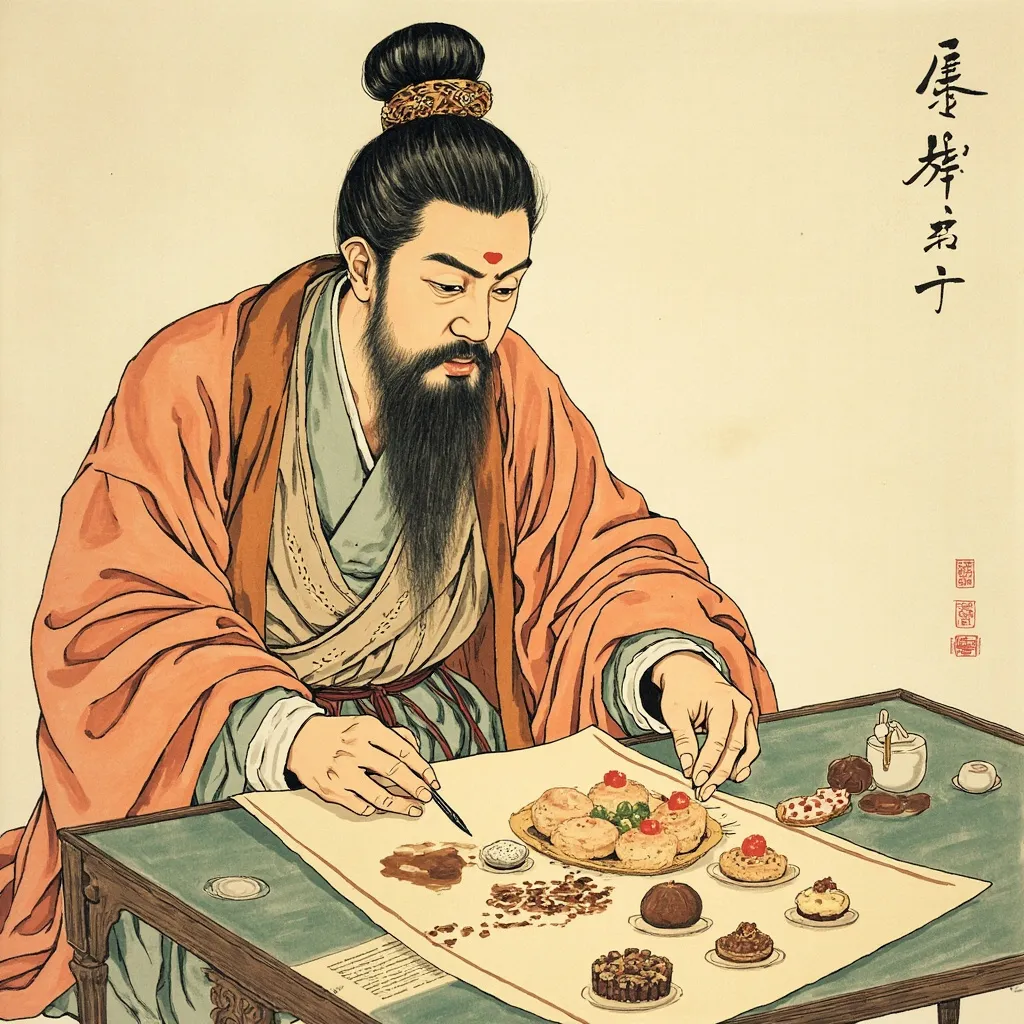
The most commonly cited origin of 对答如流 appears in the Old Book of Tang (旧唐书), a historical record compiled in the 10th century during the Song Dynasty. The story involves a scholar named Su Lin during the reign of Emperor Xuanzong, who ruled during the Tang Dynasty’s golden age.
Su Lin was known for his learning, particularly his mastery of classical texts and his ability to discuss them in depth without hesitation or reference to notes. He had spent decades studying the Confucian canon, history, philosophy, poetry — the full range of subjects a scholar of his era was expected to command. His reputation was such that he had risen through the imperial examination system to become an official, a rare achievement that only a tiny percentage of candidates ever accomplished.
One day, the Emperor called Su Lin to court for an audience. What was intended as a standard examination — the Emperor periodically tested officials to assess their fitness for service — turned into something memorable. The Emperor posed question after question, testing Su Lin’s knowledge of history, philosophy, governance, literature, military strategy — the full range of subjects a scholar-official was expected to master. There was no warning about which topics would be covered, no time to prepare, no way to anticipate the specific questions.
Su Lin answered each question without pause. He didn’t need to think, to request time to consider, to ask for clarification. His responses came rapidly, each one appropriate to the question asked, each one demonstrating not just familiarity but genuine depth of understanding. He could cite the original sources, reference different interpretations, draw connections between domains. It was, by all accounts, a stunning performance — the kind that leaves an audience stunned.
The Emperor was genuinely impressed, and the story spread throughout the court and beyond. From that point on, anyone who could answer questions with such fluid grace — who could engage with whatever was asked and respond appropriately without visible effort — was said to 对答如流. The phrase became shorthand for a particular kind of intellectual mastery: deep knowledge that expresses itself effortlessly.
What Makes the Idiom Special: The Water Metaphor
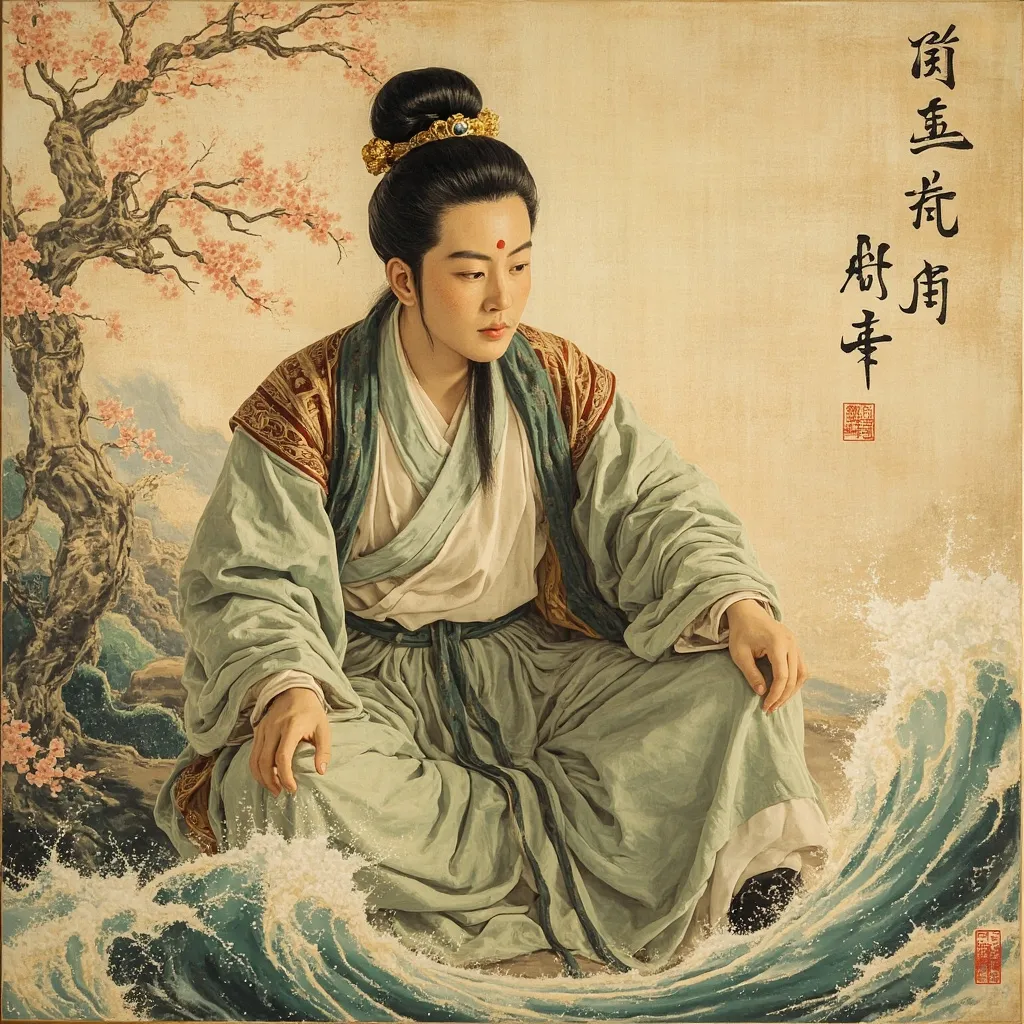
Chinese idioms frequently use natural imagery, and the water metaphor here is particularly apt. Anyone who has watched a river knows the qualities it represents: water flows without effort, not because it doesn’t encounter obstacles but because it doesn’t resist them. Water goes around rocks, over falls, through narrow channels, and still maintains its essential character as water. It doesn’t stop, doesn’t second-guess itself, doesn’t need to restart or recalibrate. It just keeps moving.
This is the ideal that 对答如流 describes: not just speed, but smoothness; not just knowledge, but the ability to access and deploy that knowledge instantly. The scholar who 对答如流 isn’t rushing through answers nervously, desperate to get to the end of each sentence. He’s moving through the exchange with a kind of ease that suggests deep preparation has been transformed into something like reflex. The effort involved is invisible not because it doesn’t exist but because it has been internalized so thoroughly that it no longer surfaces as visible effort.
The comparison to water also implies continuity. A river doesn’t answer in separate drops — it flows as a continuous whole, each moment connected to what came before and what comes after. The idiom suggests that Su Lin’s knowledge wasn’t a collection of discrete facts he had to search through mentally, like searching for a file on a cluttered computer. It was a unified understanding that expressed itself fluidly in dialogue, with each answer naturally leading from the question and connecting to the broader conversation. The river doesn’t fragment into droplets and lose its character; it maintains flow.
The Darker Side of Fluency: When Ease Masks Emptiness
Here’s where the story gains depth: the original context of 对答如流 wasn’t just about natural talent or effortless performance. It was about the imperial examination system — about proving yourself in a残酷 system that determined your social standing, your career prospects, and your family’s status for generations. Su Lin’s remarkable performance was the product of years of study, memorization, practice, and repeated exposure to exactly the kind of questioning the Emperor deployed. He hadn’t stumbled into eloquence; he’d earned it through sustained, disciplined effort.
This matters because the idiom sometimes gets used in ways that miss this crucial point. People see the smooth surface and assume it’s all natural gift — that some people are just born with the ability to speak fluidly while the rest of us stumble and hesitate. But the water-like flow Su Lin displayed was the visible result of invisible work. The ease was hard-won. The effortlessness was the product of countless hours of preparation that no one watching could see.
There’s another dimension worth considering: fluency can be performed without substance. Someone who 对答如流 might be someone who’s very good at talking, at filling space with words, at making a confident impression — without necessarily having the depth the fluency implies. The original story guards against this misinterpretation because Su Lin was tested by an Emperor who was himself highly educated and knew what he was talking about. The fluency was validated by actual knowledge. But in less rigorous contexts, a smooth talker might seem to 对答如流 while offering nothing but verbal foam.
Modern workplaces are full of this kind of hollow fluency. Someone who speaks in polished paragraphs, who never pauses awkwardly, who always has a response ready — but whose responses are long on confidence and short on content. They use the privilege of uninterrupted speaking time to construct plausible-sounding arguments rather than to convey actual insight. The form is there; the substance is not.
The deeper lesson of the idiom is that true 对答如流 requires both the surface skill and the underlying knowledge. It’s not enough to be smooth. You also have to have something to say that’s actually worth hearing.
Modern Applications: When Fluency Is an Asset
In contemporary usage, 对答如流 is most often applied to situations involving interviews, debates, public speaking, and any context where someone is expected to respond to unexpected questions in real time.
Job interviews are a prime example. When a candidate handles a barrage of questions from a hiring panel without faltering — answering each concern, addressing each challenge, pivoting smoothly from behavioral questions to case studies to salary negotiations — people might describe that performance as 对答如流. It’s a mark of preparation and confidence, and hiring managers notice it. The candidate who can do this has clearly done their homework, and it shows.
Debates and live Q&A sessions also showcase the quality. A politician or commentator who can handle hostile questions without getting defensive, who can answer directly or gracefully redirect, who never seems thrown by anything that comes their way — that’s 对答如流 in action. The audience recognizes the skill even if they disagree with the content. Fluency in service of a position you disagree with is still fluency, and it’s still impressive.
In education, the idiom describes the student who has genuinely mastered the material. When a teacher asks unexpected questions and the student responds without hesitation, showing clear understanding rather than just memorized answers, that’s fluency. It’s the visible evidence of invisible work — of study sessions, of practice problems, of the gradual building of genuine comprehension.
You also see it in customer service, in sales, in any role where quick thinking matters. The representative who can address a customer’s concern without having to put them on hold, who has internalized the product knowledge so thoroughly that it surfaces automatically — that’s 对答如流. It’s a mark of training and experience combined.
How to Develop Your Own 对答如流
If the idea of answering like flowing water appeals to you, here’s the encouraging news: it’s a skill you can develop, not a innate talent you’re born with or without. The bad news: it requires the same thing Su Lin’s eloquence required — sustained, deep preparation, done over months and years.
The first step is building genuine knowledge. You can’t fake 对答如流 — not for long, and not in contexts that matter. If you’re preparing for an interview in a technical field, know your field deeply, not just broadly. Read beyond what you need for the job. Understand the fundamentals so thoroughly that you can explain them to someone who knows nothing about them. If you’re preparing for a presentation, understand your material from multiple angles, including the angles that might be raised by skeptical questioners. If you’re preparing for a conversation that matters, think through the territory in advance, anticipate the questions you might face, and develop your responses before you have to deliver them under pressure.
The second step is practicing retrieval. Many people study by re-reading, by highlighting, by reviewing notes. These are comfortable activities that feel like learning but often aren’t very effective at building the kind of knowledge that surfaces under pressure. 对答如流 is about accessing knowledge quickly, which is a different skill than having knowledge. Practice testing yourself. Practice answering questions out loud, without notes. Practice explaining concepts in your own words, as if to someone who genuinely needs to understand them. This trains your brain to find information faster, to make connections more automatically, to express understanding without having to consciously construct every sentence.
The third step is accepting imperfection. The goal isn’t robotic smoothness — it’s ease within genuine engagement. The scholar who 对答如流 was having a conversation with an Emperor, not reciting a memorized script. He was responsive, present, adapting to each question as it came. The fluidity came from being genuinely engaged in the exchange while drawing on deep preparation. If you’re so focused on being smooth that you can’t be genuine, if you’re performing at the expense of actually connecting with the person you’re talking to, you’ve missed the point. The water is smooth because it’s natural, not because it’s forced.
The Wisdom Beneath the Surface
What makes 对答如流 more than just a compliment about talking well is what it implies about the relationship between preparation and performance, between knowledge and expression, between the invisible work and the visible ease. The idiom reminds us that impressive ease usually comes from invisible work. The water that flows so smoothly has traveled a very long way to get there, over rocks and through channels that shaped it.
It also reminds us that fluency without substance is hollow. Anyone can talk a lot. Not everyone can say something worth hearing. The highest form of 对答如流 is when knowledge, preparation, and genuine engagement come together so naturally that the effort involved becomes invisible. The audience sees only the flow — and perhaps doesn’t realize that what looks like effortless talent is actually the product of sustained effort that the speaker has made invisible through practice.
The next time you encounter someone who answers like flowing water, resist the temptation to attribute it entirely to talent or luck or some unfair advantage you don’t have. Ask instead what they’ve prepared, how deeply they’ve studied, what work went into developing that ease. The answer will probably involve years of effort that most people never see — the late nights, the failed attempts, the embarrassing moments of stammering that came before the smooth performance.
And if you’re working on developing your own 对答如流, remember that the river didn’t become smooth by trying to be smooth. It became smooth by flowing. Keep showing up, keep practicing, keep building the knowledge and the skill, and eventually the flow will come. Not because you forced it, but because you’ve done the work that makes it possible.