Most of us know what it feels like to be cornered. That tightening in the chest, the sudden clarity about what matters and what doesn’t, the strange energy that comes when there’s genuinely nothing left to lose. Psychologists have studied this phenomenon extensively, and they’ve found that human performance under genuine threat often exceeds what seems possible — people lift cars off trapped family members, students score perfect scores on exams they thought they’d fail, athletes find reserves they didn’t know they had. There’s a transformation that happens when the situation becomes truly desperate.
The ancient Chinese general Han Xin didn’t just understand this psychologically — he weaponized it. The military tactic he employed at the Battle of Jingxing (also known as the Battle of the River) in 204 BCE became one of the most famous examples of turning certain defeat into victory through the clever manipulation of desperation itself. The idiom that emerged from this battle, 背水一战 (bèi shuǐ yī zhàn), means “fighting with your back to the river” — and it’s come to describe any situation where you fight with such intensity precisely because you have no way out.
The General Who Came from Nothing
To appreciate what Han Xin did at Jingxing, you need to understand who he was and how he got there. Han Xin was one of the most remarkable military geniuses of ancient China, but his path to prominence was nothing like a typical officer’s. He had grown up in poverty, working as a clerk in a market and apparently suffering various indignities because of his low status. One famous anecdote describes how a local bully humiliated him by forcing him to crawl through his legs in public — an experience Han Xin reportedly endured without retaliation, though he later said he would have killed the man if he’d had his sword at the time.
The shame of his background followed him even after he began serving Liu Bang, the future founder of the Han Dynasty who was then fighting to establish himself against his rival Xiang Yu. Han Xin had the tactical knowledge and the strategic mind, but he lacked the social connections and the reputation that would have gotten him noticed. He served initially as a low-ranking officer, and his suggestions for military operations were reportedly ignored or dismissed by Liu Bang’s other generals, who didn’t take the poorly-dressed newcomer seriously.
It took a fateful conversation with Liu Bang’s advisor Xiao He to change Han Xin’s fortunes. Xiao He recognized something in Han Xin’s understanding of warfare that others had missed, and he convinced Liu Bang to give the young man a chance. Liu Bang made Han Xin a general — though how much he trusted him at this point is debatable. What is certain is that Han Xin soon had an opportunity to prove himself that would have seemed suicidal to anyone with less brilliance or less audacity.
The Tactical Problem Han Xin Faced
The situation at Jingxing was grim. Liu Bang had been defeated by Xiang Yu’s forces and forced to flee, leaving his rear army to hold a position against an overwhelming enemy. Han Xin had been given command of a relatively small force — reportedly around ten thousand men — and ordered to face a much larger army of twenty thousand赵国 (Zhao Kingdom) soldiers led by the Zhao general Chen Yu. The Zhao forces had occupied a strong defensive position on the far side of a river, and conventional military wisdom said you didn’t attack such a position from below without the element of surprise and superior numbers.
Han Xin had neither.
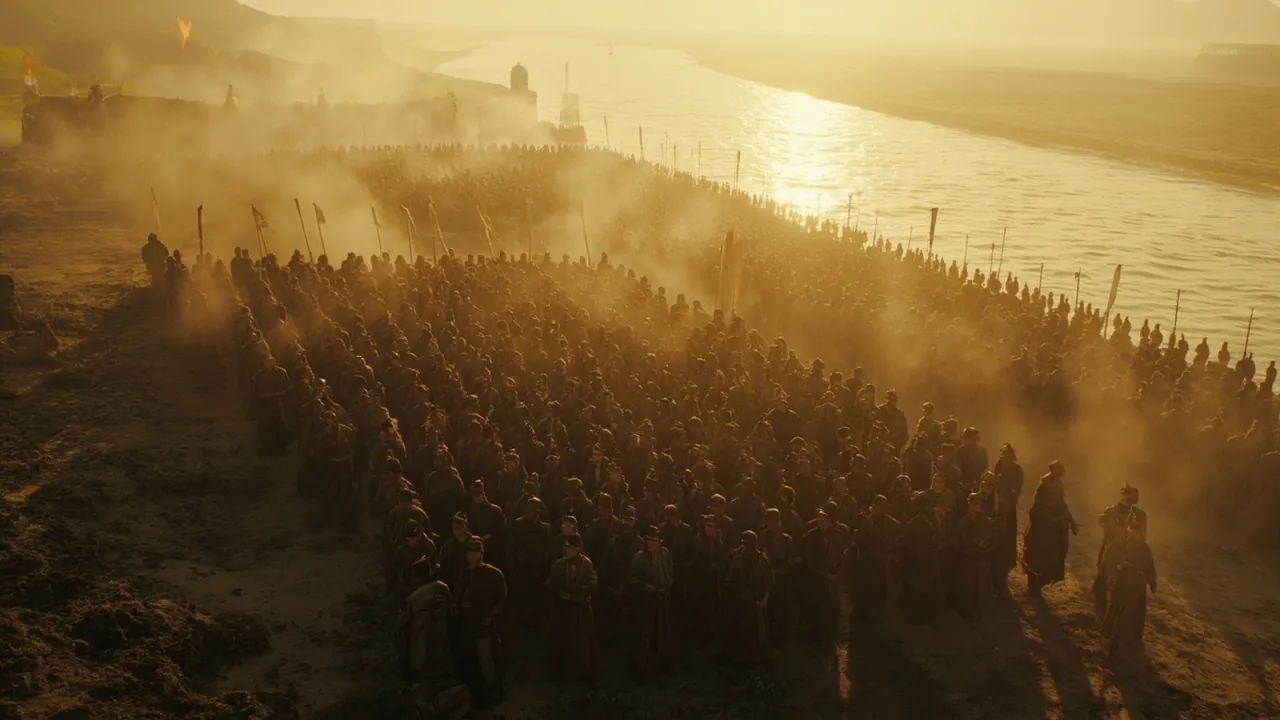
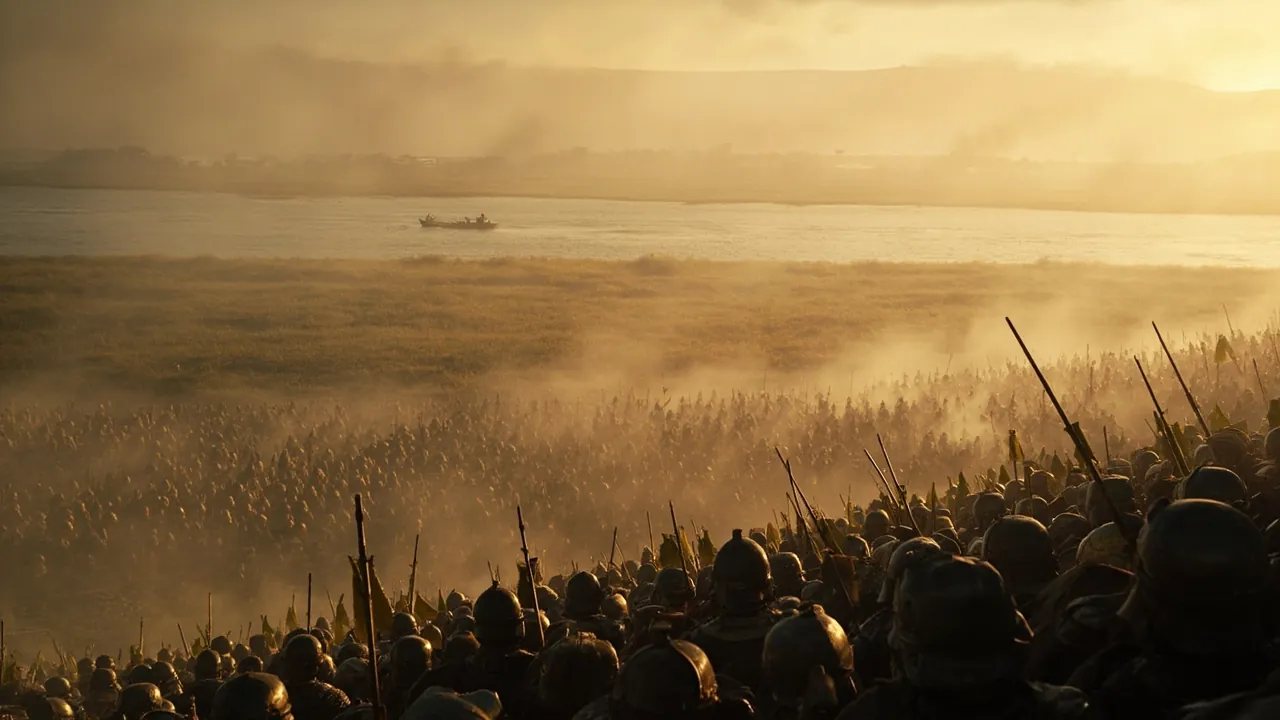
What he had was a clever understanding of human psychology and an innovative approach to troop deployment that turned the conventional tactical situation on its head. Rather than positioning his men in a traditional formation facing the enemy, Han Xin ordered them to form up with their backs to the river. The only direction they could move was forward — into the enemy. There was no retreat, no fallback position, no possibility of strategic withdrawal. If they lost, they died. That was the entire plan.
His officers were horrified. This violated every principle of military survival they’d been taught. But Han Xin insisted, reportedly telling his uncertain commanders that this was precisely the point. By positioning his men with no escape route, he would create a situation where they would fight with a ferocity that would surprise even their own expectations. Fear of death, he understood, could be channeled into a kind of desperate courage that discipline alone couldn’t produce.
The soldiers knew that if they ran, they would die. They knew that if they stood and fought, they might die too. But standing and fighting at least gave them a chance — and in the psychology Han Xin was creating, the chance felt more real when retreat was impossible. The paralysis of choice was eliminated. There was only forward.
The Battle and Its Brilliant Resolution
What made Han Xin’s tactic work wasn’t just the psychological manipulation — it was the full package. Han Xin had other tricks up his sleeve. Before the battle began, he sent a small force of cavalry to circle around and seize the Zhao camp while the main engagement was happening. He also arranged for his men to see banners and equipment that suggested reinforcements were arriving — a simple but effective form of misdirection that threw the Zhao forces off balance when they saw unfamiliar standards appearing behind them.
When the battle began, Han Xin’s men fought with a ferocity born of desperation. With the river at their backs, they couldn’t retreat, couldn’t scatter, couldn’t do anything except hold the line and push forward. And because they’d been told there were reinforcements coming — and because they could now see those reinforcements arriving (the cavalry Han Xin had positioned earlier) — they fought with a confidence that mixed with their desperation to create something powerful.
The Zhao forces, initially confident of easy victory, found themselves facing an enemy that wouldn’t break. And when they heard the commotion behind them — Han Xin’s hidden cavalry raiding their camp, raising Han’s banners, creating chaos and the impression of being surrounded — their morale shattered. The battle became a rout, and Han Xin achieved a decisive victory with a smaller force against a larger one, using tactics that would be studied by military strategists for the next two millennia.
The Zhao general Chen Yu was killed, and his army was destroyed. Han Xin had done the seemingly impossible.
Why It Worked: The Psychology of Desperate Courage
The story of 背水一战 contains a truth about human psychology that remains relevant in every era. When people believe they have nothing to lose, they become capable of things that would be impossible under normal conditions. The reason is a combination of factors that Han Xin intuitively understood and manipulated deliberately.
First, the elimination of choice paradoxically increases performance. When you’re deciding whether to fight or flee, your mental energy goes partly into weighing those options, calculating odds, preparing for different outcomes. That cognitive load reduces the energy available for actually fighting. When there’s only one option — fight or die — all that cognitive energy goes into the fight. The decision has been made; now you execute.
Second, group dynamics amplify the effect. When soldiers see that everyone around them is committed to standing and fighting — when retreat is genuinely impossible for all of them — they become less likely to break. Individual soldiers in conventional formations sometimes flee, hoping to survive while others hold the line. When there’s no retreat, there’s no point in running: you’ll just be killed faster with your back to the enemy. The group becomes locked into collective commitment, which strengthens everyone’s resolve.
Third, the presence of a cunning plan — Han Xin’s hidden cavalry and staged reinforcements — added a crucial element that pure desperation alone couldn’t provide. The desperate courage gave his men the will to hold, but the tactical misdirection gave them something equally important: a plausible reason to believe they could win. Desperation without hope is just panic. Han Xin gave them both the desperation and a path to victory, and the combination was irresistible.
背水一战 in Everyday Life
The idiom has naturally expanded beyond military contexts into any situation where someone fights with unusual intensity because failure isn’t an option. A businessperson betting their entire savings on a startup that has no fallback funding is in a 背水一战 situation. An athlete competing in the final game of a tournament when elimination is on the line is fighting 背水一战. A student who knows this one exam determines everything and there are no second chances is in that same psychological territory.
The idiom gets used frequently in Chinese to describe situations where someone has burned their bridges deliberately — not necessarily physically destroying escape routes, but making a commitment so total that backing out would be more painful than pushing forward. It’s typically used as an observation or an acknowledgment of someone’s circumstances, often with an element of admiration for the courage involved, though sometimes with a note of concern about the risk taken.
In personal development contexts, the psychology behind 背水一战 is sometimes deliberately invoked. Coaches and motivational speakers talk about “creating urgency” and “eliminating options” — deliberately making it harder for yourself to quit so that you have no choice but to succeed. This approach has legitimate uses, but it also carries risks. Han Xin was brilliant enough to pair his psychological manipulation with actual tactical plans. Someone who creates a 背水一战 situation for themselves without Han Xin’s strategic backup might simply be creating a beautiful setup for an impressive failure.
The Difference Between Desperation and Recklessness
What separates Han Xin’s 背水一战 from mere reckless gambling is the presence of a genuine plan. Han Xin didn’t just put his back to the river and hope his men fought harder. He positioned hidden cavalry for a flanking maneuver. He arranged for fake reinforcements. He studied the terrain. He understood his enemy. The desperate positioning was a psychological tool that amplified the effectiveness of a sound tactical approach.
This distinction matters for modern applications. Someone who quits their job to start a business without a backup plan isn’t automatically doing a 背水一战 — they might just be being reckless. The person who quits their job after developing a product, lining up investors, building a customer list, and creating a financial runway — but who deliberately chooses to make quitting impossible — that’s closer to what Han Xin did. The commitment is real, but it’s in service of a plan that has actual chances of success.
There’s also a dark side to the psychology that deserves acknowledgment. 背水一战 works when it works, but when it fails, it fails completely. Han Xin’s gamble paid off at Jingxing, but the same approach in different circumstances could have meant the death of his entire force with no survivors. For the individual who creates a 背水一战 situation in their own life, the stakes are usually lower — bankruptcy instead of death — but the principle is similar. Desperation is a powerful tool, but it’s a tool that destroys the user if it fails.
The Lasting Legacy of Han Xin’s Gamble
Han Xin went on to become one of the founding generals of the Han Dynasty, his reputation secured by this and subsequent victories that proved his military genius was no fluke. He was eventually appointed to the highest military position in the new empire, and his contributions to the establishment of Han rule were immense. The tactics he employed at Jingxing became textbook examples that Chinese military officers studied for generations.
背水一战 entered the language as a phrase that captures something specific and important about human potential: the recognition that people can accomplish extraordinary things when the situation genuinely demands it and when escape is impossible. The idiom acknowledges both the power and the danger of such moments — they’re moments where everything is at stake, where extraordinary performance becomes possible, and where failure has permanent consequences.
The phrase endures because it names something real. We all face moments where we’d benefit from that extra level of commitment, that final reserve of courage that only becomes available when there’s no way out. Han Xin’s solution was to create those moments deliberately, through tactical innovation and psychological insight. Most of us don’t have his genius, but we can recognize the principle: sometimes the thing that looks like your greatest weakness — having your back to the wall — can become your greatest strength, if you know how to use it.