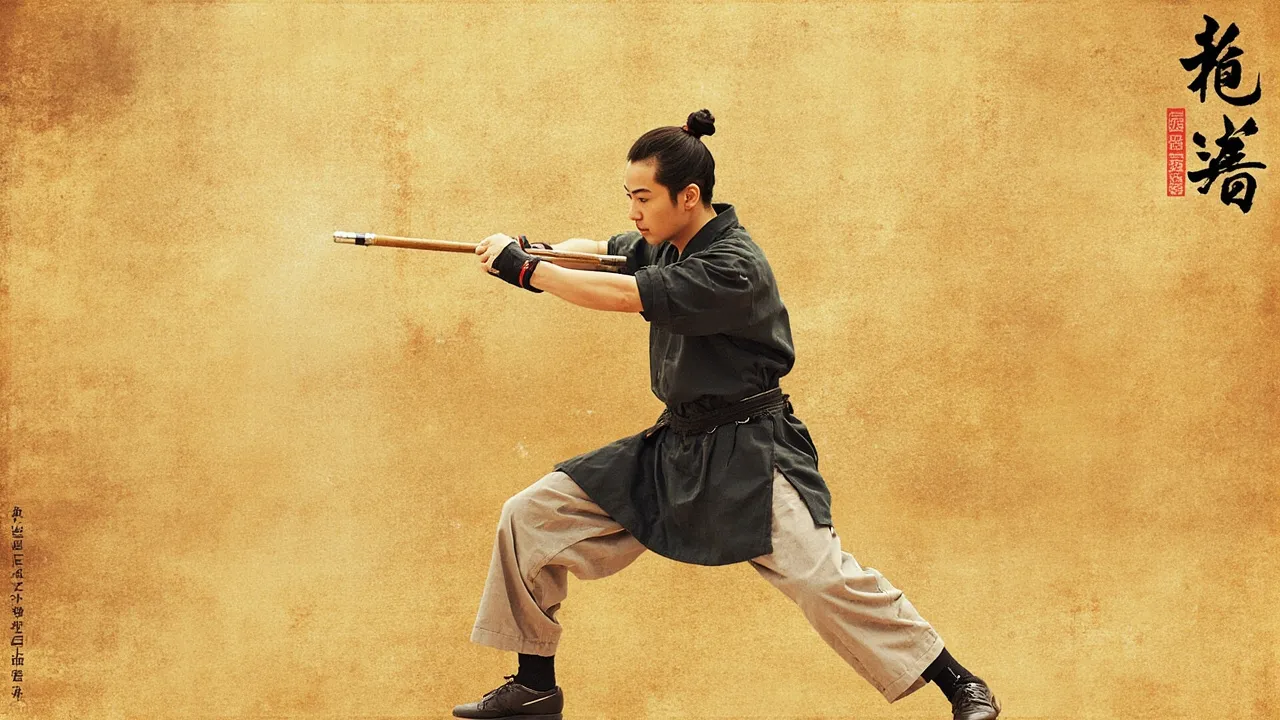
Baguazhang: Walking the Circle of Internal Power
In the quiet dawn hours of Chinese parks, you might occasionally spot someone walking in circles around a tree, shifting direction smoothly, and transitioning through fluid palm positions. This unusual practice belongs to Baguazhang (also spelled Pa Kua Chang), one of the three great Chinese internal martial arts alongside Tai Chi and Xingyiquan. Where Tai Chi flows like water and Xingyiquan explodes like fire, Baguazhang spins like the wind—constant motion, circular pathways, and seemingly endless variation.
This art remains somewhat mysterious to Western practitioners, partly because it was historically kept more secretive than other styles, and partly because its practice looks so different from conventional martial arts. Yet those who discover Baguazhang often become devoted to a practice that transforms their body, sharpens their mind, and opens doors to understanding Chinese philosophy in ways nothing else can.
The Founder: Dong Haichuan’s Journey
The history of Baguazhang begins with a single remarkable individual: Dong Haichuan (1797-1882). Born in rural China, Dong spent his early years as a shepherd, spending countless hours watching the animals move and interact. This childhood observation of natural movement patterns would later influence his martial development.
As a young man, Dong became a servant in the household of a wealthy martial arts enthusiast. This position allowed him to observe various masters teaching their students. Dong reportedly learned aspects of many styles during this period while working secretly on his own system. When his martial abilities were eventually discovered, he was challenged repeatedly by skilled fighters—and defeated them all.
Dong’s innovation combined circular walking movements with palm techniques derived from Chinese Taoist philosophy. He encoded the Eight Trigrams (bagua) of the I Ching into his system, creating eight basic palm changes that transform into sixty-four individual palms matching the sixty-four hexagrams of that ancient text. This philosophical foundation gives Baguazhang its name: “Eight Trigram Palm.”
What made Dong’s system revolutionary was its emphasis on continuous circular motion. Unlike linear arts that move forward and backward, Baguazhang practitioners orbit around their opponents, striking from constantly changing angles. The body learns to move in spirals rather than straight lines, developing a completely different movement vocabulary than most martial arts.
The Foundation: Walking the Circle
If you visit a Baguazhang school, you won’t see students kicking and punching immediately. Instead, you’ll likely observe them walking in circles—lots of circles. This “walking the circle” (zou huan) practice forms the foundation upon which everything else builds.
The basic exercise seems simple: step sideways around an imaginary circle while maintaining specific arm positions and body posture. Yet this simplicity is deceptive. Proper circle walking develops the unique weight distribution, hip rotation, and whole-body connection that define advanced Baguazhang. Students might spend months, even years, on walking practice before adding palm techniques.
The walking develops what practitioners call “whole-body movement”—the ability to generate power from the ground through the legs, hips, and spine, transferring energy smoothly through the body into the hands. Unlike arm-powered strikes, Baguazhang techniques emerge from this integrated body movement. The arms serve as delivery systems for power generated far below them.
Advanced circle walking includes directional changes, acceleration and deceleration, and variations in height. Practitioners learn to walk forward, backward, and diagonally while maintaining the circular principle. The body becomes capable of moving in any direction while maintaining this spiral-based movement quality.
The philosophical dimension of circle walking also matters deeply. Walking meditation connects to Taoist concepts of yielding, of following rather than opposing, of remaining flexible while maintaining center. These principles translate directly into combat application—yielding to an opponent’s force while creating angles for counterattack—but also into daily life philosophy.
The Eight Palms and Their Applications
Once students develop adequate circle-walking ability, they learn the eight primary palm changes (jing zhang), each associated with one of the Eight Trigrams. These aren’t separate techniques but rather movement principles that transform into countless variations.
Qian (Heaven) emphasizes upward, rising movements and developing the “dragon palm” power that extends vertically. Practitioners learn to redirect attacks upward while simultaneously striking upward into vulnerable points. The body learns to extend upward through the crown of the head while maintaining rooted feet.
Kun (Earth) focuses on downward, yielding movements and the “bear palm” that grounds and sinks. This palm teaches yielding and absorbing force into the ground—the practitioner becomes immovable while remaining flexible. Deflection and redirection characterize this trigram’s expression.
Zhen (Thunder) emphasizes explosive, shocking power delivered through the palms. The movement mimics thunder’s sudden, powerful nature—a quick, fierce strike followed by immediate recovery. Speed and snap characterize Zhen palm work.
Kan (Water) deals with fluid, adaptable movements that flow around obstacles. Like water filling any container, Kan practitioners learn to find the path of least resistance while maintaining continuous pressure. This palm develops the most sophisticated evasion and counterattacking skills.
Gen (Mountain) emphasizes stable, unmoveable qualities while delivering heavy, crushing power. The practitioner becomes like a mountain—solid, patient, overwhelming in persistence. This trigram develops the crushing palm strikes that can break through defenses through pure weight of movement.
Xun (Wind) features swift, penetrating movements that slip past defenses like wind through cracks. Speed and precision characterize Xun palm, developing the ability to find and exploit the smallest openings in an opponent’s guard.
Li (Fire) emphasizes bright, direct attacks that strike like lightning. The movements are clear, straightforward, and impossible to miss once launched. This trigram develops the penetrating power that strikes directly to internal organs.
Dui (Lake) focuses on rounded, continuous movements that flow endlessly like water in a lake. The practitioner becomes difficult to pin down, constantly rotating and redirecting attacks into new angles.
Each palm contains numerous variations and combinations, leading to literally hundreds of techniques all flowing from these eight principles. The variations can seem overwhelming until practitioners understand that they’re simply different expressions of the same underlying principles.
Health Benefits and Internal Development
Like its internal martial arts cousins, Baguazhang offers substantial health benefits beyond martial capability. The combination of gentle but continuous movement, breath coordination, and mental focus creates a practice that transforms practitioners physically and mentally.
The constant circular walking develops leg strength, joint mobility, and cardiovascular fitness in ways that differ from linear exercises. The hip rotation required improves lower back mobility and reduces back pain for many practitioners. The balance demands of circle walking develop proprioceptive abilities that help prevent falls in daily life.
The breathing practices involved in advanced Baguazhang training develop respiratory capacity and coordinate movement with breath in ways that reduce stress. Many practitioners report improved sleep, better digestion, and enhanced mental clarity after consistent practice. The meditative aspect of circle walking—requiring sustained attention while moving—builds mental stamina similar to sitting meditation but with the added benefit of physical movement.
The internal energy cultivation (qi gong) aspect of Baguazhang develops sensitivity and awareness that Western science is only beginning to understand. Whether one accepts traditional Chinese concepts of qi or prefers to understand these practices in terms of nervous system development, the effects are real and demonstrable. Advanced practitioners develop what they describe as increased sensitivity to touch, better awareness of their body in space, and improved ability to sense others’ intentions.
Training Baguazhang Today
Modern Baguazhang training follows paths that would be familiar to Dong Haichuan himself, though with some adaptations for contemporary schedules and expectations. The core practice remains circle walking and palm changes, supplemented by partner exercises that develop sensitivity and application.
The Wooden Phoenix (mu xie) practice device—a swinging apparatus made of wooden arms mounted on a frame—allows practitioners to develop striking power and accuracy against moving targets. This training builds on the palm changes while adding timing and distance judgment impossible to develop through solo forms alone.
Push hands and sticky hands exercises, similar to those in Tai Chi and Xingyiquan, develop the sensitivity required for Baguazhang’s close-range work. Partners train to sense each other’s intentions through physical contact, developing the reflexes that allow advanced practitioners to respond to attacks before conscious recognition occurs.
Weapon training includes the straight sword (jian), palm blade (zhan dao), and chain (shuo). These weapons extend the principles learned through empty-hand practice while developing weapon-specific skills that have practical self-defense applications.
Whether your interest lies in the martial applications, the health benefits, or the philosophical dimensions, Baguazhang offers a path unlike any other martial art. The spiral movement patterns, the circle walking meditation, and the continuous flowing palm changes create a practice that challenges the body and mind while developing capabilities most people never knew they could achieve. In Baguazhang, you don’t just learn to fight—you learn to move like water, to adapt like wind, to become immovable like the mountain.