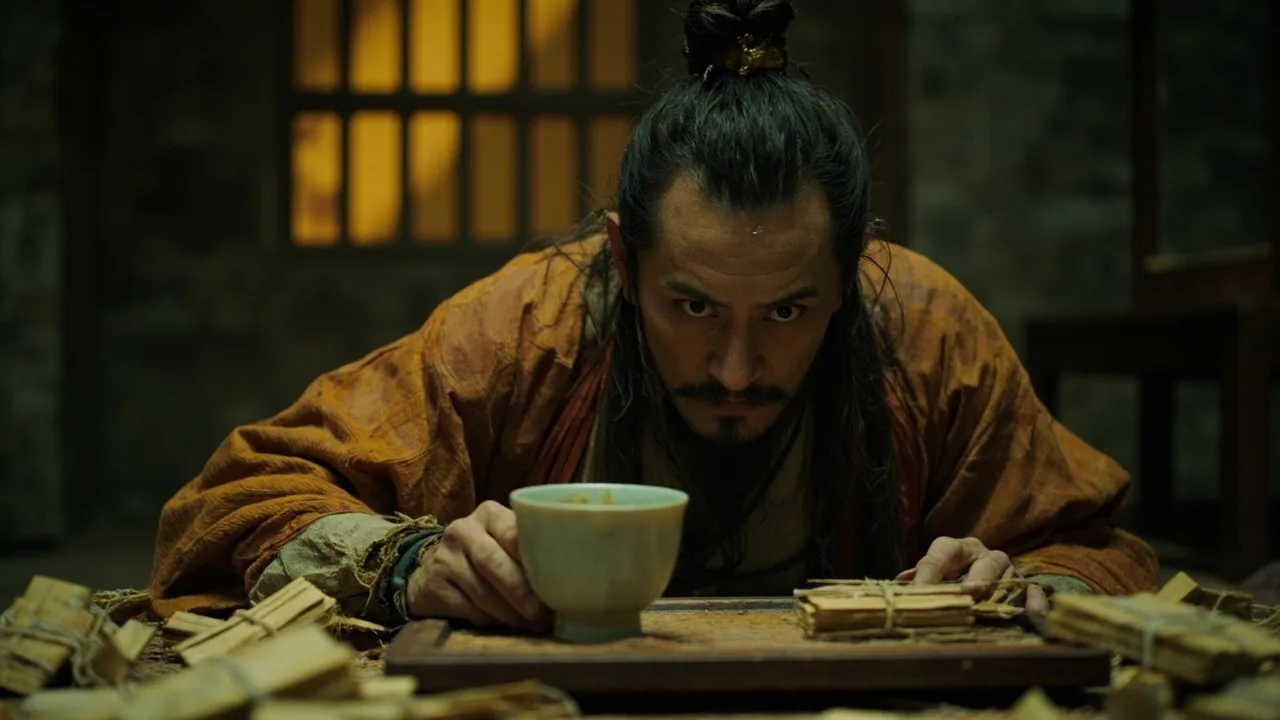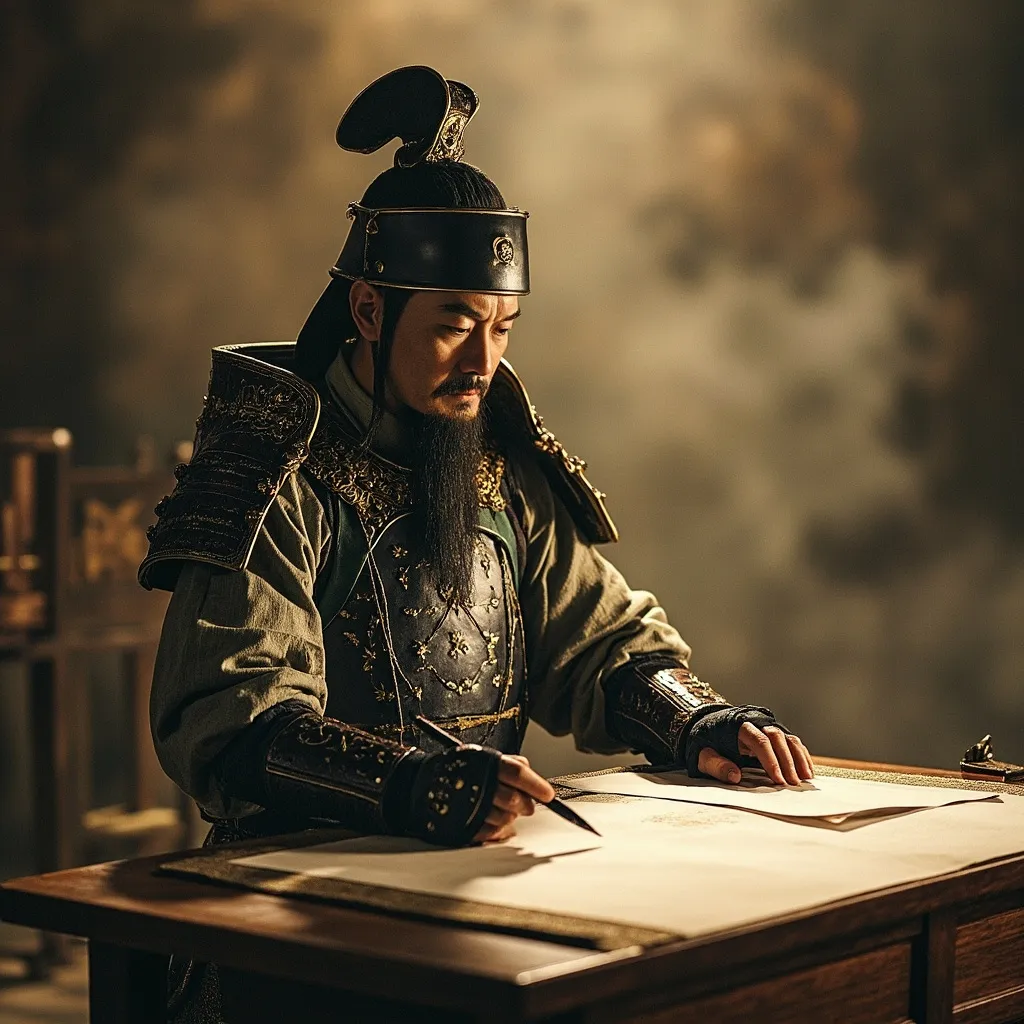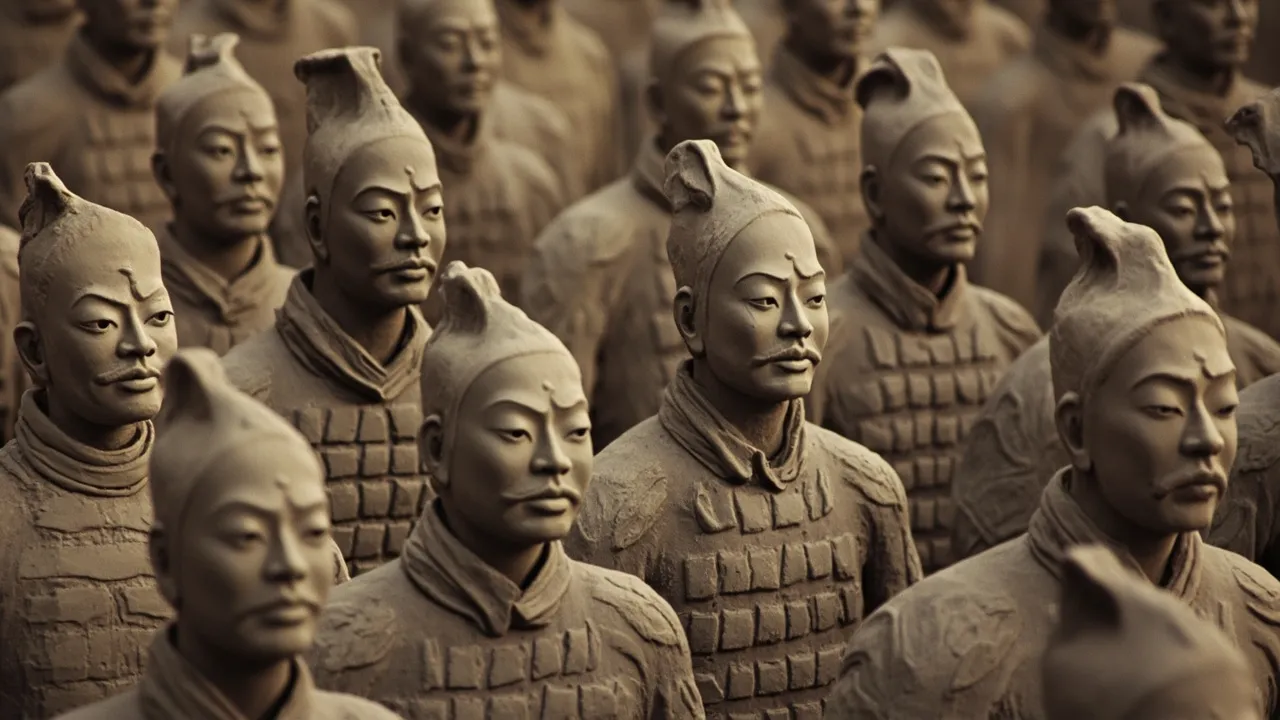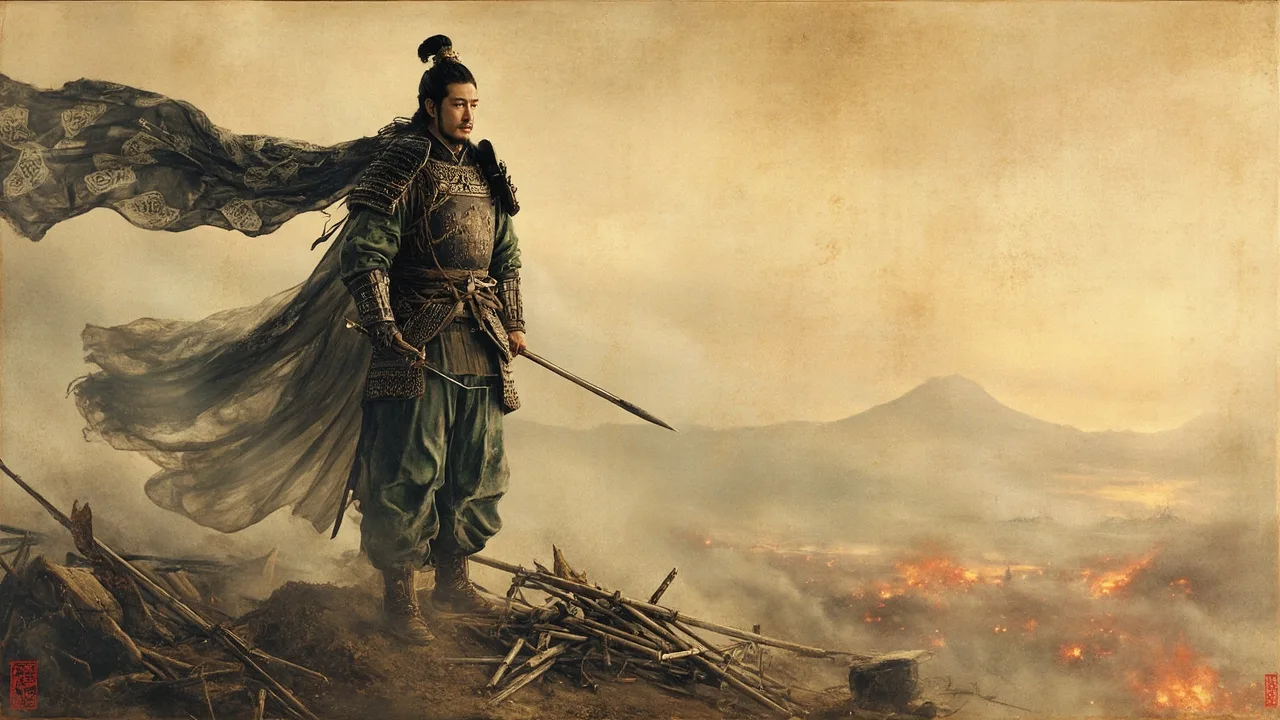
Most people who know anything about the Warring States period know the Art of War. They know Sun Tzu. They know the famous lines about knowing your enemy and winning without fighting. They don’t usually know Bai Qi. That’s strange, because Bai Qi may be the most successful military commander in Chinese history — a man who fought something like seventy engagements, lost none of the major ones, and personally directed the massacre at Changping in 260 BCE where roughly 400,000 Zhao soldiers were killed or buried alive. Then his own king forced him to commit suicide. He went quietly. He is still remembered.
There is no Shangri-La equivalent for Bai Qi in Western consciousness. The closest analogues might be Genghis Khan (more territory, less siege craft) or Erwin Rommel (more famous, smaller body count). Neither comparison quite lands. Bai Qi fought in an era of mass infantry combat with bronze and iron weapons, and he did it in a Chinese political environment where even the most brilliant general could be executed at the king’s pleasure on a word, a rumor, or a poor mood. That he survived as long as he did — three decades as Qin’s foremost commander — and died with the dignity he kept is itself part of the story.
What follows is an attempt to put him back in the picture.
The State That Made Him
To understand Bai Qi, you have to understand Qin. The kingdom of Qin occupied the western edge of the Chinese cultural world, in what is now Shaanxi province. The Qin heartland was mountainous, dry, and stubbornly martial. The people were tough, suspicious of strangers, and ruled by a code that prized law and punish-ment over ritual and negotiation. This was not an accident. The Qin state had been, for two generations before Bai Qi’s prime, deliberately reforged.
The figure most responsible was Shang Yang, a reformer who served King Xiao of Qin from roughly 361 to 338 BCE. Shang Yang’s program — sometimes called the Shang Yang reforms — turned Qin from a peripheral, somewhat backward state into the most efficient war machine in the Warring States system. He did this by tying every household’s status, taxation, and privileges to military service. If your family had multiple adult males and none of them had been killed in battle, you paid double tax. If you captured enemy heads in combat, you received land, titles, and exemption from forced labor. The message was unambiguous: war is the only business that matters.
This had consequences. By the time Bai Qi became a serious commander, the Qin army was the best-equipped, best-trained, most ruthlessly motivated military force in China. Iron weapons were standardized. Infantry drill was rehearsed in formation. Logistics were professionalized. Most importantly, the army had a steady supply of conscripted peasants who understood, at the level of their stomachs, that battlefield performance was the only way out of poverty. The Qin soldier was, in modern terms, a man who had been financially conditioned to fight.
That conditioning is part of why Bai Qi could operate as he did. The men under his command did not need to be flattered or bribed to advance. They had their own reasons to do it.
If you’re interested in the broader intellectual environment of the Warring States period, a good [product_affiliate: Art of War by Sun Tzu annotated edition with Warring States military commentary] is essential reading, since it was compiled in roughly the same generation as Bai Qi’s campaigns. For the larger political framework, the [product_affiliate: Records of the Grand Historian Sima Qian translation covering Warring States period] is the primary source for almost everything we know about the era. And to get a feel for the material culture of Qin soldiers, look at a [product_affiliate: bronze dagger-axe ge weapon replica from Warring States Qin] — the ge was the standard-issue polearm of the era.
The Four Great Victories
Bai Qi’s career as a senior commander is conventionally dated to around 294 BCE, when King Zhaoxiang of Qin — the longest-reigning of the Warring States monarchs — began to trust him with independent field commands. From that year until his forced suicide in 257 BCE, Bai Qi fought four campaigns that defined his reputation and reshaped the political map of China.
Battle of Yique (293 BCE). Bai Qi’s first major independent command. Qin had been besieging the Han state; Han sought help from Wei and Zhao. The allied relief army under general Wei Jia met Bai Qi at Yique in modern Henan. Bai Qi used a feigned retreat to draw the allied infantry into disorganized pursuit, then counterattacked with cavalry striking the exposed flanks. He killed roughly 150,000 allied troops in a single engagement, captured Wei Jia, and broke the coalition. The victory gave Qin control of the Hangu Pass corridor — the strategic bottleneck connecting the western heartland to the central plains — and put every other Warring States kingdom on notice that Bai Qi was not a man to underestimate.
Battle of Huayang (273 BCE). Qin invaded Wei. The Wei general Meng Qiao held a fortified position at Huayang in modern Henan. Conventional Qin doctrine called for a direct assault. Bai Qi instead bypassed the Wei main position, drove deep into Wei territory to seize the Wei capital, and forced Wei to sue for peace — but only after he had struck at Wei’s supporting allies, including Chu. By the time the campaign ended, Wei had ceded territory and Chu had been driven back from the central plains. Bai Qi had won without ever engaging Wei in a frontal battle.
Battle of Yingshi (273 BCE, often paired with Huayang). A separate campaign in the same year. Zhao general Zhao Kuo — not the famous Zhao Kuo of Changping, an important distinction we’ll get to — led an army against Qin. Bai Qi, despite being heavily outnumbered and low on supplies, held a defensive position for weeks, then counterattacked when Zhao Kuo made the mistake of overextending. The Zhao army broke and fled. Bai Qi pursued and reportedly killed another 150,000.
Battle of Changping (260 BCE). The campaign that made Bai Qi’s name and sealed his fate. The state of Zhao, the most formidable of Qin’s remaining adversaries, was fighting Qin over the Shangdang commandery. Qin sent its most experienced commanders, including Wang He, to handle the operation. Wang He fought Bai Qi to a stalemate at length. King Zhaoxiang grew impatient, replaced Wang He with Wang Ling, who was also stymied. Then the king sent a personal order: replace Wang Ling with Bai Qi himself. Bai Qi famously objected — he told the court that Qin had not yet prepared enough logistical reserves to win decisively, and that the war would be costly. The king overruled him.
What followed was a six-month stalemate at the frontier fortress of Changping in modern Shanxi. Zhao eventually replaced its commander, the cautious Lian Po, with Zhao Kuo — yes, the son of the famous Zhao She, who was supposedly trained in theoretical warfare from his father’s books. (The lesson, as old Chinese writers loved to point out, was that theoretical knowledge without field experience gets you killed.) Bai Qi, knowing Zhao Kuo’s reputation and his own strengths, switched from a defensive posture to an offensive posture overnight. He sent a small force to break through Zhao supply lines while a much larger force, hidden in the hills, ambushed Zhao Kuo’s main army when it pursued. The Zhao army was surrounded, cut off from supply, besieged for forty-six days, and finally surrendered. Bai Qi received the surrender, then — and this is the part that has horrified readers for two and a half millennia — ordered the execution of all prisoners except about 240 juveniles who were sent home to deliver the news. The number killed is usually given as 400,000.
This is the figure that has stuck. It’s also the figure that should be read with care. Ancient Chinese casualty counts are notoriously inflated. The actual number killed was probably between 100,000 and 200,000 — still staggering, still a war crime by modern standards, still a massive disaster for Zhao. But the cultural number, the 400,000, has done more work. It has shaped how Chinese history remembers Bai Qi: brilliant, unstoppable, and morally compromised.
For readers who want to think through this morally complicated legacy, an excellent companion is the [product_affiliate: Chinese military strategy classics anthology including Sun Tzu Sun Bin and Warring States texts], which puts Bai Qi’s tactics in their theoretical context.
The King He Served, and the King Who Killed Him
Bai Qi lived under three kings of Qin: King Zhaoxiang (the one who elevated him), King Xiaowen, and briefly King Daoxiang. The first loved him. The third killed him.
The immediate trigger for Bai Qi’s fall was the campaign of 257 BCE. After Changping, Bai Qi had proposed a methodical series of small-scale sieges to absorb Zhao. He wanted to take the rest of the state slowly, with minimal additional bloodshed. King Zhaoxiang, by this point impatient and surrounded by advisers who wanted a quicker victory, overruled him. He ordered Bai Qi to take the Zhao capital Handan in a single swift operation. Bai Qi refused. The king ordered Wang Ling (the same general who had been replaced at Changping) to take charge. Wang Ling failed. The king offered Bai Qi the command again; Bai Qi refused again, citing illness.
The king’s patience broke. He stripped Bai Qi of his command and demoted him to a commoner. Then he exiled him to a remote town. Then, when a later military disaster occurred, he ordered Bai Qi executed.
The order had legal cover — Qin law held that commanders who refused orders could be executed. But the real reason was simpler. Bai Qi had made the king look like a fool. Bai Qi had been right about Changping, and the king had been wrong, and the king couldn’t forgive that. So he did what Qin kings did: he removed the man who knew too much.
There is a famous story, almost certainly legend, that Bai Qi said as he died: “I have killed countless men in my service to Qin. This death is deserved.” Whether or not he actually said it, the story captures something real. Bai Qi knew what he was. He did not pretend to be merciful. He did not pretend the killing would stop with him. He just did his job, took the consequences when they came, and accepted them without complaint.
That grim stoicism — call it Legalist, call it soldierly, call it the specific moral universe of Qin — is part of why he has remained fascinating. He wasn’t the noble warrior of Confucian imagination. He wasn’t the cunning strategist of Sun Tzu’s maxims. He was something colder and more efficient: a state instrument who happened to be very good at his craft.
The Massacre at Changping and the Question of Legacies
No discussion of Bai Qi is complete without sitting with Changping.
The argument that Bai Qi was a brilliant commander who served his state is easy to make. So is the argument that he was a war criminal. Both arguments have merit, and most serious historians hold them simultaneously. The harder question is what to do with that.
One useful way to read Bai Qi is through the Shang Yang system he served. He didn’t invent the Qin military model. He inherited it. The men under him had been conditioned from birth to value enemy heads over their own lives. The state he served measured military success in bodies and acres. The king he answered to did not blink at killing 100,000 enemies when 50,000 would have done the job. In that environment, Bai Qi’s behavior is consistent with his training, his incentives, and the moral framework of his society. That doesn’t make it less monstrous. It just locates the monstrosity where it belongs: not in the man alone, but in the system that produced him.
Another way to read Bai Qi is through the comparative lens of military history. We have many generals who committed acts that shock us today. Julius Caesar’s Gallic campaigns killed perhaps a million people. William Tecumseh Sherman’s March to the Sea killed perhaps as many. The difference with Bai Qi is that he did it earlier than any of them, and that the Chinese historiographical tradition preserved his case so vividly that it remained a topic of debate two millennia later. Bai Qi’s afterlife is one of his legacies. He is read, argued about, and condemned in roughly equal measure by Chinese historians, philosophers, and novelists from the Han Dynasty down to the present.
If you want to read his story in translation, Sima Qian’s Shiji is the central source — and a good [product_affiliate: Records of the Grand Historian with Warring States military campaigns annotated] is the edition you want.
Why Bai Qi Still Matters
There is a reason Chinese military history is full of Bai Qi. He is the type of the brilliant-but-unsustainable commander: someone whose victories made him indispensable, whose intelligence made his kings feel inferior, and whose death served as a warning to every talented officer who came after him. The lesson Chinese strategists drew was obvious. Serve the state. Win the battles. But never make yourself so necessary that the king fears you. Never be so openly right that the king cannot forgive you.
It’s a grim lesson. Bai Qi took it on his way out.
But there’s another side, the side Chinese writers have spent more time on. Bai Qi is also the type of the professional soldier — the man who refuses to follow orders that he knows are wrong, even when those orders come from his own sovereign. He refused to take Handan. He was right that the campaign would fail. The campaign did fail, badly. He was then killed for being right.
That is the tension at the heart of Bai Qi’s story, and it’s a tension that has not gone away. We still argue about whether it is better to follow obviously bad orders from legitimate authority, or to refuse and accept the consequences. Bai Qi answered the question his way. He chose to refuse. He chose to be killed. The state he served survived. The dynasty he had built for went on to unify China.
He died, in the end, the way he lived. Quietly. Professionally. With a record he knew would be remembered for the wrong reasons by some, and for the right reasons by others.
If we want to remember him fairly, we have to hold both.