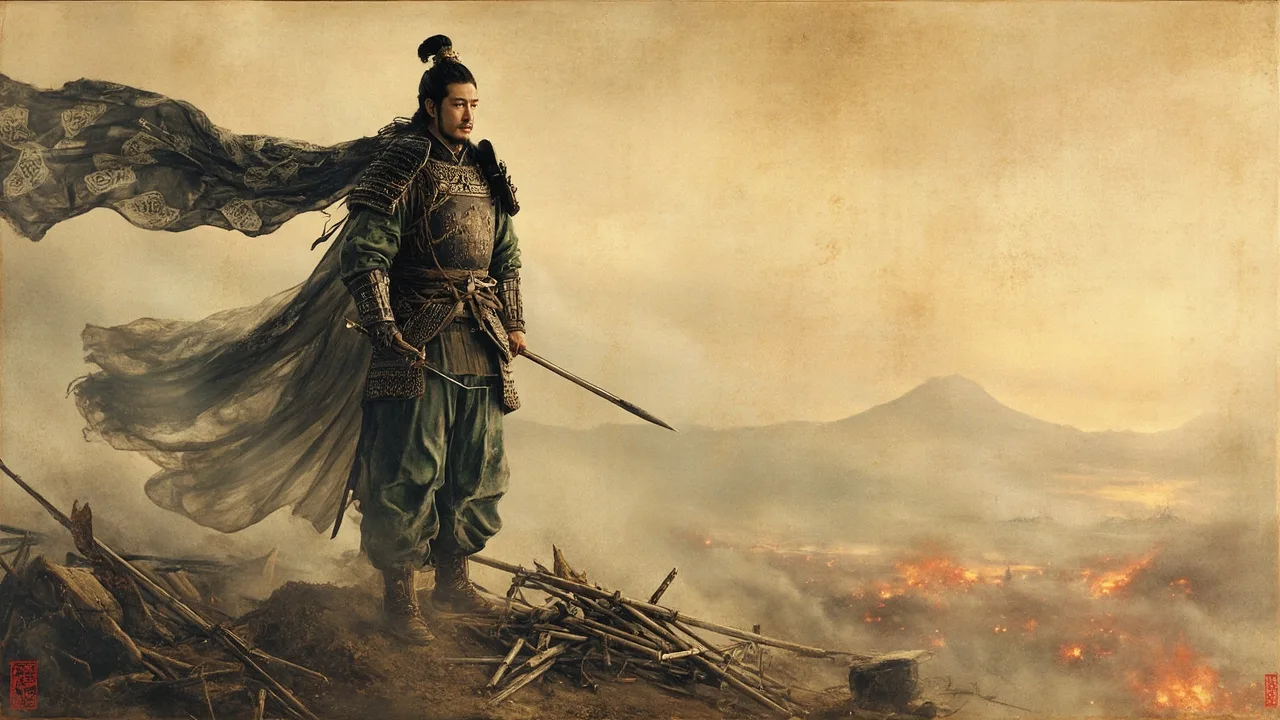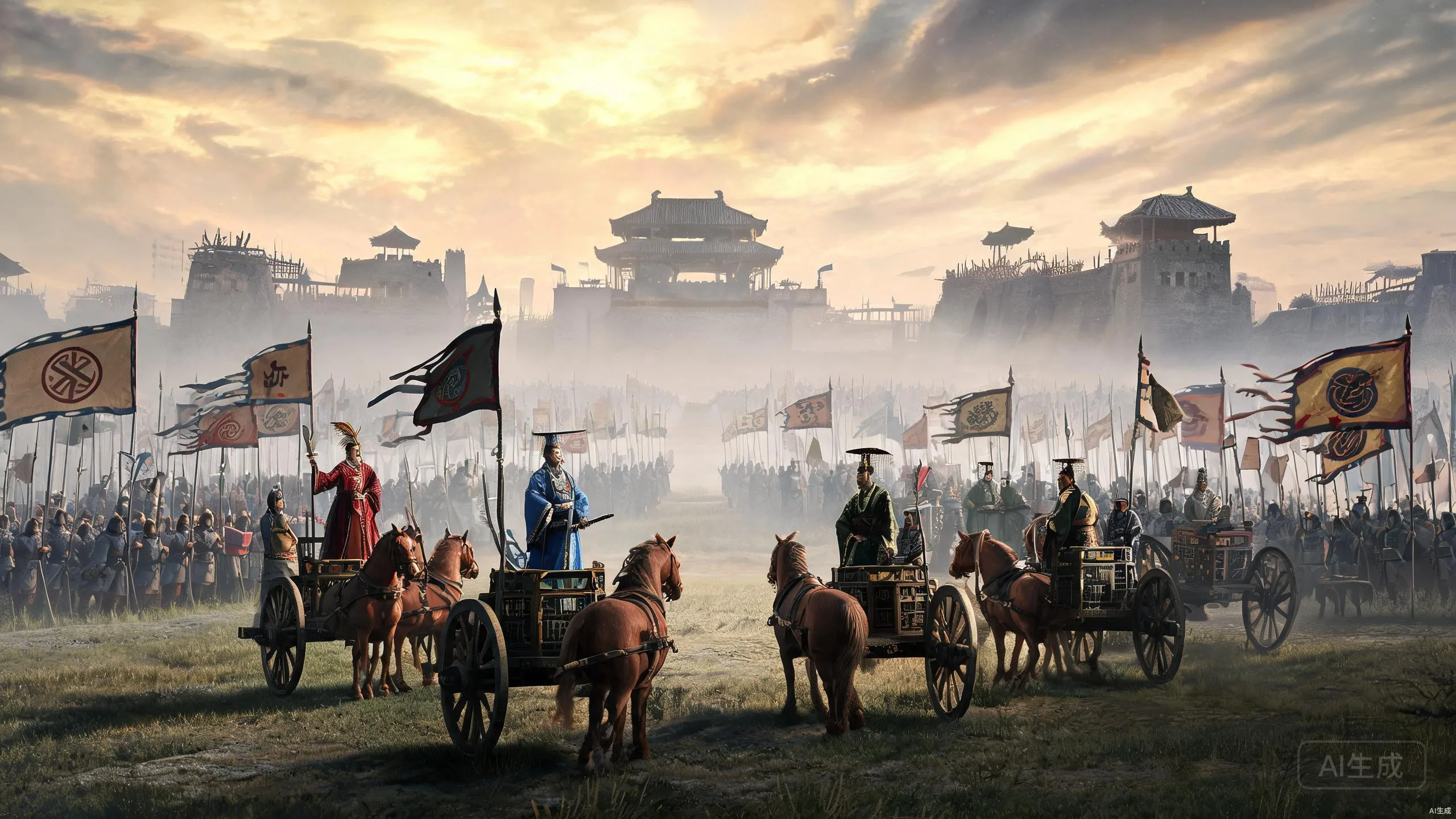
By 284 BC, the state of Zhao had been systematically destroyed. The Yan army, led by the general Yue Yi, had invaded with a massive force, defeated the Zhao armies in two major battles, and occupied the Zhao capital. They had killed the Zhao king, installed a puppet ruler, and annexed the richest territories of the state. Zhao, one of the major powers of the Warring States period, was reduced to two remaining cities—and certain destruction.
Then a former horse trainer named Tian Dan devised the most audacious psychological warfare operation in ancient Chinese history.
Tian Dan was not a general by training. He had been a manager of the Zhao horse stables—a position of some importance in a state whose military depended on cavalry, but hardly the kind of background that suggested strategic genius. Yet in the ruins of his shattered state, with Yan armies occupying his homeland and his people either dead or enslaved, Tian Dan began to plan something desperate and brilliant.
The plan he came up with was extraordinary in its simplicity and its psychological precision. It required no superior technology, no larger army, no fortified positions. It required only an understanding of what his enemy believed—and a willingness to do what no one would expect.
What made Tian Dan’s strategy remarkable was not just its cleverness but its cost-effectiveness. He did not need to manufacture sophisticated weapons or train elite soldiers. The bulls were ordinary draft animals, available in any agricultural society. The oil was a standard commodity. The bamboo and rope were basic materials. His weapon was information: he understood how the Yan soldiers would interpret what they saw, and he engineered that interpretation to produce maximum panic. In modern terms, he had essentially weaponized the Yan army’s own psychology against them.
Tian Dan: The General Who Refused to Lose
Tian Dan’s first move was to disguise his intentions. He began publicly proclaiming that the Yan army was weak—that its soldiers were cowardly and its commander, Yue Yi, was incompetent. He went further: he announced that his real goal was not to defeat the Yan but to lead his people in a mass exodus to the far north, where they would live as nomads and abandon their conquered homeland.
The Yan general, hearing these reports, relaxed his guard. His supply lines were secure. His army was victorious. The Zhao resistance was finished. He allowed his forces to rest and prepare for a final mop-up campaign.
Tian Dan used that respite to prepare his actual weapon: five thousand strong, healthy bulls.
The Fire Bull Formation: A Brilliant Piece of Psychological Warfare
He had their horns bound with sharp blades, and he tied long ropes to their tails. Then he soaked the bulls’ tails in oil, and just before the attack, he set the oil-soaked tails on fire.
The bulls, maddened with pain, charged directly at the Yan encampment.
This was not a random act of desperation. It was a carefully engineered psychological operation. The bulls themselves were not the primary weapon—the fire was. By tying burning torches to the bulls’ tails, Tian Dan created a sea of moving flames that would spread chaos through the Yan camp. The bulls, terrified and in pain, would run in straight lines until they hit something solid, overturning cooking fires and trampling supplies. The secondary fires they started would be more dangerous than the bulls themselves. Tian Dan had essentially designed a self-propelled incendiary weapon that would create a cascade of destruction, starting with panic.
Tian Dan had calculated every element of this attack with cold precision. The Yan soldiers, woken in the middle of the night by an enormous noise—the bellowing of five thousand burning bulls—would see a stampeding mass of fire coming directly at them. They would not know what they were facing. They would panic.
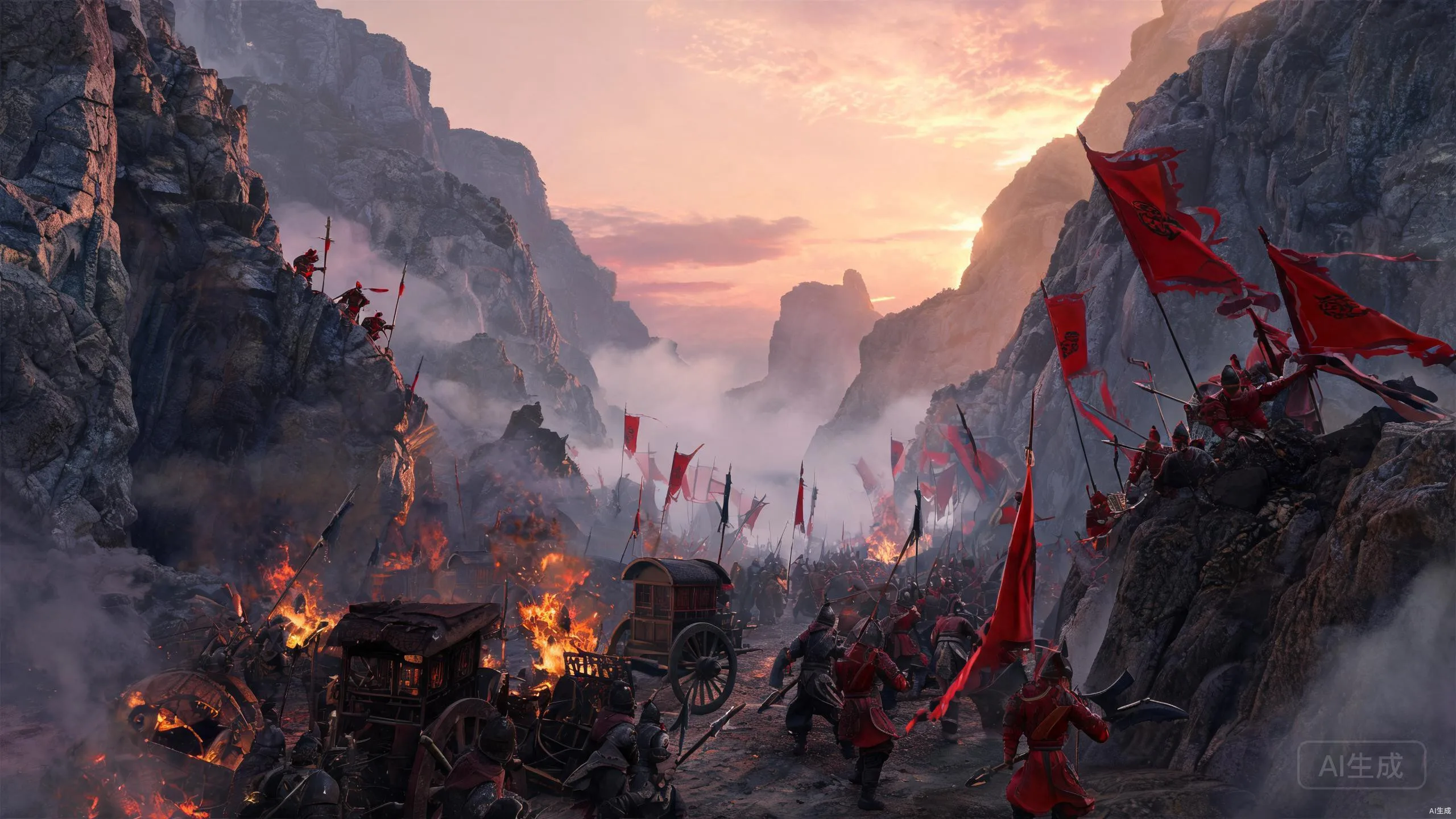
And they did. The Yan soldiers, confronted with flaming bulls charging through their camps, broke and fled in every direction. The Zhao soldiers, following behind the bulls, killed as many as they could catch. The panic spread through the entire Yan army. What had been an overwhelming military victory turned into a rout.
The psychological dimension was as important as the physical. Tian Dan had engineered a terror that transcended conventional military thinking.
The scale of the victory was remarkable given the asymmetry of forces. The Yan army numbered in the tens of thousands—well-trained, battle-hardened, and commanded by a general who had already conquered most of the rival states of China. Tian Dan had five thousand soldiers and whatever chaos he could create with burning livestock. By every conventional measure, the Yan should have crushed the Zhao remnants without difficulty. Instead, the Yan army was annihilated, its general was killed, and the Zhao state was restored. The operation had required no advanced technology, no logistical masterpiece, no superior numbers. It had required only the ability to see what the enemy expected and to do the exact opposite. Tian Dan had essentially hacked the Yan army’s decision-making process, using their own assumptions as the entry point for an attack they never saw coming. He had understood that an army is not just a collection of trained fighters—it is a psychological organism, vulnerable to fear, surprise, and loss of confidence. He had studied the Yan’s psychology as carefully as a modern general studies terrain and supply lines. The Fire Bulls were not simply a tactical surprise. They were a psychological weapon, designed to shatter the Yan’s belief in their own invincibility.
The Question Historians Can’t Answer: Did It Really Happen?
Here is the strange thing about the Battle of Maling: the primary source for it is the Strategies of the Warring States, a text compiled from various historical accounts and political speeches. It is not a military chronicle in the style of Sun Tzu’s Art of War. It is a collection of anecdotes and arguments, assembled centuries after the events it describes.
Modern historians have therefore asked a question that has never been definitively resolved: did the Fire Bulls actually happen?
The account in the Strategies of the Warring States is vivid and detailed—five thousand bulls, oil-soaked tails, torches, the Yan encampment in chaos. It names specific officers, describes the movements of troops, and explains Tian Dan’s reasoning at every step. Yet the same text also contains accounts of other battles and diplomatic maneuvers that clearly mix fact and embellishment, and historians have long debated which parts are historical record and which are literary invention.
What is not in dispute is the broader context: by the late 280s BC, the state of Zhao had indeed been dramatically weakened by Yan invasion. Its capital had fallen, its king had been killed, and it had been reduced to holding on in two cities. Yet within a few years of this low point, Zhao had reconstituted itself as a significant military power. Something dramatic had happened. Whether it involved burning bulls or some other military reversal, the story of Zhao’s survival in these years is real.
The Philosophy Behind the Triumph
Sun Tzu, in the Art of War, had written that the highest form of generalship was winning without fighting—by subverting the enemy’s plans, disrupting their alliances, and attacking their psychology rather than their formations. Tian Dan’s Fire Bulls operation was a perfect embodiment of this principle. He did not meet the Yan army on equal terms. He did not try to match their superior numbers or better-trained soldiers. He found a way to attack their minds.
What makes this remarkable is the complete absence of any technological advantage. Tian Dan had no better weapons, no superior intelligence network, no secret ally waiting to betray the Yan. He had five thousand bulls and an understanding of human psychology that he had developed over years of managing horse stables. The lesson is uncomfortable for anyone who believes that military success is primarily a function of material resources. Tian Dan proved that a clever mind with modest resources could defeat a superior army through nothing more than a better understanding of how human beings—soldiers and commanders alike—actually think and behave under pressure.
In the generations after Maling, military manuals across China would reference the Fire Bulls as the ultimate example of what could be achieved when a general combined thorough knowledge of enemy psychology with absolute willingness to act on that knowledge in unexpected ways. Tian Dan had won not by being stronger but by being smarter, more creative, and more daring than his opponents.
The Legacy of an Angry Bull
Tian Dan went on to serve the state of Zhao for several more years, eventually dying of old age in his bed—itself a remarkable outcome for a general who had defied one of the most powerful armies in China.
The historical record of Tian Dan is unusually complete for this period. The Strategies of the Warring States preserves detailed accounts of his campaign, and these accounts are supported by other texts from the period. Unlike many ancient generals, whose biographies are fragmentary or legend-laden, Tian Dan’s actions can be traced with reasonable confidence through multiple sources. The Fire Bulls operation is the most dramatic episode, but he is also credited with the broader strategy that led to the Zhao reconquest—the patient political maneuvering, the intelligence gathering, the exploitation of Yan internal divisions. He was, by any measure, one of the most effective military leaders of the Warring States era, operating from a position of extreme weakness and transforming it into victory through intelligence, psychology, and audacity.
The battle he won with burning bulls became one of the most famous engagements in Chinese military history. It entered the repertoire of strategic examples that Chinese generals and scholars would cite for centuries. When later Chinese strategists wanted to illustrate the power of psychological warfare, the cleverness of surprise attacks, or the danger of underestimating a desperate enemy, they reached for Tian Dan’s Fire Bulls.
For modern readers, the Battle of Maling offers a lesson that transcends ancient China: the most powerful weapon in any conflict is often not the largest army or the best technology, but the ability to understand what your enemy expects and to do the thing they cannot anticipate. Tian Dan understood his enemy—their overconfidence, their contempt for a defeated foe, their psychological need to believe the war was already won. And he used that understanding to destroy them. The lesson is one that military strategists have remembered for two and a half millennia: never underestimate the power of surprise, and never assume that your enemy is incapable of thinking creatively. The history of warfare is full of examples of smaller, weaker forces defeating larger ones through cunning. Tian Dan’s Fire Bulls remain one of the most vivid and entertaining examples in the entire history of military strategy.
Image Prompt: Dynamic scene of the Battle of Maling at night, showing thousands of charging bulls with flaming torches tied to their horns bursting through a surprised Yan army encampment, soldiers fleeing in panic, firelight illuminating the chaos of battle, dramatic ancient Chinese military painting style.
Related Articles:
- Sun Tzu’s Art of War: Timeless Military Principles — the strategic philosophy behind Tian Dan’s victory
- The Warring States Period: Seven States, One Empire — the era that produced this battle
Affiliate Products:
Explore the military thinking behind Tian Dan’s victory:
- Sun Tzu’s Art of War — The foundational text on strategy that shaped Tian Dan’s thinking.
- Ancient Chinese Battles: A Military History — Detailed accounts of the engagements that shaped the Warring States period.
- Military History Collection — Comprehensive coverage of ancient military strategy from China and around the world.
- Chinese History: A Comprehensive Survey — The political context that produced Tian Dan’s moment.