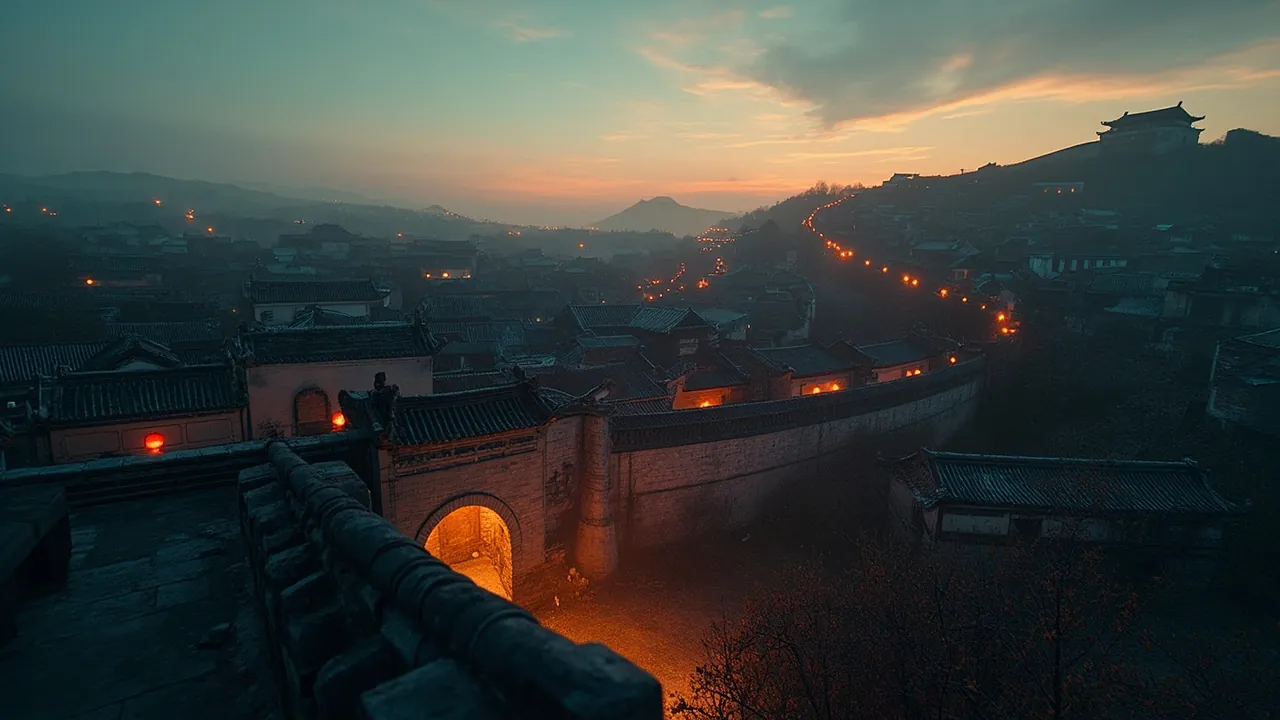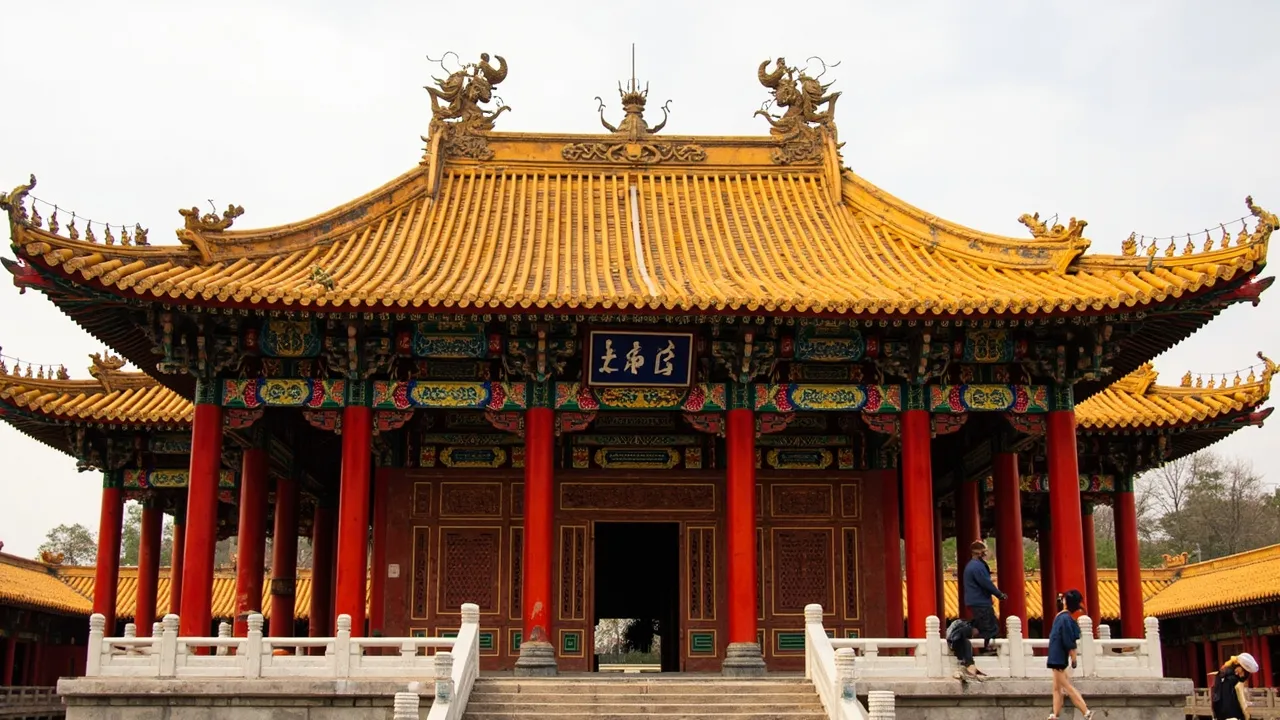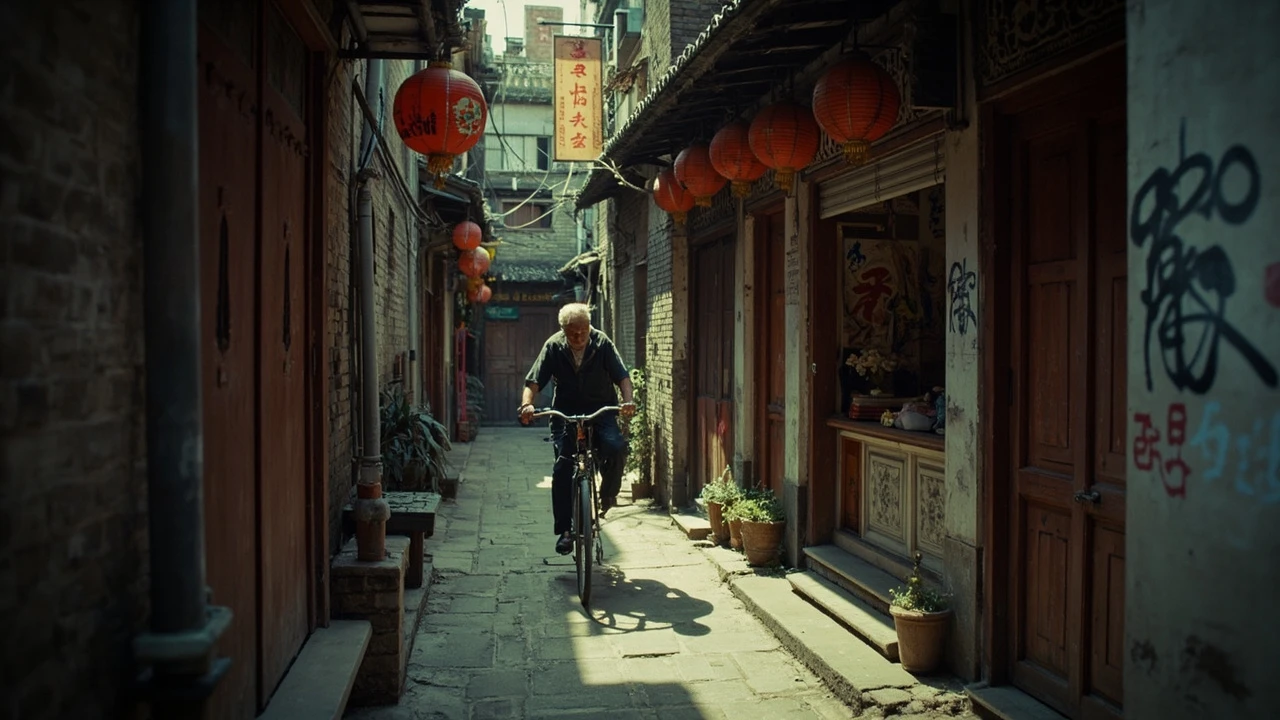
If you’ve ever watched a Beijing taxi pull into a narrow alleyway between gray brick walls, heard the driver’s voice drop into that special pitch reserved for familiar territory (“您家是几号?”), and realized you were being delivered into a living neighborhood that has been quietly continuing its daily business for seven centuries — then you’ve had the hutong experience.
A hutong is a narrow street or alleyway, typically running between rows of single-story courtyard houses, in a traditional Chinese city. The word comes from Mongolian (hottog, meaning “well” or “water source”), and entered Chinese vocabulary when the Mongol Yuan Dynasty established its capital in what would become Beijing in the 1270s. The original hutongs were laid out to organize access to water wells: each alley led from a main street to a courtyard cluster, and each cluster shared a well. The word stuck even after the wells were no longer the organizing principle.
Beijing’s hutongs are not just a style of street. They’re a way of organizing urban life that has shaped the city for over 700 years. The hutongs are the connective tissue between the great monuments — the Forbidden City, the Temple of Heaven, the Bell and Drum Towers — and the neighborhoods where ordinary Beijingers have lived, eaten, married, quarreled, raised children, and died. To walk through a real Beijing hutong — not the tourist version, but a lived-in one in the eastern or northern districts of the city — is to enter a piece of urban history that doesn’t have an exact American equivalent. The closest analogies are Brooklyn brownstones, Amsterdam canal houses, or London mews — neighborhood-defining residential architecture under pressure from modern development — but none of those captures quite what a hutong is.
Today, Beijing’s hutongs are at a crossroads. Almost half of them were destroyed between 1949 and 2008 in the name of modernization. A significant preservation fight has slowed that destruction, but the pressures of population density, real estate development, and shifting demographics continue. The hutong you walk through tomorrow may not be the hutong that exists a decade from now.
This article is for readers who want to understand what hutongs are, where they came from, why they nearly disappeared, and what’s being done to keep them alive.
What Exactly Is a Hutong?
The basic unit is the siheyuan — a traditional Chinese courtyard residence, literally “four-sided courtyard.” A siheyuan is a compound of buildings arranged around a central open courtyard, with the main building (the zhengfang) facing south to catch the sun, two side buildings (xiangfang) flanking the courtyard, and a rear building (houzhaofang) closing off the north. The entrance is typically on the southeast corner, and the buildings are one story tall, built of gray brick with tile roofs.
Siheyuans were (and in some cases still are) the homes of Beijing families. Their size and number of courtyards indicated social status — a modest family might live in a single-courtyard siheyuan, while a wealthy merchant or official might have a two- or three-courtyard compound stretching back from the street. The largest siheyuans could occupy an entire city block.
A hutong is the alleyway that runs between rows of siheyuans. The standard hutong is about 9 meters wide — wide enough for a horse cart and a pedestrian, narrow enough to feel enclosed by the walls on either side. Many older hutongs are even narrower, barely 4 meters across. The layout of hutongs and siheyuans follows a grid: a main hutong running east-west (because the city’s streets were aligned with the cardinal directions), with smaller hutongs branching off at right angles.
The standard hutong layout includes a gate at each end — sometimes marked by elaborate wooden columns and carved lintels, sometimes just a plain archway. The walls on either side are typically 2 to 3 meters high, with trees (often jujube or persimmon) leaning over the alley. Doorways to individual siheyuans open off the hutong, often with painted red doors and brass studs in pairs (the pattern of door studs traditionally indicated the rank of the household).
What makes a hutong different from just any alley is the social texture. Hutongs weren’t just streets. They were the neighborhood-scale unit of Beijing life. Each hutong had its own informal community — the elders who sat on stools in the alley in summer, the children who played in it after school, the vendors who pushed carts through at predictable hours. Beijingers used to speak of the jiedao (a slightly larger administrative unit, usually a few hutongs together) the way Americans speak of a neighborhood: you knew which jiedao you were from, what kind of people lived there, where to get the best jianbing.
The Four Generations of Hutongs
Beijing’s hutong layout didn’t appear all at once. It evolved over four major historical periods, each of which left a distinct mark.
The Yuan Dynasty (1271-1368) is when the hutong system was first established. Kublai Khan moved the Mongol capital to Dadu (大都, “Great Capital,” what would become Beijing) in the 1270s, and the new city was laid out on a regular grid patterned after earlier Chinese capitals but with the Mongols’ administrative sense of order. The grid defined blocks of siheyuans separated by alleyways — the first hutongs. Many of the original Yuan-era hutong names survive in Beijing today, particularly in the areas north and west of the Forbidden City.
The Ming Dynasty (1368-1644) inherited the Yuan grid and reorganized it for the new Chinese Ming rulers. The Ming rebuilt the Forbidden City, expanded the city walls, and reorganized the residential districts. The famous “seventy-two hutongs” of old Beijing — each named for a trade, a temple, or a feature of the alley — date mostly from this period. These are the hutongs that old Beijingers still remember by name: the Goldfish Hutong (Jinyu Hutong), the Hat Hutong (Mao’er Hutong), the Calligraphy Hutong (Shufa Hutong).
The Qing Dynasty (1644-1912) preserved the hutong system largely intact but added layers of ethnic distinction. Manchu bannermen (Qing-era hereditary soldiers and their families) lived in specific hutong districts, often larger and more elaborate than the surrounding Han Chinese residences. The Eight Banners system created a kind of ethnic geography of the city, with named Manchu garrison hutongs throughout Beijing. Several of these — like the famous Miao’erdong Hutong in the Xicheng district — still contain the original Manchu-style siheyuans with their distinctive interior layouts.
The Republican and early Communist periods (1912-1949) added new hutong types. As Beijing modernized in the early 20th century, certain hutongs became commercial — small shops, teahouses, and workshops opened up at ground level. Foreign legations and embassies established themselves in some of the larger hutong districts, and a few hutongs became associated with universities, theaters, and intellectual life. The famous Nanluoguxiang area, with its mix of residences and small shops, was developing during this period.
How Hutongs Shaped Beijing Life
For someone who didn’t grow up in a hutong, it’s hard to convey the texture of life in one. But a few details help.
The courtyards were shared, sometimes communally. In a single-courtyard siheyuan, several related families might share the courtyard, with private rooms opening off it but shared use of the central space. Cooking was done inside, but laundry was hung in the courtyard, children played in it, elders sat in it on summer evenings. The courtyard was effectively the family’s outdoor living room.
Public bathhouses (pengrang) served the hutong neighborhoods. Most siheyuans didn’t have indoor plumbing or private baths, so families went to neighborhood bathhouses a few times a week. The bathhouses were also social spaces — neighbors caught up on gossip in the steam rooms. Old Beijingers talk about the bathhouses with the same nostalgia that Americans sometimes reserve for the local diner.
Food vendors cycled through the hutongs at predictable times. The morning brought the tofu seller with his wooden cart, the yuba (bean curd skin) carrier, and the milky white steam from the breakfast baozi shop. In the evening, the jianbing vendor set up at the alley entrance, the sugar-roasted chestnut man fired up his wok, and the smell of cooking oil and garlic drifted through the alley. You didn’t go to the restaurant; the restaurant came to you.
The neighborhood (jiedao) was the primary social unit. People who lived in the same jiedao knew each other, helped each other, and resolved disputes through the informal mediation of respected elders. Marriage, childbirth, and funeral customs were observed collectively, often with the entire hutong contributing labor and food.
For an American, this is reminiscent of what urban sociologists used to call “the village in the city” — the dense, multigenerational, face-to-face community that characterized American immigrant neighborhoods before WWII, and that some rural Southern and Appalachian communities still preserve. The hutong was Beijing’s version of that: a place where everyone knew everyone, and where anonymity was impossible.
The Destruction Crisis
Between 1949 and 2008, the period of the People’s Republic of China up to the Beijing Olympics, an estimated 60% of Beijing’s old hutong districts were demolished. The reasons shifted over time but compounded each other.
The 1950s-60s: After 1949, the new government undertook a major urban renewal program. Many old siheyuans were subdivided to house more people — a single-family home might become housing for three or four families. Public utilities were slowly extended, but the basic hutong fabric remained. Some demolitions happened for road widening and the construction of new government buildings.
The Cultural Revolution (1966-1976): During the political upheavals of the Cultural Revolution, many traditional courtyard residences were attacked as feudal. Door studs were pried off siheyuan doors. Decorative carvings were smashed. Some siheyuans were confiscated and reassigned to multiple families, with internal walls built to divide larger courtyards into smaller living units. A lot of physical fabric was lost or degraded during this period, though the hutong street grid largely survived.
The 1980s-90s: With economic reform came new pressures. Beijing’s population grew rapidly, and the city government began a sustained campaign of demolition and redevelopment, clearing hutong neighborhoods to make way for high-rise apartments, commercial buildings, and ring roads. The most famous (and infamous) destruction was in the old Dongcheng and Xicheng districts, where entire hutong blocks were razed.
The 2000s buildup to the Olympics: As Beijing prepared for the 2008 Summer Olympics, demolition accelerated. Hundreds of hutong blocks were cleared to make way for Olympic venues, athlete housing, and infrastructure. The number of old hutong blocks in central Beijing dropped sharply.
By 2008, the situation had become a public scandal. UNESCO, international preservationists, and even many Chinese intellectuals and ordinary Beijingers were alarmed at the pace of destruction. The “old Beijing” that had survived war, revolution, and political upheaval was being wiped out in a decade of real estate development.
The Preservation Fight
The fight to save Beijing’s hutongs wasn’t just an external, foreign-driven movement. It was led, in significant part, by Beijing residents themselves.
One famous figure was Zhao Wu (赵武), an elderly Beijing resident who became an unlikely preservationist. In 2004, Zhao and his family received a demolition notice for their courtyard home in the Dashilan area, the historic market district just south of Tiananmen Square. Instead of accepting the relocation offer, Zhao fought back — petitioning, organizing, and eventually going public with his story. His case became a focal point for the broader preservationist movement.
Other Beijingers were also documenting the losses. Photographers, writers, and amateur historians began recording the disappearing hutongs — photographing facades, recording oral histories from elderly residents, and building archives of the old city’s street life.
NGOs and academic institutions played an important role. The Beijing Cultural Heritage Research Center, established by scholars and preservationists, documented threatened sites and advocated for legal protections. Tsinghua University’s school of architecture developed detailed surveys of remaining hutong fabric.
The 2017 policy reversal was the key turning point. By that year, the central government had become alarmed by the speed of destruction and the loss of cultural heritage. In April 2017, the State Council issued a directive: Beijing was to halt wholesale demolition of old hutong neighborhoods and instead focus on “renovation and improvement” of existing structures. The demolition notices that had been issued were largely suspended. Several high-profile demolition projects were cancelled.
This didn’t save every hutong. Some had already been lost. Some remaining ones are in poor condition and need expensive renovation. But the policy change was real, and it slowed the destruction dramatically. Estimates suggest that around 1,000 hutong blocks remain in central Beijing today, down from perhaps 6,000 at the city’s mid-20th-century peak.
Contemporary Hutongs: Tourist Street vs. Real Neighborhood
If you visit Beijing today, you’ll encounter two very different versions of hutong life.
The tourist hutongs are mostly in the Dongcheng district. The most famous is Nanluoguxiang (南锣鼓巷), a north-south hutong just east of the Forbidden City. By the 2000s, Nanluoguxiang had become the destination for both Chinese and foreign tourists. The small siheyuans lining the hutong were converted into coffee shops, craft stores, hostels, and galleries. By the mid-2010s, the hutong was so crowded that the city government had to limit the number of shops and ban new commercial conversions to keep it from becoming entirely unlivable.
Nanluoguxiang is fun, atmospheric, and worth a visit — but it’s not a “real” hutong in the residential sense. Most of the original residents have been priced out and relocated to outer Beijing suburbs.
The residential hutongs are still there, but you have to know where to look. Dashilan (大栅栏), southwest of Tiananmen, is a denser, more commercial district that still has working residents alongside the renovated shopfronts. The hutongs in Xicheng district to the west — particularly around Shichahai and the Bell and Drum Towers — retain much of their residential character, with elderly residents sitting on stools in the alley and old men walking their caged birds. Beiluoguxiang, parallel to and just east of Nanluoguxiang, is similarly residential and quieter.
If you want to see a real hutong, walk a few blocks east or west of Nanluoguxiang. The alleys with no signs in English, no coffee shops, no art galleries — those are the ones where Beijing life still happens.
Hutongs and American Comparisons
American readers might find it useful to think about hutongs through familiar urban categories.
The closest American analogy might be Brooklyn brownstones. Built in the 19th century as family residences in a regular urban grid, the brownstones defined Brooklyn’s residential character for generations. By the mid-20th century, many were deteriorating, subdivided into apartments, or threatened with redevelopment. The brownstone preservation movement of the 1960s and 70s saved many of them. Today, Brooklyn brownstones are some of the most valuable residential real estate in New York. The transformation came with costs — displacement of original working-class and immigrant residents, gentrification — but the architectural fabric survived.
Beijing’s hutongs are arguably more historically dense than Brooklyn’s brownstones (they’re centuries older) and more vulnerable (because Chinese government has more direct leverage over urban land use than American government does). The preservation story is similar in shape but more compressed and politically charged.
Amsterdam canal houses are another comparison: an urban residential form that defined a city for centuries, came under pressure in the 20th century, and was saved by preservation policy. The Amsterdam case shows what successful long-term hutong preservation might look like — canal houses are now lived in by wealthy professionals, with ground-floor businesses serving both residents and tourists. The price was displacement of working-class Amsterdammers, but the buildings survived.
London mews — the small stables and carriage houses tucked behind grand main streets — also resonate. London’s mews were almost lost to redevelopment after WWII. They’re now some of the most desirable small residences in central London.
What all these cases have in common is a transition from “ordinary working-class neighborhood” to “preserved heritage district” to “gentrified desirable address.” Beijing’s hutongs are at an earlier stage of that transition, and the outcome is still uncertain.
The Future of the Hutongs
The 2017 policy reversal slowed destruction but didn’t solve the underlying pressures.
Population density: A single siheyuan might house multiple families today, often with shared kitchen and bathroom facilities. The lack of modern plumbing, heating, and electrical capacity is a real quality-of-life issue. Any preservation plan that ignores residents’ desire for modern amenities will face resistance.
Cost of renovation: Renovation of historic siheyuans is expensive. Many residents can’t afford to upgrade their homes under the current property rights regime, where siheyuan ownership is complicated by decades of subdivision and reassignment. New public-private partnership models are being tested, but they often involve displacing original residents.
Commercial pressure: The economic logic of central Beijing favors demolition and rebuilding. A new high-rise can house hundreds of residents on a single hutong block. The preservation policy limits this, but the pressure continues.
The most promising models involve careful renovation of siheyuans with residents’ consent and financial participation, combined with mixed-use zoning that allows small businesses (cafes, galleries, design studios) at ground level. Several pilot projects in Xicheng and Dongcheng districts are testing these approaches.
The hutongs are still there, for now. Walking through them is still possible. But every year, the number shrinks a little, and the residents who remember the old hutong life grow older and fewer. There’s a real sense in Beijing that this is a closing window — that within another generation or two, the lived-in hutong will be largely gone, replaced by either gentrified boutique districts or else high-rise redevelopment.
If you want to see the hutongs in their living state, the time to visit is now.
Recommended Products
A few items that can help you bring a bit of hutong atmosphere home:
- courtyard-house-print: A print or photographic series of traditional Beijing courtyard houses — perfect for a study wall.
- beijing-photo-book: A high-quality photography book of contemporary Beijing, including hutong scenes.
- rickshaw-model: A decorative model of a Beijing pedicab, the traditional hutong transport.
- chinese-door-couples-art: A traditional Chinese door-couple art piece inspired by the carved and painted siheyuan doors.
- siheyuan-book: A well-illustrated book on traditional Beijing courtyard houses and their architectural history.
Conclusion
The hutong is more than an alley. It’s a way of organizing urban life that has shaped Beijing’s soul for over 700 years. In a world where most major cities have replaced their historical street grids with modern development, Beijing’s hutongs are a remarkable survival — a piece of medieval urban planning that has adapted to industrial, socialist, and post-socialist eras, and that continues to function as a residential neighborhood.
What’s at stake in the hutongs isn’t only architectural heritage. It’s the kind of neighborhood that the hutong represents — multigenerational, face-to-face, with shared courtyards and known neighbors. That’s a way of life that American cities have largely lost, and one that even Beijing’s surviving hutongs are slowly losing. The preservation fight is partly about buildings, but it’s really about whether this kind of dense, communal urban life can survive the 21st century.
If you walk through a Beijing hutong and hear the slow rhythm of elderly Beijingers sitting on stools, smell the cooking oil drifting from a courtyard kitchen, and see a child running through an alley that’s been there since the Yuan Dynasty — you understand what the preservation fight is about. You also understand why it’s uncertain who’ll win.