Chinese Bells: The Ancient Bronze Chimes That Sang for Emperors and Gods
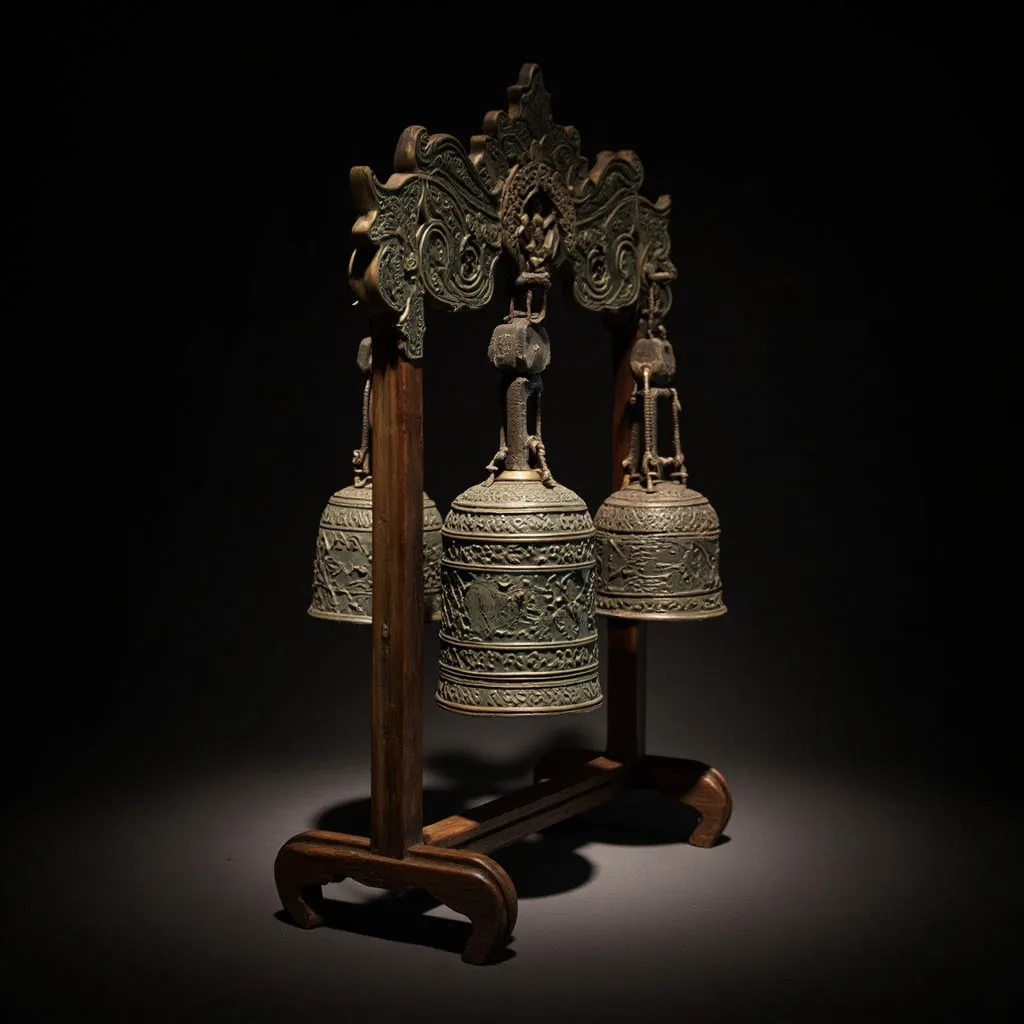
There is a sound that has haunted Chinese history for more than three thousand years—the resonant, layered tones of the bianzhong, or Chinese bronze chime bells. These extraordinary instruments, cast in elaborate bronze alloys and tuned to produce precise musical intervals, were among the most treasured possessions of ancient Chinese rulers. They marked royal ceremonies, accompanied sacrificial offerings to the ancestors, and filled the courts of China’s greatest dynasties with music that connected the human and divine realms.
The bianzhong represents one of humanity’s most remarkable achievements in prehistoric metallurgy and musical engineering. Each bell was cast using the lost-wax method, a sophisticated technique that allowed craftspeople to create instruments of extraordinary tonal complexity. The largest sets contained dozens of bells, each precisely tuned and decorated with intricate patterns that told stories of cosmic order and royal authority. When struck in sequence, these bells produced melodies of surprising sophistication—melodies that modern musicologists have spent decades trying to fully understand.
Perhaps the most famous set of Chinese bells are the Zenghouyi bells, discovered in 1978 in Hubei Province. These 65 bells, dating from the 5th century BCE, produced sounds so complex and beautiful that their discovery forced music historians to completely revise their understanding of ancient Chinese musical capabilities. The bells could produce multiple tones depending on where they were struck—a feature that European bell-makers did not achieve until the 17th century. Today, these bells are displayed in the Hubei Provincial Museum, where they draw visitors from around the world who come to hear recordings of the music they once produced.