There are poets, and then there’s Li Bai. While Shakespeare may dominate the Western literary imagination, and Homer holds sway over the ancient world, Li Bai occupies a space in Chinese culture that is almost mythological in its dimensions. He is called the “Poet Immortal” (诗仙, Shīxiān), a title bestowed not by accident but by the force of his own extraordinary gift for language. His verses don’t merely describe the world — they lift you out of the world entirely, into a realm of moonlight and mountains and wine and freedom that feels more real than the room you’re sitting in as you read them.
Li Bai lived during the Tang Dynasty (618–907 CE), widely considered the golden age of Chinese civilization — a period of unprecedented political stability, economic prosperity, and cultural flowering. It was an era when poetry was not merely appreciated but required; if you wanted to hold public office in the Tang, you had to pass a imperial poetry examination. The Tang court attracted the finest minds from across Asia, and the city of Chang’an (modern Xi’an) was the largest, most cosmopolitan metropolis on Earth. Into this extraordinary world, Li Bai arrived like a comet, trailing fire and wonder.
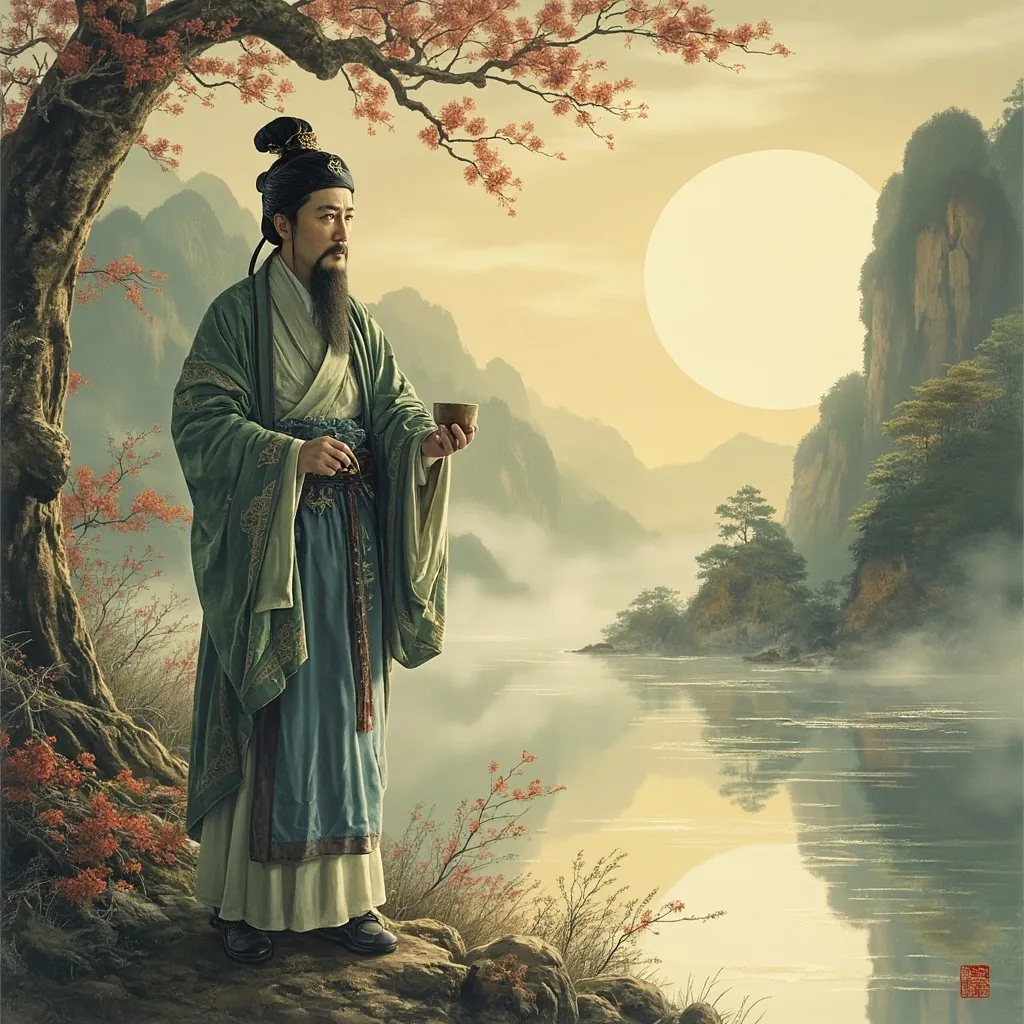
His life reads like one of his own poems — full of movement, passion, solitude, friendship, wine, and a relentless restlessness that drove him from the mountains to the capital to the Yangtze River and back again. He died, by most accounts, in a boating accident on the Yangtze in 762 CE, though legend prefers the story that he drowned while reaching for the moon’s reflection in the water. Given the man, that seems fitting.