Mid-Autumn Festival: Mooncakes, Legends, and Family Gatherings Under the Full Moon
The Mid-Autumn Festival falls on the fifteenth day of the eighth lunar month, when the moon hangs fullest and brightest in the autumn sky. In China, this holiday ranks among the most beloved of all traditional celebrations — a time for families to gather outdoors, share mooncakes and tea, and gaze upward at the same luminous moon that has inspired poets for millennia. If you’ve only ever seen photos of this festival, you might think it’s primarily about the food or the pretty lanterns. But once you understand what’s really being celebrated, the whole occasion takes on a deeper, almost magical quality.
Chang’e’s Journey to the Moon: The Legend That Gives the Festival Its Soul
To understand the Mid-Autumn Festival, you first need to know the story that lies at its heart — the legend of Chang’e and Hou Yi, the archer who shot down nine of the ten suns that were scorching the earth.
According to ancient Chinese mythology, Hou Yi was a legendary archer who saved the world by shooting down nine of the ten suns that had appeared in the sky, leaving only one to provide warmth and light. As a reward, he was given the Elixir of Immortality. But Hou Yi didn’t want to become immortal without his beloved wife Chang’e, so he asked her to guard the elixir while he went out.
One day, while Hou Yi was away, a villain named Peng Meng broke into their home and demanded the elixir. Chang’e knew she couldn’t defeat him, so she drank the elixir herself rather than let it fall into evil hands. Immediately upon drinking it, she began to float upward toward the moon. When Hou Yi returned and learned what had happened, he was devastated. He laid out Chang’e’s favorite foods in the courtyard each night, hoping she might somehow return. The gods, moved by his devotion, allowed Chang’e to live on the moon, where she became the Moon Goddess, forever separated from her husband but eternally beautiful in the night sky.
This legend transforms the Mid-Autumn Festival from a simple harvest celebration into something deeply romantic and poignant. On this night, when the moon appears perfectly round and bright, families look up and see not just a celestial body but a symbol of reunion, longing, and enduring love. It’s why the festival is sometimes called the “Festival of Reunion” — Chang’e’s story reminds everyone what it means to be separated from the ones you love and to cherish the moments when you can come together.
The Mooncake Tradition: More Than Just a Sweet Treat
No discussion of the Mid-Autumn Festival would be complete without talking about mooncakes. These round pastries, typically filled with sweet or savory ingredients, have become synonymous with the holiday in the same way that turkey defines Thanksgiving or chocolate bunnies define Easter.
The history of mooncakes stretches back to the Tang Dynasty, but they became truly intertwined with the Mid-Autumn Festival during the Yuan Dynasty. There’s even a legendary story about how mooncakes helped the Han Chinese overthrow Mongol rule. The rebellion leaders distributed mooncakes with hidden messages inside, coordinating an uprising that successfully drove out the Mongols. Whether strictly true or not, this legend shows how deeply embedded mooncakes are in Chinese cultural consciousness.
Traditional mooncakes feature ornate patterns pressed into their tops — designs like flowers, the character for longevity, or the moon itself. The round shape symbolizes completeness and reunion, since the moon is at its fullest on this night. Inside, the fillings vary by region. In southern China, lotus seed paste with salted egg yolks is extremely popular — the yolks represent the moon itself. Northern styles tend toward sweeter fillings like red bean or jujube paste. In recent years, manufacturers have gotten increasingly creative, producing mooncakes with ice cream, chocolate, coffee, and even cheese fillings, particularly popular among younger consumers.
For many families, giving mooncakes is as important as eating them. Boxes of mooncakes are exchanged between colleagues, clients, friends, and family members. The quality of the mooncakes given can signal your regard for the recipient, so premium mooncake gift boxes from luxury brands command astronomical prices during the festival season. Department stores display elaborate mooncake boxes that wouldn’t look out of place in a jewelry case, with prices to match.
Lanterns That Float Toward the Sky
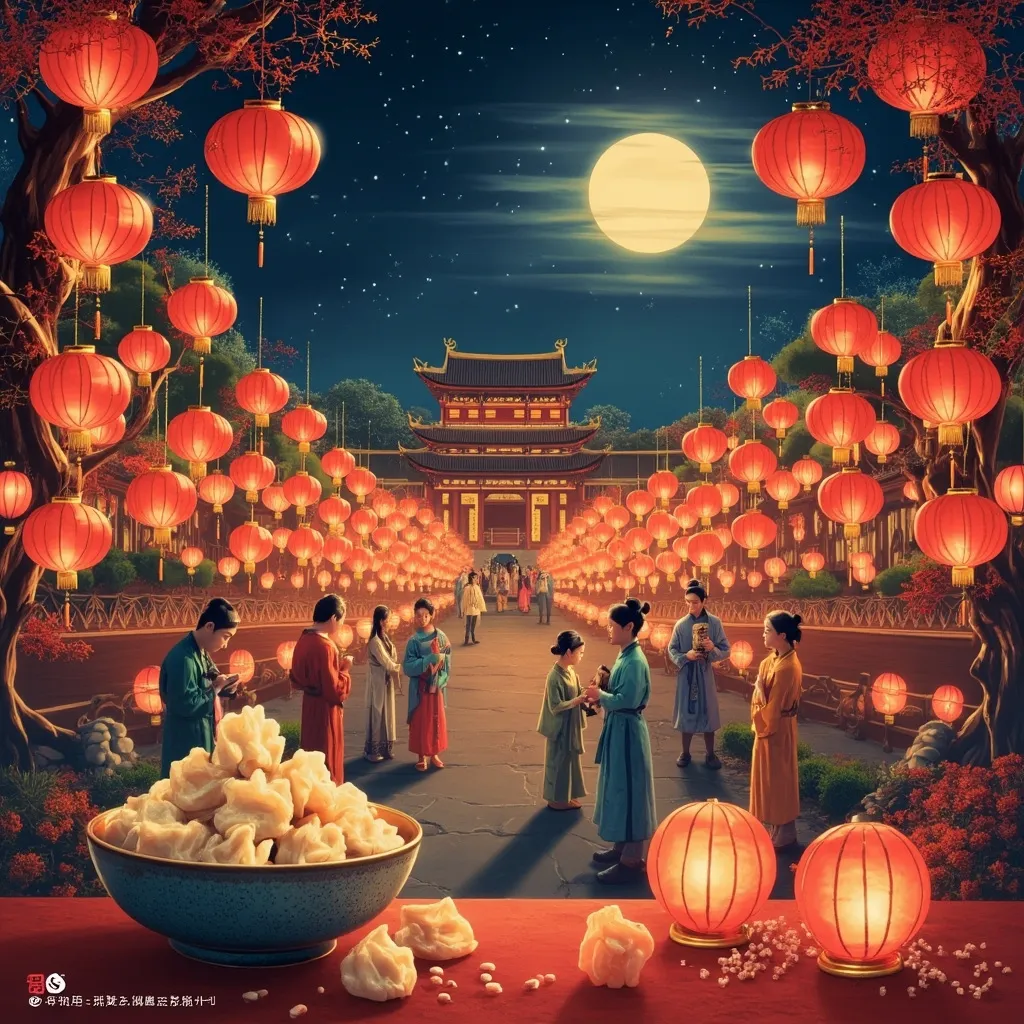
Another iconic element of the Mid-Autumn Festival is the lantern. Throughout China, especially in southern regions, families display lanterns in their homes and gardens, and children carry them through the streets, creating rivers of soft glowing light.
The most famous lantern tradition involves releasing sky lanterns — large paper lanterns that float upward when a small fire is lit inside. As dozens or hundreds of these lanterns rise into the night sky, they create a mesmerizing effect, like a swarm of glowing dandelion seeds drifting toward the heavens. People write wishes or prayers on the lanterns before releasing them, believing the smoke will carry their hopes up to the gods.
In some regions, particularly in Taiwan and Hong Kong, communities organize elaborate lantern exhibitions featuring lanterns shaped like animals, mythological figures, or cartoon characters. These displays draw thousands of visitors who wander through illuminated pathways,拍照 (take photos), and soak in the festive atmosphere.
Lanterns also feature prominently in the associated tradition of zuìráoǔ, a game where children try to use their lanterns to light each other’s candles without being caught. It sounds simple, and it is, but generations of Chinese children have spent countless Mid-Autumn evenings playing this game, making the festival as much about childhood memories as anything else.
The Full Moon Dinner: A Different Kind of Family Gathering
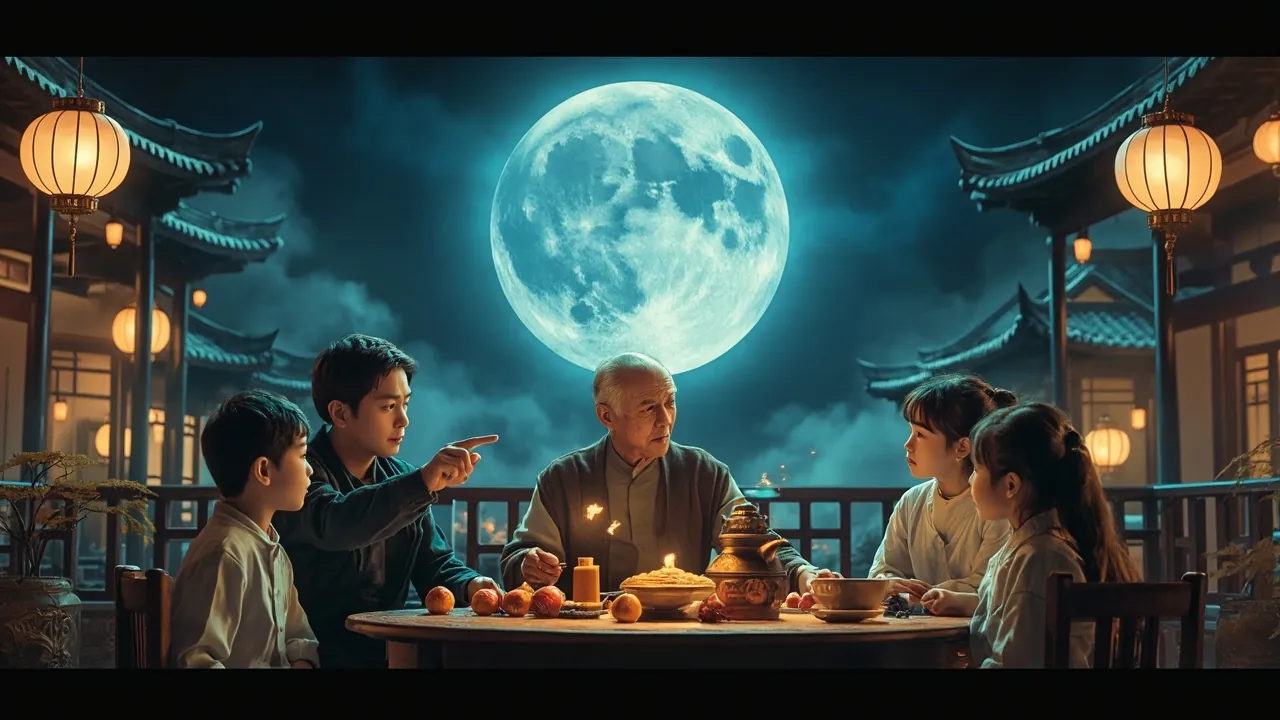
If the Spring Festival is about reunion dinners at a crowded table indoors, the Mid-Autumn Festival flips the script. This celebration is fundamentally about being outside together under the open sky, ideally with an unobstructed view of the moon.
Many families plan elaborate picnics or outdoor dinners specifically timed to coincide with moonrise. They spread out blankets on rooftops, in parks, or in courtyards, and bring along baskets filled with mooncakes, tea, pomelos, and other autumn foods. The pomelo, a large citrus fruit, is particularly associated with the festival — its round shape and golden color make it a natural symbol of the full moon, and its thick rind is sometimes used to make lanterns for children.
Tea is the beverage of choice for the Mid-Autumn Festival. There’s something almost meditative about brewing and drinking tea while contemplating the moon. Many families break out their best teas for this occasion, and some believe that drinking tea on this night makes the moon’s blessings especially powerful. In rural areas, farmers sometimes hold simple ceremonies beneath the moon, offering thanks for the harvest and asking for good fortune in the coming year.
The setting creates a distinctly different atmosphere from the boisterous Spring Festival. Mid-Autumn is quieter, more contemplative, and often more romantic. Couples stroll through parks hand in hand, reciting classical poetry about the moon, or finding private spots to enjoy the night together. The festival has a softer, more nostalgic quality — perhaps because Chang’e’s separation from Hou Yi is always somewhere in the background, reminding everyone of the value of togetherness.
Modern Celebrations: Preserving the Old While Embracing the New
Like most traditional Chinese festivals, the Mid-Autumn Festival has evolved considerably in recent decades while maintaining its core identity. Today, the holiday is both a public celebration and a deeply personal one, with traditions playing out at national, community, and family levels.
Public celebrations have become increasingly elaborate. Major cities stage light shows, cultural performances, and lantern exhibitions that draw enormous crowds. In Hong Kong, the Mid-Autumn Festival is practically a city-wide event, with Lam Tsuen Village’s famous “wishing trees” drawing thousands of visitors who throw fortune sticks into the trees as a form of divination. In Guangzhou, traditional lantern displays in Yuexiu Park have become a beloved seasonal attraction.
At the family level, many urban families now celebrate differently than their rural ancestors did. Rather than gathering in ancestral homes in the countryside, children who have moved to cities often invite their parents to join them, creating new traditions in new locations. Video calls have made it possible for families separated by oceans to celebrate together in some sense, though everyone acknowledges it’s not the same as being physically present.
The commercial side of the holiday has also grown dramatically. The mooncake industry is enormous, with luxury brands like Hermès and Dior getting into the game with ultra-premium mooncake boxes that cost hundreds of dollars. There’s been some backlash against this commercialization, with critics arguing that the focus on expensive gifts has distracted from the festival’s spiritual essence. Still, for most people, the act of giving and receiving mooncakes remains meaningful regardless of the price tag.
Finding Your Own Moonlit Moment
Though the Mid-Autumn Festival is rooted in specific cultural traditions, its core themes — gratitude, family, and wonder at the natural world — translate across cultures. You don’t need to be Chinese to appreciate the value of pausing to admire the moon with the people you love.
If you’re interested in experiencing the festival yourself, look for Mid-Autumn celebrations in Chinese communities near you. Many cities with significant Chinese populations organize public lantern displays, cultural performances, and tasting events. Alternatively, host your own small celebration — pick up some mooncakes from an Asian supermarket, brew a pot of good tea, and find a spot with a clear view of the sky. Invite a few friends or family members, share some food, and take a moment to look up.
The moon doesn’t belong to any one culture. It’s shared by everyone on Earth, a common point of reference that has inspired the same sense of wonder across every civilization. The Mid-Autumn Festival simply gives that universal impulse a particular form, a time when looking up isn’t just natural but expected and meaningful.
In Chinese communities overseas, the Mid-Autumn Festival has become an important way to maintain cultural connections. Families who might not observe many Chinese holidays still make an effort to celebrate Mid-Autumn, both to teach children about their heritage and to connect with the broader Chinese community. Mooncakes from home countries become precious imports, and video calls allow grandparents to watch grandchildren eat their first mooncake of the season, even from thousands of miles away.
The mooncake industry itself has become a fascinating window into modern Chinese commerce. Premium brands compete fiercely for the corporate gift market, with boxes of high-end mooncakes selling for hundreds of dollars. Some manufacturers have experimented with ice cream mooncakes, chocolate mooncakes, and even mooncakes infused with expensive ingredients like truffle. This innovation has drawn criticism from traditionalists who feel the festival’s meaning is being diluted, but others welcome the creativity as a sign of the tradition’s vitality.
This year, when the next Mid-Autumn Festival comes around, pay attention to the full moon. It might just remind you to reconnect with someone you’ve been meaning to call, or to appreciate the people sitting around you right now, right here, under the same beautiful sky.
Affiliate Product Recommendations:
Authentic Lotus Seed Paste Mooncake Gift Box — Premium mooncakes with golden egg yolks, traditional packaging, perfect for gifting or enjoying with family under the moonlight.
Chinese Sky Lanterns for Festival Celebrations — 12 large biodegradable rice paper lanterns with fuel cells, ideal for releasing wishes at your Mid-Autumn gathering.
Traditional Chinese Tea Ceremony Set — Complete set with clay teapot, cups, and bamboo tray — perfect for the tea that complements every mooncake.
Ceramic Moon Lantern Table Lamp — Beautiful handcrafted ceramic lantern with warm LED light, brings festival ambiance to any room year-round.
Asian Grocery Delivery Gift Card — Give the gift of authentic ingredients so friends and family can prepare their own traditional Mid-Autumn Festival treats at home.