Pu-erh Tea: The Aged Black Tea That Improves with Time
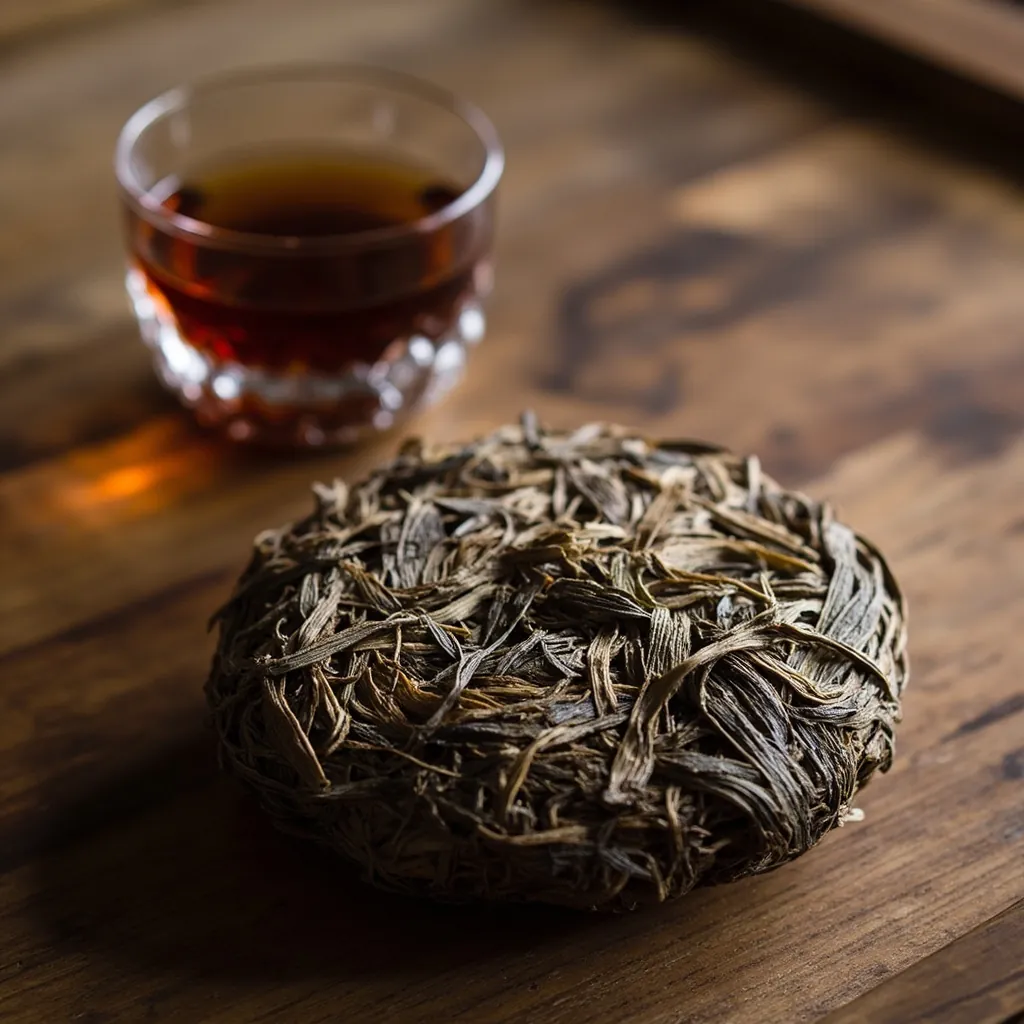
There is something almost paradoxical about pu-erh tea. In most categories of food and drink, freshness is the virtue — you want the bread baked today, the fish caught this morning, the wine from the most recent harvest. Pu-erh defies this entirely. It is a tea that is explicitly, deliberately made to age, and its value increases with time in ways that can feel almost irrational to outsiders. A cake of pu-erh that cost a few hundred yuan when it was pressed might be worth thousands a decade later. The tea itself is actively changing, evolving, becoming something different from what it started as. It is perhaps the only widely consumed food or beverage that genuinely improves with age, sometimes for decades.
My own introduction to pu-erh came through an old merchant in Kunming who kept a cabinet of pu-erh cakes going back forty years. He pulled out a small disc of tea from the early 1980s and brewed it with the casualness of someone opening a tin of everyday biscuits. The taste was unlike anything I’d encountered — earthy, complex, with this incredible depth that seemed to have no bottom. It tasted old in the best possible sense, like a well-seasoned cast-iron pan: accumulated character, layers upon layers of time expressed in liquid form. I understood that evening why people build rooms dedicated to storing this tea, why they argue about provenance and storage conditions with the intensity of wine collectors, why some people spend more on aged pu-erh than they do on their cars.