The Summer Palace: China’s Largest Imperial Garden
Nestled at the foot of the Fragrant Hills in Beijing, the Summer Palace stands as one of the most magnificent examples of Chinese garden design ever created. This sprawling imperial retreat, originally built in 1750 and extensively renovated in the late 19th century, offers visitors a glimpse into the lives of China’s last dynasty—the Qing. Today, it stands as a UNESCO World Heritage Site and remains the largest imperial garden in all of China.
Walking through the East Gate, visitors are immediately transported into a world that feels both grand and serene. The pathway curves gently toward Kunming Lake, with willows trailing their fingers across the water’s surface and荷叶 (lotus leaves) floating peacefully near the shore. It’s easy to see why Empress Dowager Cixi found this place so intoxicating—she reportedly spent much of her later reign here, conducting state affairs from within these grounds even as the Qing Dynasty crumbled around her.
The History Behind the Palace
The Summer Palace has a rich and fascinating history that spans more than two and a half centuries. Originally constructed during the Qing Dynasty under Emperor Qianlong, the garden was known as the Garden of Clear Ripples (Qingyan Yuan). The original design incorporated elements from both northern Chinese architecture and southern Jiangnan garden styles, creating a unique blend that remains visually stunning today. Qianlong, who ruled for sixty years and was one of China’s most prolific builders, spent considerable resources creating a retreat that would honor his mother, Empress Xiaoxianchun, during the summer months.
The garden’s original layout was inspired in part by Emperor Qianlong’s legendary southern tours—journeys during which he visited the scenic landscapes south of the Yangtze River. Enamored with the gardens of Suzhou and Hangzhou, Qianlong sought to recreate their essence within his own imperial grounds. He commissioned artisans from Jiangnan to work on the project, importing not just their skills but also rare rock formations that would eventually form the famous Kunming Lake shoreline.
However, the Summer Palace we see today is largely the result of Empress Dowager Cixi’s reconstruction in the 1880s. After the original Summer Palace was destroyed during the Second Opium War (1860), when Anglo-French forces burned and looted the grounds as part of their punitive expedition against the Qing court, Cixi ordered its reconstruction. What makes this reconstruction historically contentious is the source of its funding: the massive reconstruction project was financed using funds that were originally intended for modernizing China’s navy. The famous story that Cixi diverted naval modernization funds to build her personal retreat has made the Summer Palace a symbol of the Qing Dynasty’s fatal weaknesses.
The Empress Dowager Cixi, one of China’s most controversial historical figures, used the Summer Palace as her primary residence during the summer months and for conducting state affairs. Born Consort Yehenara of the Manchu Niohuru clan, she rose to become the de facto ruler of China during the late Qing, exercising power behind the throne through her position as mother to successive emperors. Her influence during the final decades of the Qing shaped much of the Summer Palace’s history and the controversies surrounding it. She died in 1908, just three years before the dynasty itself would fall.
Kunming Lake: The Heart of the Palace
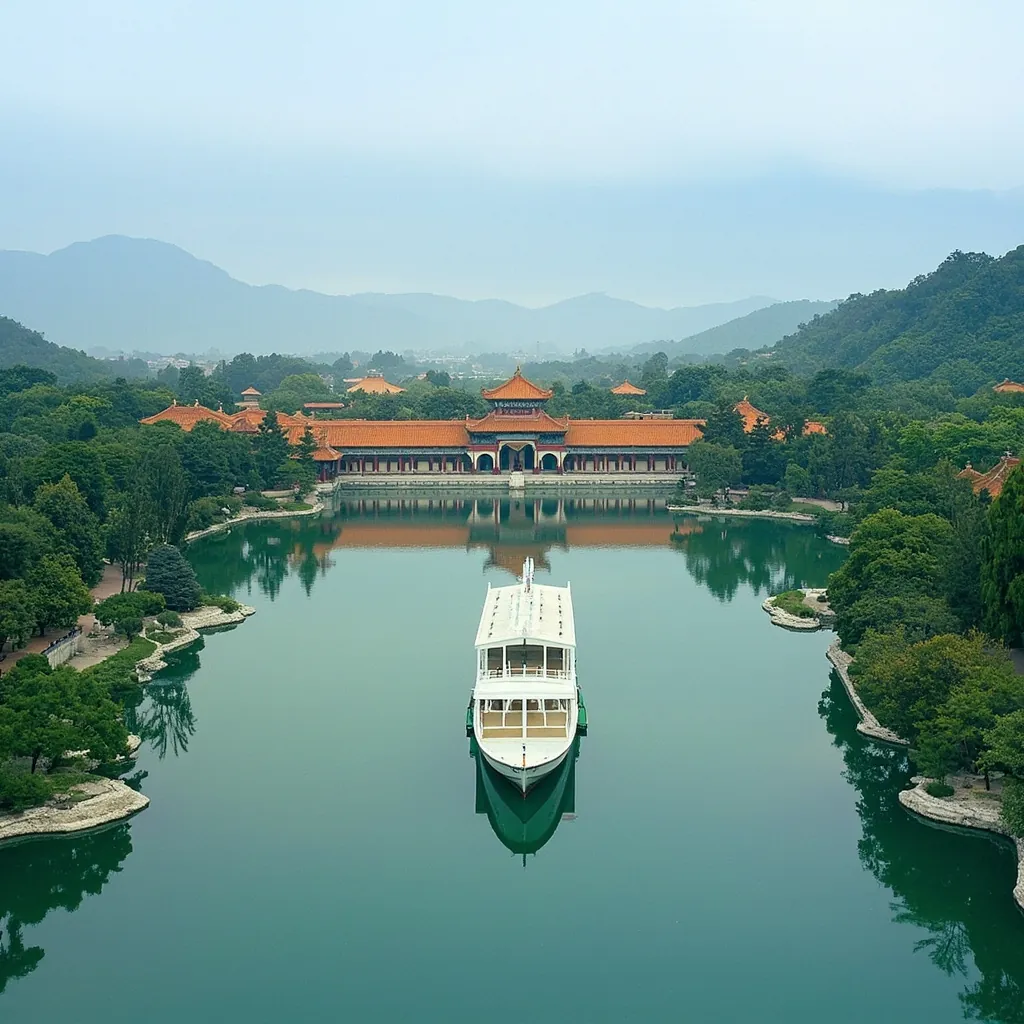
At the center of the Summer Palace lies Kunming Lake, a man-made lake that covers approximately three-quarters of the palace grounds. Covering about 2.2 square kilometers, this expansive body of water was designed to resemble the West Lake of Hangzhou, one of China’s most celebrated scenic destinations. The comparison was deliberate—Qianlong wanted to bring the beauty of southern China to his doorstep, and Kunming Lake does indeed echo West Lake’s sweeping vistas and island-dotted surface.
The lake is not merely decorative—it served practical purposes as well. During the summer months, the large body of water created a cooling effect, making the palace grounds more comfortable for the imperial family and their entourage. Beijing’s summers can be brutally hot, and the lake functioned as a natural air conditioning system, moderating temperatures across the grounds. The lake also provided opportunities for boating and fishing, activities that the imperial family and their guests enjoyed during the long summer days.
Kunming Lake features three distinct islands—Nanhai, Zhongnanhai, and Beihai—each offering different perspectives of the palace grounds. These islands are connected to the shore and to each other by elegantly arched bridges, creating a network of pathways across the water. The longest bridge in the Summer Palace, theCauseway (Gouchi), stretches across the lake’s western section, connecting various parts of the garden and providing visitors with stunning views of the surrounding landscape. Modeled after the famous Su Causeway at West Lake in Hangzhou, this bridge is lined with willow trees whose branches create a curtain of green in summer.
The Seventeen-Arch Bridge (Shiqi Kong Qiao), another iconic structure, spans the northeastern section of the lake and connects the palace grounds to the eastern island. As its name suggests, this bridge features seventeen arches of varying sizes, creating a silhouette that has become one of the most photographed scenes in Beijing. At 150 meters long, it is the longest bridge in the Summer Palace, and its white stone arches reflected in the blue water create a scene of timeless elegance.
The Long Corridor: A Masterpiece of Design
One of the most distinctive features of the Summer Palace is the Long Corridor, or Changlang in Chinese. This covered walkway stretches for 728 meters, making it one of the longest corridors in any Chinese palace or garden. The corridor is famous for its elaborate painted ceilings—more than 14,000 paintings decorate the beams and crossbeams, depicting scenes from Chinese mythology, history, literature, and everyday life.
Walking through the Long Corridor, visitors can admire the intricate details of each painting while enjoying views of Kunming Lake on one side and the palace gardens on the other. The paintings fall into several categories: scenes from Chinese opera, episodes from the classic novel Dream of the Red Chamber, and various auspicious symbols representing good fortune and longevity. One of the most charming aspects of these paintings is their variety—each section features different imagery, ensuring that repeat walks through the corridor reveal new details.
The paintings were created by some of the finest artists of the Qing Dynasty, working under imperial commission. The colors remain remarkably vibrant considering their age, a testament to the quality of the pigments used and the protective properties of the wooden beams. Some paintings depict historical scenes—the loyal minister sacrificing himself for his country, the wise emperor governing justly—while others show mythological creatures such as dragons, phoenixes, and qilin. Still others capture the beauty of flowers, birds, and landscapes, creating a moving gallery that transforms a simple walkway into an outdoor museum.
The Long Corridor serves both aesthetic and practical purposes. During Beijing’s hot summers, the shaded walkway provided a cool passage for the Empress Dowager and her attendants, protecting them from the harsh sun as they moved between buildings. During rainy weather, the enclosed corridor ensured that members of the imperial court could move between buildings without getting wet—an important consideration in an era before umbrellas were common. The corridor also served as a gallery for displaying precious artworks and as a venue for informal meetings.
The Marble Boat: Symbol of Imperial Extravagance
Perhaps the most recognizable structure in the Summer Palace is the Marble Boat, known in Chinese as the Shi Waiting (Stone Houseboat). This unusual building sits on the shores of Kunming Lake and is famous for its marble superstructure, which resembles a boat floating on the water. The structure was designed by Empress Dowager Cixi and built in 1905 using funds that many believe should have gone to naval modernization.
The Marble Boat is significant not only for its unique design but also for the story it tells about imperial priorities during the late Qing Dynasty. When Cixi ordered the boat’s construction, China was facing mounting pressure from foreign powers and internal unrest. The Boxer Rebellion had only recently been suppressed, and the indemnity payments imposed by foreign powers were crushing the imperial treasury. Critics argued that the funds used for the boat could have been better spent on modernizing China’s military and infrastructure. This criticism has made the Marble Boat a symbol of the disconnect between the imperial court and the changing needs of the nation.
The boat’s design reflects a fusion of Western and Chinese architectural elements that is unusual for the period. The hull is made of white marble from distant quarries, its forms carved to resemble wooden boat construction. The upper structure features traditional Chinese roof tiles and painted beams, blending seamlessly with the palace’s overall aesthetic. This combination of materials—stone made to imitate wood—was both a technical achievement and a philosophical statement about the permanence that Cixi sought to create.
The interior was used as a reception area where the Empress Dowager entertained guests and conducted informal state business. Its location at the edge of the lake provided a pleasant setting for such activities, with views across the water to the distant Fragrant Hills. Today, visitors can enter the Marble Boat and imagine Cixi receiving diplomats and officials in this improbable floating parlor.
Longevity Hill and the Hall of Benevolence and Longevity
Rising from the northern shore of Kunming Lake, Longevity Hill (Wanshou Shan) provides a dramatic natural counterpoint to the flat expanse of water. The hill was created partly from excavated soil when the lake was expanded, giving it a dual origin—both natural formation and human construction. Its name reflects the Taoist belief in the importance of longevity as a blessing to be cultivated, a theme that resonated deeply with the imperial family.
The hill is divided into three terraces, each supporting different buildings and pavilions. At the summit stands the Tower of Buddhist Relics (Fo Xiang Ge), a striking structure whose green-tiled roof is visible from much of the palace grounds. This tower was built in the Qing Dynasty and houses relics of the Buddha that were brought from Tibet. The structure combines elements of Tibetan and Han Chinese architecture, reflecting the religious diversity of the Qing Empire.
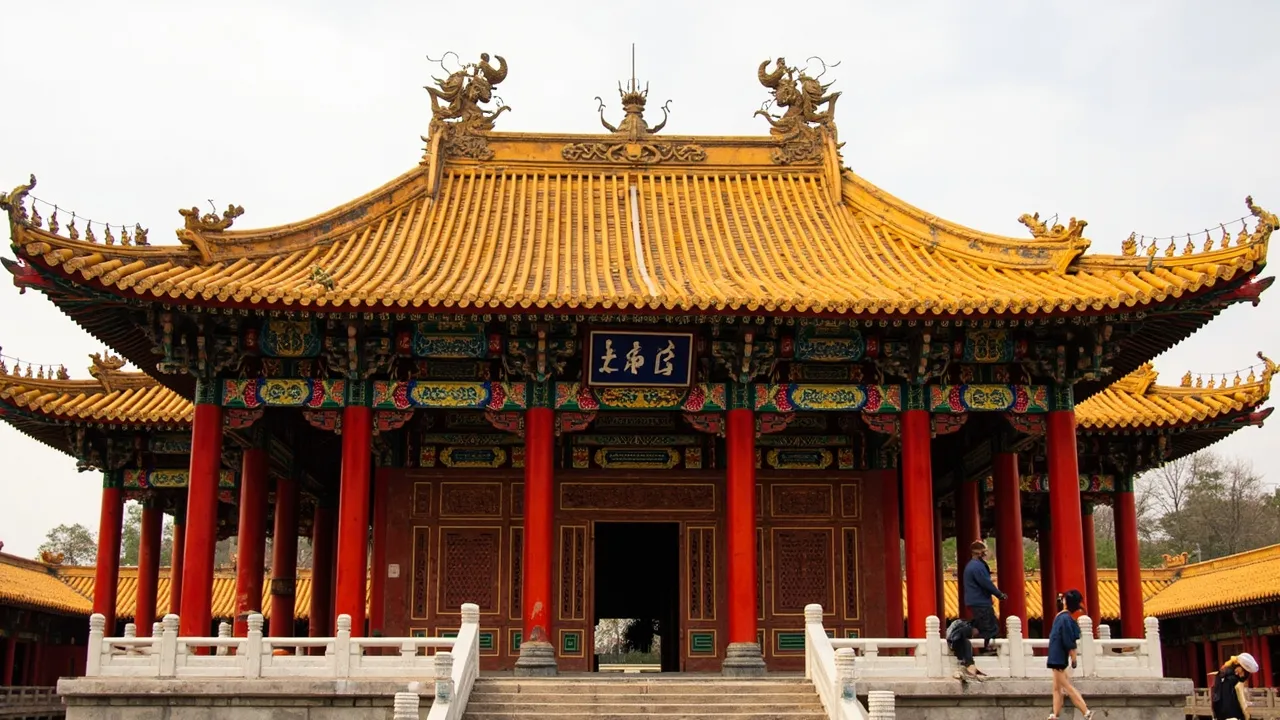
At the foot of the hill, the Hall of Benevolence and Longevity (Renshou Dian) served as Cixi’s primary audience hall and the center of her administrative work. This grand building, with its double-eaved roof and elaborate interior decorations, was where the Empress Dowager received officials, foreign diplomats, and conducted the business of government. The hall’s name—combining characters for benevolence and longevity—was clearly chosen to reflect the qualities Cixi wished to embody as she ruled from the Summer Palace.
The buildings on Longevity Hill are connected by winding paths and additional covered walkways, creating a network of structures that invites exploration. Visitors who climb to the summit are rewarded with panoramic views across Kunming Lake and the surrounding countryside, views that would have been reserved for the imperial family and their closest attendants in the dynastic era.
Visiting the Summer Palace Today
Modern visitors to the Summer Palace can explore the vast grounds through multiple entrances, though the East Gate near the ticket office offers the most direct access to the main attractions. Audio guides are available in multiple languages, including English, Japanese, Korean, French, German, and Spanish, and provide detailed explanations of the palace’s history and architecture. For those who prefer a more guided experience, private tours with knowledgeable local guides can be booked in advance, offering deeper insights into the stories and symbolism embedded in every structure.
The best time to visit is during spring or autumn when Beijing’s weather is mild and comfortable. April and May bring blooming flowers across the grounds, while October showcases autumn colors in the surrounding hills. Summer visits can be pleasant due to the cooling effect of Kunming Lake, though the palace grounds can become crowded with tourists—arriving early in the morning helps avoid the worst of the crowds. Winter visits offer a different perspective, with snow-dusted buildings creating a starkly beautiful landscape, though some areas may be closed for maintenance and the lake may partially freeze.
When exploring the Summer Palace, visitors should plan to spend at least half a day to properly appreciate the scale and detail of the gardens. The main attractions—including the Long Corridor, the Marble Boat, the Hall of Benevolence and Longevity, and the top of Longevity Hill—can be visited in a logical sequence that maximizes time efficiency. A boat ride across Kunming Lake offers a refreshing perspective on the palace grounds and provides views that cannot be captured from the shore. The ferry connects the area near the East Gate to the western shore near the Marble Boat, saving considerable walking distance.
The Summer Palace remains one of Beijing’s most popular tourist destinations, welcoming millions of visitors each year. Its combination of natural beauty, historical significance, and architectural grandeur makes it an essential stop for anyone interested in Chinese history, culture, or garden design. Walking through its gates, visitors step into a world that was once reserved for China’s imperial elite, now opened to all who wish to experience its timeless beauty.
For those unable to visit in person, the Summer Palace’s official website offers virtual tours and detailed information about the site’s conservation. The palace has also been featured in numerous documentaries and films, helping audiences around the world appreciate its significance. Yet nothing quite compares to standing on the Seventeen-Arch Bridge at sunrise, watching the first light illuminate the painted beams of the Long Corridor reflected in still waters—a moment that has inspired artists and poets for generations and continues to move visitors from around the world.