Taoism: China’s Indigenous Philosophy of Living in Harmony
Among the great philosophical traditions of the world, Taoism stands apart as one of the most uniquely Chinese contributions to human thought. Unlike Buddhism, which arrived in China from India, or Confucianism, which developed as a social philosophy focused on proper human relationships, Taoism emerged from Chinese soil as both a religion and a way of life. Its influence pervades every aspect of Chinese culture—from medicine and martial arts to painting, poetry, and the very worldview that Chinese people hold about the nature of reality.
What makes Taoism distinctive is its apparent simplicity masking profound depth. The core concepts can be stated in a few words—the Tao that can be named is not the eternal Tao, Wu Wei or non-action, the balance of Yin and Yang—yet these ideas have generated millennia of commentary, practice, and spiritual development. Taoism teaches that the deepest truths cannot be grasped through intellectual effort alone but must be experienced through direct engagement with the natural world and the flow of existence itself.
The word Tao, meaning “the Way,” forms the foundation of Taoist thought. This concept defies simple definition because the Tao is understood as something that cannot be named or fully comprehended. The Tao is the ultimate reality, the source of all things, and the pattern that underlies the universe. Understanding the Tao, or at least aligning oneself with it, represents the highest goal of human existence according to Taoist teaching. The opening lines of the Tao Te Ching capture this perfectly: “The Tao that can be told is not the eternal Tao.”
Laozi and the Origins of Taoism
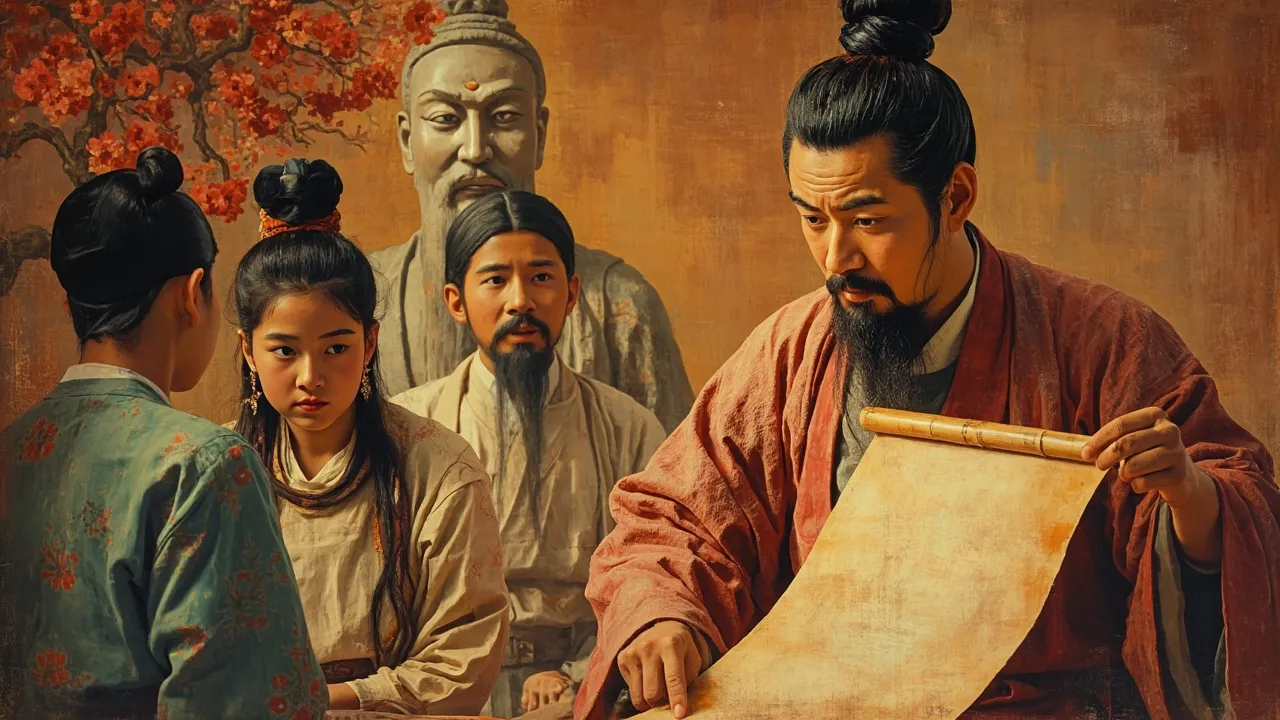
The founding figure of Taoism is Laozi, whose name literally means “Old Master.” According to tradition, Laozi lived during the 6th century BCE and served as a keeper of archives at the Zhou Dynasty court. The legendary meeting between Laozi and Confucius, who reportedly asked Laozi about propriety, forms one of the most famous anecdotes in Chinese intellectual history. Confucius was said to have described Laozi as a dragon—someone whose wisdom was too profound to grasp. This comparison has stuck through the centuries, capturing the sense that Laozi’s teachings exist beyond ordinary human understanding.
The primary text of Taoism, the Tao Te Ching, is traditionally attributed to Laozi. This brief but profound work of approximately 5,000 Chinese characters contains 81 short chapters that distil the essence of Taoist thought. The text is notoriously difficult to interpret, with its meaning shifting depending on the reader’s understanding and the context of reading. Over the centuries, countless scholars have written commentaries on the Tao Te Ching, each finding new layers of meaning in its seemingly simple verses. Some read it as a guide to political rule, others as a mystical text about the nature of reality, still others as a practical guide to personal cultivation.
According to legend, Laozi grew dissatisfied with the corruption of the Zhou court and decided to leave China for the western frontier. At the border pass, a gatekeeper named Yinxi recognized Laozi’s spiritual stature and asked him to record his teachings before departing. It was then that Laozi composed the Tao Te Ching and then disappeared beyond the frontier, never to be seen again. Some traditions claim he traveled to India, where he influenced the development of Buddhism, though this claim is disputed by scholars. The legend of his departure has become symbolic of the Taoist path—eventual withdrawal from worldly concerns in favor of spiritual pursuit.
Zhuangzi, who lived in the 4th century BCE, became Taoism’s second great philosopher. Where Laozi’s text is cryptic and aphoristic, Zhuangzi’s writings are vivid, playful, and often hilarious. The “Inner Chapters” of the Zhuangzi contain parables and stories that illustrate Taoist principles through narrative rather than direct teaching. The famous story of the butterfly dream—in which Zhuangzi wondered if he was a man who had dreamed he was a butterfly, or a butterfly dreaming he was a man—captures the Taoist interest in the fluid nature of reality and the limitations of fixed categories.
The Concept of Wu Wei
Central to Taoist practice is the concept of Wu Wei, often translated as “non-action” or “effortless action.” This does not mean passive inactivity or laziness. Rather, Wu Wei refers to acting in harmony with the natural flow of the universe, without forcing or straining. A person practicing Wu Wei does not struggle against the current of life but rather moves with it, finding the path of least resistance. The river does not force its way to the sea—it simply follows the terrain, and yet it eventually reaches its destination.
In practical terms, Wu Wei suggests that excessive effort often produces counterproductive results. A farmer who tries to force crops to grow faster by pulling on them will only damage the plants. A person who strains too hard at a problem often cannot find the solution that comes easily when they relax. By understanding and aligning with the natural patterns of the world, one can achieve great things through what appears to be minimal effort. This does not mean sitting idle—rather it means acting with awareness of when to push and when to yield.
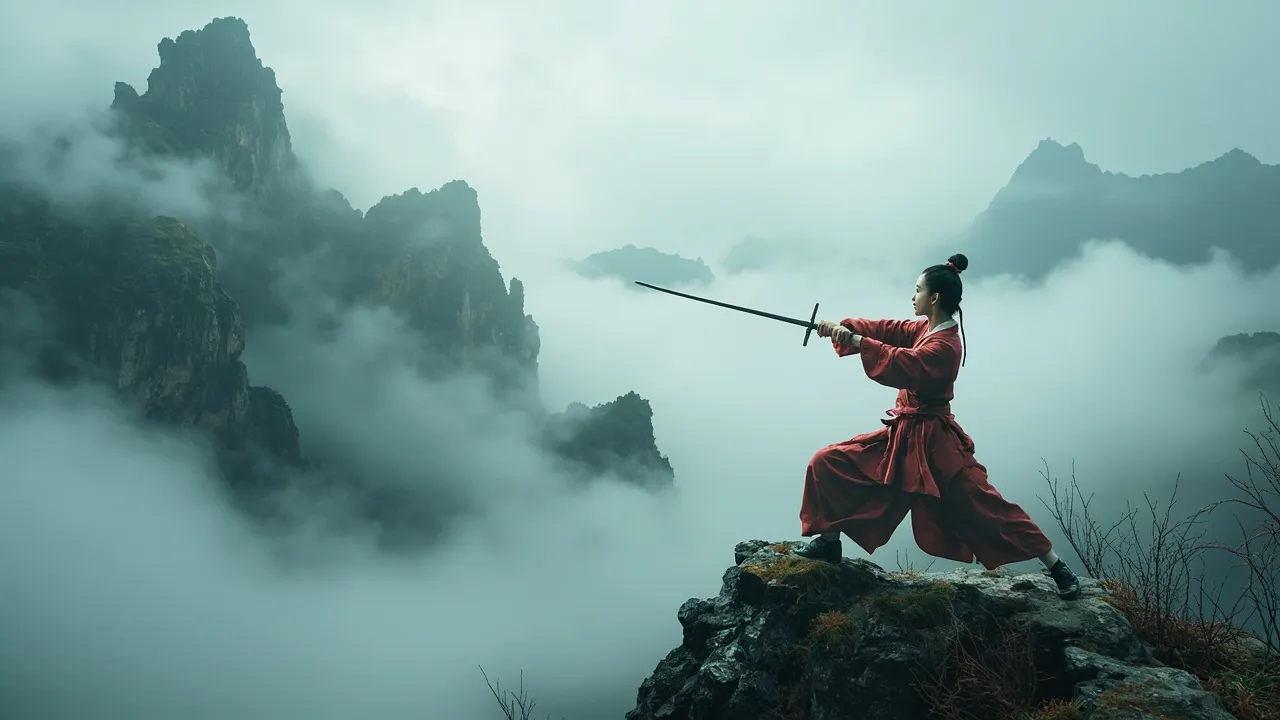
The concept of Wu Wei has influenced Chinese approaches to governance, medicine, and martial arts. Traditional Chinese medicine, for example, does not seek to attack diseases directly but rather to strengthen the body’s natural defenses and restore balance. The physician works with the body’s own healing capacity rather than overwhelming it with powerful interventions. The martial art of tai chi, derived from Taoist principles, uses yielding and redirecting rather than direct confrontation. The practitioner does not meet force with force but instead guides the attacker’s energy away, using their strength against them.
Even in business and diplomacy, the Taoist emphasis on patience and timing has shaped Chinese strategic thinking for centuries. The concept of “shih” or strategic potential, developed in works like “The Art of War,” incorporates Taoist ideas about acting in harmony with circumstances rather than forcing outcomes. The skilled strategist, like the skilled martial artist, seeks to understand the flow of events and position themselves to benefit from it rather than to struggle against it.
The Yin Yang Symbol and Balance
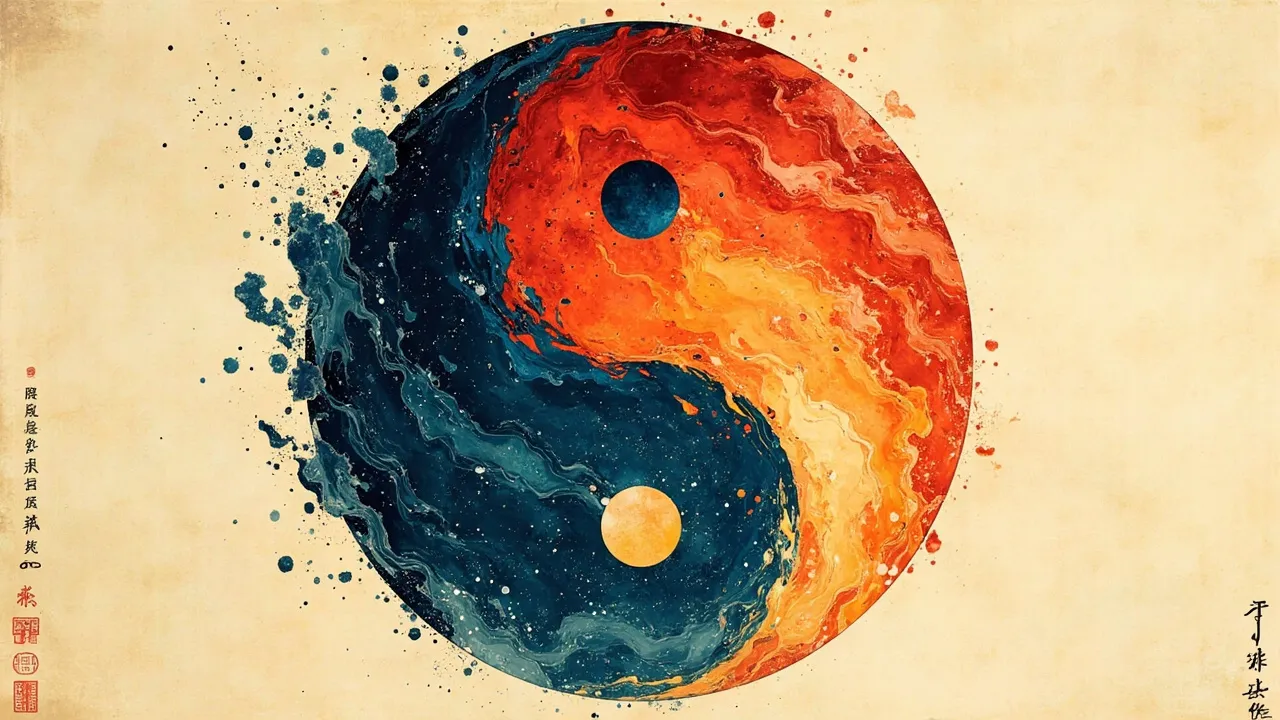
No symbol is more closely associated with Taoism than the Yin Yang—the circular design divided into light and dark sections, each containing a small circle of the opposite color. This ancient symbol represents the fundamental Taoist principle that all things contain their opposites and that these opposites interpenetrate and transform into each other. The symbol has become so widely recognized globally that it appears on everything from corporate logos to sports team emblems, though its deep meaning is often forgotten in such usage.
Yin, the dark side, represents qualities such as darkness, passivity, femininity, the moon, and water. Yang, the light side, represents brightness, activity, masculinity, the sun, and fire. Neither is considered superior to the other—each contains the seed of the other, and the balance between them creates harmony. When Yin and Yang are in balance, things flourish; when they are imbalanced, problems arise. The small circles within each side remind us that complete Yin still contains some Yang, and complete Yang still contains some Yin—they are never fully separate.
The Yin Yang principle has practical applications in every area of Chinese life. In medicine, health is understood as a balance between Yin and Yang energies in the body. Deficiencies or excesses of either create illness, and treatment involves restoring proper balance. In feng shui, spaces are arranged to achieve harmony between Yin and Yang elements—the soft flow of water represents Yin, while bright, warm lighting represents Yang. In relationships, the complementary qualities of Yin and Yang create dynamic balance, each supporting and completing the other.
This worldview sees opposition not as conflict to be eliminated but as a necessary tension that gives rise to all things. Light exists because of darkness, activity because of rest, life because of death. Rather than trying to eliminate one side of any opposition, the Taoist seeks to maintain balance and allow the natural transformation of Yin into Yang and back again. This is a fundamentally different approach to life than those that seek to establish fixed states of perfection or to eliminate opposition through domination.
Taoism and Nature
Taoism places particular emphasis on living in harmony with nature. Unlike Confucianism, which focuses on human relationships and social order, Taoism directs attention to the natural world and humanity’s place within it. The Taoist seeks to preserve his or her original nature, uncontaminated by social conventions and artificial desires that distance humans from their natural roots. The phrase “ziran” or “self-so” refers to the natural state of things, uncontaminated by artificial constraints.
This reverence for nature manifests in many aspects of Chinese culture. Chinese landscape painting, which reached its height during the Tang and Song dynasties, was heavily influenced by Taoist aesthetics. These paintings do not merely depict scenery but seek to capture the spirit of nature—the flowing energy (qi) that moves through mountains and water. The great landscape painters sought to merge with the scene they were depicting, to become one with the misty mountains and winding rivers rather than simply observing them from outside.
Similarly, Chinese poetry often celebrates the beauty of wilderness and the wisdom that comes from observing natural patterns. The Tang Dynasty poet Li Bai, whose work is deeply infused with Taoist sensibility, wrote poems about drinking with the moon and conversing with mountains. His famous poem “Quiet Night Thought” captures the Taoist sense of cosmic connection: “Before my bed the moonlight gleams so bright / I almost think the frost hangs in the air.” In this moment of quiet observation, the poet experiences the Tao itself.
The Taoist preference for nature over civilization has sometimes been interpreted as a rejection of human society. Some Taoist hermits withdrew completely from society, living in mountains and forests in pursuit of spiritual cultivation. The tradition of the wandering Taoist sage, with no fixed home but traveling in harmony with the seasons, represents an extreme form of this orientation. However, Taoism also developed practices for living well within society while maintaining spiritual balance. The Taoist approach involves finding stillness within activity, simplicity within complexity, and freedom within constraint.
Taoist Practices and Meditation
Taoism developed rich traditions of spiritual practice aimed at cultivating longevity, health, and spiritual realization. These practices include various forms of meditation, breathing exercises, gymnastics, sexual techniques, and alchemy. The goal was often to refine and transform the body’s spiritual energy, either to achieve immortality or at least to extend life significantly. While the more extreme practices—such as methods for achieving physical immortality—have been abandoned, the basic contemplative practices remain alive today.
Neidan or inner alchemy represents the Taoist system of internal cultivation. Practitioners work with the body’s energy system, seeking to refine and circulate qi through specific pathways in the body. The practice involves meditation, breathing exercises, and sometimes physical movements designed to promote energy flow. These practices have influenced Chinese martial arts, traditional medicine, and the modern wellness movement. Qigong, widely practiced today for health maintenance, draws heavily on Taoist concepts and practices.
Meditation in the Taoist tradition differs somewhat from Buddhist forms. While Buddhist meditation often focuses on mindfulness or insight into the nature of mind, Taoist practice tends to emphasize energy cultivation and the alignment of body, breath, and spirit. The goal is often described as “returning to the childlike state” or recovering the pure, unconditioned awareness that we had before social conditioning obscured it. This involves letting go of the mental chatter that normally occupies our minds and resting in simply being.
Taoism in the Modern World
Today, Taoism continues to influence Chinese culture and is gaining attention worldwide. The practices of tai chi and qigong, which have their roots in Taoist meditation and breathing techniques, are practiced by millions globally for health and stress reduction. The Tao Te Ching remains one of the most translated texts in world literature, appearing in countless versions that attempt to capture its elusive wisdom. Even in the business world, Taoist concepts like Wu Wei and the balance of Yin and Yang are sometimes invoked as guides to effective strategy and leadership.
In China, Taoist temples continue to operate as centers of religious practice, and Taoist priests perform rituals for weddings, funerals, and festivals. The popular religion practiced by many Chinese families incorporates Taoist elements alongside Buddhism and Confucianism, creating a syncretic spiritual practice that draws from all three traditions. Temple fairs, divination, and the observance of festivals all bear Taoist influence. Most Chinese people, even those who do not consider themselves religious in any formal sense, participate in these cultural practices without necessarily identifying them as Taoist.
For modern readers, Taoism offers a perspective that challenges the dominant narratives of progress and achievement. In a world that often equates success with constant activity and accumulation, the Taoist emphasis on simplicity, acceptance, and alignment with natural rhythms provides a compelling alternative. The Taoist sage does not struggle against the current of life but learns to swim with it, finding peace and effectiveness through harmony rather than conflict.
The environmental implications of Taoist thought have also attracted renewed interest. Taoism’s emphasis on living in harmony with nature resonates with contemporary concerns about sustainability and our relationship with the natural world. The Taoist insight that human beings are part of nature rather than separate from or superior to it offers a perspective that challenges the dominion-over-nature assumptions that have driven environmental degradation. In this sense, Taoism speaks to modern concerns through ancient wisdom.