The Temple of Heaven: Where Emperors Prayed for Harvests
In the southern part of Beijing, surrounded by a serene park that has become a favorite gathering spot for local residents practicing tai chi and dancing, stands one of China’s most sacred architectural achievements—the Temple of Heaven. This magnificent complex, where Chinese emperors of the Ming and Qing dynasties performed annual rituals to pray for good harvests, represents the pinnacle of ancient Chinese architectural design and religious practice.
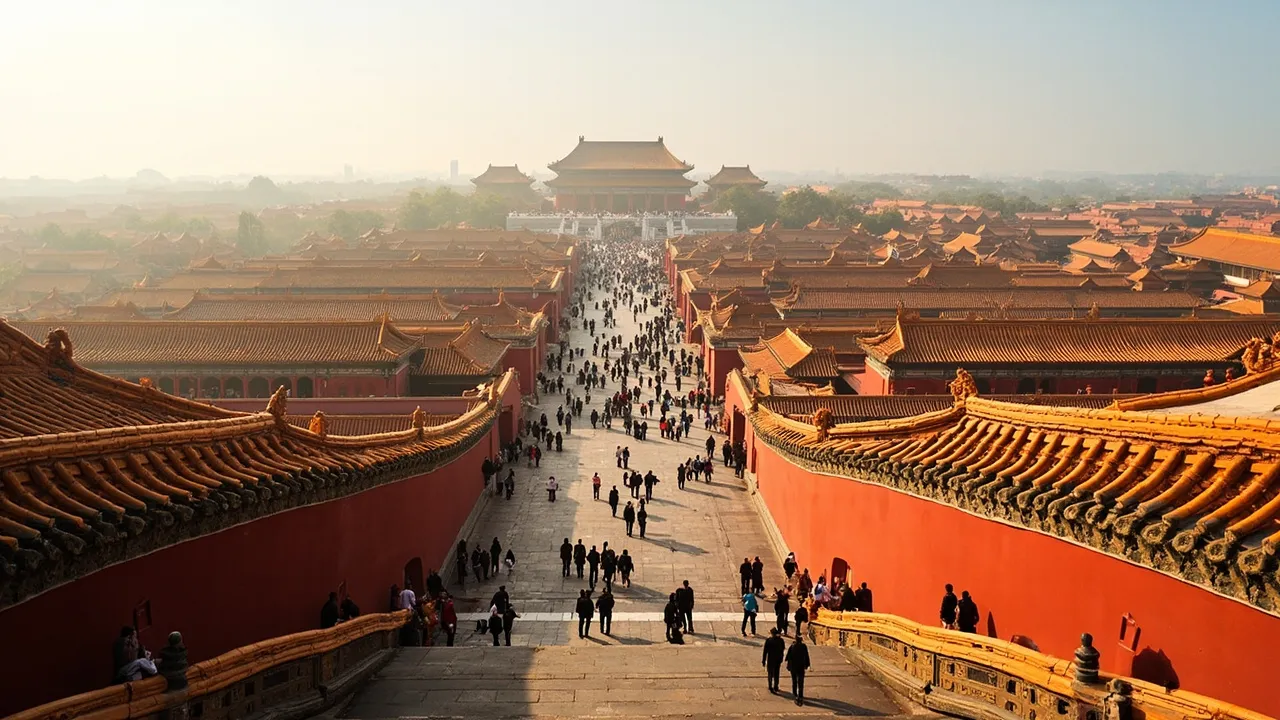
The Temple of Heaven is unique among Chinese imperial structures. Unlike the Forbidden City, which was designed to impress with its sheer scale and elaborate ornamentation, the Temple of Heaven was built to inspire spiritual contemplation and connection with the heavens. Every element of its design—from the color blue representing the sky to the circular structures symbolizing heaven—was deliberate and meaningful. The architects who designed this complex understood that they were creating not merely a building but a cosmic diagram made manifest in stone and wood.
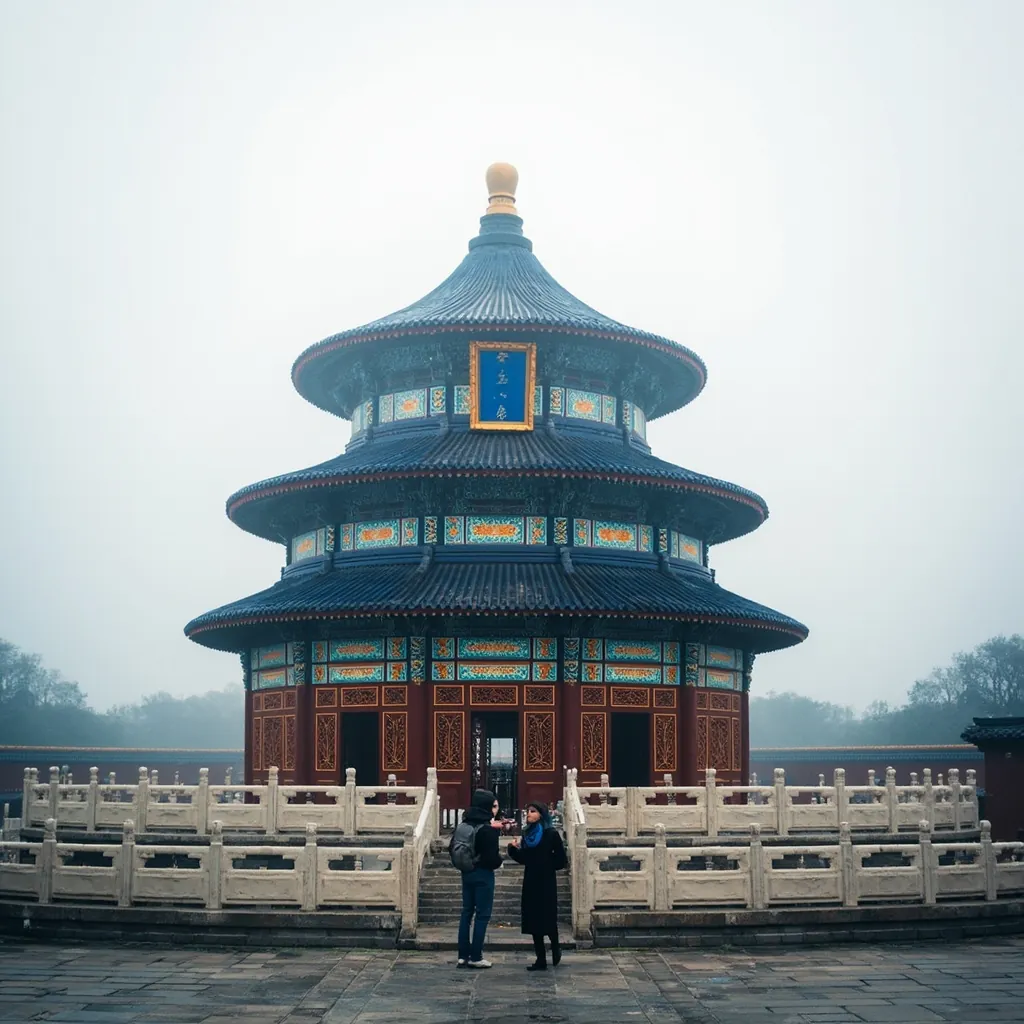
What strikes most visitors immediately is the color palette: deep blue roof tiles that seem to merge with the sky on clear days, white marble that gleams in the sunlight, and the warm brown of wooden pillars weathered by centuries. These are not arbitrary choices but cosmological statements. Blue represents heaven, the realm where the gods reside. White represents the earth and purity. The combination creates a space that feels suspended between earthly and divine realms, exactly as the emperors who worshipped here intended.
The Sacred Geometry of the Complex
The Temple of Heaven covers an area of approximately 2.7 square kilometers, making it larger than the Forbidden City. The complex is divided into two main parts: the inner altar (nei tan) and the outer altar (wai tan). The inner altar contains the most sacred structures, including the Hall of Prayer for Good Harvests, the Imperial Vault of Heaven, and the Circular Mound Altar. The outer altar contains structures used for religious ceremonies and fasting, including the Three-Star Hall and the kitchens where sacrificial animals were prepared.
The design of the Temple of Heaven follows strict principles of Chinese cosmology and symbolism. The color blue, representing the sky and heaven, dominates the roof tiles. The number nine, considered the most auspicious number in Chinese culture, appears repeatedly in architectural details—nine being the number of heaven and the number of the emperor. The Circular Mound Altar is constructed in three tiers, each representing a different level of the cosmos: the lowest for earth, the middle for humans, and the highest for heaven.
The axis that runs through the center of the complex extends northward through Beijing to the Forbidden City, creating a spiritual connection between the emperor’s residence and his role as the intermediary between heaven and earth. This careful alignment reflects the Chinese belief that the emperor served as the Son of Heaven (tian zi), responsible for maintaining harmony between the human and divine realms. When the emperor walked this axis during ceremonies, he was literally walking the path between worlds.
The symbolism extends to the smallest details. The wooden pillars are carved with patterns representing clouds and dragons rising toward heaven. The railings feature marble panels carved with dragon and phoenix motifs. Even the stones that pave the walkways are placed in patterns that echo celestial movements. Walking through the Temple of Heaven, one cannot escape the sense that every element has been precisely calculated to create an atmosphere of sacred geometry.
The Hall of Prayer for Good Harvests
At the heart of the Temple of Heaven stands the Hall of Prayer for Good Harvests, or Qiniandian. This circular building, constructed entirely without the use of nails, features three tiers of blue glazed tiles and sits on a three-tiered white marble base. The hall’s design represents the heavens, while its location at the center of the complex symbolizes the emperor’s role at the center of the universe. The building’s circular shape contrasts with the square buildings of the outer altar, representing the Chinese philosophical concept that heaven is round and earth is square.
Inside the hall, massive wooden pillars support the ceiling without any nails or screws—the entire structure is held together through careful joinery that has endured for centuries. The four central pillars represent the four seasons—spring, summer, autumn, and winter—while the twelve outer pillars represent the twelve months of the year. Together, these sixteen pillars support the entire structure, creating a space that feels both grand and intimate. The four central pillars are particularly impressive, each made from a single piece of timber sourced from trees estimated to be over 500 years old at the time of construction.
The interior is decorated with dragons, the symbol of imperial power, and phoenixes, representing the empress, though the Empress Dowager Cixi rarely, if ever, visited this sacred space reserved for the emperor’s solo prayers. The beams are painted with intricate designs featuring clouds, bats, and flame patterns—all symbols of good fortune and divine blessing. The floor is made from specially fired bricks that produce a hollow sound when walked upon, creating an otherworldly echo that was believed to help prayers rise toward heaven.
The Hall of Prayer for Good Harvests was used for only one ceremony each year—the winter solstice worship ceremony held in late December. On this day, the emperor would fast for three days in the palace, then proceed to the Temple of Heaven in a grand procession accompanied by hundreds of officials and musicians. The ceremony was considered the most important religious observance in the imperial calendar, marking the emperor’s gratitude for the year’s harvest and his prayers for the next. The entire ceremony followed procedures laid out in the Imperial Rituals of the Zhou Dynasty, updated over centuries but maintaining core elements of ancient agricultural worship.
The Echo Wall and Acoustic Marvels
One of the most fascinating features of the Temple of Heaven is the Echo Wall, which surrounds the Imperial Vault of Heaven. This curved wall is precisely constructed to reflect sound waves, allowing a person whispering at one end to be heard clearly at the other end, approximately 60 meters away. This acoustic phenomenon was not accidental—it was carefully engineered by ancient Chinese architects who understood the principles of sound reflection through centuries of architectural experimentation.
The Echo Wall serves as the outer boundary of the inner altar, enclosing the Circular Mound Altar and the Imperial Vault of Heaven. The wall’s smooth surface and consistent curvature create the perfect conditions for sound reflection, making it one of the most remarkable examples of ancient acoustic engineering in the world. Visitors today still experiment with the wall, whispering messages to friends stationed at opposite ends and marveling at the clarity of sound transmission. The effect works because sound waves travel along the wall’s curved surface, reflecting repeatedly without dispersing.
Within the Echo Wall stands the Imperial Vault of Heaven, a smaller circular building that once housed the spirit tablets of past emperors. The vault’s interior features a remarkable acoustic device called the Three Sounds Stone (san sheng shi)—three stones placed at specific locations where a single clap or footstep produces three distinct echoes. These acoustic wonders were designed to enhance the spiritual atmosphere of the sacred space, creating sounds that seemed to come from multiple directions simultaneously, as if the spirits themselves were responding to the emperor’s prayers.
The science behind these acoustic features reflects sophisticated understanding of architectural acoustics. The builders knew that certain shapes and materials would reflect sound in particular ways, and they applied this knowledge to create effects that reinforced the spiritual power of the space. In an age before electronic amplification, the ability to make a whisper audible across 60 meters using only architectural geometry was genuinely impressive. Modern acoustical engineers have studied these features and confirmed that the design represents remarkable engineering achievement.
The Circular Mound Altar
The Circular Mound Altar, or Yuanqiutan, represents another architectural and spiritual achievement of the Temple of Heaven complex. This white marble altar consists of three tiers, each circular and surrounded by elegantly carved marble railings. The number of stones and the design of the railings follow strict symbolic principles, with the topmost tier featuring nine sections, each containing nine stones, creating the number 81, which represents yang energy at its most powerful.
At the center of the top tier lies the Heart of Heaven (tianxin), a circular stone that serves as the altar’s focal point. During ceremonies, the emperor would stand on this stone to offer prayers and sacrifices to heaven. The altar’s design ensures that all sounds, including the emperor’s prayers, would be heard clearly in the heavens—the round shape and open construction allowed prayers to rise unimpeded toward the sky. The design also meant that the emperor, standing alone at the center, was literally at the axis of the cosmos during the ceremony.
The Circular Mound Altar was used for the most important ceremony of the year—the winter solstice worship of heaven. On this day, the emperor would ascend the altar in the early morning, accompanied only by a small entourage. The ceremony involved offerings of silk, cattle, and ritual objects, all performed in complete silence to maintain the sacred atmosphere. The entire ceremony was conducted according to elaborate protocols recorded in imperial texts, with each gesture and phrase prescribed in detail. Musicians played special compositions designed to accompany the ritual, their melodies drifting across the silent morning air.
What makes the Circular Mound Altar particularly striking is its apparent simplicity. Unlike the elaborate Hall of Prayer for Good Harvests with its painted beams and decorated pillars, the altar is essentially a geometric form in white marble. Yet this simplicity is itself meaningful—the altar strips away all ornamentation to create a direct connection between the praying emperor and heaven above. The altar proves that architectural power need not come from complexity but can emerge from pure geometric form perfectly executed.
The Living Temple: Morning Activities in the Park
After the fall of the Qing Dynasty in 1912, the Temple of Heaven ceased to function as an imperial religious site. The complex was opened to the public and eventually designated as a UNESCO World Heritage Site in 1998. Today, it stands as one of Beijing’s most visited attractions, drawing millions of tourists and locals each year.
What makes the Temple of Heaven particularly special is the way it has been embraced by modern Beijingers as a public space. Every morning, hundreds of locals gather in the surrounding park to practice tai chi, dance, sing, and exercise. This daily ritual, which has continued for decades, gives the temple grounds a living quality that many historical sites lack. The sight of elderly practitioners moving through tai chi forms against the backdrop of ancient architecture creates a striking juxtaposition of old and new.
The morning activities around the Temple of Heaven have become a attraction in their own right. Visitors who arrive early—before 7 AM—can witness organized groups practicing various forms of exercise and dance. Some groups perform traditional tai chi, moving slowly and deliberately in synchrony. Others dance to music played from portable speakers, creating impromptu dance floors on the paving stones. Still others practice singing, their voices carrying across the morning air. These activities are not tourist performances but genuine community gatherings that have developed organically over decades.
This daily use has transformed the temple from a monument to a living space. Local residents speak of the temple grounds as their “backyard,” a place where they come to exercise, socialize, and connect with neighbors. The temple’s outer altar area, in particular, becomes a busy public space each morning, filled with the sounds of exercise music, the rustle of tai chi practitioners moving through forms, and the chatter of friends meeting for their daily routine.
Planning Your Visit
For visitors planning to explore the Temple of Heaven, the best time to arrive is early morning when the park is alive with activity but before the tourist crowds arrive. The main structures can be visited in two to three hours, though those wishing to fully appreciate the site’s historical and cultural significance may want to allow more time. The Temple of Heaven Museum, located within the complex, provides additional context through artifacts and interactive exhibits that explain the rituals and architecture in detail.
Photography enthusiasts will find the early morning hours particularly rewarding, as the soft light and minimal crowds allow for unobstructed shots of the iconic structures. The Hall of Prayer for Good Harvests looks particularly dramatic in the golden hour light, its blue roof tiles seeming to glow against the morning sky. The Circular Mound Altar, stripped of its usual crowds, makes for striking photographs that capture its geometric elegance.
The Temple of Heaven remains one of Beijing’s most accessible and rewarding historical sites. Unlike some attractions that feel frozen in time, the temple grounds offer a window into contemporary Chinese community life while preserving the architectural grandeur of the imperial past. Walking the same paths that emperors walked, listening to the same echoes that were designed to carry prayers heavenward, visitors can experience a direct connection to one of humanity’s oldest concerns: our relationship with the cosmos and the powers that govern the harvest upon which our survival depends.