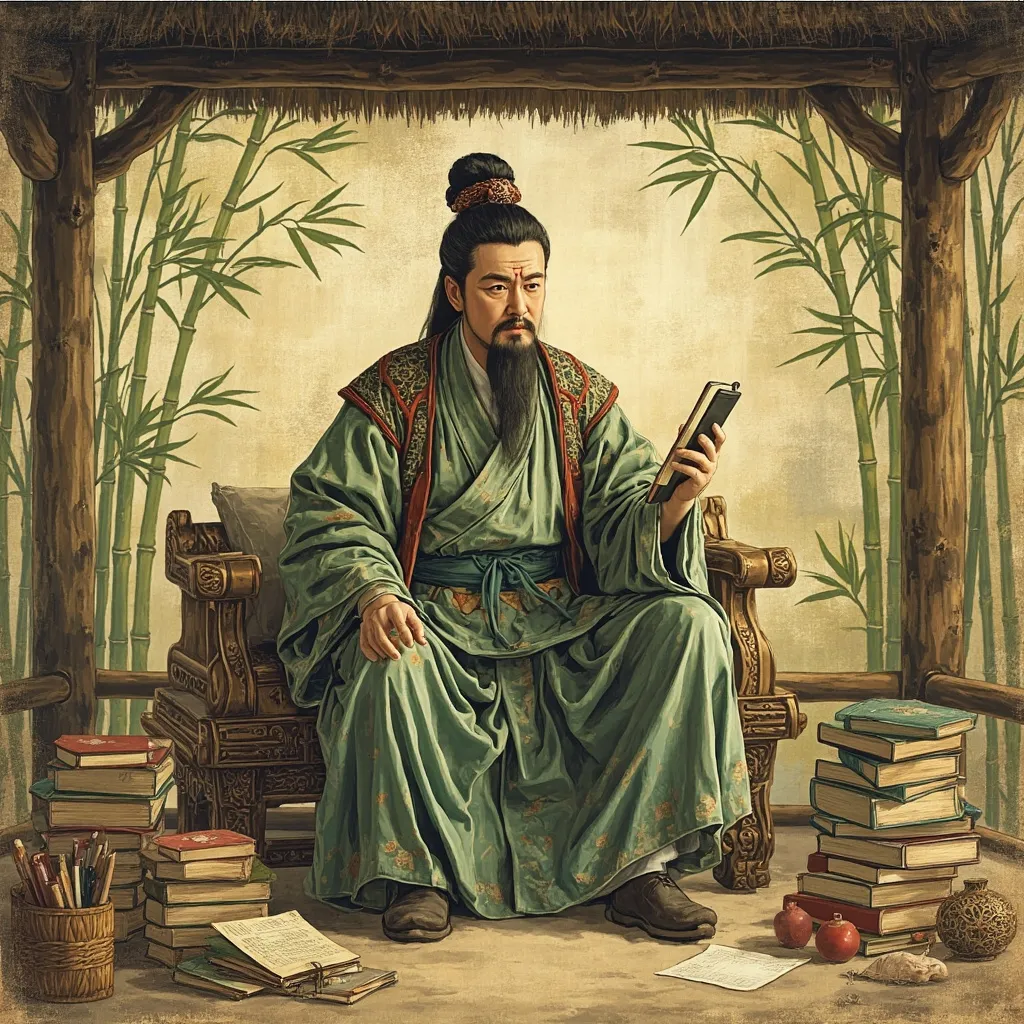
Zhuge Liang: The Sleeping Dragon of Three Kingdoms
In the winter of 207 CE, a young scholar living in terrible poverty in Yangdu, a remote agricultural village in southern China, received a visitor. Three times the visitor came, and three times the scholar refused to see him — not out of arrogance, but because he wanted to be certain that whoever he served would be worthy of the extraordinary abilities he knew he possessed. When they finally met, the visitor — Liu Bei, a warlord of noble lineage claiming descent from the Imperial Han family — asked the scholar to become his advisor. The scholar rose from his bamboo couch, walked outside, and agreed. His name was Zhuge Liang, and he was twenty-six years old.
What followed was one of the most remarkable partnerships in Chinese history: a relationship that would shape the fate of empires, inspire a thousand stories and legends, and create a template for the brilliant, devoted scholar-official that Chinese culture would venerate for centuries. Zhuge Liang, known throughout the world by his courtesy name Kongming, was a military strategist without equal, a inventor whose creations are still studied today, a poet-philosopher of genuine depth, and a statesman who governed with such fairness and skill that his reputation spread far beyond the kingdom he served. He is also the subject of one of the longest and most beloved novels in Chinese literature, Luo Guanzhong’s Romance of the Three Kingdoms, which has shaped how hundreds of millions of people understand history, loyalty, and strategic brilliance.