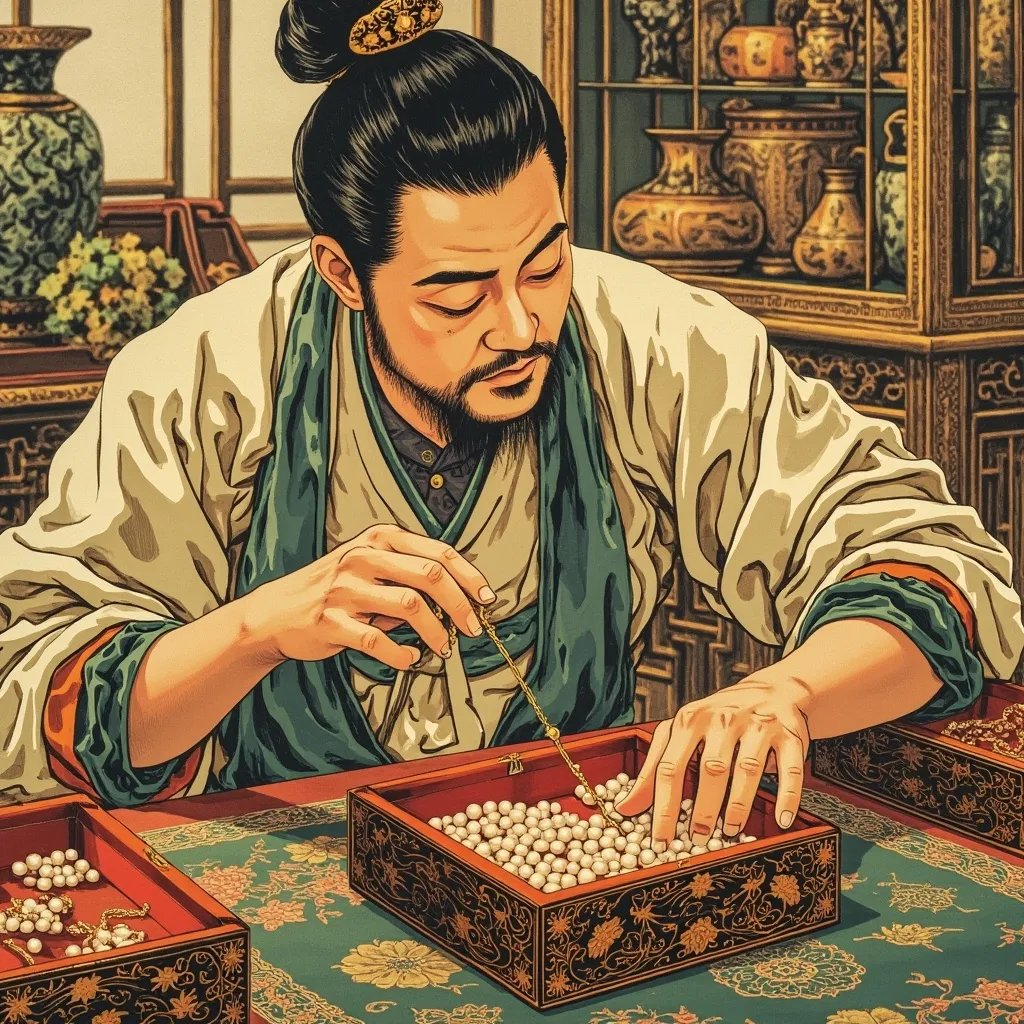
Buying the Box and Returning the Pearls: The Chinese Idiom About Prioritizing Looks Over Value
Every culture has that one story that makes you stop and think about the choices you make. In Chinese folklore, there’s a short but unforgettable tale that captures something many of us struggle with — the temptation to fall so in love with the wrapping that we forget what was actually valuable inside. The story is called 买椟还珠, pronounced mǎi dú huán zhū, which translates roughly to “buying the lacquer box and returning the pearls.”
It sounds almost absurd when you say it plainly. Who would buy a beautiful box and give back the jewels inside? Yet the story has endured for over two thousand years precisely because it holds up a mirror to human nature in a way that still resonates today. Let’s dig into the full story, what it means, and how you can apply its lesson in modern life.
The Original Story: What Actually Happened
The earliest known version of this tale comes from the works of Han Fei (韩非), a philosopher and legalist thinker who lived during the Warring States period of ancient China, roughly between 280 and 233 BC. Han Fei was a sharp observer of human behavior, and he used parables like this one to make arguments about governance, commerce, and personal judgment.
Here’s how the story goes. A man visits a merchant’s shop and there, displayed on a luxurious silk cushion, sits an extraordinary pearl. It wasn’t just any pearl — it was the kind that seemed to glow from within, the kind collectors would travel kingdoms to own. But the merchant hadn’t simply thrown this treasure onto a bare table. He had placed it inside a lacquer box of such extraordinary beauty that the pearl itself almost seemed secondary.
The box was carved from the finest wood, its surface so smooth it reflected light like still water. It was adorned with intricate patterns of scrolling vines and mythical creatures, each one rendered in gold and silver inlay that must have taken a master craftsman months to complete. The box smelled faintly of rare sandalwood and cedar. When you held it in your hands, the texture was cool and silky, almost alive.
The man looked at the pearl. Then he looked at the box. Then he looked at the box again. Something shifted in his expression. He picked up the lacquer box, admired it from every angle, turned it over in his hands, and eventually made his decision. He paid the merchant a handsome sum, wrapped the box under his arm, and left.
The merchant, feeling pleased with himself, began counting the coins. But as he untied the silk cord that had held the box shut, he discovered the pearl was gone. The man had taken the pearl out, examined it, decided he preferred the container, and simply left the jewel behind on the silk cushion.
When word of this reached Han Fei, he used the story to make a point about prioritizing the secondary over the essential — a habit he saw in rulers, merchants, and ordinary people alike.
What the Idiom Means in Modern Terms
In contemporary Chinese, 买椟还珠 is used to describe a situation where someone focuses on the external appearance or packaging of something while completely overlooking its actual worth or content. It’s a gentle way of calling out bad judgment, but with an underlying tone of absurdity — the same tone you might use if a friend showed up with an expensive watch display case and no watch inside.
The idiom shows up in everyday conversation more often than you might think. If a colleague spends three hours designing the perfect PowerPoint template but has nothing meaningful to say in the slides, someone might jokingly call it a 买椟还珠 situation. If a company redesigns its packaging to look incredibly premium but the product inside is exactly the same cheap stuff, marketing folks will reach for this idiom. It captures that specific frustration of encountering beautiful surfaces that conceal hollow interiors.
The deeper meaning, though, goes beyond just “looks aren’t everything.” Han Fei was making an argument about discernment — the ability to look past the immediately striking and identify what truly has value. In the story, the buyer wasn’t stupid. He clearly had aesthetic appreciation and enough wealth to recognize quality craftsmanship. What he lacked was the judgment to know which of the two treasures in front of him was actually worth more. And that, Han Fei suggested, was a dangerous kind of ignorance to carry through life.
Why We Fall Into the Same Trap Today
Here’s the uncomfortable truth: the man in the story isn’t some uniquely foolish character from ancient times. If anything, modern life has created a world that practically rewards the behavior he exhibited. We are surrounded, every single day, by immaculately designed packaging, flawless product photography, celebrity endorsements, and carefully curated aesthetics that exist specifically to make us value the container over what’s inside.
Think about the last time you bought something online primarily because the product photos were stunning. Or the last time you chose a restaurant because of its Instagram-worthy decor rather than the taste of the food. These aren’t moral failures — they’re just the natural result of living in an age where the visual presentation of anything has become its own art form.
But the idiom提醒 us that this habit, taken too far, leads to real losses. When we become so dazzled by packaging that we stop asking what we’re actually buying, we end up like that man — holding something beautiful in our hands and completely missing the treasure we already had.
The same principle applies in relationships, career choices, and education. A person might choose a partner because of their social media presence rather than their character. A student might pursue a degree from a prestigious institution without caring about what they actually learn. An investor might buy a stock because the company’s branding looks solid, ignoring the actual financial health underneath.
The lacquer box hasn’t disappeared. It’s just taken on new forms — sleeker, more sophisticated, and even harder to resist than ever before.
What the Story Teaches About Discernment and True Value
The real lesson of 买椟还珠 isn’t “don’t be fooled by nice packaging.” It’s about developing the capacity for discernment — the inner compass that helps you distinguish between what shines and what actually matters.
Han Fei, the storyteller, was particularly interested in this idea because he lived during an era of great political chaos. Rulers, he observed, were often seduced by表面上的强大 or immediate gratification while ignoring the deeper forces that shaped their kingdoms. A strong military might look impressive, but if the people were starving and the treasury empty, that strength was just lacquer — beautiful and meaningless. He used the pearl and the box as a simple metaphor for this larger problem.
In our own lives, cultivating discernment means slowing down before making decisions. It means asking not just “does this look good?” but “is this actually worth what I’m paying — in money, time, and attention?” It means being willing to look past the first impression and do the harder work of evaluating substance.
This doesn’t mean aesthetics don’t matter or that you should never appreciate beautiful things. The lacquer box in the story was genuinely beautiful and valuable. The problem wasn’t that the man admired it. The problem was that he mistook the secondary for the primary, the beautiful for the valuable, and the container for the contents. You can appreciate both the gift and the wrapping — just don’t mix them up.
Modern Applications: When “Buying the Box” Shows Up in Daily Life
One of the most common places this idiom shows up today is in e-commerce and product design. Companies invest enormous resources in packaging design precisely because they know that how a product looks on a shelf — real or virtual — influences purchasing decisions more than most people would like to admit. This is fine as far as it goes, but it becomes a problem when consumers stop asking whether the product itself justifies the price tag.
In personal relationships, a similar dynamic plays out. The " lacquer box" might be someone’s charm, social status, looks, or the excitement they bring to a first date. These aren’t inherently bad things, but when they become the sole basis for a relationship decision, people often find themselves with a beautiful container and no real substance inside. The idiom is a quiet warning to look beyond the first impression before committing.
In professional settings, the principle shows up in hiring decisions, project planning, and leadership. A CV with perfect formatting and impressive company names might catch a recruiter’s eye the way that lacquer box caught the merchant’s eye. But when actual performance matters, the pearl — competence, integrity, creativity — is what produces results.
You can even see it in politics and public discourse, where polished presentation and clever messaging sometimes overwhelm substantive policy discussion. When a candidate’s visual branding and slogan become more important than their actual positions and track record, you’re looking at a collective 买椟还珠 moment — an entire society mistaking the box for the treasure.
The idiom doesn’t offer a simple solution, because the problem isn’t simple. Human beings are wired to be attracted to beauty and put off by things that look plain or rough. But wisdom, as the ancient Chinese philosophers understood, lies in training yourself to look deeper.
How to Apply the Pearl-and-Box Principle in Your Own Life
The good news is that recognizing the pattern is the first step toward changing it. Once you understand what 买椟还珠 looks like, you start seeing it everywhere — including in your own decision-making habits.
Here are a few practical ways to bring the lesson home:
Start by questioning your first impressions. When you’re attracted to something — a product, a person, an idea — pause and ask yourself what specifically draws you in. Is it the genuine value of the thing, or is it the way it’s been presented? There’s nothing wrong with appreciating presentation, but you should know which one is driving your decision.
Practice delayed judgment. The man in the story made a quick decision in the moment. One antidote is to force a waiting period before committing to anything significant. Sleep on a big purchase. Give a new relationship more time to reveal its character. Let a business proposal sit for a few days before you sign. Distance strips away the immediate dazzle and lets you see more clearly.
Learn to evaluate substance independently. Before you judge a book by its cover, make sure you know what’s actually inside. Read reviews that describe the experience of using a product over months, not just the initial unboxing. Talk to people who have been in a relationship long enough to know what the person is really like. Research a company’s actual financial reports rather than relying on its brand image.
Finally, remember that you can appreciate beauty without being deceived by it. The lacquer box was genuinely a work of art. It deserved admiration. The mistake was only in letting that admiration override the recognition that a pearl of extraordinary value was right there alongside it, waiting to be acknowledged.