I drank my first cup of butter tea in a small restaurant in Xiahe, Gansu Province, two years before I ever set foot in Tibet proper. The restaurant was run by a Tibetan family from Qinghai — technically in a Tibetan cultural area but outside the Tibet Autonomous Region. The tea itself was a shock: salty, greasy, and unexpectedly energizing. It took me three cups before I stopped grimacing. By the fifth cup, I was asking for more.
That experience taught me something about Tibetan culture that I hadn’t picked up from books: it is a material culture. It lives in what you eat, what you wear, what you breathe, and how you move through altitude. You cannot understand Tibet as an abstract idea. You have to understand it as a specific environment that shaped specific people over specific centuries.
The Tibetan Plateau averages 4,500 meters above sea level — roughly 14,800 feet. Denver, the “Mile High City,” sits at 1,609 meters. Lhasa, Tibet’s capital, sits at 3,650 meters. Most of the plateau is significantly higher. At these altitudes, oxygen levels are about 40% lower than at sea level. The air is dry. The UV radiation is intense. The temperature swings between extremes. Human settlement here required extraordinary biological and cultural adaptation — and the culture that emerged is among the most distinctive on earth.
The Tibetan Plateau: Geography of the Sacred
The plateau covers approximately 2.5 million square kilometers across Tibet, Qinghai, Sichuan, Gansu, and Yunnan provinces. It is the highest and largest plateau on earth, nicknamed the “Third Pole” after the Arctic and Antarctic. It contains the world’s highest peaks — more than 50 mountains exceed 7,000 meters, and 11 exceed 8,000 meters, including Mount Everest (known in Tibet as Qomolangma, “Mother Goddess of the Earth”).
Tibetans call their homeland Bod, meaning “the land of snows.” The Tibetan language distinguishes between the Ü-Tsang central region, the Amdo northeastern region, and the Kham southeastern region — three distinct cultural zones that share a common religious and linguistic heritage but developed somewhat different local traditions.
The plateau’s geography is inseparable from Tibetan religious imagination. Mount Kailash (Kailash is actually a Sanskrit loanword; Tibetans call it Kangrinboqe, “Mountain of the Sun”) is considered sacred in four religions: Tibetan Buddhism, Bon (the indigenous pre-Buddhist Tibetan religion), Hinduism, and Jainism. It is the source of four major rivers: the Indus, the Sutlej, the Brahmaputra, and the Karnali. The 52-kilometer kora — pilgrimage circuit — around Mount Kailash is walked by thousands of Tibetan Buddhist pilgrims each year, clockwise for Buddhists, counterclockwise for Bon practitioners. Walking the full kora at altitude is physically grueling; completing it is considered an act of enormous spiritual merit.
Yamdrok Lake is another sacred geography marker: one of the three largest sacred lakes in Tibet, a vast turquoise body of water that sits at 4,441 meters elevation and changes color depending on the light. Pilgrimage sites dot the plateau — caves where saints meditated, mountains where deities manifested, hot springs believed to have healing properties. Tibetan sacred geography is not metaphorical; it is a literal mapping of the divine onto the physical landscape.
Tibetan Buddhism: Schools, Monasteries, and the Spiritual Life
When I say “Tibetan Buddhism,” I’m describing a family of related religious traditions, not a single monolithic practice. There are four major schools:
Nyingma (the “Ancient Ones”) is the oldest school, founded in the 8th century by the Indian tantric master Padmasambhava and the Tibetan king Trisong Detsen. Nyingma emphasizes tantric practice, dzogchen (the “great perfection” meditation), and the preservation of ancient translation texts. Nyingma monasteries tend to be less rigidly organized than those of other schools.
Kagyu (the “Oral Lineage”) emphasizes direct mind-to-mind transmission of teaching, particularly through the practice of meditation. The Karmapa lineage is the most famous Kagyu lineage. Kagyu monasteries have a more centralized organizational structure than Nyingma.
Sakya derives its name from the greyish-white hill (Sakya) in southern Tibet where its main monastery was founded. Sakya is known for its scholarly tradition and its distinctive use of the Hevajra tantra as a central practice.
Gelug (the “Way of Virtue”) was founded in the early 15th century by Tsongkhapa and eventually became the dominant school, particularly after the 16th century when the Dalai Lama lineage became closely associated with Gelug leadership. The Dalai Lama title, given to the Gelug leaders, is not an invented title — it translates roughly as “Ocean of Wisdom” and was conferred by the Mongolian Altan Khan on the Gelug leader Sonam Gyatso in 1578.
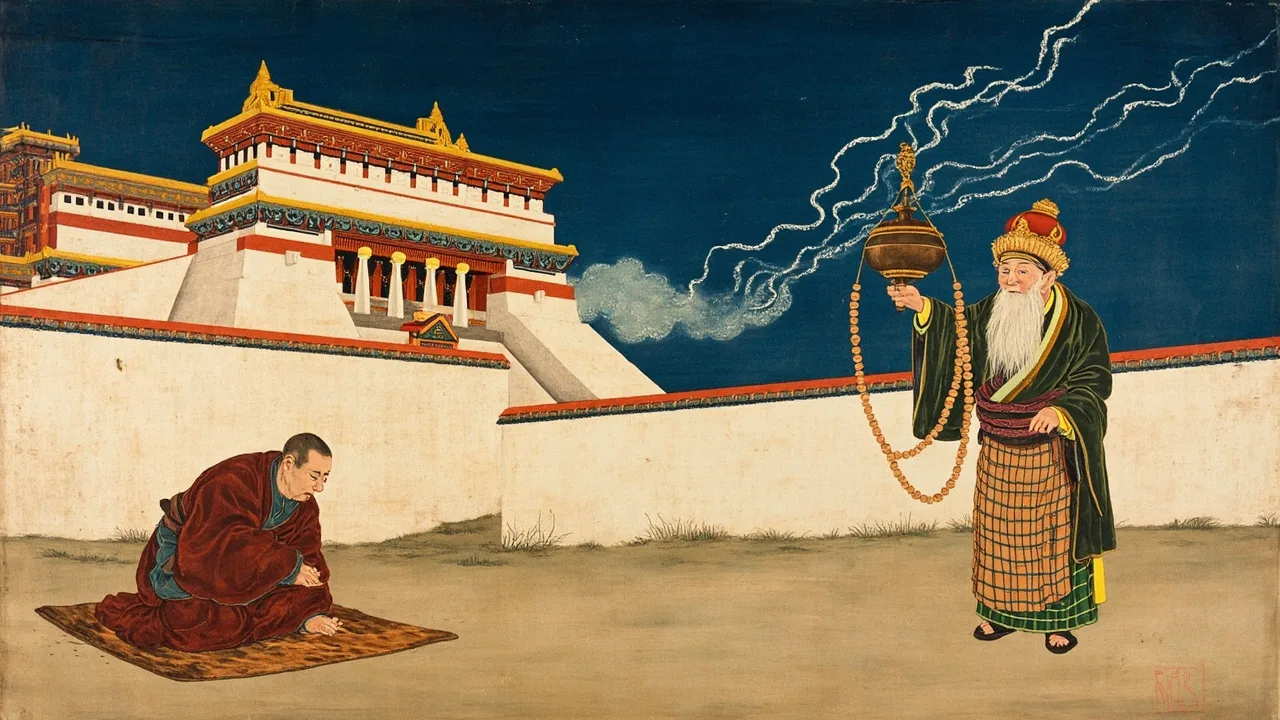
Monastic life in Tibet follows a structured schedule. Monks and nuns rise early, perform morning prayers and rituals, study religious texts, attend teachings, and engage in debate practice (Tibetan Buddhist monastic education relies heavily on formalized logical debate — two monks face each other and one presents a proposition while the other attacks it, clapping their hands to emphasize points). The three major Gelug monasteries near Lhasa — Sera, Drepung, and Ganden — were once among the largest monastic institutions in the world. At their peak in the 18th century, Drepung and Sera each housed over 10,000 monks.
The monastic community historically played multiple roles in Tibetan society: religious center, educational institution, economic actor, and — in pre-1959 Tibet — political authority. The relationship between the monasteries and the Tibetan government was complex, involving both cooperation and periodic conflict.
Recommended Products
[product_affiliate: “The Tibetan Book of Living and the Dead” - https://www.amazon.com/dp/0062507242] [product_affiliate: “Tibetan Buddhism: A Very Short Introduction” - https://www.amazon.com/dp/0195393094] [product_affiliate: “Tibetan Prayer Beads (Mala) - Authentic Himalayan Craft” - https://www.etsy.com/market/tibetan_mala]
The Tibetan Language and Writing System
Tibetan is a Sino-Tibetan language — unrelated to Mandarin Chinese despite geographic proximity. It belongs to the Bodish branch of Sino-Tibetan, sharing distant genealogical relations with languages like Burmese and the Himalayan languages of Nepal and Bhutan.
The written Tibetan language is based on the U-chen (དབོན་ཅན) script, developed in the 7th century by the Tibetan king Songtsen Gampo’s minister Thonmi Sambhota. The script was modeled on the Devanagari script used in India and has 30 consonants and 4 vowels. It is an abugida — consonants carry an inherent vowel (usually ‘a’) unless modified by a vowel marker. Written Tibetan is read left to right, top to bottom.
There is also a cursive script, U-mê (གཅིག་མ་), used for fast writing and certain religious texts. U-mê is significantly more difficult to read than U-chen.
The relationship between Tibetan and Chinese is important to understand: they are completely unrelated languages. A Mandarin speaker cannot read Tibetan script any more than an English speaker can read Thai. Tibetan belongs to a completely different language family. This is not a political statement — it’s a linguistic fact. Tibetan is as different from Chinese as Arabic is from Japanese.
Tibetan also has a significant number of regional dialects. The speech of Lhasa (Ü-Tsang) is the most widely understood standard, but Amdo Tibetan and Kham Tibetan are mutually unintelligible with Lhasa Tibetan in their spoken forms. Written Tibetan, however, is standardized across all regions.
Daily Life: Yaks, Tsampa, and the Rhythm of Altitude
If there’s one animal that defines Tibetan daily life, it’s the yak. The domestic yak (Bos grunniens) is adapted to high altitude in ways that cattle are not: it has larger lungs and heart, a different hemoglobin structure that binds oxygen more efficiently, and a thick woolly undercoat that handles temperatures dropping to -40°C. Yaks provide milk (for butter tea and cheese), meat, hide, dung (used as fuel in a treeless landscape), and wool. A yak can carry loads of 40-50 kilograms across terrain that would exhaust a horse.
Nomadic Tibetan herders move with their yak herds across seasonal pastures — typically at elevations between 3,500 and 5,000 meters, where growing crops is impossible. The nomadic pattern follows the availability of grazing: families move to high summer pastures after the spring thaw, then descend to lower winter camps when snow covers the high meadows. This mobile pastoralism is not a primitive survival strategy — it is a sophisticated ecological adaptation that has sustained populations on the plateau for thousands of years.
Tsampa — roasted barley flour — is the dietary staple. The barley is grown at the highest elevations of any cultivated grain in the world (some barley varieties grow at over 4,700 meters). The grains are roasted, ground into flour, and mixed with butter tea in a small bowl to form a pliable dough-like mass that is eaten by hand. Tsampa is calorie-dense, portable, and suited to a high-altitude, low-oxygen environment where digestion is compromised. I tried making it myself once in a hotel room in Chengdu with authentic tsampa I bought in Xiahe — it’s harder than it looks to get the butter tea-to-flour ratio right.
Butter tea (po cha, པོ་ཆུ་) is made by churning tea leaves, yak butter, and salt together in a cylindrical churn called a chub. The result looks like a thin gravy and tastes like salted broth with a buttery mouthfeel. It delivers calories, salt, and caffeine — exactly what a high-altitude herder needs. It is not an acquired taste so much as a forced adaptation: you either learn to drink it or you don’t get the calories.
Tibetan hot springs (chu tshwa, literally “hot water”) are scattered across the plateau and are considered both medicinal and spiritually cleansing. Several major hot spring sites have developed into pilgrimage destinations where people soak for days, believing the mineral-rich waters can cure joint diseases, skin conditions, and other ailments.
Sacred Arts: Thangka, Medicine, and the Tibetan Calendar
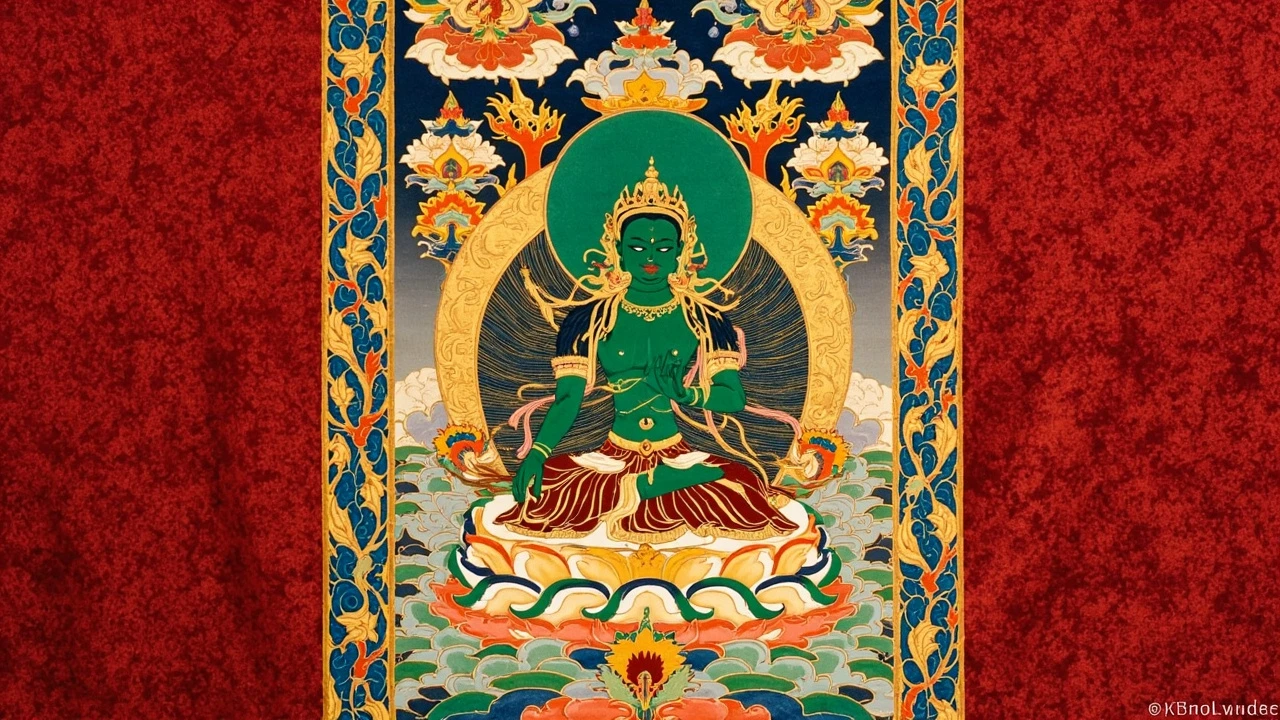
Tibetan painting traditions are among the most technically demanding in the world. A thangka — a scroll painting depicting a Buddhist deity, mandala, or religious scene — requires years of training to produce. The pigments are mineral and organic: gold, cinnabar, malachite, azurite, coral, and charcoal are ground and bound with animal glue. The painter follows strict iconographic rules about proportions, colors, and symbols — a deity’s number of faces, hands, and attributes are not artistic choices but doctrinal specifications.
The best thangka painters in Tibet train for fifteen to twenty years. A single large thangka can take months to complete. They are not meant to be wall decorations — they are meditation aids, religious objects, and teaching tools. When not in use, they are rolled rather than folded to protect the pigment.
Tibetan medicine (Sowa Rigpa, “knowledge of healing”) is a systematic medical tradition with roots in Indian Ayurvedic, Chinese, and indigenous Tibetan herbal and mineral pharmacopeia. Tibetan medical texts describe a diagnostic system based on pulse-taking, urine analysis, and tongue examination, identifying three “humors” (rlung/mongolian wind, mkhris-pa/bile, and bad-kan/phlegm) whose imbalance produces disease. Tibetan medical hospitals operate across the plateau and in Tibetan diaspora communities worldwide.
The Tibetan calendar is a lunisolar system based on the cycles of the moon and the position of the sun relative to constellations. It is not identical to the Chinese lunar calendar — while they share some structural features, they calculate astronomical events differently. The Tibetan calendar is particularly important for determining the dates of religious festivals: Losar (Tibetan New Year) falls on the first day of the first month of the Tibetan year, and the dates of other festivals shift annually based on the calendar calculation.
Conclusion
Tibetan culture is not a museum exhibit. It is a living civilization with six million people who were born at altitude, speak a Sino-Tibetan language, practice a distinctive form of Buddhism, eat tsampa, drink butter tea, and navigate a landscape where the air is thin and the mountains are sacred. It is a culture that developed in one of the most extreme environments on earth, and it developed extraordinarily well: a written language with 1,400 years of continuous literary tradition, a medical system, a sophisticated philosophy, and an art tradition that has no parallel anywhere else.
You cannot understand Tibet by reading about it from sea level. But you can start.
Quick Reference: Tibetan Culture at a Glance
| Aspect | Detail |
|---|---|
| Population | ~6 million Tibetans across Tibet, Qinghai, Sichuan, Gansu, Yunnan |
| Plateau area | 2.5 million km² |
| Average elevation | 4,500 meters (14,800 feet) |
| Capital | Lhasa (3,650m) |
| Language family | Sino-Tibetan (Bodish branch) |
| Script | U-chen (7th century), U-mê cursive |
| Buddhist schools | Nyingma, Kagyu, Sakya, Gelug |
| Dietary staple | Tsampa (roasted barley) + butter tea |
| Key animal | Domestic yak |
| Major monasteries | Sera, Drepung, Ganden (Gelug) |
| Sacred mountain | Mount Kailash (Kangrinboqe) |
| Sacred lakes | Yamdrok, Namtso, Manasarovar |
{ “subject”: “A lone Tibetan monk in deep maroon and saffron robes stands on a high stone terrace of an ancient monastery complex, arms slightly raised in a gesture of devotion, gazing toward snow-capped Himalayan peaks glowing gold in late afternoon light. Below him, the terracotta and white walls of the monastery spread across the hillside, with prayer flags in red, white, yellow and blue strung across the foreground”, “style”: “Traditional Tibetan Buddhist thangka painting style blended with realistic landscape composition. Rich saturated colors with gold leaf accents. Museum-quality fine art with spiritual atmosphere. Cinematic lighting with warm golden-hour tones on the mountains and cooler blue shadows on the monastery.”, “negative_prompt”: “Avoid cartoonish style, avoid AI-generated flat look, avoid generic Chinese stock photo, avoid Western oil painting realism, avoid modern buildings, avoid tourists, avoid political symbols, avoid crowded scene”, “characters”: “Single elderly Tibetan monk with weathered face and kind expression, standing in classic meditation stance with arms slightly raised, peaceful focused expression”, “environment”: “Ancient Tibetan Buddhist monastery on the Himalayan plateau, prayer flags in foreground, dramatic mountain backdrop, late afternoon golden light, high altitude atmosphere with slight haze, winter season with snow on distant peaks”, “composition”: “Classic landscape三分法 composition with monastery in lower third, mountains in upper third, monk placed at golden ratio intersection point, dramatic sky with subtle cloud formations” }