- “Chinese Musical Instrument Sets”
- “Bronze Sculpture Art Books”
- “Museum-Quality Replica Bells”
- “Chinese Music History Books”
- “Traditional Chinese Ceremonial Items”
Chinese Bells: The Ancient Bronze Chimes That Sang for Emperors and Gods
There is a sound that has haunted Chinese history for more than three thousand years—the resonant, layered tones of the bianzhong, or Chinese bronze chime bells. These extraordinary instruments, cast in elaborate bronze alloys and tuned to produce precise musical intervals, were among the most treasured possessions of ancient Chinese rulers. They marked royal ceremonies, accompanied sacrificial offerings to the ancestors, and filled the courts of China’s greatest dynasties with music that connected the human and divine realms.
The bianzhong represents one of humanity’s most remarkable achievements in prehistoric metallurgy and musical engineering. Each bell was cast using the lost-wax method, a sophisticated technique that allowed craftspeople to create instruments of extraordinary tonal complexity. The largest sets contained dozens of bells, each precisely tuned and decorated with intricate patterns that told stories of cosmic order and royal authority. When struck in sequence, these bells produced melodies of surprising sophistication—melodies that modern musicologists have spent decades trying to fully understand.
Perhaps the most famous set of Chinese bells are the Zenghouyi bells, discovered in 1978 in Hubei Province. These 65 bells, dating from the 5th century BCE, produced sounds so complex and beautiful that their discovery forced music historians to completely revise their understanding of ancient Chinese musical capabilities. The bells could produce multiple tones depending on where they were struck—a feature that European bell-makers did not achieve until the 17th century. Today, these bells are displayed in the Hubei Provincial Museum, where they draw visitors from around the world who come to hear recordings of the music they once produced.
Origins in Ritual: Shang and Zhou Dynasty Bronze Music
The history of Chinese bells stretches back to the Shang Dynasty (1600-1046 BCE), when Chinese metallurgists first began working with bronze in systematic ways. The earliest bells were relatively small and simple, often suspended from wooden frames and struck with wooden mallets. They were used primarily in religious ceremonies, where their resonant tones were believed to communicate with the spirit world—the clear, pure sound of bronze carrying prayers and offerings to the ancestors and to the gods.
The significance of bells in Shang and Zhou religious practice cannot be overstated. For ancient Chinese, music was not merely entertainment—it was a sacred art that maintained cosmic harmony. The proper performance of ritual music kept the universe in balance; its absence or disorder could bring disaster upon the kingdom. Bronze bells, as some of the most prestigious musical instruments available, played a central role in these rituals. Only the king and the highest nobility were permitted to own them, and their possession signaled legitimate authority over the Chinese world.
The Zhou Dynasty (1046-256 BCE), which succeeded the Shang, saw a dramatic expansion in the use and sophistication of bronze bells. Sets of bells became larger and more elaborately tuned, and the technology of bell-casting reached new heights of refinement. The Zhou court maintained professional musicians whose sole purpose was to perform on these instruments, and the musical forms they developed influenced Chinese music for centuries afterward.
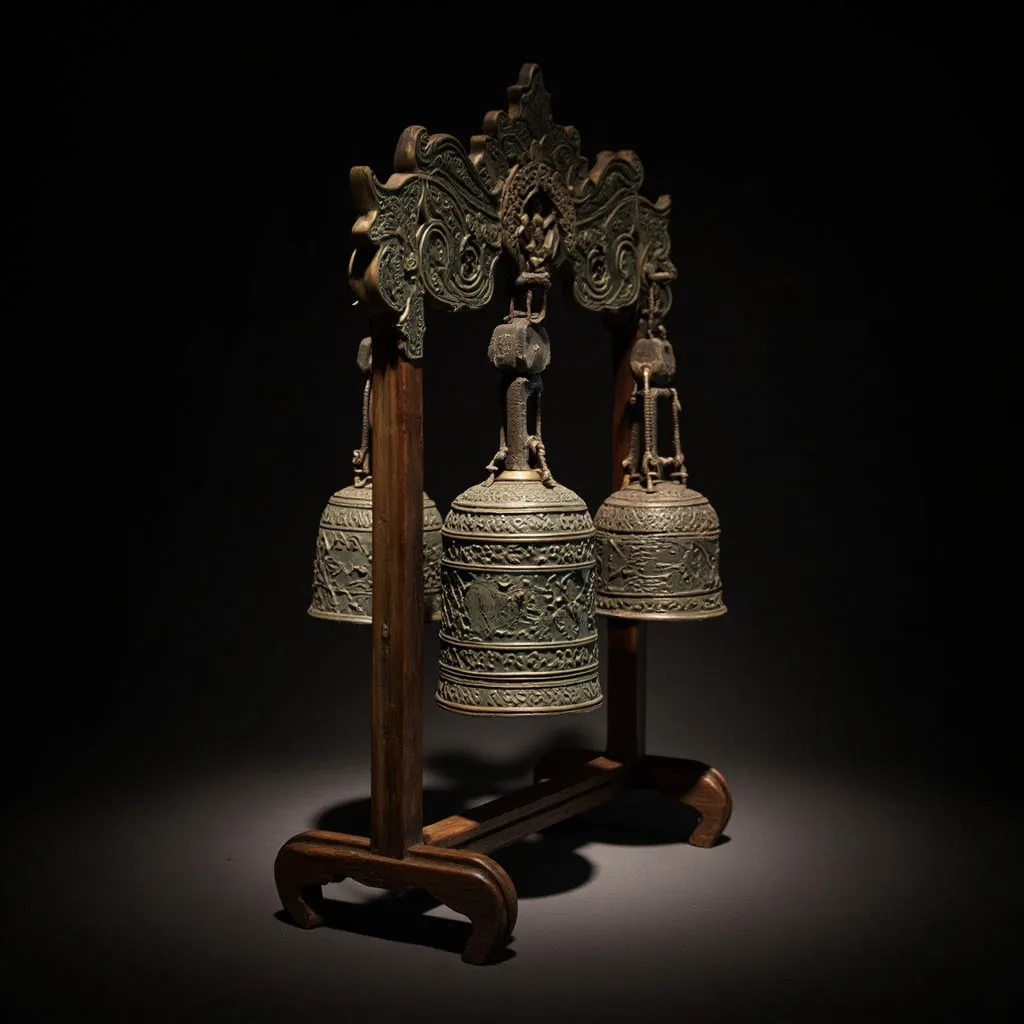
During this period, bells were organized into sets called “bianzhong,” which typically consisted of multiple bells arranged in two rows on a wooden frame. Each set could contain anywhere from three to sixty-five bells, with the largest and most elaborate sets reserved for the king himself. The bells were tuned to specific notes of the Chinese pentatonic scale, and skilled musicians could produce complete melodies by striking them in the appropriate sequence.
The Art of Bronze: Intricate Casting Techniques of Ancient China
What made Chinese bells so remarkable was not just their musical function but the extraordinary craftsmanship that went into creating them. The lost-wax method used to cast these instruments was a closely guarded secret, passed down within specialist workshops from generation to generation. This technique allowed for the creation of bells with complex internal structures—structures that were essential to producing the multiple tones that Chinese bells were capable of generating.
The process began with the creation of a clay model of the bell, which was then covered in wax. The wax was carved and shaped to create the desired decorative patterns and tonal characteristics. The entire model was then covered in another layer of clay, and the wax was melted away, leaving a cavity in the shape of the bell. Molten bronze was poured into this cavity, filling the space left by the melted wax. When the bronze cooled and the outer clay was removed, the result was a perfectly formed bell with all its decorative details intact.
The bronze alloy used for bells was itself a carefully controlled mixture, typically consisting of about 78% copper and 22% tin. This ratio produced a metal that was both strong enough to withstand the forces of casting and resonant enough to produce clear, sustained tones when struck. The exact composition varied slightly from workshop to workshop, and these variations contributed to the distinctive tonal qualities of different sets of bells.
The decoration of Chinese bells was equally sophisticated. Most bells were covered in intricate patterns—geometric designs, animal motifs, and sometimes elaborate scenes depicting mythological events or royal achievements. These decorations were not merely ornamental; they carried symbolic meaning, representing the cosmic order that the king was charged with maintaining. The handles of the bells often took the form of stylized animals, with the exact species used indicating the rank and status of the owner.
Music for Kings and Gods: Bells in Royal Courts and Temples
In ancient China, the bianzhong was not simply a musical instrument—it was a symbol of political power and spiritual authority as much as an instrument for producing sound. The possession of a complete, properly tuned set of bells marked the holder as a legitimate ruler entitled to the allegiance of his subjects. When a king was defeated or a dynasty fell, one of the first things the new ruler did was to seize the old ruler’s bells—a symbolic transfer of authority as significant as the capture of the throne itself.
The performance of bell music was a ritualized activity with strict protocols governing every aspect. Musicians were trained for years in the proper techniques for striking the bells, the correct sequences for playing melodies, and the appropriate ceremonial contexts for different pieces of music. The music itself was composed according to elaborate rules that specified not just which notes to play but the emotional and spiritual qualities that each piece should convey.
Bells were played in many contexts: at royal banquets, where they accompanied ceremonial feasting and diplomatic entertaining; at funeral rites, where their solemn tones honored the dead; and at sacrificial ceremonies, where they provided the musical backdrop for offerings to the ancestors and gods. In each context, the music served a specific purpose, and skilled musicians understood not just the technical aspects of performance but the ritual significance of everything they played.
The Zhou Dynasty developed an elaborate system of musical administration, with officials whose sole responsibility was to maintain the royal music collection and train musicians for court performances. This system recognized that musical competence was not merely a matter of personal talent but a matter of state importance. The correct performance of ritual music maintained the cosmic order; its disruption could bring natural disasters, military defeats, or the collapse of the dynasty itself. This connection between music and cosmic harmony gave musicians a status and influence that seems surprising by modern standards.
The Zenghouyi Bells: A Discovery That Rewrote Music History
The discovery of the Zenghouyi bells in 1978 ranks among the most remarkable archaeological finds of the 20th century. In the village of Leigudun in Hubei Province, workers excavating a tomb for a water project broke through into an underground chamber containing an extraordinary treasure: 65 bronze bells, plus other musical instruments and weapons, all perfectly preserved after more than two thousand years underground.
The Zenghouyi bells date from approximately 430 BCE, during the Warring States period, when China was divided among a number of rival states. The tomb belonged to the Marquis Yi of Zeng, a minor noble whose wealth and artistic patronage had evidently been considerable. The bells he was buried with represent the most complete and sophisticated set of ancient Chinese bells ever discovered—65 instruments weighing a total of more than 2,500 kilograms, decorated with intricate patterns and, most remarkably, producing sounds of extraordinary complexity.
What makes the Zenghouyi bells truly revolutionary is their tonal capability. Each bell produces two distinct tones depending on where it is struck: a note when struck at the center of the bell’s sounding surface, and a different, higher note when struck at the side. This “bipolar” tonal system allowed each bell to produce two notes, effectively doubling the musical range available from the set. Modern researchers have determined that the bells are tuned to a chromatic scale covering more than five octaves—a range comparable to a modern piano.
The implications of this discovery were staggering. Before the Zenghouyi bells were found, music historians believed that sophisticated polyphonic music—music with multiple independent melodic lines—did not develop in China until after contact with Western music in the modern era. The Zenghouyi bells demonstrated that Chinese musicians were creating complex, multi-layered music more than two thousand years ago. The implications for our understanding of musical history extend far beyond China itself.
Since their discovery, the Zenghouyi bells have been the subject of extensive research and experimentation. Musicologists have worked to determine what melodies the bells were meant to play, and recordings have been made using replicas struck in the traditional manner. These recordings give us a glimpse of what royal Chinese court music might have sounded like more than two millennia ago—a sound that has been silent since the last ancient musicians died, now resurrected through scholarly dedication and modern technology.
Lasting Significance: The Bell’s Place in Chinese Cultural Memory
The tradition of Chinese bronze bells continued for more than two thousand years, evolving through the Qin, Han, and subsequent dynasties before gradually declining in importance. The elaborate ritual music of the Zhou court gave way to new musical forms as Chinese society changed; the bianzhong found less and less place in a world that was developing in new directions. By the end of the imperial period, the tradition had effectively died out, and the instruments themselves had become rare and poorly understood artifacts.
Yet the bells have never entirely disappeared from Chinese cultural consciousness. They appear throughout Chinese literature and art as symbols of noble status, ritual authority, and refined culture. The image of a set of bells hanging in a palace hall, gleaming with bronze and producing resonant tones, evokes a world of ancient elegance and cosmic order that continues to resonate with modern Chinese sensibilities.
The revival of interest in ancient Chinese music in the modern era has brought new attention to the bianzhong tradition. Musicians and scholars have worked to reconstruct ancient playing techniques and compose new pieces for the bells, drawing on both historical research and creative interpretation. Museums with collections of ancient bells have developed educational programs that allow visitors to hear these instruments played and to learn about the culture that created them.
For the ancient Chinese, bells were more than musical instruments—they were bridges between the human and divine, symbols of legitimate rule, and repositories of cultural values that stretched back to the foundations of Chinese civilization. When a ruler presided over a ceremony accompanied by the sound of bronze bells, he was connecting himself to a tradition that stretched back through millennia, and asserting his place within an order that transcended any individual lifetime.
Today, as we listen to recordings of the Zenghouyi bells or stand before them in museums, we can catch a glimpse of what that tradition meant. The sound of these ancient instruments carries within it centuries of Chinese history—the ritual practices of the Shang and Zhou, the political ambitions of Warring States nobles, the artistic achievements of imperial courts, and the spiritual beliefs that bound together the Chinese world. It is a sound that connects us to a past that is at once foreign and familiar, distant and enduring.
The Modern Legacy of Ancient Music
The story of Chinese bells is ultimately a story about how material culture carries meaning across time. These bronze instruments were not merely objects; they were repositories of value, symbols of authority, and vehicles for spiritual expression. When they fell silent with the decline of the ancient ritual tradition, they did not disappear—they became artifacts, treasures buried in tombs or preserved in collections, waiting for rediscovery.
That rediscovery continues to yield new insights. Each generation of scholars approaches the bells with new questions and new technologies, finding aspects of their meaning and construction that earlier researchers missed. The Zenghouyi bells in particular have become the focus of ongoing research that promises to reveal even more about their musical capabilities and cultural significance.
For those of us who cannot visit the Hubei Provincial Museum to see the Zenghouyi bells in person, there are other ways to engage with this tradition. Recordings, replicas, and detailed scholarly publications allow us to experience something of what these instruments meant to the people who created and used them. And in Chinese communities around the world, the bell tradition has experienced a gentle revival, as musicians and cultural organizations work to reconnect with this aspect of their heritage.
The next time you encounter a representation of Chinese bells—in a museum, in a historical drama, or even in a video game set in ancient China—take a moment to consider the long history that these instruments carry within them. They have been silent for centuries, but the silence is gradually giving way to new sounds, as modern people learn to hear what the ancients heard in the resonant tones of bronze.
Recommended Reading and Products
Explore the fascinating world of ancient Chinese bells and bronze casting with these curated resources:
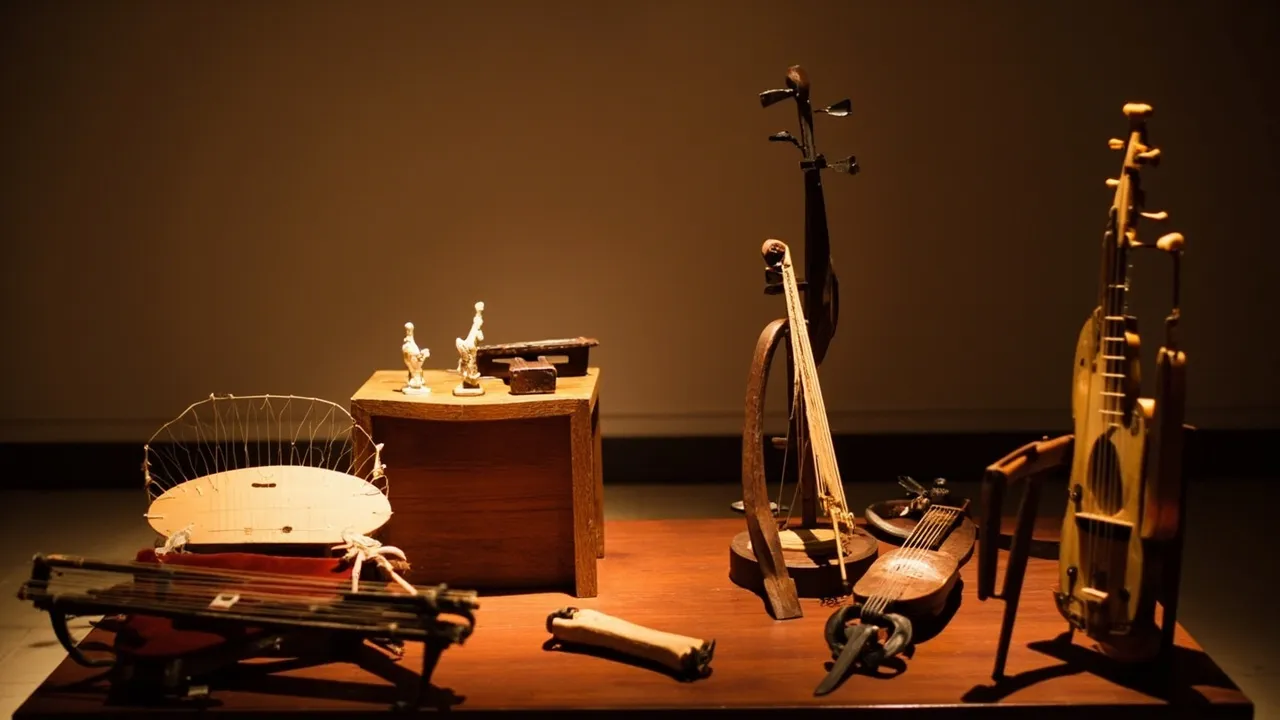
Chinese Musical Instrument Sets — From recreations of ancient bells to other traditional instruments, these sets allow you to explore the rich sonic world of Chinese music history.
Bronze Sculpture Art Books — Learn about the sophisticated bronze casting techniques that allowed ancient Chinese craftsmen to create their masterpieces. These books showcase the artistic achievements of Shang and Zhou dynasty metallurgy.
Museum-Quality Replica Bells — Own a piece of this ancient tradition with carefully crafted replicas of Chinese bells. These museum-quality reproductions capture the beauty and detail of the original instruments.
Chinese Music History Books — Understand the broader context of musical development in China. From ritual bronze music to folk traditions, these books trace the evolution of Chinese musical culture across millennia.
Traditional Chinese Ceremonial Items — Explore the ritual objects that accompanied ancient Chinese court ceremonies. From bronze vessels to silk banners, these items represent the material culture of imperial China.