The Chinese Calendar: Ancient Wisdom in Timekeeping
Every February, millions of people around the world celebrate the Lunar New Year with fireworks, family reunions, and elaborate feasts. What many do not realize is that this celebration represents just one small part of one of the most sophisticated timekeeping systems ever devised. The Chinese calendar, a complex lunisolar system that has been refined over thousands of years, represents a fundamentally different approach to organizing time than the purely solar calendars that dominate the Western world. Understanding this ancient system opens a window into how Chinese civilization learned to read the heavens, predict the seasons, and organize agricultural society across an enormous and geographically diverse landscape.
The Chinese calendar is not simply a curiosity from an ancient culture. It remains actively used today for determining traditional holidays, selecting auspicious dates for weddings and business openings, and guiding agricultural activities throughout East Asia. Its influence extends well beyond China proper to Vietnam, Korea, Japan, and diaspora communities worldwide. The depth of this system, with its intricate cycles of months, years, and solar terms, reflects a civilization that invested enormous intellectual resources in understanding and organizing time itself.
Ancient Origins of the Chinese Calendar System
The story of the Chinese calendar begins in prehistoric times, though the earliest developments are lost to history. Chinese astronomical records date back at least to the Shang Dynasty (1600–1046 BCE), where oracle bone inscriptions reveal that these people already tracked solar and lunar cycles with considerable precision. These early records show that Chinese astronomers were already aware of the approximately 29.5-day lunar month and the approximately 365.25-day solar year, recognizing that these two cycles did not align neatly.
The major breakthrough came with the realization that combining lunar months with solar observations created a more accurate and practical calendar than either system alone. Pure lunar calendars, which track only the phases of the moon, drift through the seasons over time because the lunar cycle does not divide evenly into the solar year. A lunisolar calendar solves this problem by inserting extra months at intervals, keeping the calendar synchronized with the seasons that matter so desperately for agriculture.
By the time of the Han Dynasty (206 BCE–220 CE), Chinese astronomers had developed increasingly sophisticated methods for calculating these intercalations. The famous mathematician and astronomer Zhang Heng (78–139 CE) proposed a calendar that incorporated advances in understanding lunar and solar motion. His work reflected a broader institutionalization of calendar-making as a state activity, with imperial astronomers tasked not only with predicting celestial events but also with producing and maintaining the official calendar that governed all imperial activities.
The imperial court treated the calendar as a matter of supreme political importance. Issuing the correct calendar was one of the prerogatives of legitimate rule, and calendar reform often signaled dynastic change. When a new dynasty took power, one of its first acts was typically to commission a new official calendar, demonstrating its authority over nature and time itself. This political dimension gave calendar science in China a prestige and institutional support that it rarely achieved in Western cultures until much later.
The 24 Solar Terms: Nature’s Seasonal Clock
One of the most distinctive features of the traditional Chinese calendar is its system of 24 jieqi, or solar terms. These are 24 specific points in the solar year that mark natural phenomena and guide agricultural activities. Unlike the purely astronomical divisions of Western calendars (solstices, equinoxes, and the zodiac), the Chinese solar terms blend astronomical observations with ecological awareness, creating a practical calendar that helped farmers across China’s varied climates know exactly when to plant, cultivate, and harvest their crops.
The solar terms begin with the onset of spring, known as Lichun (Start of Spring), typically falling around February 4th. This is followed by Yushui (Rain Water) around February 19th, when rainfall increases and farmers begin preparing fields for spring planting. The progression continues through the major agricultural milestones: Jingzhe (Awakening of Insects) marks the time when insects emerge from hibernation; Chunfen (Spring Equinox) signals the ideal moment for planting early crops; and Guyu (Grain Rain) brings the spring rains that nourish young seedlings.
Summer brings its own sequence of solar terms, beginning with Lixia (Start of Summer) around May 5th and progressing through the hottest months with terms like Xiaoman (Grain Full) and Xiazhi (Summer Solstice). The autumn terms include Liqiu (Start of Autumn), Qiufen (Autumn Equinox), and Shuangjiang (Frost’s Descent), guiding farmers through the harvest season. Winter’s terms, from Lidong (Start of Winter) through Dahan (Greater Cold), mark the coldest period and guide preparations for spring.
What makes the solar terms particularly clever is their design to work across China’s enormous geographic range. The timing of actual agricultural activities varies enormously between the subtropical south and the temperate north, but the solar terms provide a consistent framework that farmers can adapt to local conditions. A farmer in Guangdong and a farmer in Hebei both understand that Guyu means “time to plant,” though they might plant different crops. This shared temporal framework facilitated communication and trade across the empire by giving all participants a common agricultural timeline.
Zodiac Animals and the Lunar New Year
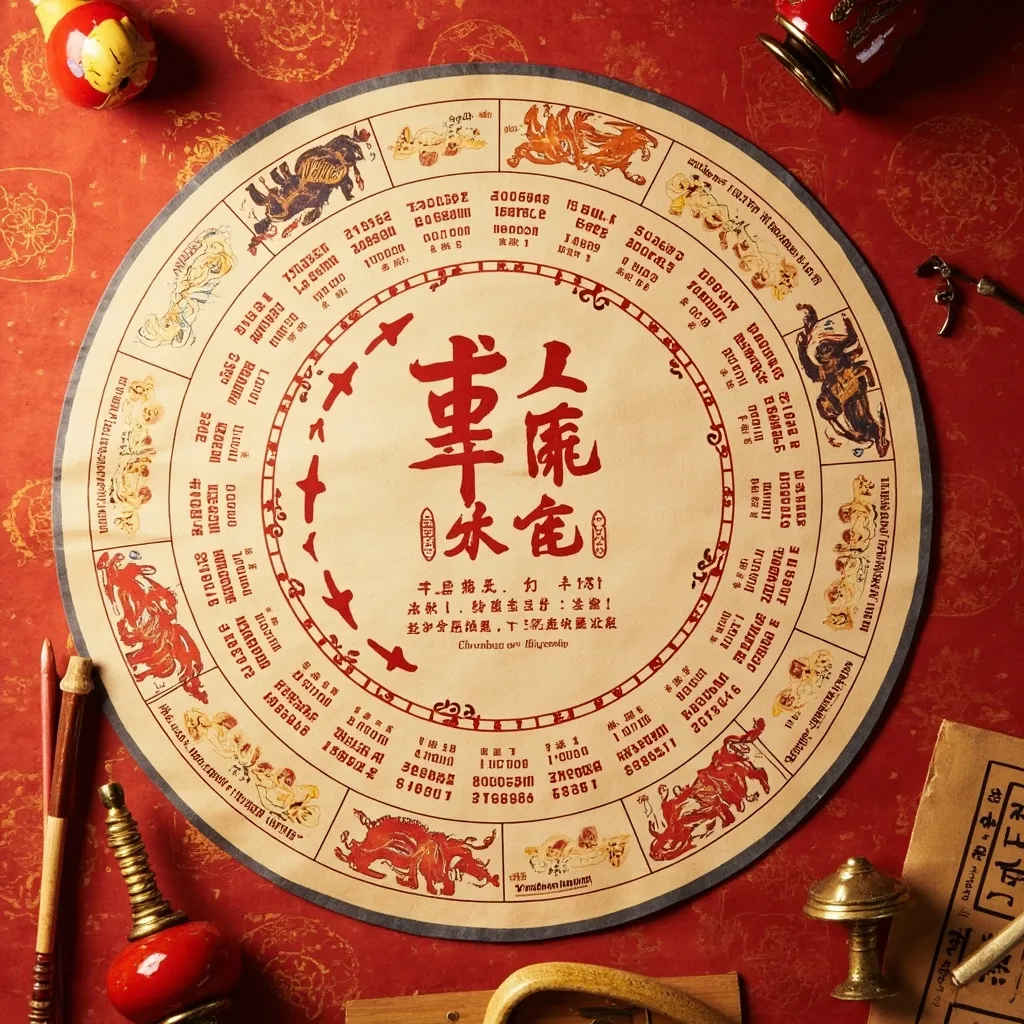
No aspect of the Chinese calendar has captured foreign imagination more thoroughly than the 12 zodiac animals that rotate through the year in a twelve-year cycle. These animals—Rat, Ox, Tiger, Rabbit, Dragon, Snake, Horse, Goat, Monkey, Rooster, Dog, and Pig—have become familiar worldwide through Chinese diaspora communities and popular culture. But understanding why these particular animals were chosen and what they represent requires diving deeper into Chinese cosmological thinking.
The zodiac animals emerged from a complex interplay of astronomy, mythology, and folk belief. The 12-year cycle corresponds to the orbit of Jupiter, which takes approximately 12 years to complete its circuit around the sun. Chinese astronomers tracked Jupiter’s position carefully, using its movement to divide the sky into 12 “stations” or zhi, each associated with one of the zodiac animals. The animals were not chosen randomly but reflect observations of creatures active during different seasons and times of day, creating a rich symbolic vocabulary for understanding the year’s character.
Each zodiac animal carries specific associations that Chinese culture uses for everything from personality prediction to business partnerships. Dragon years are considered particularly auspicious for starting new ventures, as dragons symbolize power, fortune, and the emperor himself. Goat years are traditionally associated with artistic pursuits and family harmony. These associations influence millions of decisions annually, from couples planning children to corporations selecting launch dates.
The Lunar New Year, when the zodiac animal for the coming year is celebrated, is the most important festival in the Chinese cultural calendar. Unlike the Gregorian New Year on January 1st, the Lunar New Year falls somewhere between late January and mid-February, varying each year because it marks the second new moon after the winter solstice. The celebration traditionally lasts 15 days, culminating in the Lantern Festival, when families release glowing lanterns into the sky and solve riddles written on them. This extended celebration reflects the importance of new year rituals in Chinese culture, serving as a time for family reunion, honoring ancestors, and making wishes for the coming year.
The zodiac system also interacts with other aspects of the calendar in complex ways. Each year has both a zodiac animal and one of five elements (Wood, Fire, Earth, Metal, Water), cycling through combinations in a 60-year cycle. A Wood Rat year has different characteristics than a Fire Rat year, adding layers of meaning and prediction that professional astrologers and ordinary people alike use to understand the year’s likely developments.
Agricultural Applications and Modern Relevance
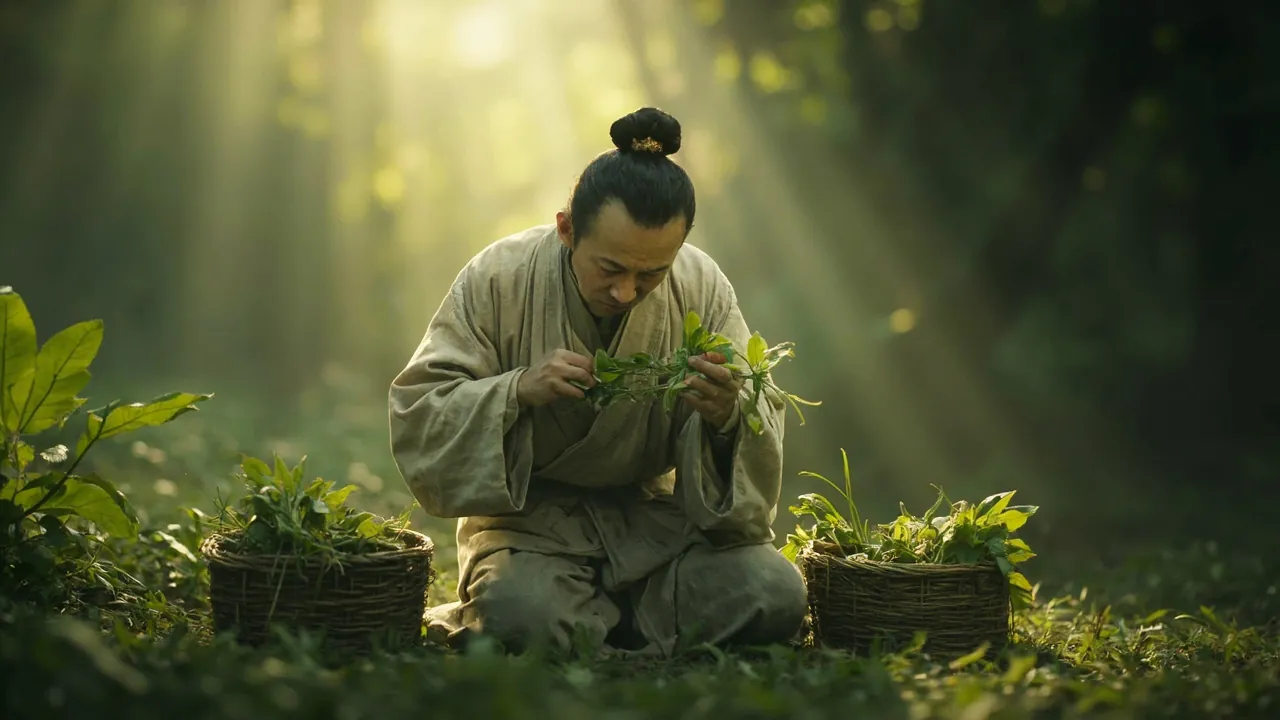
The Chinese calendar’s most practical function, particularly in ancient and medieval times, was its role as an agricultural planning tool. The combination of lunar phases for religious and festival timing with solar terms for agricultural guidance gave farmers a dual-purpose calendar that served all their timekeeping needs. This integration of celestial and terrestrial concerns was not merely theoretical but represented hard-won practical knowledge accumulated over millennia.
The agricultural calendar organized rural life in ways that shaped Chinese civilization at its deepest levels. Village festivals, harvest celebrations, and seasonal rituals all aligned with the calendar, creating a shared temporal structure that bound communities together. This synchronization of communal life meant that everyone in a village knew when to plant, when to rest, and when to celebrate, creating social cohesion through shared temporal rhythms. The timing of major festivals like the Dragon Boat Festival in the fifth lunar month or the Mid-Autumn Festival in the eighth lunar month was not arbitrary but reflected agricultural rhythms—celebrations came when work allowed relaxation, and the festival foods (zongzi rice dumplings, moon cakes) used seasonal ingredients available at those specific times.
Imperial governments took agricultural productivity extremely seriously, understanding that their legitimacy and survival depended on successful harvests. The calendar served as a tool of state agricultural policy, with officials using solar terms to issue guidance to farmers across the empire. Instructions might arrive telling farmers that Lichun had arrived and spring planting should begin, or warning that Guyu was approaching and irrigation systems should be prepared. This top-down communication depended on a shared calendar that everyone understood. Specialized agricultural manuals were produced and distributed to villages, translating solar term guidance into specific crop recommendations for local conditions. The calendar also governed the rhythm of tax collection and labor service, creating a comprehensive system of state resource mobilization tied to seasonal patterns.
In modern times, the traditional Chinese agricultural calendar has found new relevance as people seek more sustainable and natural ways of living. The solar terms offer a framework for seasonal eating, gardening, and health practices that aligns with natural rhythms rather than the artificial timing of industrial agriculture. Many modern Chinese medicine practitioners use solar terms to advise patients about diet and lifestyle adjustments appropriate to the changing seasons, drawing on ancient wisdom that recognized the body’s connection to environmental cycles. The concept of “eating seasonally” has gained mainstream acceptance worldwide, though the Chinese tradition of seasonal eating was formalized centuries ago through the calendar system. This alignment between human activity and natural cycles represents an ecological wisdom that industrial civilization is only beginning to rediscover.
The lunar calendar also continues to influence major life decisions in modern Chinese communities. Wedding dates, business openings, housewarming ceremonies, and even cesarean section deliveries are often scheduled according to lunar calendar calculations, with astrologers consulted to identify auspicious dates. While critics dismiss this as superstition, defenders argue that it represents a meaningful engagement with cultural tradition and symbolic meaning-making that purely secular calendars cannot provide. This practice reflects a worldview in which time is not merely linear and quantitative but qualitative and relational, with certain moments carrying different energetic qualities than others. Whether one accepts the metaphysical claims or not, this approach to time reflects a rich philosophical tradition that has organized Chinese life for millennia.
The Calendar’s Enduring Cultural Significance
Despite the complete dominance of the Gregorian calendar in daily business and government affairs, the traditional Chinese calendar maintains remarkable vitality in cultural and spiritual life. Chinese communities worldwide still celebrate the Lunar New Year, Mid-Autumn Festival, Dragon Boat Festival, and Qingming Festival according to the traditional calendar. These celebrations serve as powerful markers of cultural identity, connecting diaspora communities to ancestral traditions and to each other across geographic distance.
The calendar’s influence extends into popular culture as well, where zodiac animal predictions and solar term health advice appear in newspapers, magazines, and websites throughout East Asia. People check their zodiac animal’s forecast for the year when making important decisions, and employers sometimes consider zodiac compatibility when forming work teams. While this might seem strange to outsiders unfamiliar with Chinese cultural frameworks, it reflects a civilization that never separated timekeeping from meaning, astronomy from philosophy, or practical concerns from spiritual ones.
For those interested in exploring the Chinese calendar’s traditions, the accessibility of information today makes it easier than ever to engage with practices that once required years of specialized study. Apps and websites track solar terms and lunar phases, explaining their significance in accessible language. Translation projects have made classical texts on calendar science and divination available to modern readers. And the physical communities where these traditions continue—temples, markets, rural villages—remain vibrant spaces where ancient timekeeping wisdom shapes daily life.
Recommended Products
Explore the traditions discussed in this article with these carefully selected affiliate recommendations:
The Chinese Lunar Calendar Wall Poster – A beautiful 24×36 inch poster showing the lunar calendar, solar terms, and zodiac animals for the entire year.
Traditional Chinese Agriculture Planning Guide – A modern translation of classical agricultural texts incorporating traditional seasonal wisdom for contemporary gardeners and farmers.
Jade滚 Lunar Phase Calendar Wheel – An elegant rotating calendar wheel tracking both lunar phases and solar terms for daily spiritual and practical guidance.
Chinese Zodiac Complete Set Figurines – Handcrafted resin figurines representing all 12 zodiac animals, perfect for educational display or traditional altar decoration.
Mid-Autumn Festival Traditional Gift Set – Authentic moon cakes, tea, and lantern set for celebrating the Mid-Autumn Festival according to traditional customs.
The Chinese calendar system reflects thousands of years of accumulated wisdom. While its astrological applications are matters of cultural belief, its agricultural and astronomical insights continue to offer practical value for those interested in seasonal living and traditional knowledge.