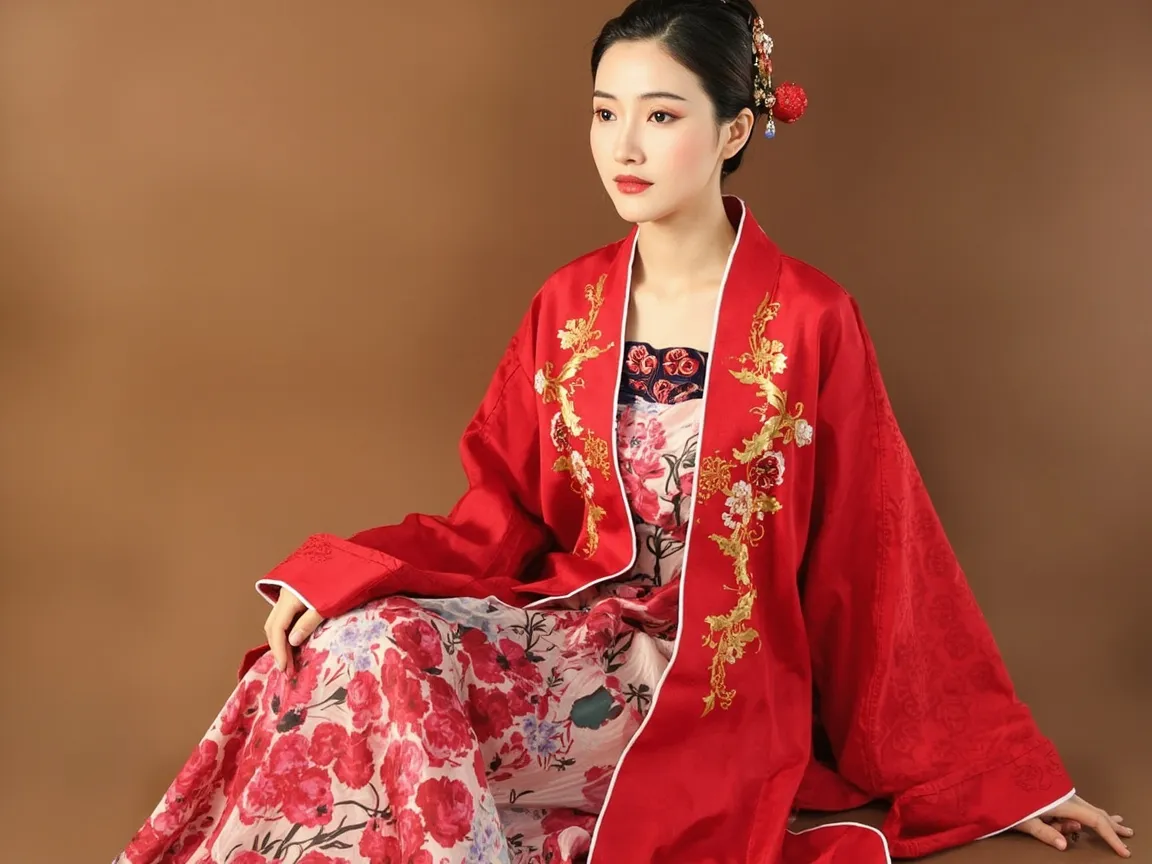
Traditional Chinese Clothing: More Than Just Fashion
Walk through any major city in China today and you’ll see something fascinating: young people dressed in flowing robes with wide sleeves, walking alongside others in sleek, form-fitting dresses. The contrast is striking, and it’s not just fashion—it’s a cultural movement that’s been gaining momentum for over two decades. Traditional Chinese clothing has become a window into the nation’s past, a statement of identity, and honestly, just plain beautiful to look at.
Ancient Chinese Dress
To understand where Chinese fashion is going, you really need to know where it came from. The history here stretches back thousands of years, and the clothing choices reflect the values, climate, and social structures of each era.
The most recognizable ancient Chinese garment is the hanfu—and here’s something that might surprise you: this word literally means “Han clothing,” referring to the ethnic Han majority that makes up about 92% of China’s population. But hanfu as a style predates the Han Dynasty (206 BCE – 220 CE) by quite a bit. Archaeologists have found evidence of similar robes dating back to the Zhou Dynasty (1046–256 BCE), making these designs roughly 3,000 years old.
What does a traditional hanfu look like? Picture a cross-collar robe that wraps left over right (the opposite of Western jackets, interestingly). It has wide sleeves that can measure up to a meter from fingertip to fingertip when extended. The garment ties together with a sash, and depending on the period and region, it might be worn as a single layer or as multiple layered robes for warmth or formality.
The colors used in ancient Chinese dress weren’t random. Yellow was reserved for emperors—regular folks could get in serious trouble for wearing it. Red symbolized joy and celebration, while white was associated with mourning. These color codes meant you could actually tell a lot about someone’s social standing just by glancing at their outfit.
Silk played a huge role in Chinese clothing history. China essentially had a monopoly on silk production for centuries, and the famous Silk Road was named after this luxurious fabric. Silk was so valuable that it was sometimes used as currency—officials were sometimes paid in silk rather than coins. The material’s natural luster and flowing drape made it perfect for the flowing silhouettes of traditional Chinese dress.
Different dynasties brought their own fashion twists. During the Tang Dynasty (618–907 CE), when China was arguably at its most cosmopolitan, women’s clothing became more elaborate and colorful. The Song Dynasty (960–1279 CE) favored simpler, more understated elegance. And the Ming Dynasty (1368–1644 CE) gave us the style most people picture when they think of “traditional” Chinese dress—elaborate embroidered robes with dragon motifs for the wealthy, and simpler cotton garments for everyone else.
The Hanfu Revival
Fast forward to the 21st century. In 2003, a curious thing happened in China—a small group of enthusiasts started wearing hanfu in public. This wasn’t for a holiday or a photo shoot. They just wanted to wear their ancestors’ clothing as everyday clothes. At first, most Chinese people didn’t know what to make of it. Many thought these folks were cosplayers or actors heading to a film set.
But the movement grew. What started as a few hundred people wearing ancient robes to parks and museums has exploded into a cultural phenomenon. By the mid-2020s, the hanfu industry in China was generating billions of dollars annually, with millions of regular wearers—mostly young people between 18 and 35.
Why the sudden interest? A few reasons. For one, there’s genuine curiosity about traditional culture. Many Chinese people grew up with grandparents who had stories about the “old ways” but never actually saw the clothing. There’s also a social media element—hanfu looks stunning in photos, with those flowing fabrics and intricate patterns creating a visually striking effect.
The hanfu revival isn’t just about复制 (copying) the past, either. Modern hanfu designers have gotten creative. They’ll take traditional patterns and silhouette but use contemporary fabrics that are easier to care for. Some add hidden zippers for convenience. Others blend hanfu elements with modern streetwear—think hanfu-inspired jackets with athletic pants. It’s tradition meeting the present, and the result feels both ancient and fresh.
Communities have formed around this movement. In cities across China, you’ll find “hanfu walks” where groups of enthusiasts parade through shopping districts, their robes swaying as they walk. These events are part fashion show, part history lesson, and part social gathering. Newbies often get advice from veterans on how to properly tie their sashes or which styles work best for their body type.
The Qipao Story
If hanfu represents ancient China, the qipao (also called cheongsam in Cantonese) represents a different era entirely—the early 20th century, when China was reinventing itself.
The qipao emerged in the 1920s in Shanghai, that bustling port city where East met West in the most interesting ways. Some credit the garment’s creation to旗 (qi), meaning “banner,” and袍 (pao), meaning “robe”—a reference to the clothing worn by Manchu women before the Qing Dynasty fell in 1912. Others argue it evolved from a fusion of traditional Chinese dress with Western silhouettes that were filtering into Shanghai’s cosmopolitan scene.
What makes the qipao special is its elegant simplicity. It’s a one-piece dress with a high collar, fitted bodice, and a skirt that slits open at the sides. Unlike the flowing hanfu, the qipao hugs the body, showing off its shape. At first, the dresses were fairly loose and practical, suitable for the active lifestyle of modern 1920s women. Over time, they became more tailored, more refined.
The golden age of the qipao was the 1930s and 40s. Shanghai’s socialites wore them to galas. Working women wore simpler versions to offices and shops. The dress became a symbol of Chinese modernity—it was traditional yet modern, Eastern yet influenced by the West. Think of any old movie set in Shanghai, and you’ll likely see elegant women in beautifully embroidered qipaos.
After the Communist takeover in 1949, the qipao largely disappeared from daily life. Practical, uniform clothing was the order of the day. The beautiful silk dresses were seen as too bourgeois, too decadent. It survived mainly in Hong Kong and Taiwan, where it remained a popular choice for weddings and formal occasions.
The revival came slowly. In the 1980s, as China opened up, fashion-conscious women rediscovered the qipao. Today, it’s experienced another renaissance—not as everyday wear like hanfu, but as elegant attire for special occasions. Chinese brides often wear qipao for their wedding receptions, choosing reds and golds for the traditional feel, or pastels for something more modern.
Modern Chinese Fashion
Here’s where things get really interesting. Traditional Chinese clothing isn’t just sitting in a museum or limited to special occasions. It’s actively shaping contemporary fashion in China and beyond.
Chinese fashion designers are finding brilliant ways to incorporate traditional elements into modern clothes. You’ll see jackets with traditional frog buttons (those beautiful braided closures), coats featuring Ming Dynasty embroidery patterns, and dresses that take the qipao silhouette but use contemporary fabrics and bold prints.
The international fashion world has taken notice. At major runway shows in Paris, Milan, and New York, Chinese-inspired elements appear regularly. Some are authentic homages; others take inspiration more loosely. Either way, traditional Chinese aesthetics are having a major moment on the global stage.
Chinese streetwear has also gotten in on the action. Brands are creating fusion clothing that mixes traditional Chinese patterns with urban aesthetics. You might see a hoodie with a dragon motif, or sneakers featuring traditional cloud patterns. This blend of old and new speaks to younger generations who want to honor their heritage while staying current.
Social media has accelerated everything. On platforms like Xiaohongshu (China’s answer to Instagram), millions share outfit photos mixing traditional and modern pieces. The hashtag for hanfu has been viewed billions of times. This digital enthusiasm has created a feedback loop—more people see the styles, more people want to try them, more designers create new options.
Traditional accessories have seen revivals too. The hair stick (簪子, zanzi), once a common way to secure elaborate hairstyles, has become a popular accessory for both traditional and modern outfits. Clogs and embroidered shoes that would have been everyday wear a century ago are now fashion statements.
Conclusion
Traditional Chinese clothing tells a story that spans millennia. From the ancient hanfu that draped scholars and emperors to the elegant qipao of cosmopolitan Shanghai, these garments carry meanings far beyond thread and fabric. They represent craftsmanship passed down through generations, cultural identity expressed through design, and a bridge connecting modern people to their ancestors.
What’s happening today isn’t just nostalgia. It’s a living, breathing fashion scene that honors the past while boldly stepping into the future. Whether you see someone in a flowing hanfu at a museum, a professional in a modern qipao at a business lunch, or a young person blending traditional patterns with streetwear, you’re witnessing something beautiful—a culture that knows where it came from and is excited about where it’s going.
The next time you see traditional Chinese clothing, take a closer look. Those aren’t just pretty fabrics. They’re thousands of years of history, wrapped around the people wearing them today.