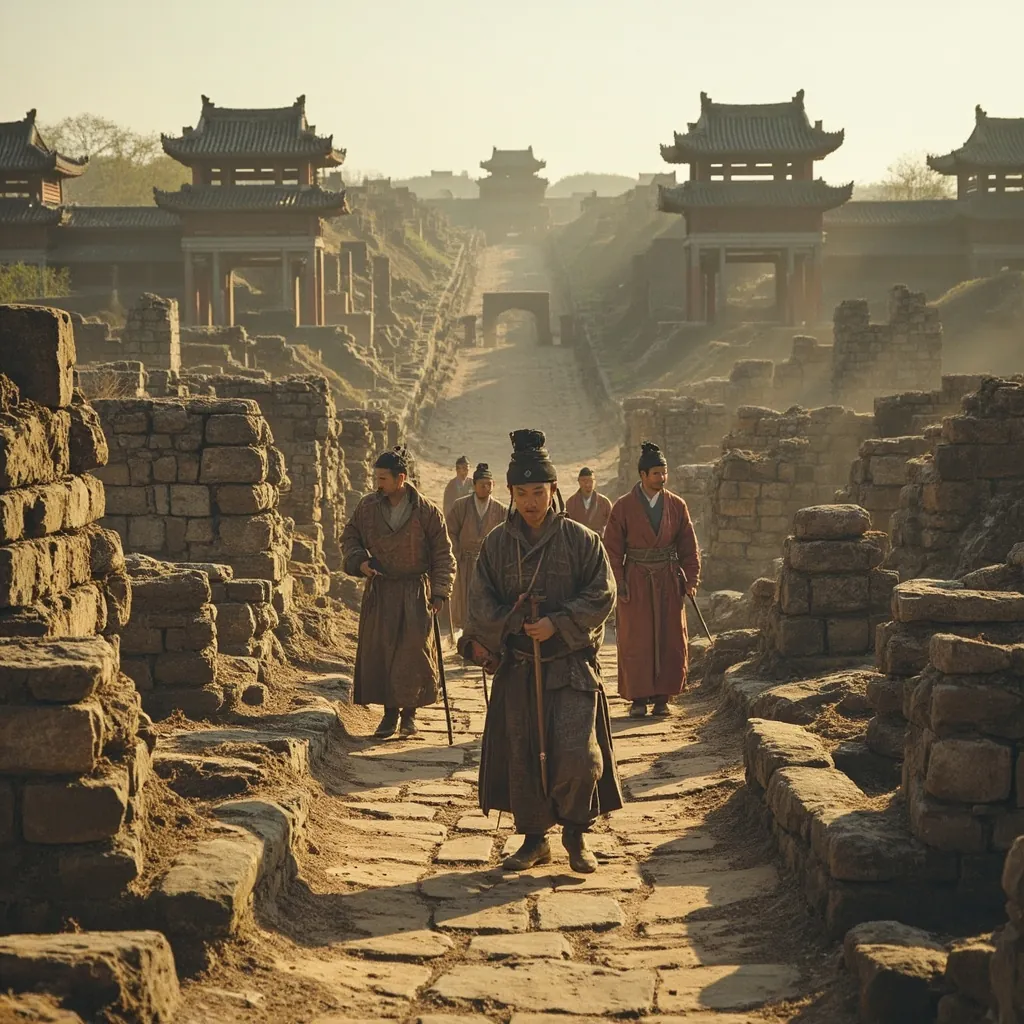
Every society has a story it tells itself about what people should aspire to. In America, it’s the rags-to-riches tale of the self-made individual who pulls themselves up by their bootstraps, strikes it rich, and lives free. In China, the story is different — older, more collective, and in some ways stranger to Western ears. It’s the story of the Chinese Dream.
The phrase “Chinese Dream” became internationally famous after 2012, when China’s leader Xi Jinping made it a central slogan of his administration. But the idea itself is ancient. Understanding what the Chinese Dream means — both in its modern political form and in its deeper cultural roots — is essential for anyone trying to understand China, its people, and their relationship to ambition and achievement.
What Is the Chinese Dream Today?
When Xi Jinping spoke of the “Chinese Dream of National Rejuvenation” (中华民族伟大复兴), he was talking about something specific: the idea that China, after a century of humiliation at the hands of foreign powers, is rising again to its rightful place as a great civilization. It’s a dream of national strength, prosperity, and international respect.
In political speeches and official propaganda, the Chinese Dream is presented as the culmination of the Chinese nation’s long struggle to reclaim its historical greatness. The narrative goes something like this: China was once the world’s greatest civilization, then it fell behind, suffered enormously, and is now climbing back to the top. The Chinese Dream is the destination — a strong, modern, harmonized China that no foreign power can bully again.
This modern version of the Chinese Dream includes concrete goals: building a “moderately prosperous society,” reducing poverty, expanding China’s military and diplomatic influence, and achieving technological leadership in key industries. It’s nationalist without being aggressive, ambitious without being explicitly expansionist.
But here’s what makes it genuinely interesting for cultural understanding: the Chinese Dream is not purely about the state. Official rhetoric also talks about the Chinese Dream as something individual Chinese people can pursue — better lives, more opportunities, greater personal fulfillment. The state and the individual are supposed to advance together. This is different from the American Dream, which is fundamentally about individual achievement. The Chinese Dream is more collective — individual success is important, but it’s framed as part of a larger national story.
The Ancient Roots: What Chinese People Always Dreamed About
The modern Chinese Dream didn’t appear from nowhere. It draws on deep cultural traditions about what constitutes a worthy life and a worthy achievement.
Consider the imperial examination system, which dominated Chinese society for over 1,300 years, from the Sui Dynasty (581–618 CE) to the Qing Dynasty (1905). This was a system of civil service exams that allowed anyone — rich or poor, noble or commoner — to become a government official, provided they could master the Confucian classics and demonstrate their literary talent.
The exam system was revolutionary. It meant that a farmer’s son who was smart enough and disciplined enough could become a minister. He could change his family’s fortunes entirely through his own effort. This wasn’t just a theoretical possibility — historical records are full of such stories. The scholar who passed the highest exams and entered the imperial bureaucracy was living the ancient Chinese Dream.
This created a culture of extraordinary emphasis on education and self-cultivation. Parents would scrimp and save to give their sons (and eventually daughters) the best possible education. Entire families would rally around a promising student. The belief was simple: study hard, pass the exams, and you could rise to the top of society. No sword or birthright required — just discipline and intelligence.
Mencius, the great Confucian philosopher, captured this spirit when he talked about the “great person” (大人) — someone who has cultivated their moral character to the point where they naturally do the right thing, regardless of personal cost. The goal wasn’t wealth or fame. It was moral self-improvement in service of the broader community. A scholar-official who passed the exams was expected to use his position not for personal enrichment, but to govern justly, serve the people, and uphold the moral order.
The Dragon That Rises: Traditional Chinese Imagery of Ambition
Chinese culture has its own rich vocabulary for ambition and aspiration, and it’s quite different from Western imagery.
The dragon, for instance, is central to Chinese ideas about achievement. In the West, dragons are monsters to be slain. In China, the dragon is a benevolent symbol of power, wisdom, and good fortune. The dragon that rises from the sea — the “long ma” (龙马), the dragon horse — is a classic image of great achievement and favorable times. An ambitious young scholar might be described as having “dragon ambition” (龙志).
There’s also the idea of the “phoenix rising” — the mythical bird that emerges from its ashes more beautiful than before, symbolizing transformation, rebirth, and the triumph of light over darkness. In Chinese culture, the phoenix (凤) represents not just rebirth but specifically the achievement of someone who has overcome adversity to reach greatness.
The phrase “teng da” (腾达) — to rise and flourish — captures the idea of rapid ascent, whether in career, wealth, or social standing. A person who achieves great success is said to have “teng da” — they’ve taken flight.
And then there’s the Four Great Inventions: papermaking, printing, the compass, and gunpowder. These technological achievements, made in ancient China, became powerful symbols of Chinese ingenuity and national pride. They represent what China was capable of when it was at the forefront of world civilization — and what it hopes to be again. You can see why these inventions feature so prominently in discussions of the Chinese Dream: they prove that China’s current rise isn’t unprecedented. The nation has been here before.
How Chinese Families Approach Ambition
If you want to understand the cultural engine behind the Chinese Dream, look at how Chinese families approach their children’s education and achievement.
The phenomenon sometimes called “tiger mom” culture — rigorous, demanding parenting focused on academic and professional success — is often misunderstood in the West as mere pushiness. But it has deeper roots. In a society where social mobility historically depended almost entirely on exam performance, education wasn’t just important — it was the primary path to dignity, security, and social advancement.
The imperial exams were brutal. Candidates might spend decades preparing, attempting the exams multiple times, enduring failure after failure. But the rewards for success were immense — not just wealth and status, but the ability to serve the community, uphold justice, and fulfill one’s moral obligations. The Chinese Dream was never just about personal gain. It was about becoming someone worthy of respect.
Today, this translates into extraordinary investment in education. Chinese families spend enormous proportions of their income on tutoring, test prep, and extracurricular activities. The Gaokao — China’s national college entrance exam — is one of the most high-stakes examinations in any country in the world. Entire families reorganize their lives around it. A child’s performance on the Gaokao can determine not just their own future but their family’s standing for generations.
This isn’t purely about money or status, though those matter. There’s a deep cultural conviction that self-improvement — continuous, disciplined, purposeful self-improvement — is the correct way to live. Confucius taught that learning is endless, that the cultivated person never stops growing. The Chinese Dream, in its cultural essence, is about becoming the best version of yourself — but always in a social context, always in relationship to family, community, and nation.
American Dream vs. Chinese Dream: Different Stories
The comparison is inevitable. Both nations talk about dreams. Both frame aspiration as a core national value. But the differences are revealing.
The American Dream tends to emphasize individual freedom and personal choice. You should be free to pursue your own definition of success, in your own way, limited only by your talent and effort. Government is supposed to stay out of the way. The hero of the American Dream story is the individual who refuses to be constrained by circumstance.
The Chinese Dream, by contrast, is more explicitly collective. Yes, individuals can prosper — and the modern Chinese Dream explicitly includes personal advancement. But the overarching narrative is about the nation. Individual success matters partly because it contributes to national strength. The hero of the Chinese Dream story is both the individual who improves themselves and the society that makes such improvement possible.
There’s also a difference in how each culture understands “opportunity.” The American Dream assumes a relatively level playing field — that anyone who works hard can succeed, regardless of where they start. The Chinese Dream, with its emphasis on education and self-cultivation, is more honest about the role of personal discipline and moral development. Anyone can study. Anyone can improve themselves. But the emphasis is on what you can control — your own effort, your own character — rather than on external circumstances being fair.
Neither story is entirely true, of course. But understanding how each culture frames aspiration tells you something important about how people in that culture think about success, failure, and what they owe to their communities.
The Cultural Bridge
If you’re an American trying to understand the Chinese Dream, here’s a useful thought experiment. Think about how Americans talk about the “American Dream” — the language of possibility, self-determination, and national greatness. Now imagine that language being used by a society that values collective achievement more than individual glory, that has a 5,000-year civilization behind it, and that experienced a century of foreign invasion and civil war before finally getting back on its feet.
That’s the Chinese Dream. It’s not alien. It has recognizable American elements — the emphasis on possibility, the focus on achievement. But it’s embedded in a very different cultural context, one where individual ambition is always understood in relationship to family, community, and nation.
The next time you hear about the Chinese Dream in the news, remember: there’s a 2,000-year-old scholar-examination system behind it, a philosophical tradition of self-cultivation, a century of national humiliation, and a civilization that knows it was great once and intends to be great again. Understanding that context doesn’t make the Chinese Dream either good or bad — but it does make it comprehensible.