Chinese Festivals: A Year of Celebration
Every year, millions of people around the world mark their calendars by the same dates—January 1st, July 4th, December 25th. But for over a billion people, another calendar guides their lives, one that dances between seasons and shifts slightly each year. This is the lunar calendar, and it determines when China comes alive with its most spectacular celebrations.
Chinese festivals aren’t just dates on a calendar. They’re windows into thousands of years of history, philosophy, and collective memory. Each holiday carries stories of ancient emperors, mythological creatures, family reunions, and hopes for prosperity. Understanding these festivals isn’t just about knowing when to expect fireworks or which foods to prepare—it’s about understanding how a civilization has celebrated life’s big moments for millennia.
The Lunar Calendar
Before we dive into the festivals themselves, there’s something important to understand: the Chinese calendar is fundamentally different from the Gregorian calendar most Americans use every day.
The Chinese calendar is lunar-solar, meaning it tracks both the moon’s phases and the sun’s position. A month begins with the new moon and lasts about 29.5 days. Twelve of these months give you roughly 354 days—about 11 days short of a full solar year. To keep things aligned, Chinese calendar makers add an extra month every few years, kind of like how we handle leap years, but more complex.
This explains why Chinese New Year falls anywhere between January 21st and February 20th. The festival follows the moon, not the clock. When the moon is dark and new, families gather to welcome the year ahead. This creates a celebration calendar that shifts slightly each year, giving Chinese festivals a dynamic quality that feels connected to the cosmos in a way fixed calendar dates simply can’t match.
The lunisolar calendar isn’t just some ancient curiosity—it’s still the official calendar in China for determining traditional holidays, agricultural rhythms, and auspicious dates for weddings, business openings, and other major life events. Even though most people use the Gregorian calendar for daily life, when it comes to celebrations, the lunar calendar still rules.
For Americans, this might feel unfamiliar. We celebrate holidays on fixed dates—Thanksgiving always falls on the fourth Thursday of November, for example. But imagine if your biggest holiday could land anywhere between late January and late February depending on celestial mechanics. That’s the Chinese experience, and it adds an extra layer of anticipation. You never quite know exactly when Spring Festival will arrive until a few weeks before, which makes the buildup feel almost electric.
Spring Celebrations
Spring arrives early in the Chinese festival calendar, and it brings the biggest celebration of them all: Chinese New Year, also called the Spring Festival or Lunar New Year.
Chinese New Year (Spring Festival)
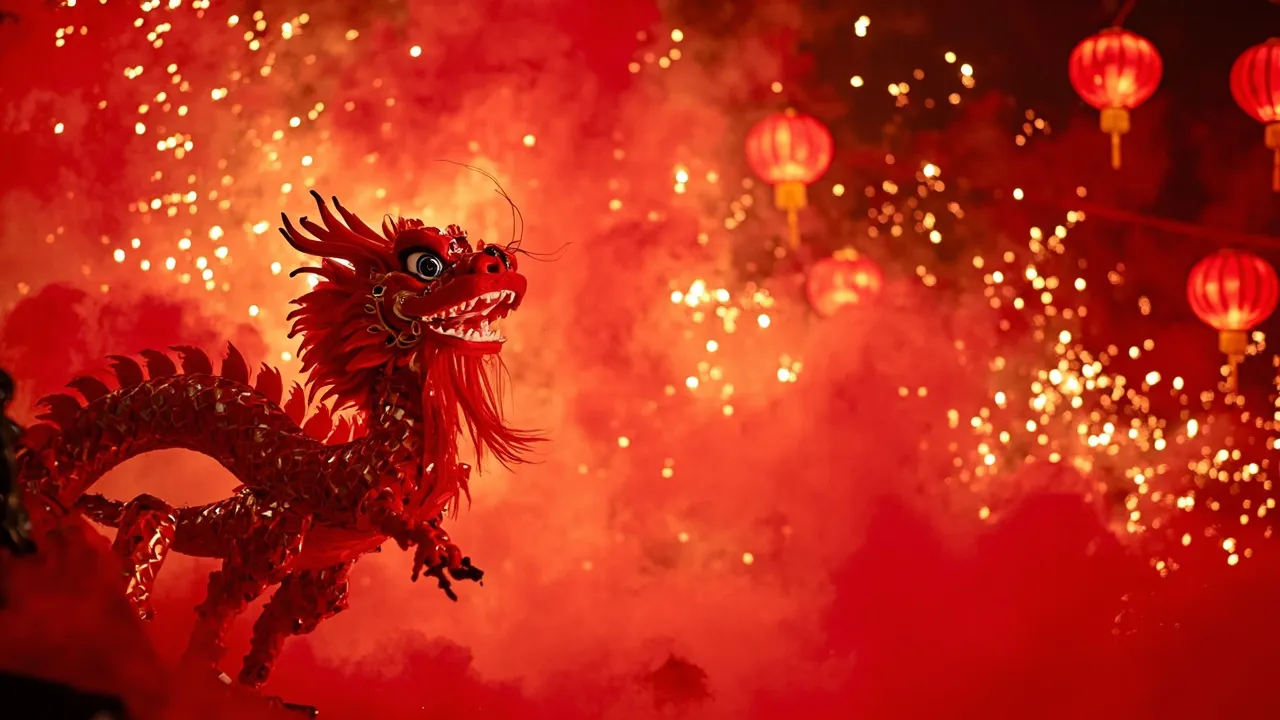
If you only know one Chinese festival, it’s probably this one. Chinese New Year is the most important traditional holiday in China, a fifteen-day celebration that kicks off with massive fireworks, family reunions, and the iconic red envelopes filled with money.
The holiday stems from an ancient legend about a monster called Nian who terrorized villages each winter. The story goes that Nian feared the color red and loud noises, so people started using firecrackers and decorating with red paper to chase it away. Today, those traditions have evolved into one of the most spectacular displays of cultural celebration on the planet.
The first few days of Chinese New Year are the most intensive. Families clean their homes from top to bottom to sweep away bad luck, then decorate with red couplets, paper cuttings, and lanterns. On New Year’s Eve, the biggest dinner of the year comes together—dumplings shaped like ancient gold ingots (symbolizing wealth), whole fish representing abundance, and longevity noodles for health and good fortune.
The fireworks and firecrackers are absolutely deafening in China during this time—some cities have nearly non-stop explosions from dusk till dawn on New Year’s Eve. It’s loud, it’s chaotic, and it’s absolutely magnificent. The noise is supposed to scare away evil spirits and bad luck, but it also creates an atmosphere of pure celebration that you’d have to experience to believe.
After the immediate family celebrations, the holiday extends outward. People visit relatives, friends exchange gifts, and children receive red envelopes called hongbao containing money—these are often given by elders to younger generations as a blessing. The amount of money usually ends in an even number (like 200 or 500) because odd numbers are associated with funerals in Chinese culture.
Chinese New Year ends with the Lantern Festival, when thousands of colorful lanterns illuminate the night, and families eat tangyuan—sweet rice balls that symbolize family unity and completeness. The round shape of these treats represents completeness and happiness.
Qingming Festival
About two months after Chinese New Year, when spring flowers are in full bloom, comes a more solemn celebration: Qingming, also known as Tomb-Sweeping Day.
This isn’t a festival of fireworks and feasting. Instead, it’s a day of remembrance and respect. Families travel to ancestral gravesites to clean the tombstones, remove weeds, and offer food, tea, and paper money to their departed relatives. The holiday reflects deep Confucian values about honoring one’s ancestors and maintaining connections with those who came before.
But Qingming isn’t entirely somber. It’s also a time when Chinese families head outside for spring outings. The weather is perfect—warm but not hot—and parks fill with people flying kites, enjoying picnics, and appreciating the season’s beauty. There’s something beautiful about a holiday that balances remembrance of the past with celebration of the present season.
The food associated with Qingming is particularly interesting. People eat a type of green rice ball called qiutuimo, colored with the juice of a plant called artemisia. These glutinous treats have a subtle earthy flavor and a soft, slightly chewy texture. They’re not widely known outside China, but they’re a beloved seasonal treat that marks the arrival of spring.
Summer and Autumn Festivals
As temperatures rise and the year progresses, Chinese festivals take on different characters—some celebrating abundance, others honoring ancient traditions and mythological figures.
Dragon Boat Festival
The fifth day of the fifth lunar month brings the Dragon Boat Festival, one of China’s most exciting and visually spectacular celebrations. This holiday commemorates the ancient poet Qu Yuan, who lived during the Warring States period over two thousand years ago.
Qu Yuan was a爱国诗人—a patriotic poet—who served in the royal court of Chu. When political rivals convinced the king to exile him, Qu Yuan was devastated. Years later, when he learned that his homeland had been invaded, he threw himself into the Miluo River in despair. Local fishermen rushed out in their boats to try to save him, but it was too late. They threw rice balls into the water to keep the fish away from his body, and thus the tradition of zongzi was born.
Today, the Dragon Boat Festival is famous for, well, dragon boat races. Long, narrow boats shaped like dragons are powered by teams of paddlers who race across rivers and lakes while spectators cheer. The boats are decorated with carved dragon heads and tails, and the rhythm of the drums driving the paddlers creates an absolutely electric atmosphere.
The food of this festival is zongzi—those glutinous rice dumplings wrapped in bamboo leaves. They’re stuffed with fillings like pork, egg, beans, or sweet red bean paste, depending on the region. Making zongzi is a labor of love that takes hours, and many families still make them from scratch rather than buying them pre-made. The triangular shape is said to resemble the ancient gold ingots that represented wealth.
Mid-Autumn Festival
If Chinese New Year is the biggest festival, Mid-Autumn Festival might be the most beautiful. It falls on the 15th day of the 8th lunar month, when the moon is at its fullest and brightest of the year.
The holiday has several layers of meaning. Historically, it celebrates the harvest and gives thanks for the year’s bounty. Mythologically, it’s associated with the story of Chang’e, the Moon Goddess, who floated to the moon after drinking an immortality elixir. Her story is one of sacrifice and longing, and looking at the full moon on this night is said to help you see her image in the lunar surface.
What makes Mid-Autumn Festival special is its emphasis on reunion. Like Chinese New Year, this is a time when families try to gather together. Adults who live in different cities often make the journey home to be with their parents and siblings. The holiday falls in September or October, when the weather is pleasant and travel is easier than during the chaos of Chinese New Year.
The signature food of Mid-Autumn is the mooncake—a round, dense pastry filled with lotus seed paste, red bean paste, or egg yolk. The round shape symbolizes completeness and unity, much like the full moon. Modern mooncakes come in countless varieties, from traditional to adventurous (some brands have made mooncakes with ice cream, chocolate, and even durian fillings), but the traditional versions remain the most beloved.
Families often gather on the evening of Mid-Autumn Festival to appreciate the moon, eat mooncakes, and spend time together. It’s a contemplative, peaceful holiday—far more low-key than the explosive celebration of Chinese New Year, but no less meaningful. There’s something deeply moving about a holiday that asks you to stop, look up at the sky, and think about the people you love.
Double Ninth Festival
The ninth day of the ninth lunar month brings the Double Ninth Festival, a celebration with roots in ancient Chinese wellness traditions. The number nine is considered yang (positive, masculine) in Chinese numerology, and doubling it creates an especially powerful yang day.
This festival is all about longevity and health. Families climb mountains to enjoy the autumn scenery and breathe the crisp fall air—higher altitudes were believed to be healthier in traditional Chinese medicine. People also drink chrysanthemum tea, which is associated with health and long life, and eat double Ninth cakes made from rice flour and nuts.
The Double Ninth Festival has become an occasion to honor elderly family members, similar to how Americans celebrate Mother’s Day or Father’s Day. It’s a time to show respect to elders and wish them health and longevity. In that sense, it carries some of the same emotional weight as American holidays dedicated to family.
Winter Festivals
As the year winds down, Chinese festivals take on a warm, family-centered quality that feels perfect for the colder months.
Winter Solstice Festival
The Dongzhi Festival marks the winter solstice, the shortest day of the year. In Chinese philosophy, this is the moment when yang energy begins to return after reaching its lowest point. It’s a celebration of light returning, of hope reborn.
This festival is particularly important in southern China, where families gather to make and eat tangyuan—those sweet glutinous rice balls we also see at the Lantern Festival. The round shape symbolizes reunion and completeness, and eating them is a way of welcoming the return of longer days.
In northern China, the winter solstice is traditionally marked by eating dumplings. There’s a saying that goes “Dongzhi dumplings, New Year’s mantou”—meaning you eat dumplings at winter solstice and steamed buns at Chinese New Year. The dumplings are said to warm the body and prepare it for the cold winter ahead.
Laba Festival
The Laba Festival falls on the eighth day of the twelfth lunar month, marking the beginning of the Chinese New Year preparations. It’s about a month before Spring Festival, and it serves as a countdown to the main event.
Laba congee is the traditional food—a hearty porridge made with rice, various beans, nuts, and dried fruits. The exact recipe varies by region and family, but it’s always a warming, nourishing dish that brings comfort during the cold winter. Some families also make Laba garlic, pickled in vinegar and sugar, which becomes a tangy accompaniment to winter meals.
The Laba Festival isn’t as widely celebrated as some of the other Chinese holidays, but it’s an important marker on the path to Chinese New Year. For people paying attention to the lunar calendar, it serves as a gentle reminder that the biggest celebration of the year is just around the corner.
Conclusion
Chinese festivals offer a window into a civilization that has celebrated life’s rhythm for thousands of years. From the explosive joy of Chinese New Year to the contemplative beauty of Mid-Autumn, from the remembrance of Qingming to the anticipation of Laba, these holidays weave together history, mythology, family, and hope into celebrations that shape how billions of people experience the passing of time.
What strikes me most about Chinese festivals is how they balance opposites. There’s noise and silence, solemnity and joy, ancient tradition and modern celebration. Families gather, food carries deep meaning, and the passing of seasons becomes an occasion for connection.
For Americans interested in Chinese culture, these festivals offer a wonderful entry point. You don’t need to understand every mythological reference or historical nuance to appreciate the beauty of a dragon boat race, the warmth of sharing mooncakes with family, or the spectacle of a million fireworks lighting up the night. Sometimes the best way to understand a culture is simply to experience its celebrations—and Chinese culture offers some of the most vibrant, meaningful, and unforgettable celebrations in the world.