Chinese Garden Elements: The Art of Creating Paradise in Miniature
Have you ever walked through a Chinese garden and felt like you’d stepped into another world? The carefully arranged rocks, the gentle sound of water, the elegant pavilions tucked among bamboo—there’s something almost magical about these spaces. But Chinese gardens aren’t just pretty landscapes. Every element has been carefully designed over centuries to create specific feelings, evoke particular thoughts, and connect people to nature in profound ways.
Unlike European gardens that often emphasize symmetry and control, Chinese gardens embrace irregularity and natural beauty. They’re designed to feel like untouched nature, even though every stone placement and water flow has been carefully considered. Let me walk you through the main elements that make these gardens so special and explain why each one matters.
Pavilions: Where Beauty Meets Purpose
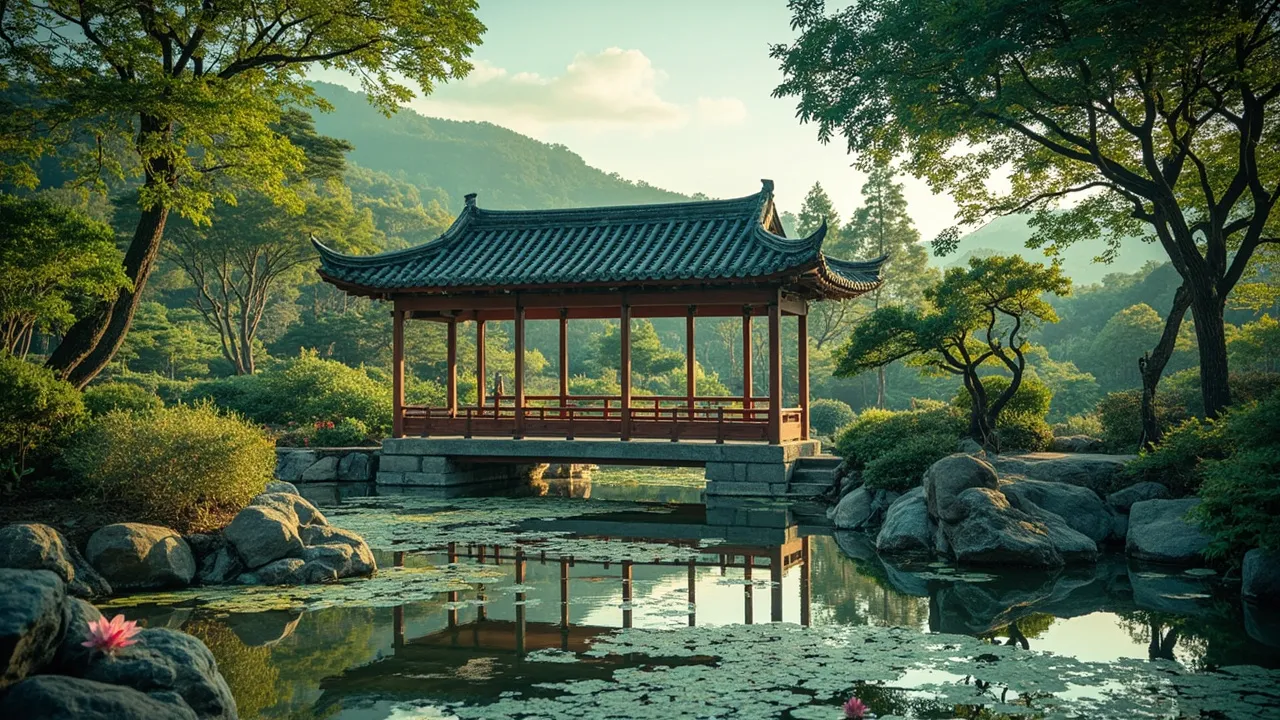
The pavilion is perhaps the most recognizable element in any Chinese garden. These elegant structures with their curved roofs and delicate pillars aren’t just decorative—they serve crucial purposes in how people experience the garden.
Chinese pavilions (ting) were designed as places for contemplation, reading, writing poetry, or simply watching the seasons change. The name itself reflects this purpose—“ting” means a place for stopping and resting, both physically and mentally. When you enter a pavilion, you’re meant to pause, breathe, and really see the garden around you.
The architecture of pavilions carries deep meaning. The upward-curving roof represents the phoenix spreading its wings, a symbol of grace and beauty. The number of pillars often corresponds to symbolic meanings—four pillars might represent the four seasons, while eight could represent the eight virtues of Confucian teaching. Even the colors matter: green for growth and spring, red for celebration and summer, white for mourning and autumn, black for winter and the north.
Different types of pavilions served different purposes. Some were large enough for elaborate tea ceremonies or musical performances. Others were small, intimate spaces designed for private reflection. Water pavilions extended over ponds so visitors could feel surrounded by the garden from all sides. Some pavilions were specifically built to frame particular views—installing windows in exactly the right spots to capture perfect perspectives of distant mountains or flowering trees.
One famous example is the Huo Fang Ting (Magnolia Pavilion) in Suzhou’s Lingering Garden. Its name comes from the magnolia trees that once grew nearby, and it was positioned specifically to offer views of the garden’s most beautiful scenery. The pavilion itself isn’t the destination—it’s a frame that helps visitors see the garden in a new way.
Rockeries: Mountains in Miniature
If pavilions are for seeing, rockeries are for feeling. In Chinese garden design, rocks represent mountains—the most grand and spiritual features of the natural world. A well-placed rock can remind you of a mighty peak, inspire contemplation, and connect the small garden to the vast universe.
Chinese garden rocks are chosen with extraordinary care. Traditional masters spent years learning to identify good specimens, and the most prized rocks could cost fortunes. The ideal rock has holes (suggesting caves and hollow mountains), distinctive ridges (evoking mountain peaks), and a color that suggests age and weathering. Pale limestone from Lake Tai near Suzhou was considered the finest material—these rocks have the gray-blue color of distant mountains and develop beautiful weathering patterns over decades.
The placement of rocks is equally important. Gardens typically feature groupings of three to five rocks, arranged to suggest a mountain range with peaks and valleys. The “主山” (main mountain) is the largest and most prominent, while smaller “客山” (guest mountains) cluster around it. This arrangement mimics real mountain ranges while fitting within the garden’s boundaries.
Chinese philosophy influences rock placement deeply. The concept of yin and yang applies—softer, rounder rocks represent yin (feminine, receiving energy), while sharper, more angular rocks represent yang (masculine, projecting energy). A balanced composition includes both types, creating harmony between opposing forces.
There’s also a spiritual dimension to rocks. Taoist monks believed certain rocks contained spiritual energy or housed deities. Placing rocks in the northern part of a garden (traditionally associated with water and the Black Tortoise) was thought to bring longevity and wisdom. Some gardens included rocks specifically to honor these beliefs.
Water Features: The Heart of the Garden
Water is essential in Chinese gardens—not just as decoration but as a living, changing element that brings the space to life. The saying “where there’s water, there’s life” captures how Chinese garden designers think about water features.
Ponds are the most common water element, designed to reflect the sky and surrounding scenery. A well-designed pond makes the garden seem larger than it actually is, doubling the visual space through reflection. The edges of ponds are never perfectly straight—irregular curves suggest natural lakefronts and create hiding spots for fish and plants.
Chinese garden ponds often include features that add visual and auditory interest. Small islands might hold pavilions or rocks, creating focal points. Bridges, either elegant arched structures or simple flat planks, connect different parts of the water and add crossing points that make the garden more interactive. Waterfowl like ducks and geese add life and movement, while koi fish provide color and the traditional association with perseverance (koi swimming upstream is a symbol of strength).
Fountains and waterfalls bring movement and sound. Flowing water creates soothing sounds that mask urban noise and add a meditative element to the garden experience. The direction and speed of water flow were considered important—in flowing water, there’s active qi (life energy), while still water suggests contemplation and stillness.
Some gardens feature streams designed to imitate natural waterways. These might include small rocky rapids, calm pools, and sections that disappear under bridges or through hidden channels. The goal is always to suggest a much larger water system than actually exists, expanding the perceived boundaries of the garden.
Bridges: Connecting Worlds
Chinese garden bridges are far more than practical crossings—they’re designed to be experienced as part of the scenery. The shape, material, and placement of each bridge contribute to the garden’s overall feeling and meaning.
The most iconic Chinese garden bridge is the arched stone bridge, inspired by designs that date back thousands of years. These bridges curve gracefully over water, with their reflections creating perfect circles or ovals—a geometric harmony that Chinese aesthetics particularly prize. The arch allows boats to pass beneath while creating a distinctive silhouette.
But not all Chinese garden bridges are arched. Some are flat wooden plank bridges, simple and rustic, designed to feel more natural and less imposing. Zigzag wooden bridges were popular in Suzhou gardens—the unusual pattern forces visitors to slow down and look around as they cross, extending the experience of moving through the garden.
The placement of bridges was carefully considered. A bridge might connect two islands, span the narrowest part of a pond, or provide access to a hidden corner. Some bridges were positioned specifically to create certain views—standing on the bridge, you might see the garden framed by its railings in a completely new way.
Bridges also carry symbolic meaning. They represent transition and change—crossing from one state to another. In garden design, they might mark the passage from active to passive areas, or from public to private spaces. The act of crossing a bridge becomes a small journey, a moment of transition that prepares visitors for the next garden experience.
Plantings: Living Elements That Change
If rocks are the bones and water the blood of a Chinese garden, plants are its living skin—always changing with the seasons and bringing the space to life throughout the year.
Chinese garden designers carefully selected plants for their symbolic meanings as much as their appearance. Bamboo represents integrity and flexibility—the hollow stems suggest humility, while the way it bends without breaking symbolizes resilience. Pine trees symbolize longevity and steadfastness, their evergreen needles representing perseverance through all seasons. Plum blossoms represent winter hardness and early spring renewal, blooming when other flowers remain dormant.
The “four gentlemanly plants” (梅兰竹菊)—plum blossom, orchid, bamboo, and chrysanthemum—appear in nearly every classical Chinese garden. Each represents a season and a noble quality: the plum blooms in winter, the orchid in spring, the bamboo stands through summer, and the chrysanthemum blooms in autumn. Together, they suggest a complete, balanced garden that offers beauty in every season.
Plant placement follows philosophical principles. Trees might be placed to frame views or provide shade in summer while allowing light through in winter (deciduous trees lose their leaves seasonally). Flowers are positioned where their beauty can be enjoyed from pavilions and paths. Fragrant plants are placed near sitting areas where their scent can be appreciated.
Perhaps most importantly, Chinese gardens embrace seasonal change. A garden designed for year-round interest includes plants that bloom at different times, ensuring something is always in flower or fruit. Spring brings cherry blossoms and wisteria; summer features lotuses and lilies; autumn offers chrysanthemums and colorful maple leaves; winter displays plum blossoms and pine branches. Walking through the same garden in different seasons reveals completely different experiences.
The Philosophy Behind the Design
Understanding Chinese garden elements requires grasping the philosophy that underlies the entire tradition. These aren’t random collections of pretty features—they’re carefully composed expressions of cultural values and spiritual beliefs.
The concept of “借景” (jie jing), or “borrowed scenery,” is fundamental. A well-designed Chinese garden doesn’t exist in isolation—it incorporates distant mountains, nearby buildings, and even the sky itself as part of its composition. The garden’s boundaries are deliberately made transparent through windows and openings that reveal the world beyond. This creates the feeling that the garden extends infinitely beyond its actual walls.
“步移景异” (bu yi jing yi) describes how the view changes with every step. Chinese gardens are designed to reveal themselves gradually—turn a corner and discover a new scene, cross a bridge and find an entirely different perspective. This creates a sense of discovery and encourages slow, contemplative exploration rather than quick observation.
The balance of “阴” (yin, shaded, passive, soft) and “阳” (yang, bright, active, hard) elements runs throughout. Rocks are yang, water is yin. Deciduous trees provide yang in summer, their bare branches allow yin in winter. Curved roofs represent yang energy, while straight pillars suggest yin stability. A well-balanced garden includes both, creating dynamic harmony.
Finally, there’s the goal of creating a “桃花源” (tao hua yuan), a Paradise on Earth. Classical Chinese gardens were meant to be refuges from the busy, corrupt world outside—small pockets of ideal nature where scholars could retreat to cultivate their minds and spirits. Every element works toward this goal of peaceful contemplation and connection to the natural world.
Chinese gardens aren’t just tourist attractions or pretty parks. They’re carefully composed works of art, philosophy, and cultural expression that have been developed over millennia. Understanding the elements—pavilions, rocks, water, bridges, and plants—gives you a key to appreciating these spaces on a much deeper level. Next time you visit a Chinese garden, look for these elements and think about the centuries of tradition behind each stone, each ripple of water, each carefully placed plant.
The Philosophy Behind the Design
Understanding Chinese garden elements requires grasping the philosophy that underlies the entire tradition. These aren’t random collections of pretty features—they’re carefully composed expressions of cultural values and spiritual beliefs.
The concept of “借景” (jie jing), or “borrowed scenery,” is fundamental. A well-designed Chinese garden doesn’t exist in isolation—it incorporates distant mountains, nearby buildings, and even the sky itself as part of its composition. The garden’s boundaries are deliberately made transparent through windows and openings that reveal the world beyond. This creates the feeling that the garden extends infinitely beyond its actual walls.
“步移景异” (bu yi jing yi) describes how the view changes with every step. Chinese gardens are designed to reveal themselves gradually—turn a corner and discover a new scene, cross a bridge and find an entirely different perspective. This creates a sense of discovery and encourages slow, contemplative exploration rather than quick observation.
The balance of “阴” (yin, shaded, passive, soft) and “阳” (yang, bright, active, hard) elements runs throughout. Rocks are yang, water is yin. Deciduous trees provide yang in summer, their bare branches allow yin in winter. Curved roofs represent yang energy, while straight pillars suggest yin stability. A well-balanced garden includes both, creating dynamic harmony.
Finally, there’s the goal of creating a “桃花源” (tao hua yuan), a Paradise on Earth. Classical Chinese gardens were meant to be refuges from the busy, corrupt world outside—small pockets of ideal nature where scholars could retreat to cultivate their minds and spirits. Every element works toward this goal of peaceful contemplation and connection to the natural world.
Famous Gardens to Explore
If you want to experience these garden elements firsthand, several classical Chinese gardens have been preserved and are open to visitors. Here are some of the most renowned:
The Lingering Garden (留园) in Suzhou is perhaps the most famous classical Chinese garden. It was built in the 16th century and covers about 2.3 acres. The garden is famous for its elegant architecture, intricate rockeries, and masterful use of space. The “Cold Mountain Hall” features one of the most beautiful rockeries in all of China—a stunning composition of carefully positioned stones that looks different from every angle.
The Master of the Nets Garden (网师园) in Suzhou is smaller but considered one of the most perfectly designed. Every element is precisely placed to create ideal views from key viewing points. The garden is especially beautiful at night when lanterns are lit, creating a magical atmosphere that has inspired countless poems and paintings.
The Humble Administrator’s Garden (拙政园) in Suzhou is the largest classical garden in Suzhou and one of the most famous in all of China. It was originally the private garden of a retired government official who wanted to live a simple life away from political pressures—hence the name “Humble Administrator.” The garden perfectly embodies the Chinese ideal of living in harmony with nature.
The Summer Palace (颐和园) in Beijing demonstrates how these garden principles work on a larger scale. While technically a royal retreat rather than a private garden, it incorporates all the elements we’ve discussed—pavilions, bridges, rockeries, and extensive water features. The famous Kunming Lake and Longevity Hill create a landscape that feels natural despite extensive human modification.
In Shanghai, the Yu Garden (豫园) was built in the 16th century and showcases Ming Dynasty garden design at its finest. The famous Huxinting Tea House, built on a small island in the garden’s center, is one of the most photographed buildings in China.
Modern Applications of Garden Design
The principles of Chinese garden design aren’t just relevant to historical preservation—they can inform contemporary landscape architecture and even our own outdoor spaces. Many modern designers draw inspiration from classical Chinese garden concepts when creating spaces that promote tranquility and connection with nature.
The principle of “borrowed scenery” is widely used in modern landscape architecture. Good designers always consider how a space will interact with its surroundings—how can windows frame views, how can paths create reveals, how can the boundary between inside and outside become blurred?
The Chinese garden emphasis on change over time is also increasingly relevant. Modern gardens are often designed to evolve through seasons and years, with plants that grow and change, with materials that weather gracefully, and with water features that develop their own ecosystems. This approach creates spaces that feel alive rather than static.
Even the smallest outdoor spaces can benefit from Chinese garden thinking. A simple backyard can incorporate elements like a small water feature, carefully chosen rocks, plants selected for seasonal interest, and a seating area positioned for optimal viewing. The key is intentionality—thinking about how each element contributes to the overall feeling and meaning of the space.
Planning Your Garden Visit
If you’re inspired to visit a classical Chinese garden, here are some tips for getting the most from your experience:
Visit early in the morning. Chinese gardens are most peaceful when they first open, before tour groups arrive. The early light also creates beautiful effects as it filters through bamboo and illuminates rockeries.
Take your time. These gardens are designed to be experienced slowly, not rushed through. Find a bench in a pavilion and sit for a while, watching how light changes the scene. Return to spots you liked earlier and see how they look from different angles.
Look for the details. Don’t just photograph the famous views—examine the craftsmanship. Notice how roof tiles are arranged, how windows are carved, how moss grows on stone in ways that look natural but are often carefully encouraged.
Learn the story. Many gardens have fascinating histories tied to specific historical figures. Understanding who built a garden and why adds another layer of appreciation. Guided tours or audio guides can provide this context.
Return if you can. The same garden changes completely through seasons and even times of day. A garden visited in spring looks entirely different from the same space in autumn—or even at sunset versus midday.
Chinese garden elements are windows into a sophisticated cultural tradition that saw no contradiction between nature and artifice, between wild beauty and careful design. They remind us that outdoor spaces can be more than functional—they can be places for contemplation, beauty, and connection to something larger than ourselves. Whether you visit a famous classical garden or simply notice these elements in your own neighborhood, Chinese garden design offers timeless lessons about creating meaningful spaces.