Chinese Kung Fu: The Art of Martial Arts
Imagine watching a martial arts movie. The hero moves with lightning speed, fists flying, legs kicking in perfect coordination. The choreography seems almost too smooth, too graceful to be real fighting. But here’s the thing—Chinese Kung Fu is very real, and it has been perfecting those movements for over four thousand years.
Maybe you’ve seen Bruce Lee films, or watched Ip Man at the theater. Maybe you’ve walked past a Kung Fu school in your local strip mall and wondered what actually happens inside. Whatever brought you here, you’re about to discover one of humanity’s most remarkable cultural treasures.
Chinese martial arts aren’t just about fighting. They’re about discipline, health, philosophy, and connecting with a tradition that has shaped millions of lives across the globe. Let’s dive in and explore what makes Kung Fu so special.
What Is Kung Fu?
First things first—what exactly is Kung Fu? The term itself might surprise you. In everyday English, we use “Kung Fu” to mean Chinese martial arts, but the Chinese characters (功夫 - gōngfū) actually mean something closer to “achievement through effort” or “skill gained through hard work.” It’s the same word the Chinese use when talking about someone’s skill at playing piano or cooking. When someone says someone has “gongfu,” they mean they’ve put in the time and effort to master something.
The more formal term for Chinese martial arts is wushu (武术), which literally means “martial art” or “military art.” But here’s where it gets interesting—there is no single “Kung Fu.” Instead, there are hundreds of distinct styles, each with its own techniques, philosophies, and training methods. Some focus on hard, powerful strikes. Others emphasize flowing, circular movements. Some are meant for combat, while others were developed purely for health and meditation.
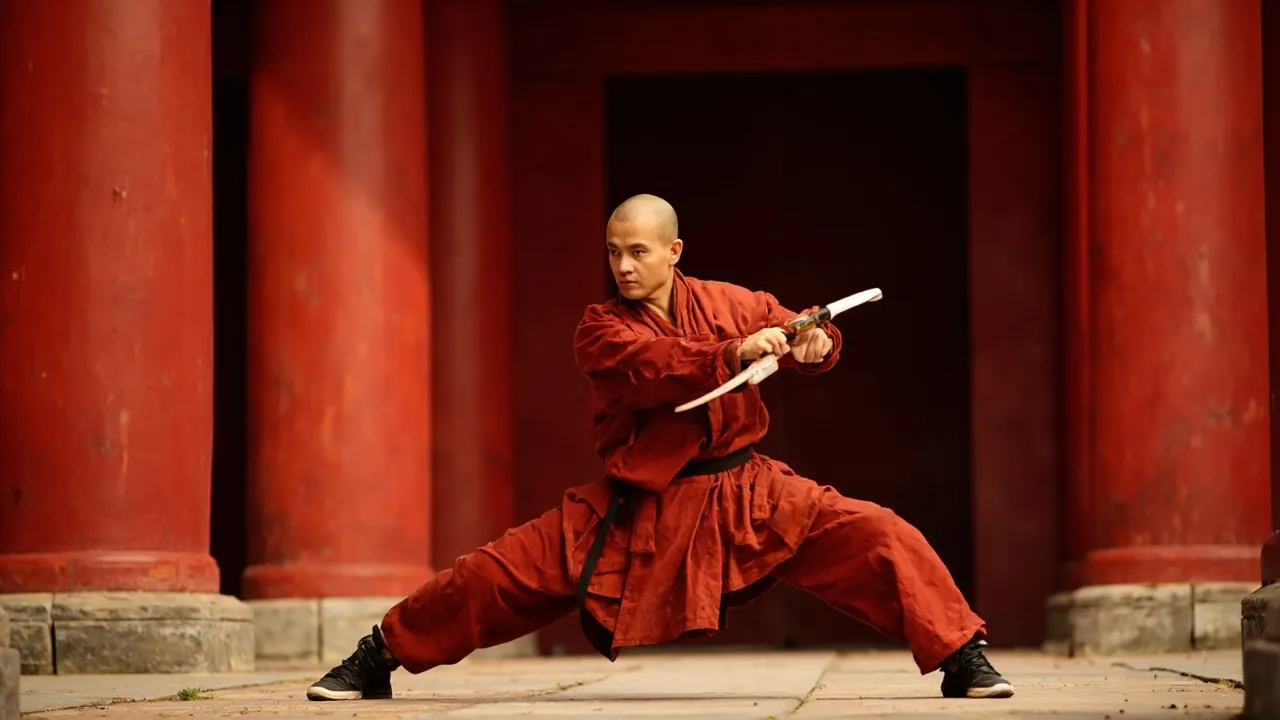
The most famous distinction in Chinese martial arts is between “hard” (外家 - wàijiā) and “soft” (内家 - nèijiā) styles. Hard styles, sometimes called “external” styles, focus on building physical strength, developing powerful strikes, and conditioning the body through rigorous training. Shaolin Kung Fu is perhaps the most well-known hard style, known for its dynamic kicks, powerful punches, and acrobatic movements. Hard style practitioners often condition their fists and shins by striking hard objects, developing calluses and bone density that make their strikes devastating.
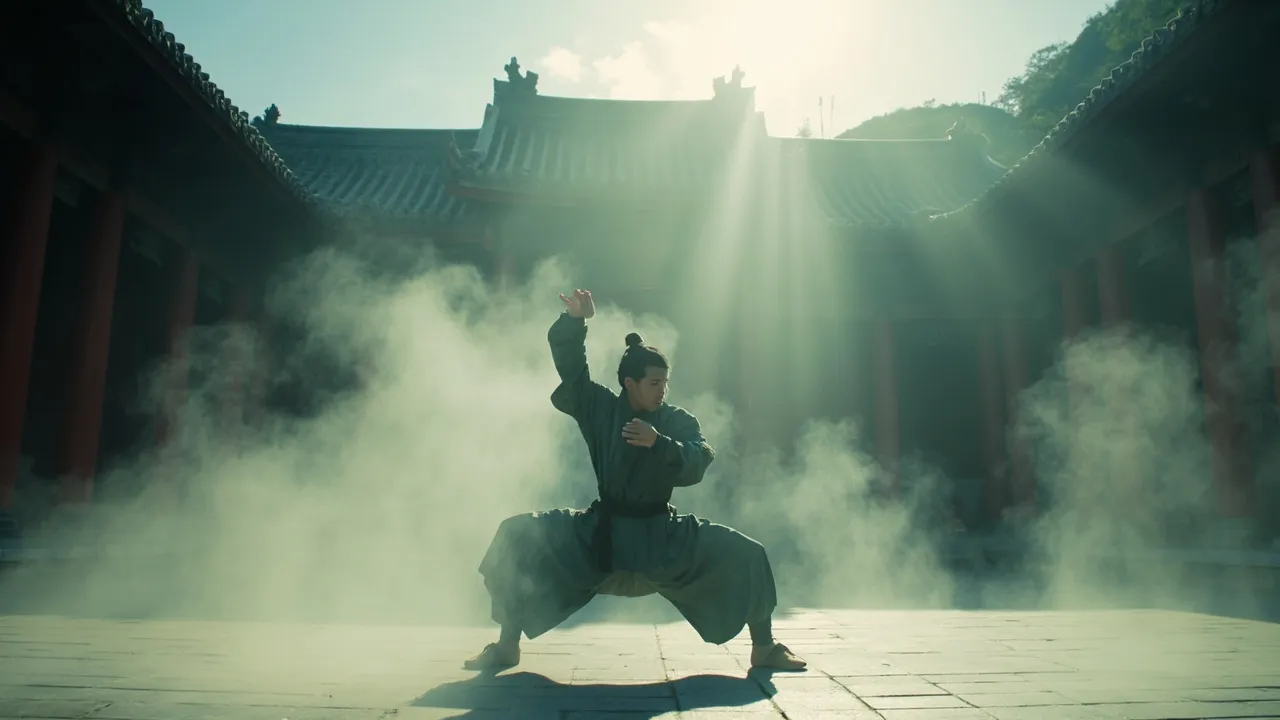
Soft styles, or “internal” styles, take a different approach. Rather than relying primarily on physical power, internal martial arts focus on developing internal energy (qi), proper body mechanics, and subtle techniques that use an opponent’s force against them. Tai Chi (太极拳) is the most famous internal style, known for its slow, flowing movements that paradoxically build tremendous internal strength. Other internal styles include Xing Yi Quan (形意拳) and Ba Gua Zhang (八卦掌), each with its own unique approach to developing internal power.
Within these two broad categories, countless specific styles exist. Wing Chun (咏春拳), made famous by Bruce Lee and Ip Man, emphasizes close-range combat and efficiency of movement. practitioners learn to detect an opponent’s intentions through sensitivity training, reacting to attacks with minimal effort. Northern Leg Style (北腿) emphasizes high kicks and aerial techniques, while Southern Fist (南拳) focuses on powerful hand techniques and stable stances. There are literally hundreds of distinct styles, each with its own strengths and characteristics.
What ties all these styles together is a shared belief that martial training develops not just the body, but the mind and spirit as well. When Chinese masters talk about Kung Fu, they’re talking about a complete lifestyle—a way of living that emphasizes constant improvement, self-discipline, and respect for tradition. The physical techniques are important, but they’re ultimately a vehicle for developing character, wisdom, and spiritual growth.
The History of Chinese Martial Arts
The story of Chinese martial arts stretches back further than most people realize. We’re not talking about a few centuries here—Chinese martial traditions are among the oldest in the world, with roots going back to the Xia Dynasty around 2100 BCE. That’s over four thousand years of continuous development, making Chinese martial arts one of humanity’s oldest unbroken sporting traditions.
In the very beginning, martial skills were purely practical. Ancient Chinese needed to defend themselves against wild animals, rival tribes, and the constant threat of war. Soldiers trained in hand-to-hand combat, archery, and spear fighting. These weren’t elegant movements—they were brutal, practical techniques designed to keep people alive. Early Chinese warfare emphasized weapons training, with the spear, sword, and halberd being the primary weapons of choice. Hand-to-hand combat was considered secondary to weapon skills, useful when weapons failed or in close-quarters situations.
The earliest written records of Chinese martial arts come from the Spring and Autumn Period (770-476 BCE) and the Warring States Period (475-221 BCE). During these turbulent times, Chinese warfare evolved rapidly, and with it, martial training became more sophisticated. Military manuals from this era, such as Sun Tzu’s “The Art of War,” although primarily about strategy, also contain insights into martial training and the importance of physical conditioning for soldiers.
But somewhere along the way, something changed. Chinese warriors and philosophers began to see that martial training could develop more than just fighting ability. The physical discipline required for martial excellence could also develop mental fortitude, moral character, and spiritual depth. This realization would transform Chinese martial arts from purely military skills into comprehensive systems for human development.
The Shaolin Temple, founded in 495 CE in Henan Province, became the legendary birthplace of Chinese martial arts as we know them today. Buddhist monks at the temple combined their spiritual practice with physical training, developing a system that turned combat into an art form. The temple sits at the foot of Songshan Mountain, one of China’s Five Great Mountains, in a location that has been sacred for thousands of years.
The story goes that a Buddhist monk named Bodhidharma (known as Damo in Chinese) traveled from India to the Shaolin Temple around the 6th century. He found the monks weak from long hours of meditation and introduced them to a series of exercises that would become the foundation of Shaolin Kung Fu. Whether this exact story is true or partly legend, there’s no doubt that Shaolin monks developed some of the most sophisticated martial systems in Chinese history. Over centuries, they created training methods that built incredible physical strength, flexibility, and combat skills while also developing the mental discipline necessary for spiritual advancement.
The monks developed what we now call “Shaolin Temple Kung Fu,” which includes both empty-hand techniques and weapon forms. Temple records mention martial training as early as the Tang Dynasty (618-907 CE), and by the Ming Dynasty (1368-1644), Shaolin martial arts had become famous throughout China. The monks developed hundreds of forms, each with specific applications for combat, health, or spiritual development.
Over the following centuries, martial arts spread throughout Chinese society. Farmers developed styles for self-defense against bandits. Merchants created techniques for protecting their goods on the road. Wandering martial artists studied with multiple masters, combining different styles into new systems. Even the imperial court had its own martial traditions, with the emperor’s guards trained in specialized combat methods. Each region, each profession, each family developed its own variations, leading to the incredible diversity we see today.
The Ming Dynasty saw a particular flourishing of martial arts literature. Famous masters wrote treatises on their styles, preserving techniques and philosophies for future generations. These texts often combined practical combat instruction with philosophical reflections, showing how martial training was seen as a path to moral and spiritual development.
The 20th century brought dramatic changes to Chinese martial arts. The fall of the Qing Dynasty in 1912 and the subsequent political upheavals forced many martial arts masters to flee China. When many Chinese masters emigrated to the United States after the Communist takeover in 1949, they brought their knowledge with them, establishing schools that would introduce American audiences to Chinese martial arts.
Bruce Lee’s movies in the 1960s and 1970s introduced Chinese martial arts to mainstream American audiences in a way that nothing had before. His films, including “Enter the Dragon” (1973), which he co-starred in with James Bond himself, brought Kung Fu into living rooms across America and around the world. Bruce Lee wasn’t just a movie star—he was a genuine martial artist who developed his own philosophy of combat (Jeet Kune Do) and challenged many traditional assumptions about martial training.
The subsequent decades saw continued growth of Chinese martial arts in the West. Jackie Chan brought a new dimension to martial arts cinema, combining incredible acrobatic skills with comedic timing. Other stars like Jet Li and Donnie Yen further popularized Chinese martial arts, each bringing their own distinctive styles to the screen.
The Five Animals Style
One of the most fascinating aspects of Chinese martial arts is how deeply they connect to nature. Nowhere is this more apparent than in the Five Animals style (五形拳 - wǔ xíng quán), a system that draws inspiration from the movements and characteristics of five creatures: the dragon, tiger, leopard, snake, and crane. This system represents centuries of observation of animal movement and combat behavior, translated into human martial techniques.
Each animal represents a different fighting philosophy and set of techniques. Understanding these styles gives you a window into how Chinese masters thought about combat and self-improvement. The five animals aren’t just metaphors—they represent distinct approaches to movement, strategy, and physical development that can be applied to any combat situation.
The Dragon (龙 - lóng) represents power, mystery, and spiritual awareness. Dragon style Kung Fu emphasizes strong, fluid movements that can appear almost magical. Practitioners learn to move with the energy that flows through their bodies, developing internal power that isn’t immediately visible to the eye. Dragon style builds overall strength and teaches practitioners to tap into their natural chi or life energy. The movements are often soaring and expansive, with sweeping arm motions and powerful stances. In Chinese culture, the dragon is a symbol of imperial power and divine protection, so Dragon style carries associations with nobility and spiritual transcendence.
The Tiger (虎 - hǔ) symbolizes strength, stability, and raw power. Tiger style focuses on powerful strikes, clinch work, and ground techniques. When you watch a Tiger style practitioner, you see explosive energy—strong punches, devastating elbow strikes, and powerful grappling moves. This style builds physical strength and develops the hard, aggressive aspects of martial combat. Tiger style training often includes strengthening exercises like hitting iron rings, crushing bricks with bare hands, and other conditioning routines that build the hand and finger strength needed for powerful clawing and gripping techniques. The tiger represents one of the most dangerous predators in nature, and this style channel that predatory ferocity into combat.
The Leopard (豹 - bào) brings speed and precision to the system. Leopard style practitioners move quickly, striking with lightning-fast jabs and combinations. This style emphasizes timing and accuracy over raw power. Practitioners learn to exploit openings in their opponent’s defense, striking vulnerable points with surgical precision. Leopard style includes many rapid, consecutive strikes, reflecting the leopard’s method of overwhelming prey with a flurry of attacks before it can react. The movements are more compact than Tiger or Dragon, emphasizing efficiency and economy of motion.
The Snake (蛇 - shé) represents flexibility, sensitivity, and subtle movement. Snake style looks almost serpentine—the movements are smooth, flowing, and hard to predict. Practitioners learn to flow around attacks, finding gaps in their opponent’s defense. This style develops sensitivity to an opponent’s movements, allowing practitioners to react to attacks before they land. Snake style includes many joint-locking techniques and strikes to vulnerable points, reflecting how the snake uses coiling and striking motions to capture prey. The movements are low and ground-oriented, with practitioners often moving in close to work against larger opponents.
The Crane (鹤 - hè) embodies balance, grace, and efficiency. Crane style practitioners seem to float above the ground, moving with elegant balance. This style emphasizes kicks, dodging, and maintaining optimal distance from an opponent. Practitioners learn to use an opponent’s energy against them, deflecting attacks with minimal effort. The crane is known for standing motionless for long periods before striking with incredible speed, and this style captures that patient, explosive energy. Crane style includes many one-legged stances and balance-challenging movements that develop tremendous stability and body awareness.
The genius of the Five Animals system is that it addresses every possible combat situation. Strong opponent? Use Dragon or Tiger to match their power. Fast opponent? Match them with Leopard or Crane to match their speed. Technical opponent? Outmaneuver them with Snake. By training in all five animals, practitioners develop a complete skill set that can handle any challenge. Different animals are emphasized in different times of day and seasons—some masters teach that practicing certain animals at certain times maximizes their effectiveness.
What really captures the imagination, though, is how these animal styles connect to broader Chinese philosophy. The interplay between the five animals reflects the Chinese concept of balance—yin and yang, hard and soft, internal and external. Each style has its strengths and weaknesses, and true mastery comes from understanding how they work together. The five animals also connect to the five elements (wood, fire, earth, metal, water) in Chinese cosmology, creating a comprehensive system that addresses not just combat but health, personality development, and spiritual growth.
The Philosophy Behind Kung Fu
Here’s something that surprises a lot of people: Chinese martial arts are as much about philosophy as they are about fighting. In fact, many masters would say the fighting is just the outer expression of much deeper principles. When you strip away the kicks and punches, you find a comprehensive system for developing the whole person—body, mind, and spirit.
At the heart of Kung Fu philosophy is the concept of qi (气), often translated as “life energy” or “vital force.” Chinese masters believe that qi flows through the body along specific pathways called meridians. When this energy flows freely and strongly, a person is healthy, focused, and capable of extraordinary physical achievement. When it becomes blocked or weak, problems follow. This concept isn’t as mystical as it might sound at first—many Western researchers have studied the effects of qigong (qi cultivation) practices and found measurable benefits to health and well-being.
Internal martial arts like Tai Chi and Xing Yi specifically focus on developing and circulating qi. Practitioners perform slow, flowing movements designed to massage the internal organs, stimulate energy flow, and build what Chinese masters call “internal power.” This isn’t just spiritual belief—many Western researchers have studied these practices and found measurable health benefits, from improved balance to reduced stress to better cardiovascular health. Modern science has begun to explore what Chinese practitioners have understood for centuries: that deliberate, mindful movement can have profound effects on the body’s systems.
The concept of yin and yang is equally fundamental to Kung Fu philosophy. These complementary forces make up all things in the universe—light and dark, hot and cold, hard and soft. In martial arts, this translates to understanding when to use hard force and when to yield, when to attack and when to defend. A skilled Kung Fu practitioner doesn’t just rely on strength or speed; they understand how to blend with an opponent’s energy and redirect it. The best fighters know that strength can be overcome with softness, speed can be countered with patience, and aggression can be turned against itself.
This principle extends to training as well. Chinese masters understand that the body needs both stress and recovery, both exertion and relaxation, to develop properly. Overtraining leads to injury and burnout, while undertraining produces no progress. The balance between these extremes is itself a form of yin-yang philosophy applied to physical conditioning.
The principle of wu wei (无为), or “effortless action,” also plays a major role in advanced Kung Fu training. This doesn’t mean doing nothing—it means acting in harmony with the natural flow of things, without unnecessary tension or resistance. A master who has achieved wu wei appears to move without effort, their techniques flowing automatically in response to any situation. This level of skill takes years of dedicated practice, but it represents the ultimate goal of martial training. The master doesn’t think about what technique to use—the technique simply happens, arising naturally from years of proper training.
Wu wei extends to mental and emotional states as well. A practitioner who has mastered wu wei doesn’t waste energy on unnecessary tension, fear, or aggression. They remain calm and centered regardless of the situation, able to respond effectively because they’re not clouded by emotional disturbance. This mental aspect of martial arts is perhaps even more important than the physical techniques.
Respect and humility are also central to Kung Fu philosophy. Students bow to their teachers and seniors as a sign of respect for their knowledge and experience. Training partners thank each other after sparring, recognizing that each partner contributes to their development. The master-student relationship is treated with deep seriousness, passing down not just techniques but wisdom and values that have been refined over generations. In a traditional Kung Fu school, character development is considered just as important as physical skill. A student who shows great technical ability but poor character is not considered a true martial artist.
This emphasis on character might seem old-fashioned in our modern world, but it serves an important purpose. Martial skills are potentially dangerous—they can harm others if misused. By emphasizing moral development alongside physical training, traditional Kung Fu schools create practitioners who are unlikely to misuse their abilities. The philosophy acts as a check on the potential for violence that comes with martial skill.
Finally, there’s the concept of continuous improvement, or what the Chinese call “self-cultivation.” The Chinese word for Kung Fu itself emphasizes this—gongfu means “skill gained through effort.” There’s no endpoint to martial training, no moment when you’ve “made it.” Every day is an opportunity to learn something new, to refine a technique, to become a better version of yourself. This mindset extends beyond the martial arts school into everyday life. A true martial artist applies the same dedication to improvement in their career, relationships, and personal development.
The pursuit of perfection is itself a form of spiritual practice. By constantly striving to improve, practitioners develop qualities like patience, perseverance, and humility. They learn to accept criticism as a tool for growth rather than as an attack. They develop the resilience to keep going when progress seems slow. These are valuable life skills that extend far beyond the training floor.
Kung Fu in Modern World
Chinese martial arts have come a long way from their ancient roots. Today, Kung Fu exists in forms its founders could never have imagined, reaching millions of people worldwide through movies, television, video games, and direct training. The art that was once the exclusive domain of Chinese monks, soldiers, and wandering masters has become a global phenomenon, practiced by people of all ages, backgrounds, and nationalities.
The modern Olympics have even embraced wushu. Since 2008, when wushu competitions were held in Beijing alongside the Olympic Games, the sport has gained international recognition. Professional wushu athletes now compete in tournaments around the world, performing spectacular routines that combine traditional techniques with athletic choreography. The World Wushu Championships attract competitors from dozens of countries, proving that Chinese martial arts have truly gone global. These competitions showcase both taolu (forms) and sanda (combat sport) disciplines, demonstrating the breadth of modern wushu.
In the United States, Kung Fu schools can be found in nearly every city. Some focus on traditional styles, preserving techniques passed down through generations of masters. Others have evolved into hybrid systems, blending Chinese methods with boxing, wrestling, and other martial arts. There’s something for everyone—whether you’re interested in competitive fighting, self-defense, fitness, or cultural exploration. Many schools now offer classes specifically designed for children, seniors, or people looking for a unique workout experience.
The fitness world has also embraced Kung Fu principles. Tai Chi, once seen as an art for elderly people, is now recommended by doctors for improving balance and reducing fall risk in seniors. Medical studies have shown that regular Tai Chi practice can improve cardiovascular health, reduce anxiety, and help manage chronic conditions like arthritis. Yoga studios offer classes inspired by Kung Fu movements. Even corporate America has discovered that Kung Fu training can build focus, discipline, and stress resilience in employees. Companies like Google and Nike have incorporated martial arts training into their wellness programs.
Hollywood continues to fuel interest in Chinese martial arts. While Bruce Lee paved the way, today’s action stars—from Jackie Chan to Donnie Yen to the cast of Marvel’s Shang-Chi—continue to showcase Chinese martial arts to global audiences. These films have introduced millions of people to the beauty and drama of Kung Fu, inspiring many to try it themselves. The influence works both ways—modern action cinema has also influenced Chinese martial arts, with contemporary forms incorporating more acrobatic and athletic elements.
Video games like Tekken, Street Fighter, and dozens of others draw heavily on Kung Fu aesthetics and techniques. These games introduce martial arts to young people who might never otherwise encounter them, creating a pipeline of future practitioners. Even people who never set foot in a martial arts school develop an appreciation for Kung Fu through gaming. The success of games featuring martial arts characters shows how deeply these arts have penetrated global popular culture.
Perhaps most importantly, Chinese martial arts have become a bridge between cultures. Every year, thousands of Western students travel to China to train at the Shaolin Temple and other famous martial arts schools. Chinese teachers travel abroad to share their knowledge. What started as a purely Chinese tradition has become a global community of practitioners who share a common passion, regardless of nationality or background. This cultural exchange benefits everyone involved—Western students gain access to traditional knowledge, while Chinese masters find new audiences for their teachings.
The rise of mixed martial arts (MMA) has also brought attention to Chinese martial arts. While MMA originally drew primarily from Brazilian Jiu-Jitsu, wrestling, and boxing, many fighters have incorporated techniques from Kung Fu styles. The cage has become a testing ground for traditional techniques, and several fighters have found success using Wing Chun principles, Sanda kicks, and other Chinese methods. This cross-pollination has led to a renewed interest in traditional Chinese martial arts among serious fighters.
The philosophical aspects of Kung Fu have also found renewed relevance in our modern world. In an age of instant gratification and digital distraction, the patient, disciplined approach of traditional martial arts offers a refreshing alternative. The emphasis on respect, humility, and continuous improvement provides valuable lessons that extend far beyond the training floor. Many people find that martial arts training helps them cope with the stresses of modern life, providing a sanctuary from the chaos of daily routine.
Technology has also changed how people learn Kung Fu. Online tutorials, video conferences with teachers in China, and social media communities have made traditional knowledge more accessible than ever before. While nothing can replace in-person training with a qualified teacher, these tools have democratized access to martial arts knowledge. A person in a small town can now learn from masters on the other side of the world.
Looking to the future, Chinese martial arts seem poised for continued growth. As more people seek alternatives to conventional fitness programs, as interest in Eastern philosophy continues to rise, and as global connectivity brings different cultures into closer contact, Kung Fu will likely continue to expand its reach. The core principles of discipline, respect, and continuous improvement are timeless, and they resonate with people regardless of their cultural background.
Conclusion
Chinese Kung Fu is far more than a fighting system. It’s a four-thousand-year-old tradition that encompasses combat, health, philosophy, and culture. From the temples of Shaolin to schools in your neighborhood, this ancient art continues to transform lives and inspire people around the world. The journey from ancient battlefields to modern gymnasiums has been long, but the core principles remain unchanged: discipline, respect, and the endless pursuit of self-improvement.
Whether you’re drawn to the powerful strikes of Tiger style, the flowing movements of Snake, or the balanced grace of Crane, there’s a Kung Fu style that’s right for you. The journey isn’t easy—it requires dedication, patience, and humility. But those who commit to the path discover something truly valuable: not just the ability to defend themselves, but a deeper connection to their own potential and to a rich cultural tradition that has stood the test of time.
The beauty of Kung Fu is that it meets you where you are. If you’re young and athletic, there are styles that will challenge you physically and push your limits. If you’re older or looking for gentler exercise, internal arts like Tai Chi offer remarkable health benefits without the impact of more rigorous training. If you’re interested in self-defense, practical combat techniques are available. If you’re drawn to the philosophical side, there’s a depth of wisdom to explore that can enrich your entire life.
Perhaps the greatest gift of Kung Fu is the community it creates. When you step onto the training floor, you join a tradition that stretches back thousands of years and across the entire globe. You find training partners who will push you to be better, teachers who will guide you with patience, and a sense of belonging to something larger than yourself. In an age of increasing isolation and digital disconnection, this sense of community is more valuable than ever.
So the next time you see a martial arts movie or walk past a Kung Fu school, remember that you’re looking at the tip of a very old, very deep iceberg. Beneath the impressive moves and the dramatic fights lies a philosophy of life that has guided millions toward greater health, discipline, and inner peace. The masters have been waiting for four thousand years—they’ll wait a little longer while you make up your mind. But when you’re ready, the training floor is open, and the journey of a lifetime awaits. All you have to do is take that first step through the door.