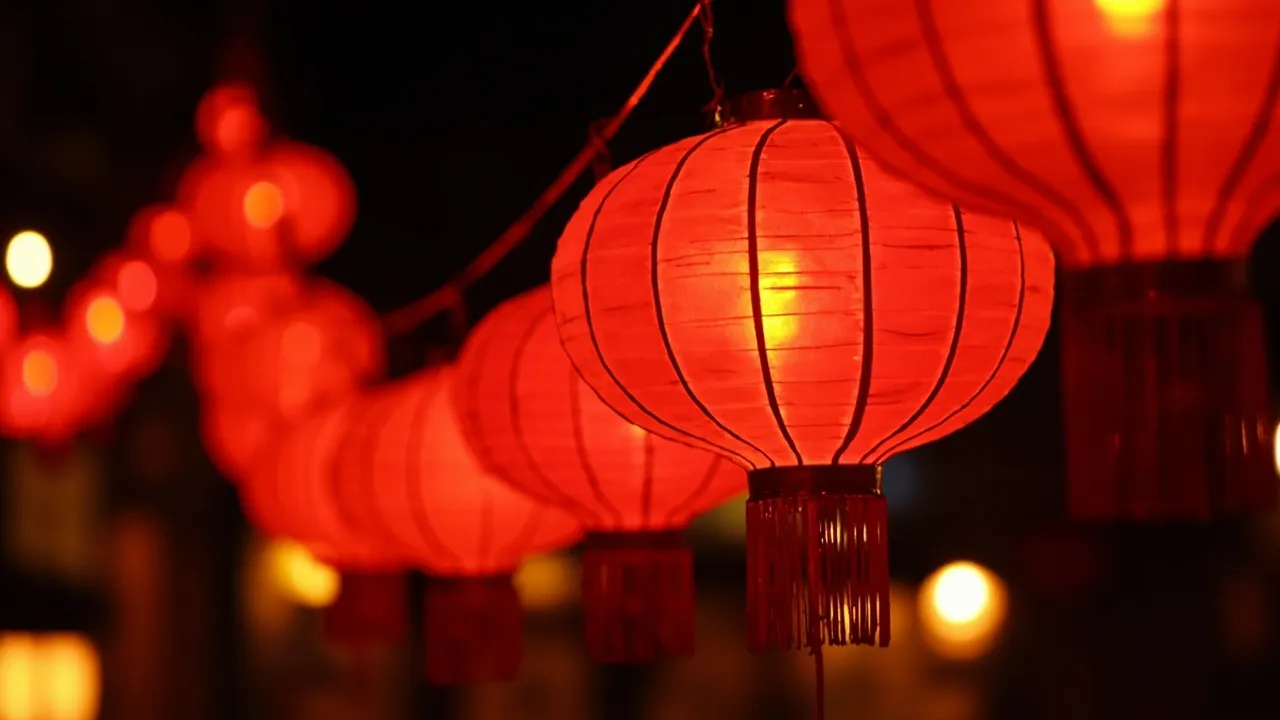
Chinese Lanterns: Light of Tradition
There’s something magical about the way light moves through silk and paper. It softens everything it touches, turns the ordinary into something ethereal. And nowhere is this more true than in China, where lanterns have been lighting up nights for over two thousand years.
If you’ve ever walked through a Chinese neighborhood during the Lunar New Year or caught a glimpse of the Lantern Festival online, you know exactly what I mean. Those glowing orbs in red, gold, and every color imaginable transform streets into dreamscapes. But there’s so much more to these lanterns than meets the eye.
History of Chinese Lanterns
The story of Chinese lanterns starts way back during the Han Dynasty, around 200 BC. Back then, they weren’t the decorative works of art we see today. People made them from simple materials—bamboo frames wrapped in silk or paper—and lit them with candles. The original purpose was practical: they helped people see at night and during dark winter days.
But even from the start, these lanterns carried meaning beyond just illumination. The glowing lights symbolized shedding darkness and embracing hope. Chinese monks and scholars started using them in religious ceremonies, believing that the light could drive away evil spirits and bring good fortune.
During the Tang Dynasty, which ran from 618 to 907 AD, lantern making became a true art form. The imperial court loved elaborate celebrations, and lanterns became central to them. Craftspeople started experimenting with shapes, colors, and intricate designs. What began as simple practical objects evolved into masterpieces of Chinese artistry.
The tradition grew stronger over the centuries. By the time of the Ming Dynasty, lantern festivals had become major national celebrations. Families would hang lanterns outside their homes, and entire cities would come alive with light. The festivals weren’t just pretty—they brought communities together and kept ancient traditions alive.
Today, historians estimate that some lantern-making techniques have been passed down for over 1,500 years. That’s remarkable when you think about it. The same basic methods your great-great-grandparents might have used are still practiced today, though they’ve evolved with new materials and designs.
Types and Designs
Walking through a Chinese lantern market is like stepping into another world. The variety is absolutely stunning. There are lanterns shaped like animals, fruits, flowers, and even famous characters from Chinese mythology. Each style carries its own symbolism and purpose.
Let’s talk about the most iconic type first: the red silk lantern. These are the ones you probably picture when someone mentions Chinese lanterns. That deep red color isn’t random—it represents good luck, happiness, and prosperity in Chinese culture. The gold or yellow tassels often hanging from the bottom symbolize wealth and honor. These are the lanterns you’ll see most during Lunar New Year celebrations.
Then there are palace lanterns, which are exactly what they sound like—they originated in the imperial palaces. These tend to be more ornate, often featuring intricate embroidery, multi-layered silk, and elaborate fringe. Making one can take weeks of careful work. They’re considered collector’s items today, and a well-crafted palace lantern can fetch a premium price.
Paper lanterns come in countless shapes and sizes. Some are simple折叠 lanterns (折叠 means “foldable” in Chinese)—these are what you might make in a crafts class, with a collapsible bamboo frame and paper sides. Others are enormous, like the giant lotus-shaped lanterns you’ll see in lantern festivals that can be dozens of feet tall.
Don’t forget about glass lanterns! These became popular during the Qing Dynasty when European glass-making techniques reached China. The transparent glass allows light to shine through beautifully, creating a different mood than silk or paper versions. They’re especially popular for outdoor displays because they can withstand wind better than their paper counterparts.
For the Chinese zodiac enthusiasts out there, there are lanterns shaped like the twelve animals—Rat, Ox, Tiger, Rabbit, Dragon, Snake, Horse, Goat, Monkey, Rooster, Dog, and Pig. These become especially popular during the year associated with each animal. Dragon lanterns, for example, are massive and often feature moving parts controlled by hidden operators.
Modern lantern makers have gotten creative, too. You’ll find LED lanterns that can change colors, battery-powered lanterns for safer use with children, and even smart lanterns that can sync with music. But even with these innovations, the handcraft traditions remain strong. Many families still prefer traditional candles or oil lamps for their ceremonial lanterns because they believe the flickering flame carries special meaning.
Lanterns in Festivals
If you want to see Chinese lanterns at their most spectacular, you have to experience them during the festivals. The biggest of all is the Lantern Festival, which falls on the 15th day of the lunar first month—usually sometime in February or March. This festival marks the end of the Lunar New Year celebrations and has been celebrated for over 2,000 years.
The Lantern Festival is genuinely one of the most beautiful celebrations on Earth. Cities across China (and Chinese communities worldwide) light up with millions of lanterns. In places like Chengdu, Nanjing, and Taipei, the displays are absolutely massive—thousands upon thousands of lanterns creating entire illuminated landscapes.
But the festival isn’t just about looking pretty (though it’s certainly that). There’s real meaning behind it. Traditionally, families would write riddles on slips of paper and attach them to lanterns. People would try to solve these riddles, and anyone who got one right would win a small prize. This tradition, called “solving lantern riddles,” is still practiced today and adds an intellectual element to the celebration.
Another key tradition is eating tangyuan—sweet rice balls filled with stuffings like sesame paste, red bean, or peanut butter. The round shape of these balls symbolizes family unity and completeness. It’s a delicious tradition, and you’ll find them in Chinese restaurants everywhere during this time.
The Lantern Festival is also a romantic celebration in some ways. In traditional China, young women were often restricted to their homes, but during the festival, they could go out to view the lanterns with friends. This created opportunities for romance—young men would try to catch a glimpse of pretty girls, and sometimes love stories began under the glow of the lanterns.
Beyond the Lantern Festival, Chinese lanterns play important roles in many other celebrations. During Qingming (Tomb-Sweeping Day), people light lanterns to guide spirits back to visit their families. During the Mid-Autumn Festival, lantern displays honor the full moon and family reunions. Weddings, business openings, and temple festivals all feature lanterns prominently.
If you’re ever in China during one of these festivals, do yourself a favor and go out at night. Walk through the streets illuminated by hundreds of lanterns. Watch families taking photos together, children running between the glowing lights, and elderly folks sitting on benches admiring the view. It’s a sensory experience you’ll never forget.
Modern Lantern Making
Here’s something that might surprise you: despite all our modern technology, the most prized Chinese lanterns are still made by hand. There’s something about the human touch—the slight irregularities, the careful attention to detail—that machines simply can’t replicate.
In places like Zigong in Sichuan Province, lantern making is serious business. This city has been known for its lantern craft for over 1,000 years and is sometimes called the “Lantern Capital of the World.” Artisans there have developed techniques that have been passed down through generations, and many families have been making lanterns for centuries.
The process starts with the frame. Skilled craftspeople bend bamboo or thin metal rods into the desired shape—this could be a simple sphere, an intricate dragon, or anything in between. This requires years of practice to master because the frame needs to be perfectly symmetrical and strong enough to hold the covering material.
Next comes the covering. For traditional silk lanterns, artisans carefully stretch and glue the fabric over the frame, making sure there are no wrinkles or gaps. The best craftsmen can do this with remarkable speed while maintaining perfect precision. For paper lanterns, multiple layers of treated paper are applied, each one adding strength and creating that characteristic glow.
The finishing touches are where artistry really shines. This includes adding tassels, painting or embroidering designs, and installing the lighting source. For festival lanterns intended for outdoor use, craftspeople pay special attention to weatherproofing—treating materials to resist rain and wind.
Interestingly, there’s been a revival of traditional lantern-making in recent years. Young Chinese artisans are rediscovering these ancient crafts, combining old techniques with contemporary designs. They’re creating lanterns that honor tradition while appealing to modern aesthetics. Some are experimenting with unconventional materials, while others are incorporating traditional patterns in new ways.
At the same time, China has embraced lantern technology for modern applications. Giant illuminated lanterns are used in advertising, architectural lighting, and public art installations. Chinese manufacturers produce millions of lanterns each year for export to countries around the world. You can find Chinese-style lanterns in Chinese restaurants, cultural centers, and homes celebrating Chinese festivals everywhere from Los Angeles to London.
The materials have also evolved. While traditional lanterns still use bamboo, silk, and paper, modern versions might incorporate LED lights (which are much safer and more energy-efficient), weather-resistant synthetic fabrics, and even recycled materials. Some contemporary artists are using lanterns as their medium, creating installation pieces that explore themes of light, culture, and identity.
Conclusion
Chinese lanterns are far more than decorative objects. They’re windows into a rich cultural heritage that spans millennia. Every lantern carries stories—of emperors and commoners, of ancient rituals and modern celebrations, of families gathering to celebrate light against darkness.
Whether you see them glowing in a San Francisco Chinatown, hanging in a temple in Taipei, or lighting up the streets of Beijing during the Lantern Festival, these luminous works of art remind us of something universal: the human need to bring light into the darkness, to gather together, and to celebrate the things that matter most.
If you’ve never experienced a lantern festival in person, put it on your bucket list. There’s nothing quite like standing in a crowd, surrounded by thousands of glowing lanterns, feeling like you’ve stepped into a living fairy tale. And who knows? You might just find yourself buying a lantern to take home—perhaps the first piece of a tradition you’ll carry forward in your own way.
The next time you see a Chinese lantern, whether in a photo, a movie, or hanging in your neighbor’s yard, take a moment to appreciate what it represents. That’s centuries of tradition, craftsmanship, and hope—all glowing together in the night.