Chinese Opera Masks: Reading the Colors of Beijing Opera
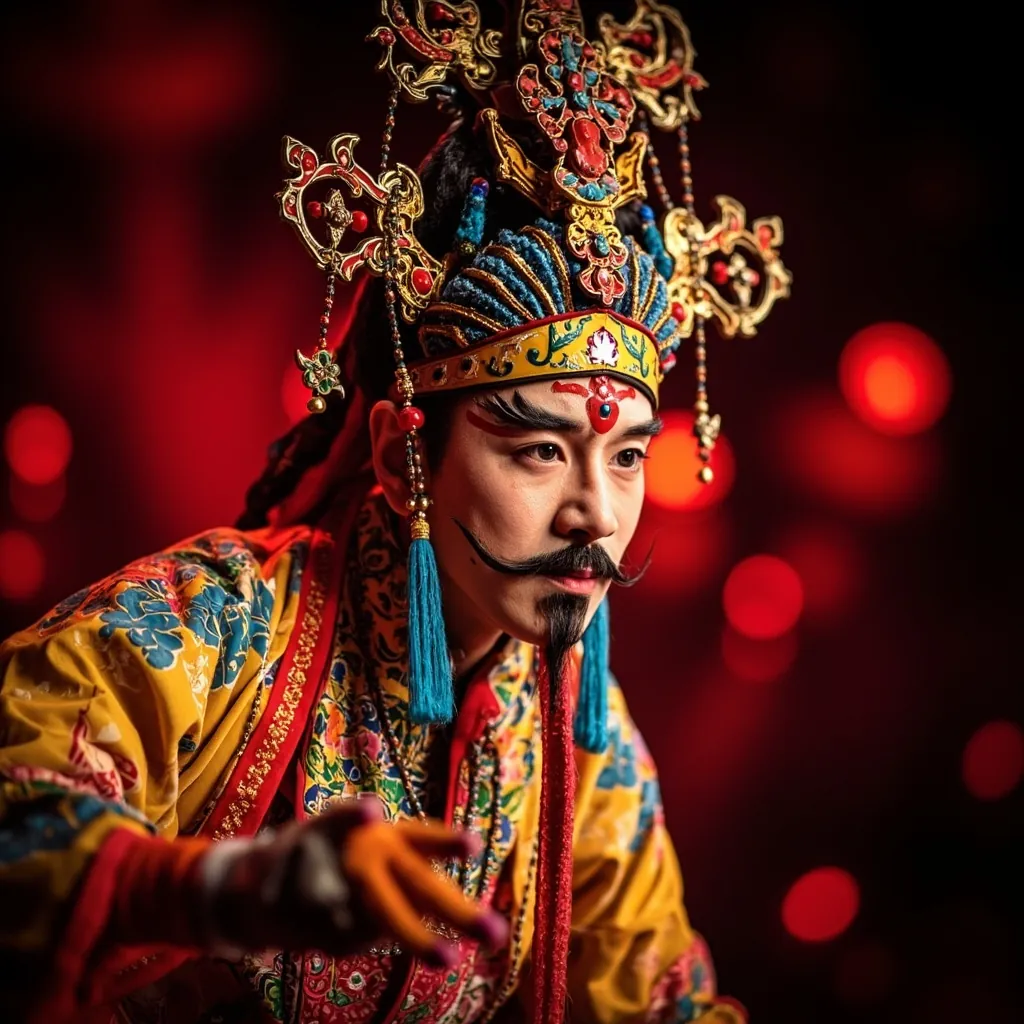
There is a moment in every Beijing Opera performance when the actor steps onto the stage, and before he speaks, before he moves, the audience already knows who he is. They know whether he is a loyal servant or a treacherous minister, a courageous warrior or a scheming villain. They know this because of what is painted on his face — a language of color and pattern so developed, so deeply embedded in Chinese theatrical tradition, that it functions almost like a second alphabet. This is the art of the opera mask, and once you learn to read it, Beijing Opera becomes a completely different experience.
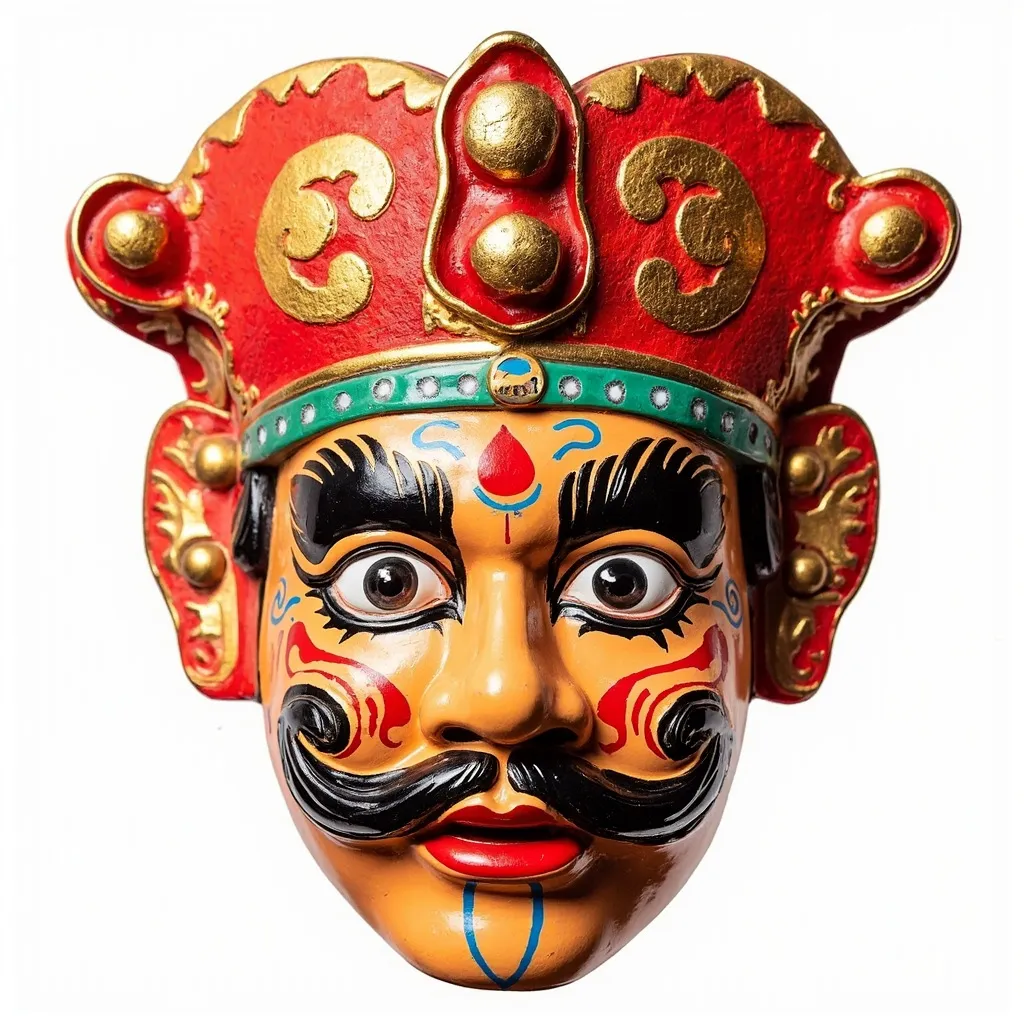
The Chinese word for these painted faces is lianpu, which literally means “face-slapping” or “face-pounding” — a reference to the way the makeup is applied, patted onto the skin in layers until the desired effect is achieved. Lianpu is not unique to Beijing Opera; similar traditions exist in other Chinese theater forms like Sichuan opera and Kunqu, but the Beijing Opera version has become the most widely recognized, both within China and internationally. When people think of Chinese opera face painting, it is usually the bold, graphic style of Beijing that comes to mind: sweeping patterns, dramatic colors, and eyebrows that seem to reach toward the heavens.
The Origins and History of Face Painting
The tradition of painted faces in Chinese theater stretches back well over a thousand years. Some scholars trace it to ritual dances performed in ancient Chinese religious ceremonies, where performers would paint their faces to invoke spirits or represent supernatural beings. Others connect it to the bian lian — “changing faces” — techniques of Sichuan opera, where performers could switch masks in a split second, apparently invoking divine power. Still others argue that face painting emerged naturally from the theatrical need to signal character types quickly in a performance tradition where stage sets were minimal and audiences needed visual cues to follow the story.
What seems clear is that by the Song Dynasty (960-1279), painted faces had become an established part of Chinese theatrical performance. The Yuan Dynasty (1271-1368) saw further development, with the emergence of fairly sophisticated systems for correlating facial patterns with character types. But it was during the Qing Dynasty (1644-1912), when Beijing Opera was being codified and standardized, that the full system of lianpu as we know it today really took shape. Officials known as “score keepers” — men who had memorized hundreds of traditional operas and were responsible for maintaining the integrity of the repertoire — also maintained detailed knowledge of facial painting conventions. Apprentices learning the craft would spend years watching their masters apply makeup, practicing on themselves until the patterns became second nature.
The application of lianpu is itself a skill that takes years to develop. The actor begins with a clean face, then applies a base layer of makeup — often white or a pale flesh tone — over the entire face. Then come the colored patterns, applied with brushes of various sizes. The most skilled actors can create remarkably precise designs freehand, without any stencils or guides. The eyebrows are often extended and raised high on the forehead to convey emotional intensity; in some styles, the eyebrows are painted to look like butterfly wings or sword blades. The eyes are emphasized with dark lines that extend outward, giving the actor a fierce, penetrating gaze even from the back of the theater. By the time an actor has finished applying his mask, his face has been transformed into something between a painting and a mask, a canvas that will carry the character’s emotional life for the duration of the performance.
The Meanings of Color: A Practical Guide
The first thing to understand about lianpu is that color is meaning. Each major color corresponds to a cluster of character traits, and once you learn the code, you can walk into any Beijing Opera performance and immediately understand the moral alignment of every character on stage. This system is not subtle or ambiguous; it was designed for quick, clear communication in a theatrical context where audiences might be seeing a particular story for the hundredth time and wanted the essential information delivered instantly.
Red is the color of loyalty, valor, and iron-core integrity. Characters with red faces are almost invariably heroes — loyal officials who serve their emperors faithfully, brave generals who would die rather than betray their country, righteous men whose moral conviction is unshakeable. The most famous red face in Beijing Opera is Guan Yu, the legendary general of the Three Kingdoms period who has been deified in Chinese folk religion and is worshipped as a god of war and wealth. Guan Yu’s face is painted red to represent his legendary virtue and his unwavering loyalty to his sworn brother Liu Bei, even when it would have been politically advantageous to switch sides. Other red-faced characters include Zhao Yun, another Three Kingdoms hero famous for his courage, and Huang Zhong, the elderly but fearless general of Shu.
Black represents justice, impartiality, and moral uprightness. Black-faced characters are typically honest officials who cannot be bribed, forthright warriors who speak their minds regardless of consequences, or铁面无私 — “iron-faced and unselfish” — figures who apply the law equally to all, high and low. The most famous black face belongs to the,包拯, or Judge Bao, a Song Dynasty official who became a folk hero for his fearless pursuit of justice, his willingness to prosecute corrupt officials (including members of the imperial family), and his reputation for solving impossible cases. Black is also the color of the loyal and courageous, including the monkey king Sun Wukong in some performances and several of the warrior heroes of the Water Margin tradition.
White signals treachery, cunning, deceit, and duplicity. Characters with white faces are villains — scheming ministers, treacherous generals, false friends who smile while plotting betrayal. The white face is usually painted with particularly delicate patterns, because these characters are supposed to appear refined and civilized on the surface while hiding corruption underneath. The most famous white face in Beijing Opera is probably Cao Cao, the founder of the Wei state in the Three Kingdoms period, who has been cast as the archetypal villain in Chinese culture — a brilliant, ambitious man whose pursuit of power led him to betray everyone who trusted him. Other white-faced characters include Zhao Gao, the treacherous eunuch who destabilized the Qin Dynasty, and various ministers and generals known for their cunning rather than their courage.
Yellow and gold represent power, ambition, and sometimes divine or supernatural status. Yellow-faced characters are often emperors, princes, or divine beings. The color also signifies those with extraordinary abilities or unusual origins. In some traditions, yellow indicates a character who is both powerful and dangerous — someone whose ambitions could tip from righteous conquest into tyranny. Purple often accompanies yellow or red as a symbol of nobility and seniority; purple-faced characters are usually older aristocrats or officials of long standing.
Patterns and Their Hidden Meanings
Beyond the basic colors, lianpu incorporates elaborate patterns that convey more specific information about a character’s personality, backstory, or fate. These patterns are where the system becomes truly sophisticated, rewarding close study and careful observation. Every curve, every dot, every seemingly decorative element carries potential meaning.
The placement and shape of the eyebrows are particularly important. Upsweeping, sword-shaped eyebrows indicate martial prowess and fierce determination. Characters with eyebrows that rise sharply toward the temples are quick to anger and quick to fight. In contrast, actors playing scholars or civil officials often have softer, more rounded eyebrows that suggest intellectual rather than martial temperaments. The forehead pattern is also significant: some characters have a distinctive design on the forehead that directly references a key episode in their story. Characters who were once wounded in the forehead may have a scar pattern painted there; characters with distinctive birthmarks or physical peculiarities often see these features exaggerated in the lianpu.
The eyes receive special attention in most lianpu designs. Dark lines around the eyes emphasize the gaze, making the actor’s eyes visible even from the back of a large theater. In some traditions, the eyes of powerful or enlightened characters are painted with small white dots or lines that catch the light, giving the impression that the character’s gaze penetrates the mundane world. The nose is another key area: flaring nostrils painted on a character indicate a fierce or volatile temperament, while a narrower nose suggests restraint or refinement.
One of the most distinctive features of elaborate lianpu is the use of small colored panels or “patches” applied over the base color. These patches can indicate specific character traits or incidents. A small red patch on a predominantly white face, for instance, might represent a moment of genuine loyalty or love that the otherwise villainous character displayed at some point in the story. Conversely, a small black element on a red face might represent a flaw or moment of weakness in an otherwise heroic character. This system of patches and modifications allows for extraordinary nuance in character portrayal while maintaining the overall color code that audiences depend on.
The Actors Who Bring Masks to Life
It would be a mistake to think of lianpu as merely decorative or purely symbolic. For the actors who spend hours applying their own makeup before each performance, the process of painting the face is itself a form of character work. Classical Beijing Opera training requires students to learn to apply their own lianpu correctly before they are allowed to perform, and the process of applying makeup is understood as part of the transformation into character. Some actors describe entering a kind of meditative state as they apply the patterns, gradually becoming the person they are painting.
The physical demands on a Beijing Opera actor are extraordinary, and the lianpu is part of that. Performances can run three hours or more, often in hot, bright stage lights, and the actor must maintain full vocal projection and physical energy throughout. The makeup must stay in place through sweat, movement, and the physical demands of the performance. Consequently, traditional lianpu formulas often incorporate ingredients — beeswax, lead-based compounds in historical formulas, various powders and pigments — that were chosen as much for their staying power as for their visual effect. Modern formulations have replaced the most toxic historical ingredients, but the challenge of maintaining a perfect mask throughout a demanding performance remains.
The actor’s relationship with his mask deepens over years of performance. Many performers describe a sense of genuine transformation when they apply their character’s face — a feeling that the painted face is not just covering their own but somehow revealing a truer version of the character beneath. This idea of the lianpu as revelation rather than concealment runs through classical discussions of Beijing Opera aesthetics. The goal is not realistic imitation of ordinary human appearance but a stylized presentation that communicates essential truths about character through the accumulated meaning of color, pattern, and gesture.
Experiencing Beijing Opera Masks Today
For visitors to Beijing or other Chinese cities, catching a live Beijing Opera performance remains one of the most memorable cultural experiences available. The National Centre for the Performing Arts, the Liyuan Theatre, and the Huguang Guild Hall are among the venues where regular performances are held. At these venues, you can watch master performers apply their lianpu in backstage preparation, which many theaters now allow visitors to observe as part of the cultural experience. Seeing the care, precision, and time that goes into each painted face transforms your understanding of what stage makeup can be.
For those who want to learn the art of lianpu more directly, a growing number of cultural workshops in Beijing and Shanghai offer lessons in basic face painting techniques, where participants can try their hand at painting traditional patterns under the guidance of experienced performers or trained instructors. These workshops typically provide all materials and are designed for visitors with no prior experience. The experience of having a traditional pattern applied to your own face, even briefly, gives you a visceral appreciation for the skill involved and the transformation that the mask represents.
The legacy of lianpu extends well beyond the theater. Chinese filmmakers working in historical genres routinely draw on the visual vocabulary of opera masks when designing character makeup. The villains in many wuxia films have white or pale faces with sharp, angular eyebrows, drawing directly on the Beijing Opera tradition. Video games, animated films, and graphic novels featuring Chinese historical or martial arts themes often incorporate stylized versions of opera mask imagery. This widespread visual adoption means that even people who have never seen a Beijing Opera performance are often already intuitively familiar with some aspects of the lianpu system.
What makes this tradition remarkable is that it has never been static. New plays and new characters continue to be added to the Beijing Opera repertoire, and contemporary performers have developed new mask designs for these characters, extending the system in directions that the original systematizers could never have predicted. In this sense, lianpu is a living art — a visual language that continues to grow and adapt while maintaining its connection to centuries of theatrical tradition and the deep cultural knowledge that makes Chinese opera face painting one of the most distinctive and rewarding art forms in the world.
Recommended Products for Exploring Chinese Opera Culture
1. Beijing Opera Face Painting Kit (Beginner Set) A complete starter kit for experimenting with traditional lianpu patterns at home. Includes non-toxic, skin-safe paints in the classic colors (red, black, white, yellow, purple, blue), a set of fine brushes suitable for creating detailed patterns, face preparation powder, and an illustrated guide explaining the basic character types and their color meanings. Several cultural education retailers produce these sets, with portions of proceeds supporting Beijing Opera preservation societies.
2. “The Colors of Character: A Visual Guide to Beijing Opera Face Painting” This illustrated book — available in both English and Chinese editions — provides comprehensive documentation of the major lianpu types, with detailed color plates, pattern diagrams, and historical context. Written by a former Beijing Opera performer turned cultural historian, it is the most authoritative English-language guide to reading and understanding opera masks. Features appendices on famous mask designs and their literary sources.
3. Liyuan Theatre Evening Performance Ticket (Beijing) The Liyuan Theatre in Beijing offers nightly performances of classic Beijing Opera selections, with English subtitles available. Tickets typically include a brief pre-show demonstration of basic lianpu application, giving visitors a chance to see the painting process up close before watching it in performance. The theatre is centrally located and tickets are reasonably priced compared to Western theater equivalents.
4. Handcrafted Beijing Opera Character Figurine Set A set of six hand-painted resin figurines representing classic Beijing Opera character types: Guan Yu (red face), Cao Cao (white face), Judge Bao (black face), a Beijing Opera clown character, a female dan role, and a warrior with elaborate helmet. These figurines capture the distinctive features of each character type and make excellent display pieces or teaching tools. Available from specialty Chinese craft retailers; look for sets made by traditional craft workshops rather than mass-produced imports.
5. “Chinese Opera: The Essential Guide” (Illustrated Edition) A comprehensive introduction to the history, forms, and performance traditions of Chinese opera, with substantial sections on lianpu and character types. This edition features high-quality color photographs of performances, detailed explanations of staging conventions, and a useful glossary of technical terms. Well-suited for readers who want context for the face painting they have observed or learned about, connecting the visual art to the larger theatrical tradition.