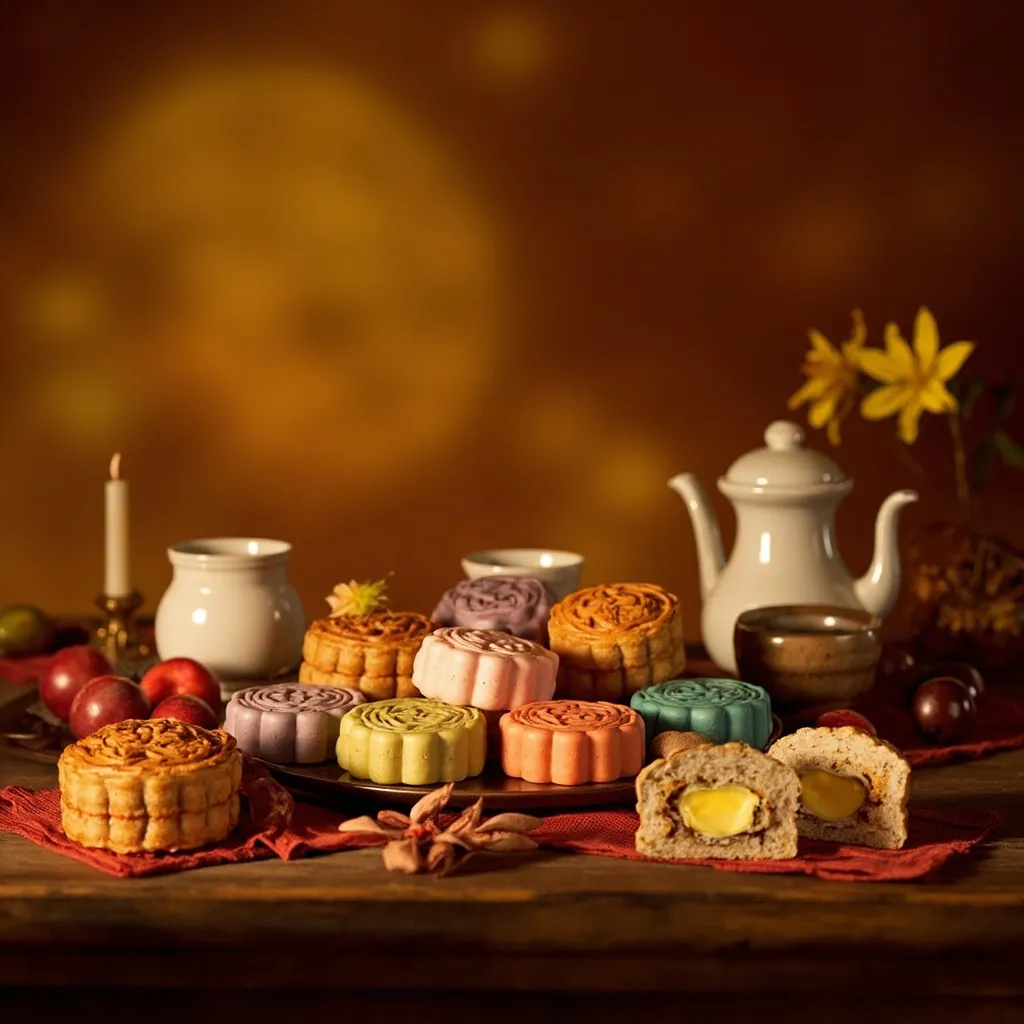
Chinese Mooncakes: The Sweet Symbol of Mid-Autumn
When the autumn wind starts
The first time my neighbor handed me a box of mooncakes, I didn’t know what to expect. The golden-brown pastries sat in their box like little works of art—each one stamped with intricate patterns and embossed Chinese characters. She smiled and said, “For you and your family. Happy Mid-Autumn Festival.” That was ten years ago, and I’ve been hooked ever since.
If you’ve never tried a mooncake, you’re missing out on one of the most meaningful foods in Chinese culture. These aren’t your everyday pastries. They’re symbols of reunion, prosperity, and the harvest moon that lights up the night sky every autumn.
What Are Mooncakes?
Mooncakes are dense, sweet pastries traditionally eaten during the Mid-Autumn Festival, which falls on the 15th day of the 8th month of the Chinese lunar calendar. In 2026, that celebration lands around September 21st—right around the autumnal equinox when the moon is at its brightest and fullest. The exterior is often decorated with geometric patterns, Chinese characters wishing for good fortune, or images of the moon and rabbits. Some are so beautiful that people use them as gifts and display them rather than eating them right away.
The texture might surprise you if you’re expecting something light and fluffy. Traditional mooncakes have a dense, almost cakey consistency—closer to a shortbread cookie than a typical American pastry. The fillings range from sweet bean paste and lotus seed paste to creamy egg yolks hidden in the center like little golden secrets. Each region and even each family has its own preferences, and debates about which type is “the best” can get surprisingly heated at dinner tables.
One thing that confuses newcomers is the crust. It shouldn’t be flaky like a croissant or soft like a muffin. Instead, it’s meant to be substantial—almost like a really good pound cake crossed with a butter cookie. You’re supposed to eat it slowly, savoring both the exterior and the rich interior together.
The filling-to-crust ratio is a topic of genuine discussion among mooncake enthusiasts. Some prefer a thin crust with a generous center (more filling, more flavor). Others argue that the crust is the soul of the mooncake and should be thick enough to balance the sweetness. Traditionalists from Guangdong might argue with traditionalists from Jiangsu, and both would have valid points.
A bite of history
People have been eating mooncakes for over a thousand years. The earliest records date back to the Tang Dynasty (618-907 CE), when merchants from Central Asia brought their own version of filled pastries to China. But the mooncake we know today really took shape during the Ming Dynasty (1368-1644), when baking techniques evolved and the treats became closely tied to the Mid-Autumn Festival celebrations.
Here’s the interesting part: mooncakes allegedly played a secret role in overthrowing the Mongol-led Yuan Dynasty. The story goes that rebels hid messages inside mooncakes, using them to coordinate a nationwide uprising on the 15th day of the 8th month. Whether that’s completely true or partly legend—it makes for a good story, and it shows how deeply mooncakes are woven into Chinese history and symbolism. It’s the original secret code wrapped in pastry.
The round shape of the mooncake represents completeness and unity—the same reason families gather to watch the full moon together during the festival. In Chinese culture, the moon symbolizes harmony and reunion. The word for mooncake, 月饼 (yuèbǐng), literally translates to “moon cake”—simple and direct.
What surprises most Westerners is that mooncakes weren’t always the sweet treats we know today. In their earliest forms, they were more likely to be savory, filled with meat and nuts. The heavy sweetness we associate with modern mooncakes developed later, influenced by changing tastes and the availability of ingredients like sugar and lotus seed paste. It’s a good reminder that every “traditional” food has a history of evolution.
Types of mooncakes
Not all mooncakes are created equal. Walk into any Chinese bakery during the weeks before the festival, and you’ll find an almost overwhelming variety. Here’s what you need to know:
Cantonese-Style Mooncakes
These are the most famous variety, especially internationally. They’re the ones you’ll typically find in Chinese restaurants and grocery stores outside Asia. Cantonese mooncakes have a golden, glossy crust that’s slightly flaky—they achieve that beautiful sheen through a special technique involving maltose and lye water in the dough. The fillings usually feature lotus seed paste or red bean paste, and the premium versions contain one or more salted egg yolks in the center—the richer and more oily, the better, according to traditional standards.
The salted egg yolk is something special. When you cut into a quality Cantonese mooncake and hit that bright orange, creamy yolk in the middle, it’s kind of like finding the prize at the bottom of a cereal box—except this prize represents prosperity and completeness. Many people specifically seek out mooncakes with multiple yolks as a sign of generosity and good fortune.
Suzhou-Style Mooncakes
These come from the region around Shanghai and have a different character entirely. They’re flakier and crispier, more like a pastry than the dense cake-like texture of Cantonese versions. The fillings tend to be sweeter and often include pork or ham alongside the sweet paste—making them an unusual and delicious combination of sweet and savory.
If you’ve had mooncakes that reminded you of a dense bread, you were probably eating the Cantonese style. Suzhou-style is more like eating a really good meat pie that happens to be sweet. They’re often smaller and more cylindrical in shape, with a noticeably different texture that crunches when you bite into it.
Teochew-Style Mooncakes
Hailing from the Chaoshan region in eastern Guangdong, these mooncakes are known for their ultra-thin, crisp crust and generous filling. The dough is stretched incredibly thin—so thin that you can almost see the filling through it. It’s a technical achievement that requires real skill from the baker. The fillings often include a sweet mixed paste with nuts and melon seeds.
Snow Skin Mooncakes
Here’s where things get modern. Snow skin mooncakes are a relatively recent invention—they’ve been around since the 1960s in Singapore and Malaysia. Instead of being baked, they’re chilled and have a soft, chewy skin that feels almost like mochi or a gummy candy. They come in every color imaginable—pastel pink, bright green, soft lavender—and often contain fresh fruit, chocolate, or ice cream fillings.
These are the mooncakes that confuse people the most: “Wait, this is cold?” They’re an acquired taste for traditionalists, but younger generations absolutely love them. They’re also much lighter than baked mooncakes, which makes them a good entry point if you’ve never tried one before.
Mini Mooncakes
These bite-sized versions have become incredibly popular in recent years, especially as gifts. They’re cute, easy to share, and—let’s be honest—it’s easier to justify eating four small ones than one gigantic pastry. Mini mooncakes have also made it easier for non-Chinese families to participate in the tradition without committing to a full-sized version.
Mooncakes and Family
If you grew up in a Chinese family, you already know: mooncakes aren’t just food. They’re a family ritual, the edible equivalent of gathering around the fireplace during the holidays.
The days leading up to Mid-Autumn Festival are busy. Families clean their homes, buy fresh fruit, and—of course—stock up on mooncakes. The fancy ones from upscale bakeries make the best gifts, so people carry boxes wrapped in ribbon to visit relatives, friends, and business associates. In China, giving mooncakes is as expected as giving pumpkin spice lattes in America during September. The fancier the box, the more respect you’re showing the recipient.
On the night of the festival, families set up tables in their yards or on balconies. They arrange mooncakes, fruit, and tea, then sit together to appreciate the full moon. It’s called “moon appreciation,” and yes, there’s actually a Chinese word for it: 赏月 (shǎng yuè). Grandparents tell stories about Chang’e, the moon goddess who floated to the moon after drinking an immortality elixir. Kids run around while adults sip tea and chat. The mooncakes get passed around, each person taking a small piece—traditionally quarter or eighth of a whole cake, shared among family members.
What strikes me most about this tradition is how it forces people to slow down. In our hyper-connected, always-on lives, here’s a holiday that says: “Put down your phone. Look up. Be here with us.”
Here’s something that might surprise Americans: many families don’t actually love the taste of traditional mooncakes. They’re dense, intensely sweet, and can feel a bit heavy on a full stomach. But nobody skips them. Eating a mooncake during Mid-Autumn is about participation—it’s a way of saying, “I’m here with you, I’m part of this.” The taste matters less than the togetherness.
There’s also a practical side to the tradition. After the festival, for weeks afterward, you’ll find mooncakes everywhere—at breakfast, as snacks, packed in lunchboxes. Nothing goes to waste. A box of mooncakes from the festival will last a family well into October, a daily reminder of the celebration and the time spent together.
And for families spread across different cities or countries? Mooncakes in the mail are a way of sending love. When my cousin moved to Canada, her parents would ship mooncakes every year without fail. The package arriving was almost as important as eating them—it was proof that distance hadn’t erased the connection.
Mooncakes Today
Mooncakes have come a long way from their traditional roots. In cities across China, Japan, Korea, Vietnam, and Chinese communities worldwide, bakeries now compete to create the most creative mooncake flavors imaginable. It’s become almost like a competitive sport among pastry chefs.
Chocolate mooncakes have become surprisingly popular, especially among younger people. Matcha (green tea) mooncakes appeal to those who appreciate Japanese-influenced flavors. Taro, durian (for the adventurous), and coffee fillings show up alongside the traditional options. Some bakeries make mooncakes shaped like cartoon characters or filled with lava-style molten chocolate that oozes out when you bite into it. The Instagram potential is real—these aren’t your grandmother’s mooncakes, and that’s kind of the point.
In recent years, there’s also been a backlash against the ultra-sweet traditional versions. Health-conscious consumers and younger generations have pushed bakeries to offer lower-sugar options and smaller sizes. Some companies now sell mooncakes in gift sets paired with premium tea, making them feel more like a refined culinary experience and less like a sugar bomb.
The corporate world has embraced mooncakes too. In China, giving high-end mooncake gift sets to clients and employees is big business—some luxury boxes can cost over $100 and include everything from premium tea to artisanal preserves. The exchange of mooncakes during Mid-Autumn is as important in Chinese business culture as sending holiday cards is in America. Companies spend enormous budgets on packaging that rivals high-end jewelry boxes.
For Chinese diaspora communities, mooncakes serve as a delicious tether to home. When you’re thousands of miles away from family, eating a mooncake while looking up at the same full moon can feel like a small connection to everything you left behind. I’ve seen grown adults get a little teary-eyed over a box of mooncakes from their hometown bakery. It’s not just about the pastry—it’s about memory, family, and belonging.
Even non-Chinese people are getting in on the action. Every year, more Western bakeries and restaurants offer mooncakes as a seasonal item. Some make them with Western flavors like caramel or Nutella. Others stick to traditional recipes but present them in more accessible ways. Either way, the tradition is spreading—which is exactly how cultural foods evolve and endure.
Conclusion
Whether you’ve never tried a mooncake or you’ve been eating them your whole life, there’s something universally appealing about a food that brings people together under the light of a full moon. The Mid-Autumn Festival reminds us to look up from our busy lives, appreciate beauty, and spend time with the people who matter most.
📚 Recommended Reading & Products
Disclosure: This article contains affiliate links.
If you find yourself near a Chinese bakery this September—particularly in the week or two leading up to the 15th day of the 8th lunar month—pick up a box. Share them with friends or family. Take a bite, look at the moon, and think about the millions of people around the world doing exactly the same thing.
That’s the magic of mooncakes. They’re sweet, they’re symbolic, and they remind us that no matter how far apart we are, we’re all looking at the same moon. Plus, they’re delicious—but that’s almost beside the point.