Chinese Mythology: Ancient Legends That Still Shape Modern China
Have you ever wondered where the Chinese gods came from, or what stories ancient Chinese people told to explain the creation of everything around them? Chinese mythology is one of the oldest and richest storytelling traditions in human history, dating back thousands of years. These aren’t just dusty old tales told to children around a fire—they’re living traditions that still influence modern Chinese culture, art, and values today.
Unlike Greek or Norse mythology, which many Westerners know well, Chinese mythology has its own unique flavor. The stories often emphasize harmony between humans and nature, the importance of family and duty, and the belief that even the smallest actions can have cosmic consequences. Let me take you on a journey through some of the most fascinating characters and tales from this incredible tradition.
The Story of Pangu: How Everything Began
Long before there was earth or sky, there was only chaos—a massive, swirling egg of nothingness that contained all the potential of everything that would ever exist. Inside this cosmic egg, a giant named Pangu slept peacefully for 18,000 years.
When Pangu finally woke up, he found himself trapped in complete darkness. He stretched his arms and legs, and the egg split apart! The lighter, clearer parts of the egg floated upward and became the sky, while the heavier, darker parts sank downward to become the earth. Pangu stood between them, pushing the sky higher and higher every day.
For another 18,000 years, Pangu grew ten feet taller each day—some stories say it was ten feet per day, others say it was ten feet per year. The sky grew higher, the earth grew thicker, and Pangu grew exhausted but determined. When he finally died, his body became the world we know today. His breath became the wind, his voice the thunder, his eyes the sun and moon, and his blood the rivers that flow across the land.
What makes this story so special is how it explains the natural world through the lens of hard work and sacrifice. Pangu didn’t create the world by snapping his fingers—he spent millennia laboring until his body gave out. This theme of perseverance through struggle appears throughout Chinese mythology and reflects values that still matter in Chinese culture today.
The Divine Couple: Nuwa and Fuxi
If Pangu created the physical world, then Nuwa and Fuxi are the parents of humanity itself. These two divine figures appear in Chinese art and mythology as snake-bodied twins, often depicted holding a compass and a square—symbols of order and creation.
Fuxi is credited with numerous inventions that supposedly brought civilization to early humans. He taught people how to fish with nets, how to cook food over fire, and—most importantly—how to write. According to legend, Fuxi observed the marks left by birds’ claws on muddy ground and invented the first characters, laying the foundation for the Chinese writing system that would develop centuries later.
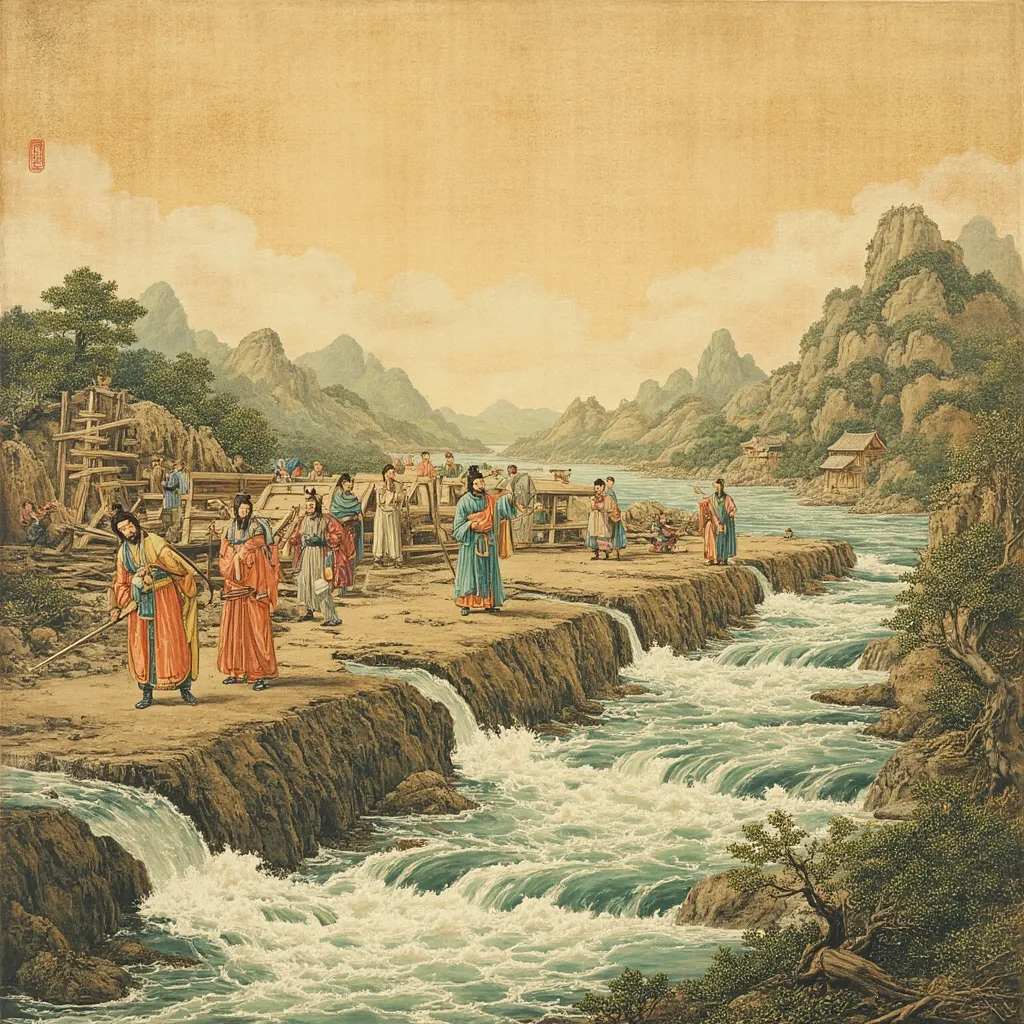
Nuwa, his sister and wife, is perhaps an even more beloved figure. When the sky cracked and the earth split open, causing terrible floods and fires, Nuwa didn’t give up. She gathered stones of five different colors—red, black, white, green, and yellow—and melted them down to repair the broken sky. She cut off the legs of a giant turtle to use as pillars to hold up the heavens.
But Nuwa’s most touching story is her creation of humanity itself. After the cosmic disaster, the world was empty and lonely. Nuwa gathered yellow clay and molded it into tiny figures. When she breathed life into them, they became the first humans. Some stories say she made them one by one, carefully crafting each person with love. Other versions say she dragged a rope through muddy clay and flicked it—each drop that landed on the ground became a human being.
This story connects deeply to modern Chinese culture. The idea that every person is crafted with care, not just randomly created, emphasizes the inherent worth of each individual. Even today, Chinese artists and craftspeople often cite Nuwa as the divine patron of their trades.
The Four Great Mythological Creatures
Chinese mythology isn’t just about gods and humans—it’s also filled with incredible creatures that symbolize different aspects of life and nature. The four most important are the Azure Dragon, the White Tiger, the Vermilion Bird, and the Black Tortoise.
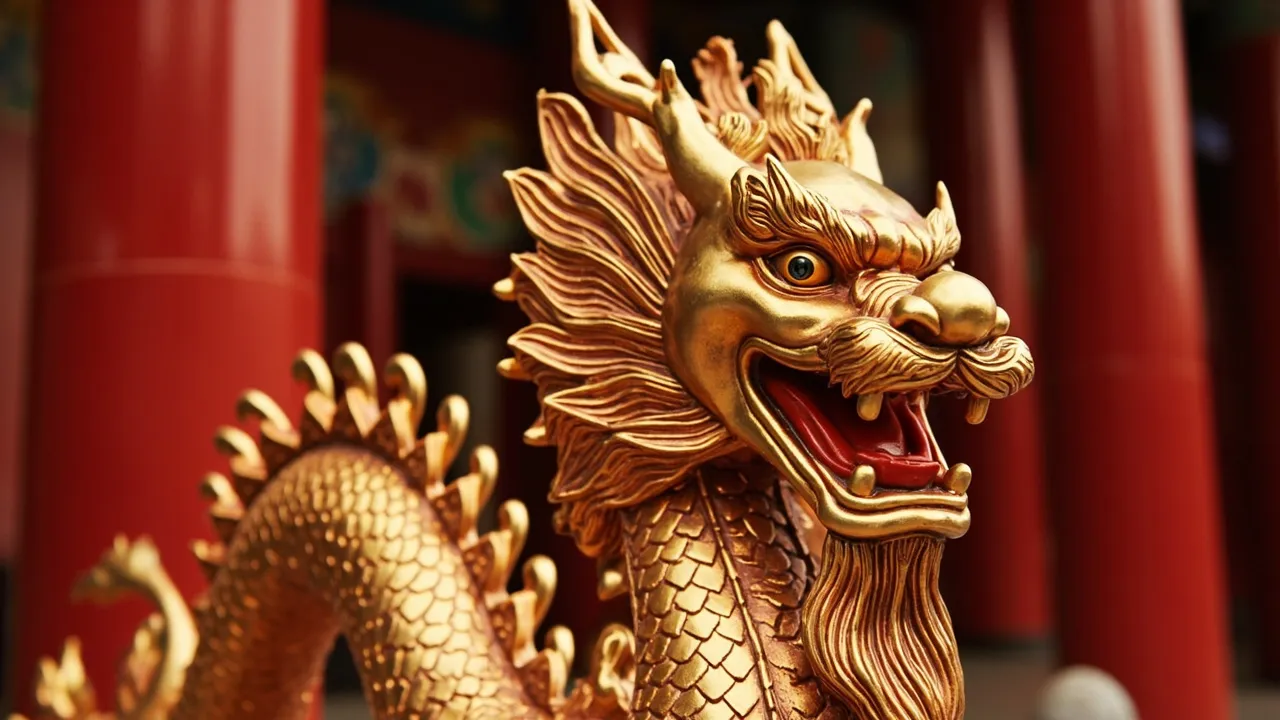
The Azure Dragon (Qing Long) represents spring, wood, and the east. In ancient China, people believed this magnificent creature controlled rain and water, making it crucial for agriculture. Farmers would pray to the Azure Dragon during droughts, and emperors claimed his divine right to rule. You’ll see his image everywhere in Chinese architecture, from imperial palaces to temple roofs.
The White Tiger (Bai Hu) embodies autumn, metal, and the west. This fierce creature was considered the king of all beasts, a powerful guardian that could fight off evil spirits. Parents often gave their children tiger-themed names or clothing to protect them from harm. The White Tiger also represents justice and military prowess—Chinese military commanders were often compared to this legendary animal.
The Vermilion Bird (Zhu Que) symbolizes summer, fire, and the south. This beautiful red bird was associated with the phoenix, though Chinese and Western versions have different stories. The Vermilion Bird represents passion, energy, and the south wind that brings summer rains. It was also the guardian of the hearth and home, making it especially important to families.
The Black Tortoise (Xuan Wu) embodies winter, water, and the north. Despite its name, it’s usually shown as a turtle wrapped in a snake—this powerful combination represents the relationship between yin and yang, the fundamental opposing forces in Chinese philosophy. The Black Tortoise was the guardian of the northern frontier and was associated with longevity, wisdom, and persistence.
These four creatures appear constantly in Chinese culture. You’ll find them on temple roofs, in martial arts symbols, on banknotes, and even in modern video games. Understanding them opens a window into how ancient Chinese people saw the world around them.
The Monkey King: China’s Most Popular Mythological Hero
No discussion of Chinese mythology would be complete without mentioning Sun Wukong, the Monkey King. This mischievous deity has been beloved for over 500 years and shows up everywhere from children’s cartoons to Hollywood movies.
Sun Wukong started as a simple monkey born from a stone egg on the Mountain of Flowers and Fruit. Through his own determination and some divine help, he learned 72 different transformations, gained immense magical powers, and became the king of all monkeys. He even dared to challenge the gods themselves, stealing imperial wine from the heavens and eating the peaches of immortality.
What makes the Monkey King so appealing isn’t his power—it’s his personality. He’s rebellious, clever, and refuses to accept authority without questioning it. When the gods try to trap him in heaven with a fake title (“Great Sage, Equal to Heaven”), he causes chaos and refuses to be controlled. Yet he also has a deep sense of loyalty to his friends and a willingness to change when he recognizes his mistakes.
The Monkey King’s story comes primarily from “Journey to the West,” a 16th-century novel that blends Buddhist history with mythology. In the story, Sun Wukong accompanies a monk on a pilgrimage to India, protecting him from demons while learning humility and compassion. It’s a tale about redemption and growth, showing that even the most powerful ego can be transformed through friendship and purpose.
Why These Stories Still Matter Today
You might be wondering why any of this matters in the modern world. Why should someone living in America today care about ancient Chinese creation myths or mythological creatures?
The answer is simple: these stories are everywhere once you start looking for them. Chinese New Year decorations feature dragons and mythology-themed imagery. Martial arts films draw heavily on these legends. Traditional medicine incorporates creatures and concepts from these tales. Even modern Chinese business culture references these ancient values of perseverance, harmony, and strategic thinking.
Understanding Chinese mythology gives you insight into one of the world’s oldest continuous civilizations. It helps explain why Chinese people think about family, nature, and community the way they do. And honestly, these stories are just plain wonderful to know—they’re filled with adventure, drama, humor, and wisdom that has enriched Chinese culture for thousands of years.
More Legendary Figures Worth Knowing
Beyond the major creation myths and the Four Celestial Guardians, Chinese mythology is filled with dozens of other fascinating deities and heroes. These figures appear in literature, art, and popular culture, and understanding them opens up even more of this rich tradition.
The Jade Emperor (Yu Huang) is perhaps the most important god in the Chinese pantheon. While he wasn’t one of the earliest creation deities, he became the supreme ruler of heaven in later mythology. Think of him as the Chinese answer to Zeus or Odin—the ruler of all the gods and the mediator of divine disputes. The Jade Emperor sits in his palace in the heavens, overseeing the mortal world and making sure the cosmic order is maintained. In the famous Chinese zodiac story, he arranged a race across a river to name the years—the rat won by riding on the ox’s back and jumping ahead at the finish line, which is why the rat comes first in the zodiac cycle.
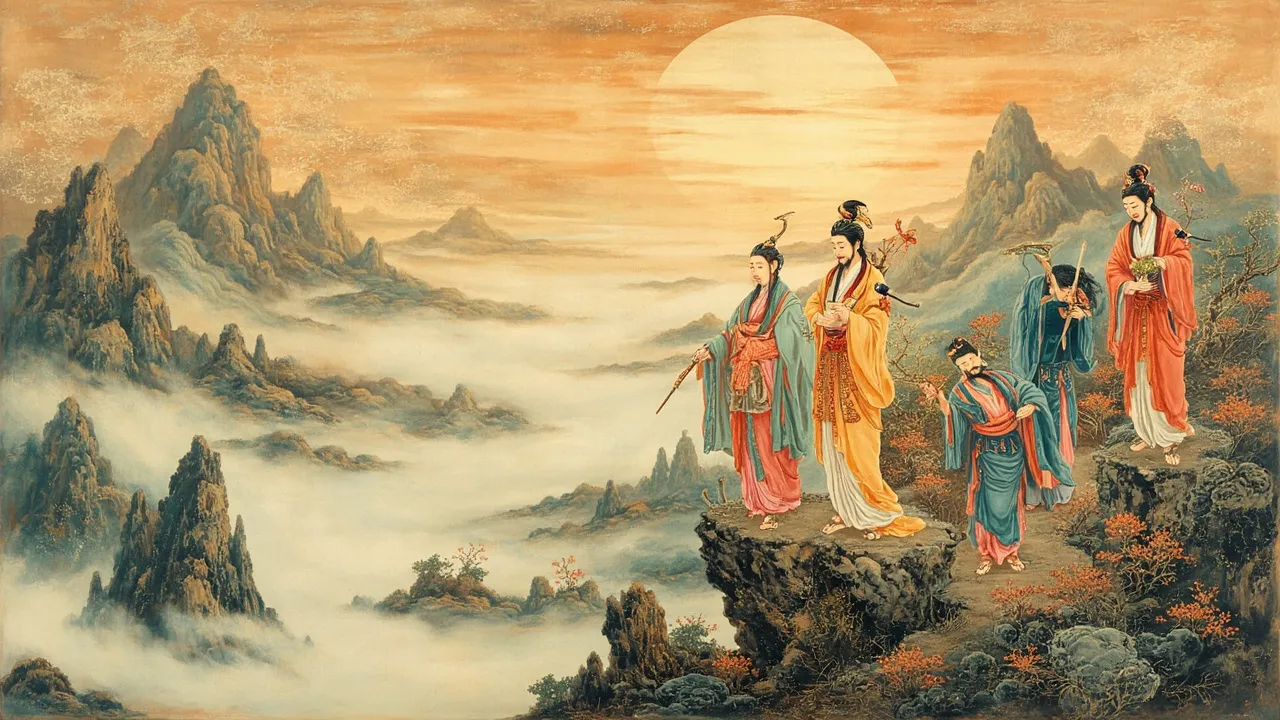
The Queen Mother of the West (Xi Wang Mu) is another supremely important deity, often depicted as the ruler of the western paradise. She’s associated with immortality—she’s said to possess the peaches of eternal life, which ripen once every three thousand years. Anyone who eats one gains eternal life. The Queen Mother of the West is also considered the protector of women and children, and she’s often shown with a retinue of fairy attendants in beautiful flowing robes. Her legendary peaches appear in Chinese art and literature constantly, and they’re an important symbol in the Mid-Autumn Festival.
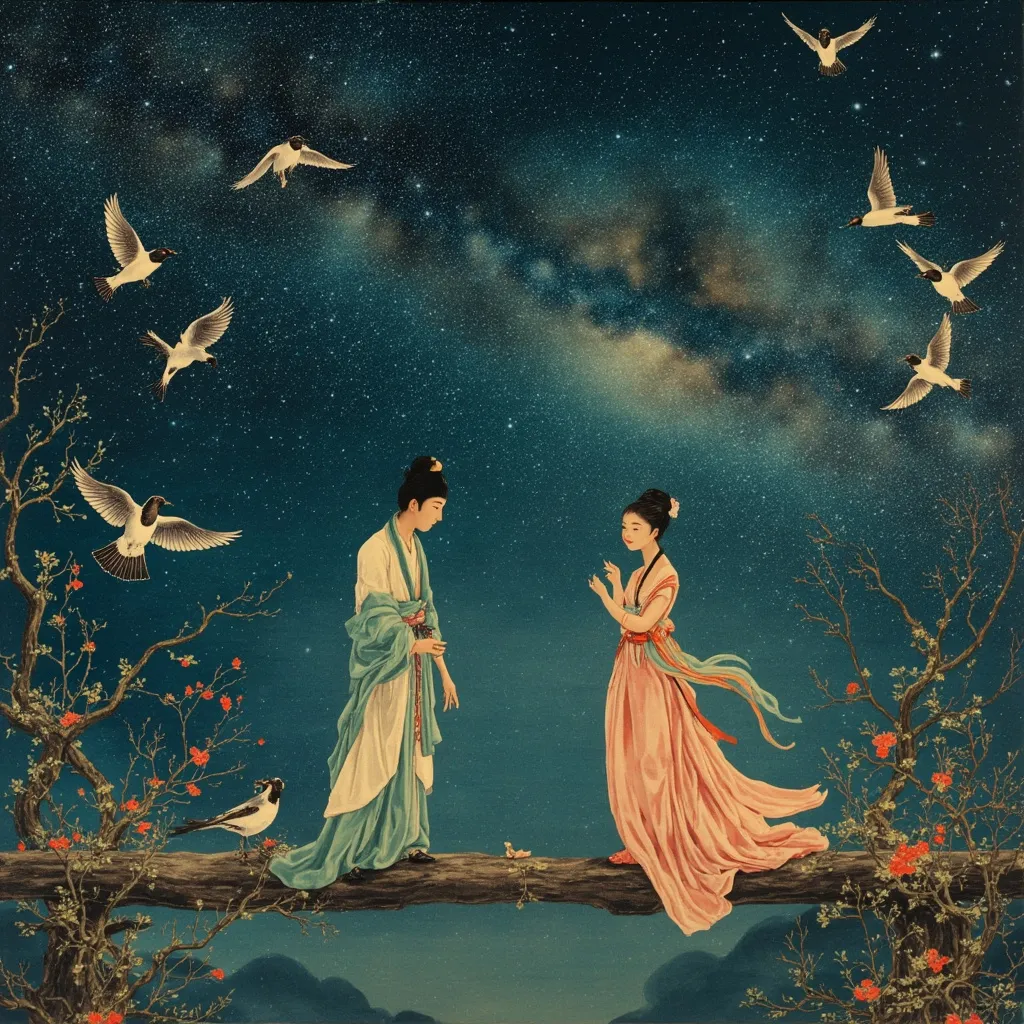
Hou Yi the Archer is famous for shooting down nine of the ten suns that were scorching the earth. According to legend, once upon a time there were ten suns instead of one, and they all rose together, burning up crops, drying up rivers, and making life impossible. The god emperor sent Hou Yi, the greatest archer in history, to save humanity. Hou Yi shot down nine of the suns, leaving just one to provide light and warmth. This story is often connected to the story of Chang’e, his wife, who later floated up to the moon after drinking an immortality elixir that was meant for her husband.
The Kitchen God (Zao Shen) is a unique figure who watches over every household. Traditional Chinese homes have an altar to the Kitchen God, who reports to the Jade Emperor each year about the family’s behavior. At the end of the Chinese year, families offer sweet treats to “sweeten” the Kitchen God’s report before he leaves for heaven. This charming custom shows how mythology was integrated into daily life—the most powerful gods were also the most intimate, present in every home and concerned with the smallest aspects of family life.
The Dragon Kings (Long Wang) rule over the four seas and are responsible for rainfall, storms, and marine life. While the Azure Dragon represents the sky and eastern direction, the Dragon Kings are more personal deities—the rulers of oceans, lakes, and rivers who can bring floods or droughts depending on how they’re worshipped. Fishermen and farmers especially needed to appease the Dragon Kings, and many coastal temples are dedicated to these water deities.
The Mythological Worldview
What makes Chinese mythology different from Greek or Norse mythology isn’t just the specific stories—it’s the underlying worldview. Chinese mythology tends to emphasize harmony rather than conflict, cyclical time rather than linear progression, and the interconnectedness of all things.
In Greek mythology, gods constantly fight each other, humans are pawns in divine games, and there’s a clear distinction between the ordered world of Olympus and the chaotic world of mortals. Chinese mythology is different. Even when gods battle monsters or heroes face challenges, there’s usually an underlying sense that everything is connected and that balance must be maintained.
The concept of “qi” (life energy) runs through Chinese thought, including mythology. The universe isn’t made of separate, competing beings—it’s made of flowing energy that takes different forms. A dragon isn’t separate from the rain it controls; it IS the rain, the clouds, the storm. This makes Chinese mythology feel more organic and less like a collection of separate characters.
There’s also less emphasis on individual heroes solving problems through personal strength or cleverness. While Sun Wukong is certainly a powerful individual, even his story is about learning to work with others, accept guidance, and find his place in a larger cosmic order. The greatest heroes in Chinese mythology aren’t the ones who conquer everything—they’re the ones who find harmony with the world around them.
This worldview affects how Chinese people approach mythology even today. These aren’t just entertaining stories—they’re guides to living well, examples of how to behave, and windows into understanding the deeper patterns of existence. When you read about Nuwa repairing the sky, you’re not just learning a story—you’re encountering an image of perseverance, creativity, and devotion to others that can inspire your own life.
Experiencing Chinese Mythology Today
You don’t need to be Chinese to appreciate and learn from these stories. They have universal themes that resonate across cultures: the importance of family, the value of perseverance, the need for balance in life, and the power of transformation and growth.
If you want to explore Chinese mythology further, there are excellent books available that retell these stories for modern readers. The classic source is “Myths and Legends of China” by E.T.C. Werner, though it’s quite academic. More accessible retellings include books by classicists like Derek Walters. For the Monkey King’s story specifically, the English translation of “Journey to the West” by Arthur Waley is considered one of the best.
In popular culture, you’ll find Chinese mythology everywhere. The movie “Kung Fu Panda” draws heavily on these traditions, with characters representing different aspects of Chinese mythology. Video games like " Genshin Impact" incorporate mythological figures. Even if you’re just watching a martial arts film or reading a fantasy novel set in China, you’ll likely encounter these ancient stories in new forms.
Next time you visit a Chinese restaurant with dragon decorations, or watch a movie featuring a wise old turtle, you’ll have a deeper appreciation for the ancient stories behind these images. Chinese mythology isn’t just history—it’s a living tradition that continues to shape how over a billion people see their world.