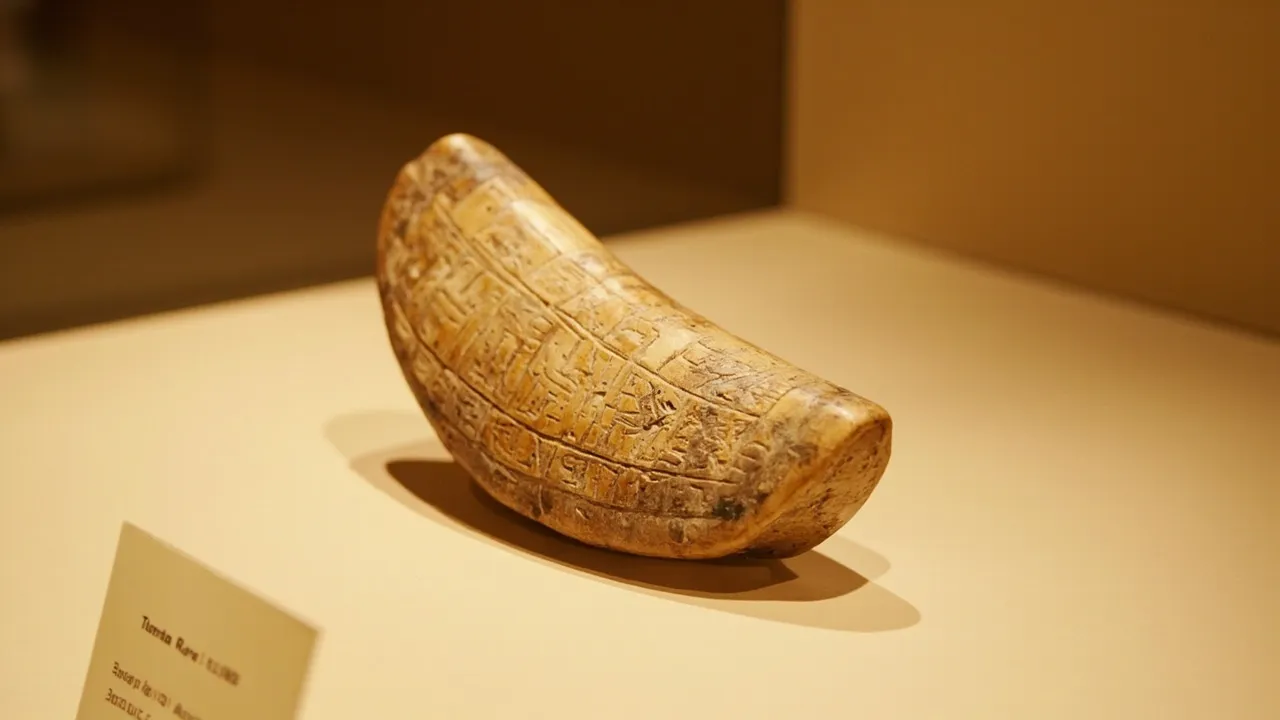
There is a particular kind of quiet that fills a museum room when you stand in front of an oracle bone. The piece itself is small — usually no bigger than a flattened hand — and it is the polished shoulder bone of an ox, or the domed shell of a turtle, weathered to the color of old coffee. Carved into its surface, in lines thin and deliberate, are characters you can almost read. Some of them are pictographs: a sun, a moon, a horse, a person bending to pray. Others are partial. A few are completely opaque, characters that no one in the world can confidently decipher in 2026, even though the people who carved them were using the writing system from which modern Chinese descended.
These are oracle bones, and the script carved into them is called jiaguwen (甲骨文), literally “shell-bone script.” The bones date from roughly 1200 to 1045 BCE — the late Shang dynasty, the dynasty that traditional Chinese historiography treats as the first historically verified Chinese state. They are the oldest substantial body of Chinese writing that has survived. The script is the ancestor of every Chinese character you have ever seen, including the one you are reading now.
The oracle bones were not literature. They were government documents. They were questions the king of Shang asked his ancestors, and the answers his priests read in the cracks that formed when the bone was heated. The fact that we have any of them at all is partly luck, partly archaeology, and partly the accident of one scholar in 1899 noticing that the strange symbols on a piece of “dragon bone” being sold in a Beijing pharmacy were not medical decoration.
What an Oracle Bone Actually Was
The Shang royal court divined. The king would pose a question — about the weather, about the harvest, about a military campaign, about whether his toothache would get worse or better — and the diviner would inscribe the question onto a piece of prepared bone or shell. Then the bone was heated, traditionally by applying a hot bronze rod until the surface cracked. The pattern of cracks was read as the answer.
The questions were real and routine. “Will the king hunt at X and capture a rhino?” “Will the harvest be good this year?” “Should we move the capital?” “Is it true that the queen gave birth to a son?” The questions, the diviner’s name, the date, the result of the divination, and sometimes a verification note (“indeed it rained on that day”) were all carved onto the bone. We have, today, something like 150,000 oracle bone fragments in collections around the world. Of these, the British archaeologist David Keightley has estimated that roughly 4,500 individual characters are attested, of which modern scholars can confidently read only about half.
The other half is the contested part. The characters were pictographic and ideographic, but they were not standardized. The same word might be written two different ways on two different bones. Some characters are clearly the ancestors of modern Chinese characters — the sun (日), the moon (月), a tree (木), a person (人), rain (雨), a horse (馬) — and we can follow the lineage from the Shang pictograph through bronze inscriptions and seal script all the way down to the regular script (楷书) used in modern Chinese. Others are still under scholarly debate. Some probably referred to specific clans, place names, or ritual objects that the Shang kings cared about and that we simply do not have independent evidence for.
Wang Yirong and the Dragon Bone
For most of Chinese history, oracle bones were not known to be what they were. People occasionally dug them up in the fields around Anyang, in Henan Province — the last capital of the Shang dynasty — and sold them as “dragon bones” (龙骨) in traditional medicine pharmacies. Ground into powder, dragon bones were prescribed as a cure for a wide variety of ailments. The Chinese pharmacopoeia treated them as fossilized or magical bones of indeterminate origin.
In 1899, Wang Yirong (王懿荣), a scholar and the chancellor of the Imperial Academy in Beijing, fell ill. His physician prescribed dragon bone powder. Wang, who was a noted antiquarian and calligrapher, noticed that the powder contained recognizable ancient Chinese characters. He was curious enough to procure an unsold piece of dragon bone, looked at the carving carefully, and realized that the script was older than any Chinese writing he had seen — older than the bronze inscriptions of the Zhou dynasty, older than the seal script on the Qin dynasty stone drums. He sent his assistant to purchase as many dragon bones as the pharmacies still had, traced the carvings, and began the work of decipherment.
Wang died in 1900 during the Boxer Rebellion, taking his own life rather than face the foreign occupation of Beijing. But his notes and his small collection of bones passed to other scholars, and the decipherment continued. Within a decade, several Chinese and Western scholars — most famously Luo Zhenyu (罗振玉), Dong Zuobin (董作宾), and the Canadian missionary James Menzies — were systematically collecting bones, traveling to Anyang, and publishing their findings. By the 1920s, the Anyang site had been identified as the last capital of the Shang dynasty, and the field of oracle bone studies (甲骨学) had become a serious scholarly discipline.
Yinxu and the Royal Archive
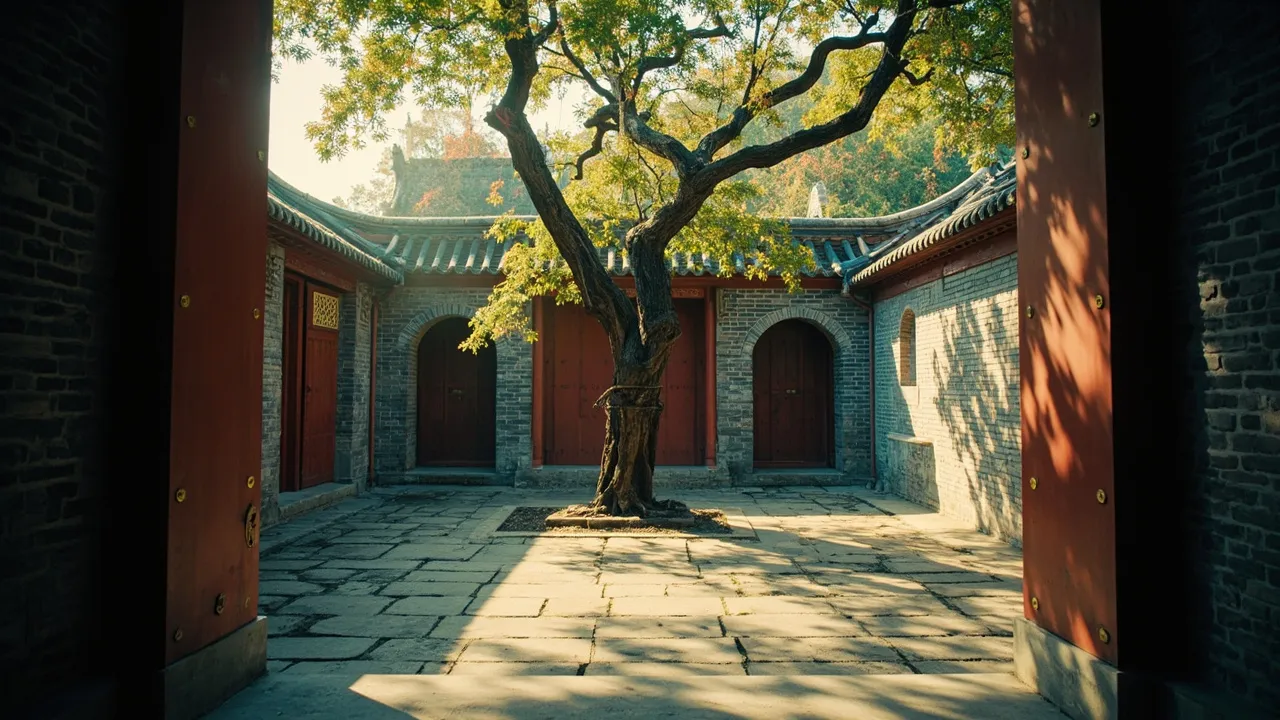
The archaeological site of Anyang, called Yinxu (殷墟) in Chinese — “the ruins of Yin” — was excavated in a series of digs beginning in 1928, and has continued almost without interruption since. It is the site of the last Shang capital, used from about 1300 to 1046 BCE, when the dynasty fell to the Zhou. The site is enormous. The palace-temple complex, the royal tombs, the workshops for bronze casting and bone carving, the residential areas, the craft production zones — all of it has been mapped and partially excavated. Yinxu was added to the UNESCO World Heritage list in 2006, alongside the nearby Yin Xu Archaeological Site itself.
For our purposes, what matters about Yinxu is the royal archive. The Shang kings kept tens of thousands of oracle bones in dedicated storage pits. When the dynasty fell, the city was abandoned, the archive was not burned or deliberately destroyed, and the bones sat in the earth for three thousand years. Many were preserved better than they would have been in a library, because they were buried. They are, in a sense, the only major surviving Chinese archive from before the Qin unification in 221 BCE — a complete bureaucratic record of royal divination practice, covering several kings and several decades.
The archive tells us a great deal. We know which kings were asking questions and when. We know the names of divination priests. We know about military campaigns against neighboring peoples (some of whom, like the Qiang and the Yi, are mentioned in oracle bones long before they appear in any other Chinese historical source). We know about weather events, harvests, hunts, childbirths, dreams, and illnesses. We know the Shang calendar in considerable detail. We know the names of at least two Shang queens, Fu Hao (妇好) being the most famous, and we know that Fu Hao, who died sometime around 1200 BCE, was a military commander in her own right — a fact established by oracle bone inscriptions and confirmed by the bronze weapons buried in her tomb.
How to Read the Script (and Why Half of It Remains Mysterious)
If you are a modern Chinese reader and you look at an oracle bone inscription, some of the characters will look strange but recognizable. The Shang character for sun (日) is a square with a dot in the middle — recognizable, even if stylized. The Shang character for moon (月) is a crescent — easily understood. The Shang character for tree (木) is a vertical line with two branches — almost the same as the modern character. These are the cases where we can confidently trace the lineage from Shang pictograph to modern Chinese character.
Other characters are more difficult. The Shang script was not standardized in the way modern Chinese writing is. The same word could be written multiple ways. Some characters that look like simple combinations of modern characters are actually unrelated words that happen to look similar. A few characters are still under active scholarly debate more than a century after decipherment began. The famous example is the Shang character for “king” or “royal” — Shang had two words for king, and which one is being used on a particular bone depends on context that is not always preserved.
The decipherment is also held back by the bones themselves. Oracle bones were not preserved as art. They were used and discarded. Many of the surviving fragments are partial — broken pieces of larger bones, with only a portion of the inscription intact. Some are weathered badly. Some were damaged by the heat of the divination itself, the cracks that the diviner was reading often cutting through the inscribed characters. Reconstructing the full text from fragmentary evidence is a slow, painstaking process, and there are still many fragments in storage that no one has yet had time to study carefully.
What this means, in practice, is that the oracle bone script is roughly half deciphered. The other half is an active research frontier. New characters are identified every year. Old readings are revised. It is one of the few major writing systems in the world where the decipherment is still in progress, and where a graduate student in Beijing or Taipei or Heidelberg can still make a real contribution by sitting down with a high-resolution photograph of a fragment and saying, “I think this character means X.”
Why This Matters
It is hard to overstate how important the oracle bone script is for Chinese history. Before their discovery, the earliest substantial Chinese writing was the bronze inscription tradition of the Western Zhou — about a thousand years younger than the Shang. There were rumors of earlier writing, including the long-disputed “seal script” carved on Qin dynasty stone drums, but nothing concrete. The oracle bones transformed Chinese historiography by pushing the documented history of Chinese writing back by a millennium and confirming, in physical form, the historical existence of the Shang dynasty — a dynasty that had previously been considered semi-legendary.
The oracle bones also confirmed the cultural continuity of Chinese writing. The script on a Shang oracle bone is not the same as modern Chinese script, but it is recognizable as Chinese. The visual logic — pictograph for sun, compound character for concepts, phonetic borrowing for homophones — runs unbroken from 1200 BCE to the present. The characters you read every day, on signs and books and websites, descend in an unbroken line from the script the Shang kings used to ask their ancestors about the weather. That is a longer continuous run of written tradition than almost any other writing system in the world can claim.
If you visit the National Museum of China in Beijing or the Yinxu Museum in Anyang, you can stand in front of an oracle bone and see a 3,200-year-old character that you can, with some effort, still read. It is one of the most direct connections any reader of Chinese can have to the deep history of their own language. The bones were not meant to survive. They were not meant to be read by anyone beyond the priest who heated them. The fact that we can read them at all is a kind of accident — and a remarkable one.
The story of their decipherment is also a story about how a culture recovers its own past. Wang Yirong was not an archaeologist. He was a scholar of calligraphy. He recognized the carved characters because he had spent his life studying Chinese writing, and because the tradition of Chinese calligraphy — the unbroken chain from Shang pictograph to Qing dynasty brush — is exactly what made him recognize that the “dragon bone” carvings were not random marks but the oldest visible layer of the same tradition he practiced. The scholar who recognized the bones was himself a product of the tradition the bones began.
Recommended Products
- [oracle-bone-book]: Oracle Bone Script: The Ancient Roots of Chinese Writing — Comprehensive academic introduction to jiaguwen decipherment
- [chinese-calligraphy-set]: Chinese Calligraphy Starter Set — Brush, ink, paper, inkstone for practicing Chinese characters
- [museum-replica-bone]: Oracle Bone Replica — Museum-quality replica bone with authentic-style Shang inscriptions, perfect for study or display
- [chinese-history-book]: The Cambridge History of Ancient China — Scholarly survey including the Shang dynasty and oracle bone discoveries
Disclosure
Some links above are affiliate links. We earn a small commission if you purchase through these links, at no extra cost to you. We only recommend products we genuinely believe enhance your understanding of Chinese culture.