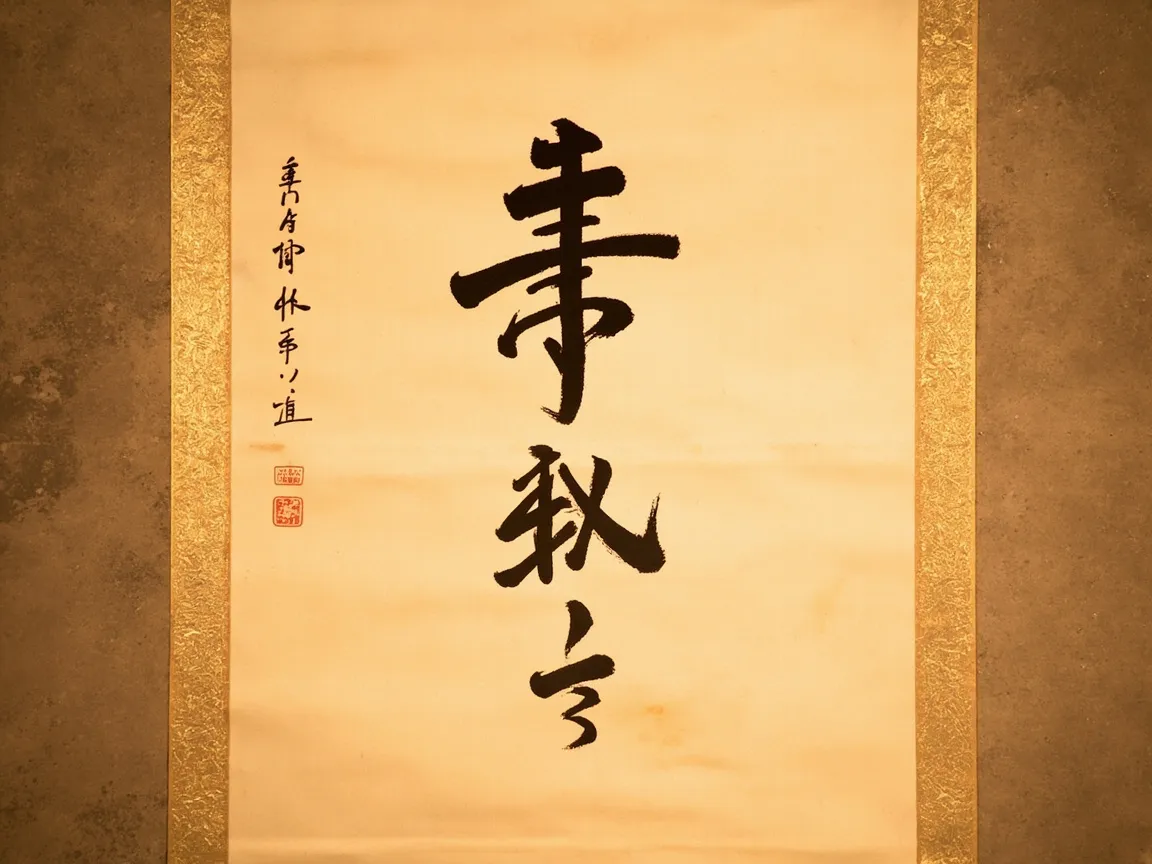
Chinese Poetry: The Soul of Chinese Literature
There’s something almost magical
The Golden Age of Tang Poetry
The Tang dynasty ruled China from 618 to 907 AD, and those nearly three centuries saw an explosion of artistic achievement that’s rarely been matched in human history. The capital, Chang’an (modern-day Xi’an), was one of the most cosmopolitan cities on Earth—a place where merchants from Persia, monks from India, and diplomats from Korea all mingled in the streets. Poetry wasn’t just appreciated; it was practically required. If you wanted to get ahead in government, you had to pass poetry exams. The emperor himself was expected to write verse.
This created a culture where anyone who was anyone wrote poetry. And I mean anyone. Soldiers, farmers, monks, politicians, emperors—all of them were expected to have at least some skill with a brush. The result was an incredible flowering of the art form. We have roughly 50,000 Tang poems surviving today, written by over 2,000 different poets. That’s a lot of reading.
But here’s what makes Tang poetry special, even if you don’t read Chinese: these poets were obsessed with capturing something universal. They wrote about friendship and loneliness, about the passing of time and the beauty of nature, about the joy of drinking with friends and the ache of missing home. These are feelings that every human being understands, no matter what language they speak or what century they live in.
The forms were tight and disciplined—most Tang poems follow patterns of five or seven characters per line, with strict rules about tone and rhythm—but within those constraints, the best poets found endless freedom. They could say the most profound things in just twenty or twenty-eight words. Every character had to pull its weight. There was no room for sloppiness, which meant every line had to matter.
Li Bai: The Immortal Poet
If Chinese poetry had a rock star, it would be Li Bai. Born in 701 AD in what is now Sichuan province, he became the most celebrated poet of the Tang dynasty, and possibly of all Chinese history. His reputation has only grown over the centuries—in China, he’s simply called “the Immortal Poet.”
What made Li Bai special was his sheer joy in the craft. His poems feel effortless, like they were channeled directly from some wild, free spirit. He wrote about nature with an excitement that jumps off the page—mountains and rivers, moonlit nights and falling flowers. He had a particular love for wine and friendship, and many of his best poems celebrate the simple pleasure of drinking with good company.
Here’s a famous poem called “Quiet Night Thought”:
Before my bed, moonlight is so bright
I think it’s frost upon the ground.
Looking up, I find the mountain moon
Looking down, I think of home.
Twenty words. And somehow Li Bai manages to capture that particular feeling of lying in bed at night, slightly disoriented, watching moonlight pour through the window, and suddenly being hit by a wave of homesickness so gentle it almost doesn’t hurt. The image of frost on the ground makes the moonlight feel cold, physical. Then he looks up, sees the moon, looks down, and thinks of home. That’s it. That’s the whole poem. But it stays with you.
Li Bai also wrote a lot about drinking, which the Chinese probably appreciated more than we might these days. One of his most famous poems opens with lines that translate roughly to: “If a thousand gold pieces were dumped, I’d spend them all. / I’d buy the finest wine with all that cash.” That’s the kind of attitude that makes him feel like a buddy而不是某个 distant文学巨头. He wasn’t trying to be pretentious. He was having fun with words.
There’s a story—probably more legend than fact—that Li Bai drowned after trying to embrace the moon’s reflection in the Yangtze River. Whether it’s true or not, it feels right. He was a poet who lived with that kind of passion, that kind of willingness to lose himself in beauty. The Chinese don’t think of him as dying; they think of him as becoming immortal, ascending to join the gods of poetry in the sky.
Du Fu: The Sage of Poetry
If Li Bai is the rock star, Du Fu is the philosopher. Born in 712 AD, he was Li Bai’s friend (they actually met and spent time together, which must have been one heck of a poetry session), but his style couldn’t be more different. Where Li Bai flew free, Du Fu grounded himself in the real world—its suffering, its injustice, its complex moral weight.
Du Fu lived through one of the most tumultuous periods in Chinese history. The An Lushan Rebellion erupted in 755 AD, tearing the empire apart for nearly a decade. Millions died. Cities burned. Du Fu witnessed it all firsthand. He watched friends die, saw families torn apart, experienced hunger and homelessness. And he wrote about it with a clarity and compassion that still stings to read today.
His poem “Spring View” was written while he was trapped in the capital during the rebellion:
The country is broken, only mountains and rivers remain.
The city is lush with weeds, yet springtime comes.
I am shocked to find the flowers shedding tears,
And the birds startling my heart with their cries.
Beacon fires have burned for three months now,
A letter from home is worth ten thousand gold.
My white hair has become so thin from scratching
That even hairpins will no longer stay in place.
This isn’t abstract poetry about beauty and transcendence. This is a man watching his world collapse, trying to hold onto hope while the evidence piles up around him. The flowers are crying. The birds are frightening. He’s so stressed that his hair is falling out. But he still notices the spring, still finds beauty in the wreckage, still writes. That’s what makes Du Fu incredible—he didn’t turn away from the hard stuff. He faced it head-on and found a way to make art from anguish.
What strikes modern readers most about Du Fu is his humanity. He wrote about ordinary people—the soldiers conscripted to fight, the women left behind, the farmers whose crops were burned. He didn’t romanticize poverty or suffering. He saw it clearly and wrote about it with a moral weight that feels almost biblical at times. That’s why the Chinese call him “the Sage of Poetry.” He used his gift not just to celebrate beauty but to bear witness to pain.
Reading Chinese Poetry Today
So how do you actually get into reading this stuff? The good news is that there have never been more resources available. The bad news is that the translation question is tricky. Let me explain.
Chinese poetry is built on character, and each character can carry multiple meanings, sounds, and visual images all at once. When you translate poetry from Chinese, you’re inevitably losing something—sometimes a lot. There’s no such thing as a perfect translation. That said, there are some truly wonderful translators who have managed to capture the spirit, the feeling, and at least some of the magic of the originals.
For English readers, a few recommendations: Arthur Waley’s translations from the 1920s and 1930s are classics—they’re not the most literal, but they have a musicality that feels close to the original spirit. More recent translations by Stephen Owen, the leading scholar of Chinese poetry in the English-speaking world, are more accurate but perhaps less approachable for beginners. For something in between, look for versions by Burton Watson or David Hinton.
Here’s a secret, though: you don’t actually have to read the Chinese to appreciate these poems. The translations, while imperfect, still carry enormous power. A great poem translated well will still make you feel something. The images will still dance in your head. The emotions will still land. Think of it like listening to a symphony played on a slightly different instrument—it’s not the original, but it can still move you in profound ways.
If you want to go deeper, there are also some excellent books that introduce Tang poetry to general readers. “The Anchor Book of Chinese Poetry” edited by Tony Barnstone and Xu Haixin is a solid place to start. Or you could look for collections focused specifically on Li Bai or Du Fu, which are widely available.
One more tip: don’t rush. These poems are short—usually just a page or less—but they reward slow reading. Read one poem. Put it down. Think about it for a day. Read it again. Let it settle. You might find that a single poem becomes a companion for years, revealing new layers every time you return to it. That’s the strange, beautiful thing about great poetry: it keeps growing.
Conclusion
Chinese poetry is one of those treasures that belongs to all of us. It doesn’t matter if you’ve never studied Chinese history or can’t tell a Tang dynasty poem from a Song dynasty one. What matters is that you’re willing to slow down, pay attention, and let these old words do what they’ve been doing for over a millennium: make you feel something real.
Li Bai and Du Fu are just two of the thousands of poets who made the Tang dynasty so remarkable. But they’re a great place to start. Li Bai will show you joy, freedom, and the pure pleasure of playing with language. Du Fu will show you depth, compassion, and the courage to face hard truths. Together, they represent the full range of what poetry can do.
So pick one poem. Just one. Find a translation online or in a book, read it slowly, and see what happens. You might be surprised how quickly a thousand-year-old poem can feel like it was written just for you.
Have you read any Chinese poetry? What’s your favorite poem or poet? Drop a comment below—I’d love to hear what moves you.