Chinese Porcelain: China’s Glorious Gift to the World
Everyday objects rarely become the stuff of legend. But Chinese porcelain achieved just that. For centuries, European aristocrats prized Chinese ceramics more than gold. Kings fought over the finest pieces. The very word “china” became synonymous with this exquisite material. Understanding Chinese porcelain means understanding one of humanity’s great artistic achievements—and one that changed the world.
For Americans, Chinese porcelain might seem like something you see behind glass in museums. But this ancient craft is still alive and producing extraordinary work. The techniques refined over centuries continue, even as contemporary artists push the medium in new directions. Whether you’re a collector, a history enthusiast, or simply curious about Chinese culture, porcelain offers a fascinating window into Chinese civilization’s remarkable accomplishments.
The Discovery That Changed Everything
Porcelain wasn’t invented so much as discovered—the result of a perfect combination of materials, techniques, and patience that couldn’t be replicated anywhere else in the world for centuries.
The story begins with cizhou (ts’zchou), a type of pottery produced in northern China during the Tang Dynasty (618-907). These early ceramics had a white or pale slip coating that, when fired, produced a surface remarkably similar to true porcelain. But something else was missing—the distinctive translucency that makes porcelain unique.
The breakthrough came during the Song Dynasty (960-1279), when potters in Jingdezhen, in Jiangxi Province, discovered deposits of a very special type of clay. This kaolin (named after the hill where it was first found, Gaoling) had the perfect properties for high-fire ceramics. When fired at temperatures exceeding 2,300°F (1,300°C), it transformed into a white, glass-like material that was simultaneously strong, translucent, and remarkably durable.
Chinese potters had actually been producing proto-porcelain for centuries before the Song. What the Jingdezhen discovery created was the genuine article: true porcelain that could be thin, elegant, and translucent while standing up to daily use. The Chinese guarded this secret jealously. For nearly a millennium, no one outside China could successfully reproduce true porcelain, no matter how hard they tried.
Jingdezhen: The Porcelain Capital
No discussion of Chinese porcelain can avoid Jingdezhen. This small city in Jiangxi Province has been the heart of Chinese ceramic production for over a thousand years, and its kilns have produced some of the most prized objects in human history.
The city’s ceramic legacy began during the Han Dynasty, but its golden age arrived with the Song Dynasty’s discovery of kaolin. Imperial patronage followed, and by the Yuan Dynasty (1271-1368), Jingdezhen was producing ceramics specifically designed for the court’s demanding tastes.
Ming Dynasty (136-1644) Jingdezhen reached its peak. The Yongle Emperor (ruling 1402-1424) established the famous imperial kiln there, dedicated to producing ceramics for the court. These imperial commissions demanded absolute perfection. Every piece that left the kiln was inspected, and any with even minor flaws were destroyed. The surviving examples represent the pinnacle of ceramic achievement.
The imperial kiln system continued through the Qing Dynasty (1644-1912), reaching perhaps its most technically ambitious phase under the Kangxi Emperor (ruling 1661-1722). During this period, potters achieved color combinations and decorative techniques that remain unmatched. The famous " famille verte" and “famille rose” enamel palettes date from this era, producing colors so vibrant they seem almost impossible.
Even today, Jingdezhen remains China’s ceramic capital. Contemporary studios continue traditional methods alongside experimental approaches. The city hosts regular ceramic arts festivals and has become a pilgrimage site for collectors and enthusiasts worldwide.
Blue and White: The Most Famous Style
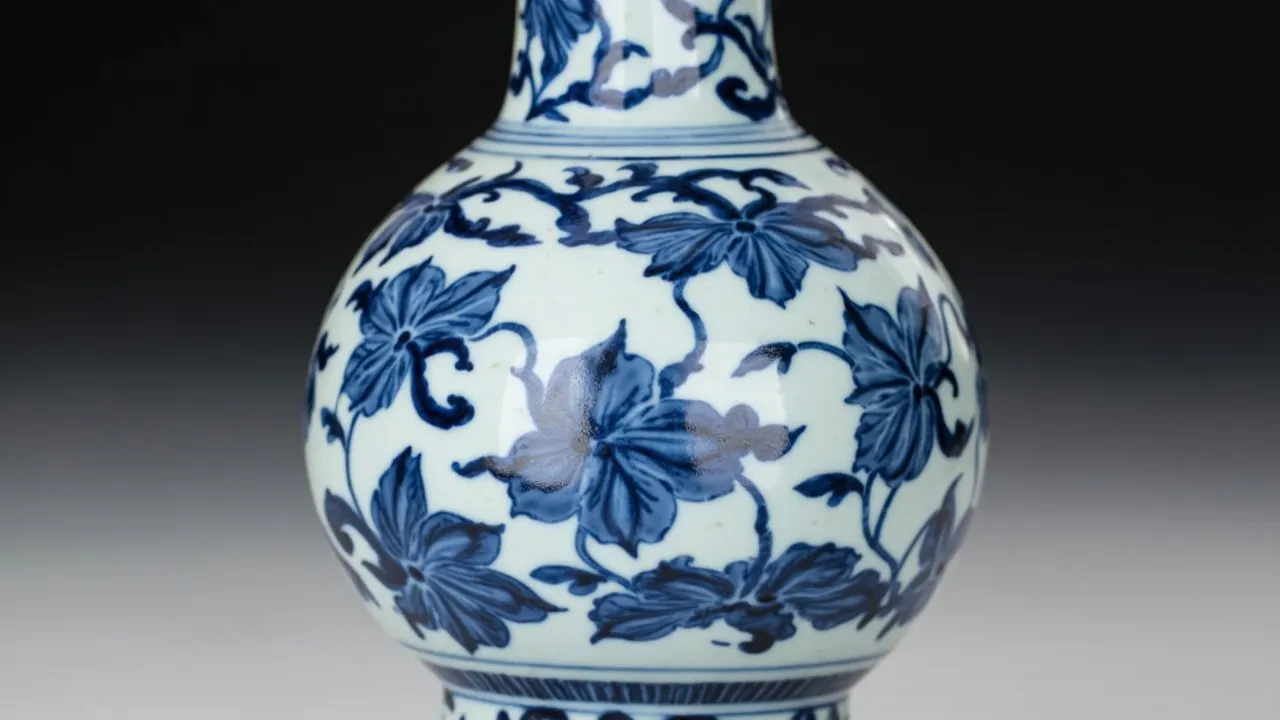
If you know only one style of Chinese porcelain, it’s almost certainly blue and white. This distinctive look—white ceramic decorated with blue cobalt designs—has been produced in China for over 600 years and exported worldwide. These pieces are so familiar that we rarely stop to appreciate how revolutionary they were.
Blue and white porcelain emerged during the Yuan Dynasty, but it reached its peak during the Ming. The cobalt blue pigment, imported from Persia via the Silk Road, created a vivid contrast against the white porcelain body that proved enormously appealing. The combination proved so successful that it became synonymous with Chinese ceramics in global trade.
Ming blue and white follows recognizable stylistic periods. The early Ming pieces (1400-1460) feature bold, somewhat informal designs with generous cobalt application that sometimes spreads slightly during firing, creating a characteristic “heavenly spread” effect. The middle Ming (1460-1520) brought more refined designs with tighter composition. Late Ming (1520-1644) became increasingly elaborate, with busy designs that sometimes sacrificed elegance for complexity.
The most famous Ming blue and white styles include the xuande marks (named after the Xuande Emperor’s reign, 1425-1435), known for their refined brushwork, and the chenghua period (1465-1487), whose pieces are considered among the finest ever produced. Authentic Chenghua “chicken cups”—named for their designs featuring chickens among flowers—have sold at auction for tens of millions of dollars.
Qing Dynasty blue and white continued Ming traditions while adding new innovations. The Kangxi Emperor’s reign produced particularly excellent blue and white, with pieces featuring crisp, clean designs in a broader palette of blue tones than Ming potters typically used.
Other Chinese Porcelain Styles Worth Knowing
Blue and white may be the most famous, but Chinese potters created many other remarkable styles. Understanding these different approaches reveals the extraordinary range of Chinese ceramic achievement.
Famille verte (green family) enamel porcelain emerged during the Kangxi Emperor’s reign. These pieces feature a palette dominated by green, with red, yellow, blue, and black in supporting roles. The bright, somewhat garish colors distinguish famille verte from more subtle earlier styles. The technique required firing the piece multiple times—once for the porcelain body, then additional firings for each enamel color. This complexity contributed to the style’s prestige.
Famille rose (pink family) appeared during the Yongzheng Emperor’s reign (1722-1735) and quickly became the court’s favorite. The signature color was a soft pink created using gold chloride—a technique that only Chinese potters mastered. Combined with other enamel colors, famille rose produced images of remarkable subtlety and beauty. These pieces were extensively exported to Europe, where they influenced Rococo design.
Yixing clay teapots come from Yixing in Jiangsu Province. Unlike other Chinese porcelain, these pieces are made from a distinctive purple-brown clay that isn’t glazed. The porous material absorbs tea flavors over time, developing a patina that dedicated tea connoisseurs prize enormously. Yixing teapots are typically smaller than Western teapots, designed for the Gongfu Cha (tea ceremony) method of brewing that Chinese tea culture developed.
Blanc de Chine (white from China) comes from the Dehua kilns in Fujian Province. These pieces are famous for their pure white, almost translucent quality. The material is so fine and white that it’s sometimes called “blanc de Chine” in Western collector circles. Buddhist figures produced in this style are particularly prized, their simple, serene forms exemplifying Chinese aesthetic ideals.
Why Chinese Porcelain Captivated the World
European obsession with Chinese porcelain has deep historical roots. When Marco Polo returned from China in the 13th century, he brought back accounts of the remarkable ceramics being produced there, but no actual examples. European aristocrats who heard these stories became obsessed with obtaining pieces.
For centuries, Chinese porcelain arrived in Europe through a lengthy trade process. Portuguese merchants were the first to bring significant quantities, beginning in the 16th century. Dutch traders followed, establishing the famous “China trade” that connected European markets to Chinese production centers. The Dutch East India Company became the primary importer, and Chinese porcelain became a standard luxury item in European aristocratic households.
The Europeans tried desperately to discover Chinese manufacturing secrets. They analyzed imported pieces, attempted to reverse-engineer the glazes, and sent spies to China in attempts to steal kaolin. All failed. The secret remained in China.
Finally, in the early 18th century, European potters cracked the code. The German Meissen factory discovered the formula around 1709, followed by French and English factories. But even with the secret revealed, Chinese porcelain remained the gold standard. Chinese pieces continued to command premium prices, and Chinese methods continued influencing Western production.
This historical context helps explain porcelain’s cultural significance in China. The craft wasn’t merely an art form—it was a strategic asset that gave China enormous economic and cultural influence. Chinese porcelain was among the most desired luxury goods in the pre-industrial world, and Chinese potters were the only source.
Collecting and Appreciating Chinese Porcelain
American collectors have access to Chinese porcelain through multiple channels. Auction houses like Sotheby’s and Christie’s regularly feature Chinese ceramics in their sales, ranging from affordable pieces to museum-quality masterpieces. Antique shops and estate sales sometimes offer opportunities to acquire older pieces. Contemporary studio porcelain is available from specialty dealers and directly from Chinese artists.
For beginners, advice from experts emphasizes several points. First, learn before you buy. Study the different periods, styles, and characteristics before committing to a purchase. Second, buy the best you can afford—good pieces appreciate, while mediocre ones typically don’t. Third, buy what you love. Collectors who focus on pieces that genuinely appeal to them end up with more satisfying collections than those who chase investment potential.
Museums offer excellent opportunities to study Chinese porcelain. The Metropolitan Museum of Art in New York has one of the world’s great collections, with pieces spanning centuries of production. The British Museum, the Victoria and Albert Museum, and the Palace Museum in Beijing (housed in the Forbidden City) all have extraordinary holdings.
The authentication of Chinese porcelain has become increasingly sophisticated. Counterfeiters produce convincing fakes, and experts use techniques including X-ray fluorescence analysis, microscopic examination, and detailed stylistic study to determine authenticity. Anyone serious about collecting should work with reputable dealers and consider professional authentication for significant purchases.
The Living Tradition
Chinese porcelain isn’t merely a historical artifact—it’s a living tradition that continues to evolve. Contemporary Chinese potters work in studios across the country, some continuing centuries-old family traditions, others experimenting with new forms and techniques.
Modern Chinese porcelain covers a vast range. Traditional styles continue being produced using the same techniques as historical pieces. Contemporary artists create innovative works that challenge viewer expectations about what porcelain can be. Functional ware—teapots, dishes, vases—remains popular for both everyday use and gifting.
The Chinese government has recognized porcelain as an important cultural heritage. Master potters receive official designation and support. Schools teach traditional techniques. The art form has adapted to the contemporary world while maintaining connections to its remarkable past.
For Americans interested in Chinese culture, porcelain offers a particularly accessible entry point. The objects are beautiful, historically significant, and widely available. Whether you visit museums, start a modest collection, or simply appreciate the aesthetic achievements on display, Chinese porcelain rewards attention.
Chinese porcelain represents one of humanity’s great craft achievements—a combination of natural resources, technical innovation, and artistic vision that the world has never stopped admiring. From the imperial kilns of Jingdezhen to contemporary studios, the tradition continues, carrying forward skills and aesthetic sensibilities developed over more than a millennium.