Chinese Red Envelopes: The Tradition of Giving Luck
Every Chinese New Year, something magical happens across the globe. In living rooms and kitchens, in apartments and suburban homes, grandparents secretly slip red envelopes into their grandchildren’s hands. The children squeal with delight, tear them open, and peek inside at the crisp bills tucked within. Meanwhile, parents quietly exchange glances—part amusement, part nostalgia, and maybe a little worry about how they’ll match those generous grandparents next year.
This is the scene of hongbao—the red envelope tradition that has defined Chinese celebrations for centuries. But what exactly is inside these crimson packets, and why do they inspire such excitement year after year?
What Are Red Envelopes?
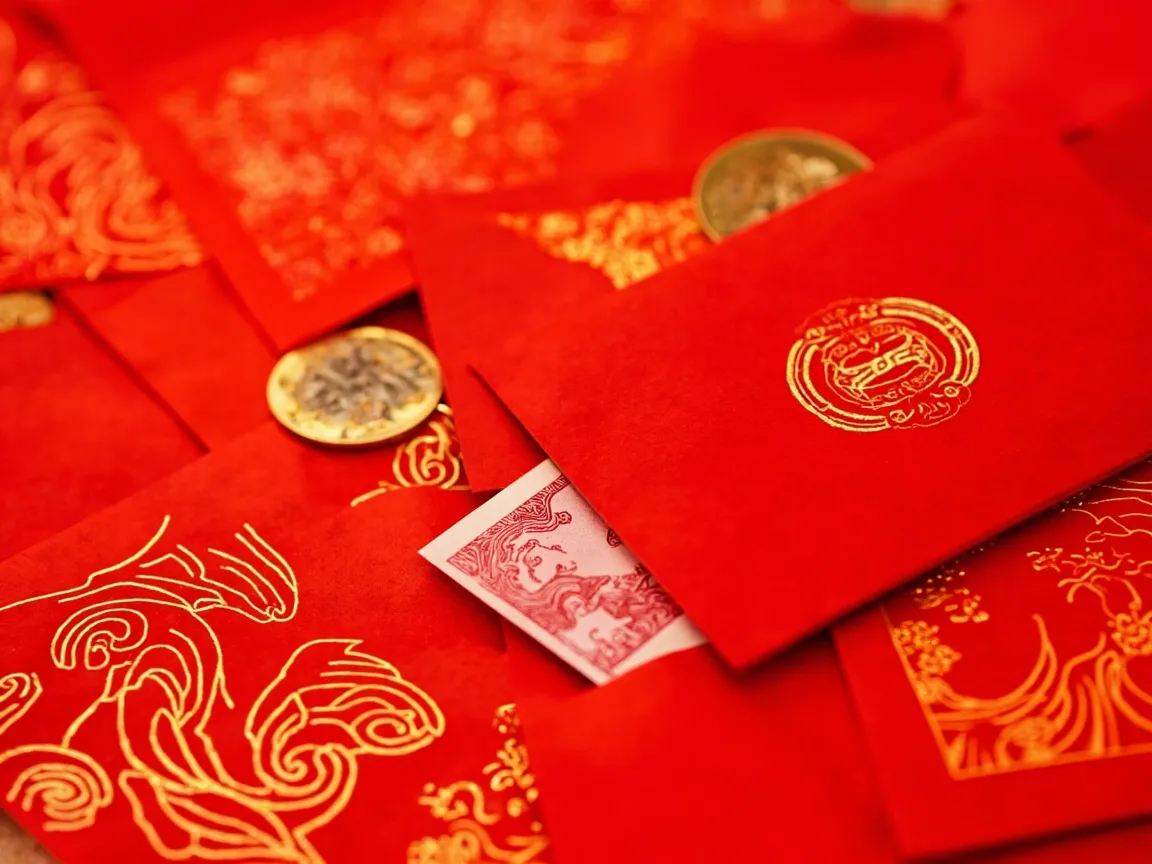
A red envelope, called hongbao (红包) in Mandarin or ang pao in Cantonese, is a small red envelope traditionally filled with money. The envelope itself is usually made of red paper or cardboard, often decorated with gold lettering, Chinese characters for luck and prosperity, or intricate patterns featuring dragons, fish, or gold coins.
The money inside—what many call “lucky money” or “gift money”—represents more than just cash. It’s a transfer of good fortune, a blessing for the recipient’s health, happiness, and success in the year ahead. The amount varies widely depending on the relationship between giver and recipient, local customs, and the giver’s financial situation.
In Chinese culture, giving money in a red envelope carries far more meaning than simply handing someone cash. The envelope transforms ordinary money into something special—a gift imbued with wishes for prosperity and protection against evil spirits.
A Brief History
The tradition of giving money in red envelopes stretches back over a thousand years. The practice evolved from an earlier custom called ya sui qian (压岁钱), which literally means “money to suppress evil spirits.”
Legend has it that in ancient times, a demon named Sui would visit children on New Year’s Eve, causing them to fall ill or behave strangely. Parents discovered that putting coins under their children’s pillows would protect them from this demon. Eventually, this evolved into the more elaborate tradition of placing money in red packets.
During the Tang Dynasty (618-907 CE), the custom of giving money during the Lunar New Year became more formalized. Emperors began distributing gold coins to their officials as a symbol of their favor and to encourage loyalty. This aristocratic practice gradually filtered down to ordinary citizens, who adapted it using red paper instead of gold coins.
By the time of the Ming Dynasty (1368-1644), the red envelope as we know it today had taken shape. Red paper, considered auspicious in Chinese culture, replaced older materials. The tradition spread throughout East Asia, adopted by Chinese communities in Korea, Japan, Vietnam, and Southeast Asia—each adding their own cultural variations.
The 20th and 21st centuries brought dramatic changes. In the early 1900s, banknotes replaced coins in most transactions, and envelopes became the standard container. Then, in the 2010s, digital red envelopes exploded onto the scene through smartphone apps, fundamentally transforming how this ancient tradition is practiced.
The Symbolism of Red
In Chinese culture, red is far more than just a color—it’s a symbol of life, energy, and good fortune. Understanding why red envelopes are red requires diving into the deeper layers of Chinese symbolism.
Red represents joy, celebration, and happiness. It’s the color of weddings, festival decorations, and festive lanterns. Perhaps more importantly, red is believed to ward off evil spirits and bring good luck. In Chinese medicine and philosophy, red is associated with the south, with fire, and with the element of passion and energy.
The color’s protective properties are particularly significant for red envelopes. By placing money in red, givers are essentially “consecrating” the gift—asking the universe to protect the recipient from misfortune and to welcome prosperity into their lives.
Interestingly, the shade of red matters. Traditional Chinese red (zhong guo hong) is a deep, vibrant red with just a hint of orange, quite different from the bright scarlet often seen in Western contexts. This particular shade has been considered the “proper” festive red for centuries.
Gold, the other dominant color in red envelope designs, symbolizes wealth and prosperity. The combination of red and gold creates a visual prayer for good fortune—red to ward off evil, gold to attract wealth.
When to Give Red Envelopes
While Chinese New Year is the most famous time for giving red envelopes, this tradition extends throughout the year. Here’s when you’re most likely to encounter this custom:
Chinese New Year (Spring Festival): This is the prime time for hongbao. Typically, married couples give red envelopes to unmarried family members—children, grandchildren, and nieces and nephews. The tradition is that elders give to younger people, passing down blessings for the new year. Many families hold special gatherings on New Year’s Eve or New Year’s Day specifically for the envelope exchange.
Weddings: Red envelopes are standard gifts at Chinese weddings. Guests present them to the newlyweds, and the amount given often reflects the guest’s relationship to the couple and the local cost of attending a wedding banquet. The money helps offset the cost of the reception—a practical element that makes the tradition sustainable.
Birthdays: In some families, especially for children and elderly relatives, red envelopes mark birthday celebrations. The amount might correspond to the person’s age or carry special numerical significance.
Funerals: Perhaps surprisingly, red envelopes also appear at Chinese funerals, though the context differs. Money given at funerals is meant to help cover funeral expenses and is typically given by close family members.
Graduations and Job Promotions: Major life milestones often trigger red envelope exchanges, especially when someone achieves success in education or career.
Business Occasions: In business settings, red envelopes might mark the opening of a new store, the signing of an important contract, or other professional milestones.
The underlying thread across all these occasions is the same: red envelopes transfer good fortune from one person to another, marking important transitions and strengthening social bonds.
Taboos and Etiquette
Like any long-standing cultural tradition, red envelopes come with their own set of unwritten rules. Getting these wrong—especially in formal settings—can cause embarrassment or even offense:
Never give empty envelopes: This is considered extremely unlucky, like giving someone an empty promise. Even if you’re low on cash, put in a small amount—some coins or the smallest bill you have.
Avoid the number four: The Chinese word for “four” (si) sounds almost identical to the word for “death.” Therefore, amounts like $40 or $444 are considered very unlucky. Stick with amounts ending in 8 if possible—the number eight sounds like “prosperity” in Chinese.
Don’t open envelopes in front of the giver: This is a common mistake Westerners make. In traditional etiquette, the recipient should accept the envelope politely, thank the giver, and put it away without opening it in front of them. Opening it immediately can seem greedy or disrespectful. (In practice, many families have become more relaxed about this, especially with children.)
Use new or crisp bills: Old, worn money in a red envelope can seem like you’re passing along bad luck. Whenever possible, use crisp, new bills—especially for larger amounts.
The envelope itself matters: Red envelopes should be new, never reused. Using an old envelope can be seen as passing along someone else’s bad fortune.
Be careful who gives to whom: In some traditions, widows or people in mourning shouldn’t give red envelopes. Similarly, people who are sick or have experienced recent misfortune might be excused from the custom.
The amount carries meaning: Giving amounts that seem too small can insult the recipient, while giving amounts that seem too extravagant can create awkwardness. In general, the amount should reflect your relationship and your means—but local custom varies significantly.
The Digital Revolution
If the ancient sages who invented the red envelope could see modern China, they’d hardly recognize their tradition. In 2014, a company called Tencent launched a feature within their WeChat messaging app that allowed users to send red envelopes digitally. The feature went viral, fundamentally changing how Chinese people practice this ancient custom.
During Chinese New Year 2015, over 1 billion digital red envelopes were sent through WeChat alone. The numbers have only grown since then, with WeChat, Alipay, and other apps competing fiercely for market share during the holiday season.
Digital red envelopes have several advantages that explain their rapid adoption:
Convenience: You can send a red envelope to anyone in your contacts list instantly, regardless of where they live. Long-distance families no longer need to mail physical envelopes or hand-deliver them.
Creative features: Digital platforms have added games and features—some envelopes are “lucky” and contain more money than expected, some require group effort to open, some are hidden and must be found.
Record-keeping: Digital transactions create automatic records, which helps in a culture where keeping track of gift-giving reciprocity matters.
Instant gratification: The digital nature means recipients get their money immediately—no waiting for the post or for visits.
But the digital revolution has also sparked debate. Many older Chinese people feel that digital red envelopes lack the warmth and intentionality of physical ones. The tactile experience of receiving a red envelope—the weight of it, the texture of the paper, the anticipation of opening it—carries emotional meaning that pixels can’t fully replace.
Younger generations tend to embrace both: they enjoy the convenience and fun of digital envelopes while also appreciating traditional physical red envelopes from family members, especially grandparents who might not be as tech-savvy.
Interestingly, digital red envelopes have spread beyond China’s borders. Chinese people living abroad use apps to participate in the tradition with family back home, and some non-Chinese people have adopted the custom for fun during Chinese New Year celebrations.
Conclusion
Red envelopes represent something fascinating about human cultures: the desire to transfer not just money, but hope, blessing, and connection. Whether made of red paper passed hand to hand or sent as digital packets across continents, these small envelopes carry profound meaning.
For Americans encountering this tradition for the first time, the key is understanding what’s beneath the surface. It’s not really about the money—it’s about relationships, respect for elders, wishes for prosperity, and participation in a cultural story that spans thousands of years.
So the next time you receive a red envelope—or give one—remember you’re holding more than cash. You’re holding a wish for good fortune, a connection to ancient traditions, and a small piece of Chinese cultural heritage that has somehow found its way into your hands.
Gong xi fa cai—wishing you prosperity and happiness!