Chinese Shadow Puppetry: Stories in Darkness
Imagine sitting in a dimly lit theater, eyes fixed on a white cloth screen. Behind it, a flickering oil lamp casts its warm glow. As skilled hands work thin leather cutouts, dragons soar, warriors clash, and ghosts dance across the canvas. This isn’t a scene from some fantasy film—it’s been a beloved form of entertainment in China for over a thousand years.
Chinese shadow puppetry, known as piyingxi (皮影戏) in Mandarin, is one of the world’s oldest and most enchanting theatrical traditions. It combines intricate craftsmanship, musical storytelling, and theatrical performance into a single, mesmerizing art form. For generations of Chinese families, it was the ultimate entertainment—equal parts movie theater, radio drama, and live theater, all packed into one portable performance.
If you’ve never heard of shadow puppetry, you’re not alone. This art form has faded from everyday life in China, surviving mainly in rural villages and among dedicated preservationists. But its story is absolutely worth knowing—not just because it’s beautiful, but because it tells us something profound about how humans have always loved a good story told in the dark.
What Is Shadow Puppetry?
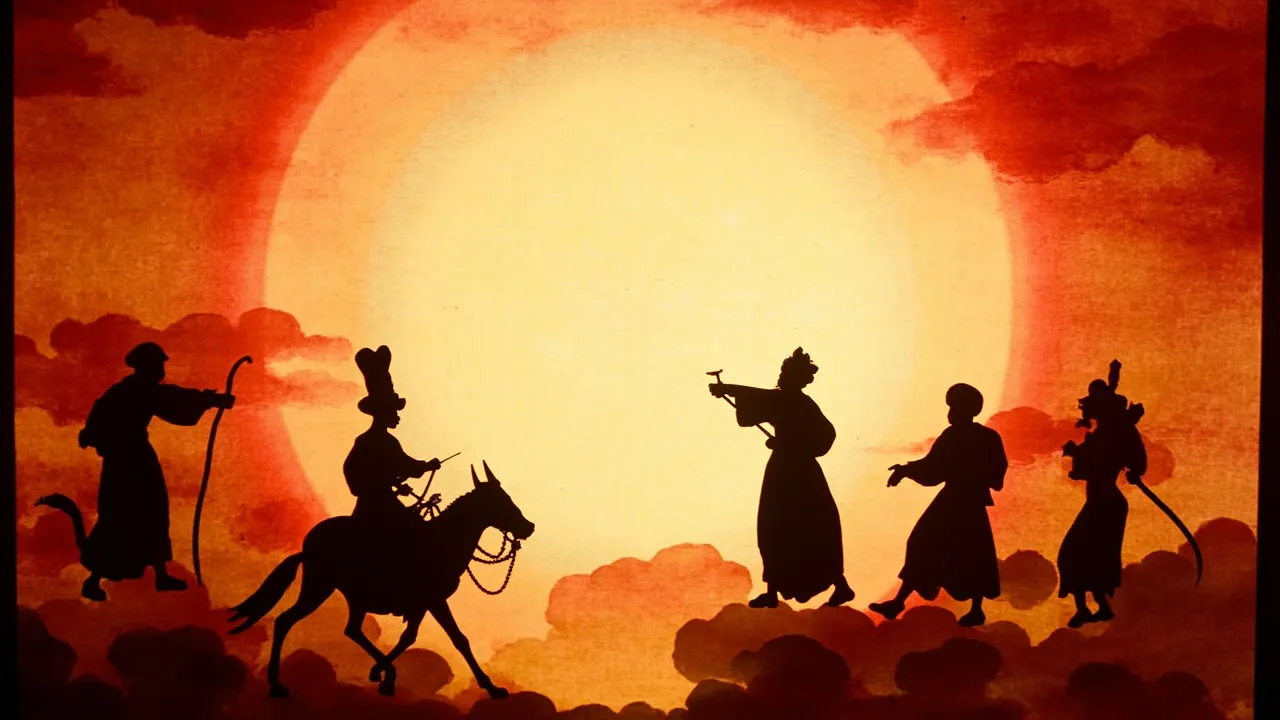
At its core, shadow puppetry is a form of theater where flat, colored figures made from leather or thick paper are manipulated behind a translucent screen. A light source behind the figures casts their shadows onto the screen, creating the illusion of moving pictures. The puppeteers work in the darkness behind the screen, visible only to themselves, while the audience watches the shadow play unfold on the other side.
The figures themselves are remarkable works of art. Master craftspeople carve intricate designs into thin sheets of donkey or ox hide, then paint them with vibrant colors. Each puppet can take weeks to complete, with separate pieces for the head, torso, arms, and legs—connected at the joints so they can move realistically. Some puppets have as many as ten adjustable parts, allowing them to walk, dance, fight, and even weep.
But the puppets are only half the performance. A typical shadow puppet show also includes a narrator who sings the dialogue, musicians playing traditional instruments like the erhu (a two-stringed violin) and drums, and sometimes even sound effects created with everyday objects. It’s a full sensory experience—haunting music, dramatic singing, and the delicate dance of shadow figures on screen.
What makes shadow puppetry special is its illusion of depth. Even though the figures are completely flat, skilled puppeteers can make them appear to turn in three dimensions, jump, wave, and interact with each other in surprisingly lifelike ways. The best puppeteers can make their puppets seem almost alive.
The Ancient Art Form
Chinese shadow puppetry has ancient roots, though its exact origins are shrouded in mystery and legend. One popular story attributes its invention to Emperor Wu of the Han dynasty (who ruled from 141 to 87 BCE). According to this tale, the emperor’s favorite concubine died young, and he became so grief-stricken that he refused to eat or sleep. His ministers, desperate to cheer him up, invented a puppet shaped like his lost love, using cloth and rods to make it dance in the light. The emperor was delighted, and the art form was born.
While this origin story is almost certainly mythology, it points to how deeply shadow puppetry is woven into Chinese cultural memory. The earliest solid historical evidence dates to the Tang dynasty (618-907 CE), when shadow plays were performed for royal court entertainments. By the Song dynasty (960-1279 CE), traveling puppet troupes were traveling from village to village, performing for common folk and aristocrats alike.
The art form truly flourished during the Ming (1368-1644) and Qing (1644-1912) dynasties. Shadow puppetry became the dominant form of popular entertainment across China, with hundreds of regional styles developing across the vast country. Each region developed its own distinctive puppet designs, musical styles, and repertoire of stories.
What’s remarkable is that shadow puppetry wasn’t just entertainment—it was education, religion, and social glue all rolled into one. Many Chinese villagers had never seen the ocean, but they knew the stories of Dragon King and the Sea. They may never have traveled beyond their county, but they could recite the adventures of the Monkey King. Shadow plays taught history, morals, and folklore to audiences who couldn’t read.
The stories often featured themes of loyalty, filial piety, justice, and love—values deeply embedded in Chinese culture. Villagers would gather for shadow puppet performances during festivals, weddings, and funerals. The shows could last all night, with audiences mesmerized by tales of warriors, ghosts, emperors, and lovers.
How It Works
The technical side of shadow puppetry is as fascinating as the performances themselves. Let’s break down how these shows actually work.
The Screen: The white cloth screen (called baijiemu in Chinese) is stretched taut on a frame. It needs to be thin enough for light to pass through but thick enough to show clear, sharp shadows. Traditionally, the screen was made from fine silk or cotton, but modern performances sometimes use synthetic fabrics.
The Light: For centuries, the only light source was oil lamps or candles placed behind the screen. This created a warm, intimate atmosphere and allowed the puppeteers to work in near-total darkness. The flickering flame also added a dreamlike quality to the shadows. Modern productions sometimes use electric lights, though many purists argue this loses something special about the traditional approach.
The Puppets: Shadow puppets are made from thin, translucent leather or stiff paper. The most prized material is donkey hide, which is prized for its durability and smooth texture. The crafting process is incredibly labor-intensive. First, the design is traced onto the hide. Then, using tiny, sharp knives, the craftsperson carves out the details—facial features, clothing patterns, decorative elements. Finally, the pieces are painted with natural dyes and joined together with threads or wires.
A single puppet might have a body, four arm segments (two upper, two lower), four leg segments, and a detachable head—each piece carved separately and connected at the joints. Some elaborate puppets have even more pieces, allowing for incredibly detailed movements.
The Controls: Puppeteers hold the puppets using thin wooden or bamboo rods attached to the hands and bodies. These rods are nearly invisible to the audience because they align with the puppet’s body, so the shadow shows only the figure itself, not the controlling sticks. A skilled puppeteer can manipulate three or four puppets at once, using two rods per puppet to create fluid, lifelike movements.
The Performers: A shadow puppet troupe typically consists of three to five people. One person (the qiang or “singer”) handles all the dialogue and singing, often portraying multiple characters with different voices. Two or three people operate the puppets. And one musician provides the accompaniment. This small team can stage elaborate productions involving dozens of characters, elaborate battle scenes, and dramatic plot twists.
The rehearsal process is grueling. Puppeteers spend years learning to coordinate their movements with the music and narration. They must be able to make their puppets walk naturally, fight convincingly, and express emotion through posture alone—since the audience never sees the puppeteers’ faces, only the shadows.
Stories and Characters
What kind of stories did Chinese audiences watch in these shadow performances? Pretty much everything.
The repertoire of shadow puppetry spans thousands of years of Chinese storytelling. Here are some of the most popular categories:
Historical Dramas: Stories about famous emperors, loyal ministers, brave generals, and cunning strategists. These tales often featured epic battles, political intrigue, and dramatic betrayals. The Romance of the Three Kingdoms, one of China’s four great classical novels, was a particularly popular source material.
Folk Tales: Countless stories featuring magical creatures, clever peasants, mischievous spirits, and moral lessons. These ranged from romantic tales of lovers separated by feuding families to comedy about greedy officials tricked by ordinary people.
Mythology and Legend: Stories featuring deities, dragons, ghosts, and supernatural beings. The Monkey King (Sun Wukong) from Journey to the West was a perennial favorite, with his magical adventures providing endless opportunities for spectacular shadow effects.
Buddhist and Taoist Tales: Religious and philosophical stories about karma, enlightenment, and the spirit world. These performances sometimes served a spiritual purpose, believed to bring good fortune or appease ghosts.
The characters in these stories are instantly recognizable to Chinese audiences. Heroes wear distinctive clothing inauspicious colors (like red or blue), while villains are dressed in black or have sinister-looking facial features. Dragons have elaborate scales, horses have flowing manes, and warriors carry weapons that glint in the lamplight.
Perhaps the most touching aspect of shadow puppet storytelling is how it handled emotion. Without facial expressions to work with, puppeteers conveyed feelings through body language—a drooping posture for sadness, a springing leap for joy, a slow, heavy walk for grief. The best performances could make audiences weep, even though they only ever saw silhouettes.
Modern Revival
For a while, it looked like shadow puppetry might disappear entirely.
The art form faced mounting challenges throughout the 20th century. Cinema arrived in China in the 1900s, followed by radio, television, and eventually the internet. Each new entertainment technology drew audiences away from traditional performances. The Cultural Revolution (1966-1976) dealt another heavy blow, as communist ideologues viewed many traditional art forms as feudal relics incompatible with modern socialism. Many puppet masters were persecuted, their collections destroyed, and their skills lost.
By the 1980s, shadow puppetry had nearly vanished from mainstream Chinese culture. The average Chinese person hadn’t seen a shadow play in decades. The art survived mainly in a few remote rural areas where tourism hadn’t yet arrived.
But in recent years, something interesting has happened. Younger Chinese artists, designers, and performers have begun rediscovering shadow puppetry—not as a dusty relic, but as a source of creative inspiration. They’re combining traditional techniques with contemporary aesthetics, creating works that appeal to modern audiences while honoring the craft’s heritage.
This revival has taken many forms. Some artists create new shadow puppet productions, updating classic stories with contemporary themes. Others incorporate shadow puppetry into installations, music videos, and even wedding ceremonies. Designers have adapted traditional puppet aesthetics into graphic design, fashion, and branding. And internationally, shadow puppetry has found new audiences in theater and film—think of the Academy Award-winning film Coraline, which drew inspiration from this art form.
In 2011, Chinese shadow puppetry was added to the UNESCO Representative List of the Intangible Cultural Heritage of Humanity. This recognition has helped generate new interest in preserving and promoting the art form. Schools in several Chinese provinces have begun offering shadow puppetry courses, and several museums now have permanent exhibitions featuring historical puppets and performance equipment.
The revival isn’t without challenges. Making authentic shadow puppets requires skills that take years to master, and the traditional materials (especially donkey hide) are increasingly scarce. The business model of traveling puppet troupes is difficult to sustain in a modern economy. And there’s always the risk of “museumifying” the art—preserving it as a cultural artifact rather than keeping it alive as a living performance tradition.
But those who love this art form remain hopeful. Every generation discovers shadow puppetry fresh, amazed that people figured out how to tell such compelling stories with nothing but leather, light, and skill. There’s something timeless about sitting in the dark, watching shadows dance, and letting your imagination fill in the rest.
Conclusion
Chinese shadow puppetry represents one of humanity’s most creative solutions to a basic problem: how do we tell stories? Long before film, television, or smartphones, people found ways to bring narratives to life using the simplest possible materials. A piece of leather, a lamp, a cloth screen, and human skill—that’s all it takes to create magic.
The next time you watch a movie with stunning visual effects, or get lost in a video game’s immersive world, remember that people in ancient China were already mastering the art of illusion. They just did it with shadows.
If you’re ever visiting China, keep an eye out for shadow puppet performances in tourist areas or cultural centers. Even if you don’t understand the language, the visual spectacle is captivating. And who knows—you might find yourself, like countless generations before you, transported by the simple, ancient magic of stories told in darkness.
The shadows still dance. And they still have stories to tell.