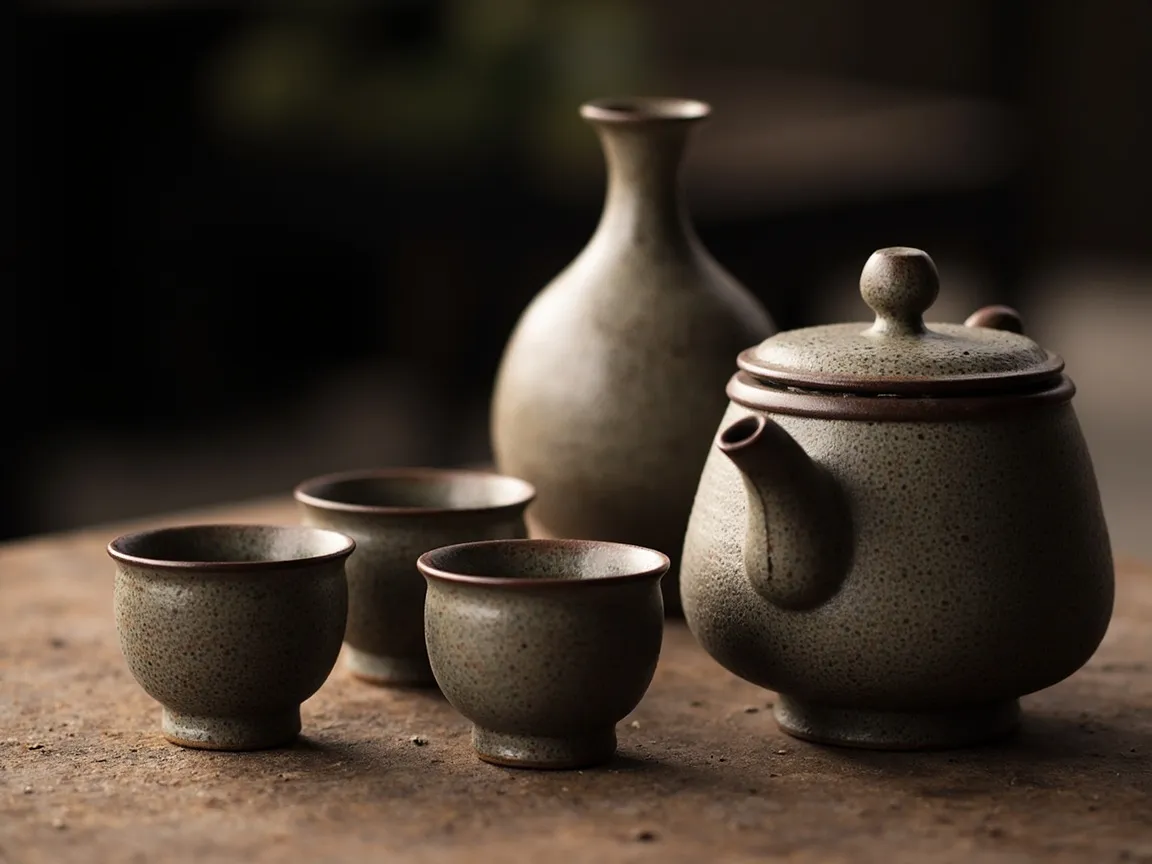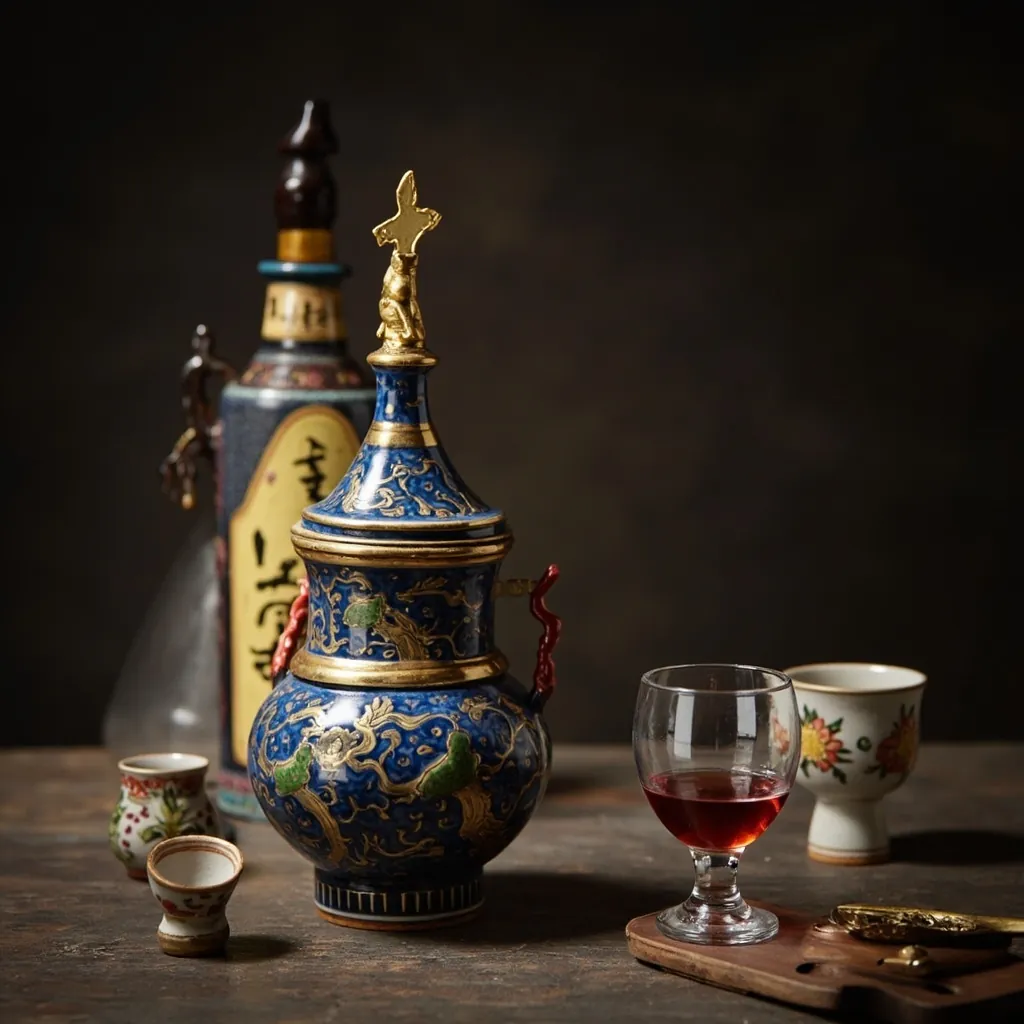
slug: chinese-wine-culture description: “Explore the rich tradition of Chinese wine culture, from baijiu to huangjiu, and discover how drinking customs shape social interactions, business relationships, and celebrations in China.” keywords: [‘Chinese wine’, ‘baijiu’, ‘huangjiu’, ‘Chinese alcohol’, ‘drinking culture’, ’toasting customs’] categories: [‘Chinese Culture’, ‘Food & Drink’] tags: [‘wine’, ‘baijiu’, ‘alcohol’, ’tradition’, ‘social customs’] image: “/images/chinese-wine-culture.jpg” alt_text: “Traditional Chinese wine vessels and baijiu bottles” author: Jaie affiliate_products:
- name: “Premium Baijiu Tasting Set - Five Famous Varieties” url: “https://example.com/products/baijiu-tasting-set" description: “Sample five premium baijiu types including Moutai and Wuliangye” price: “$95”
- name: “Traditional Chinese Ceramic Wine Warming Set” url: “https://example.com/products/wine-warming-set" description: “Handcrafted ceramic warmer with elegant dynasty-era design” price: “$48”
- name: “Chinese Drinking Games: Traditional Jiuliping Guide” url: “https://example.com/books/jiuliping-guide" description: “Learn traditional Chinese drinking games and social customs” price: “$22”
- name: “Huangjiu Cooking Wine - Premium Aged Variety” url: “https://example.com/products/huangjiu-cooking" description: “Aged huangjiu perfect for cooking and traditional ceremonies” price: “$32”
- name: “Chinese Tea Ceremony and Tea Set - Combo Experience” url: “https://example.com/products/tea-wine-combo" description: “Traditional tea and wine pairing experience kit with guide” price: “$75”
Chinese Wine Culture: The Ancient Art of Drinking in China
When Westerners think of Chinese drinking culture, they often picture baijiu—the potent white spirit that accompanies nearly every business dinner and celebration in China. But Chinese wine culture is far more nuanced and ancient than this singular image suggests. For thousands of years, alcohol has played a central role in Chinese society, from ancient ritual offerings to contemporary business negotiations. Understanding Chinese drinking culture provides insight into values that remain central to Chinese social life: hospitality, relationship-building, and the importance of shared experiences.
The word for alcohol in Chinese is “jiu” (酒), and it appears throughout Chinese history in contexts ranging from sacred ritual to everyday meals. Unlike in some cultures where alcohol consumption is viewed primarily as a personal pleasure or social lubricant, Chinese drinking culture has always carried deeper significance. To share a drink is to create a bond; to refuse a drink is to potentially insult the offerer. The ceremony of toasting, which has been perfected over millennia, transforms the simple act of drinking into a meaningful social ritual.
Chinese alcoholic beverages divide broadly into two categories: fermented grain wines, known as huangjiu, and distilled spirits, of which baijiu is the most prominent example. Both categories have histories dating back millennia, with archaeological evidence suggesting that fermented beverages were produced in China as early as 7000 BCE. These drinks were originally used in religious ceremonies, offered to ancestors and spirits as a way of communicating with the divine realm. The connection between alcohol and the spiritual world has never been entirely lost, even as drinking became increasingly secularized over time.
The Ancient Origins of Chinese Wine
The history of Chinese wine begins with the discovery of fermentation itself. According to Chinese legend, the technique of fermentation was discovered accidentally when leftover cooked millet was left exposed to the elements and began to transform into alcohol. Whether this story is literally true, it reflects the Chinese understanding of alcohol as something that emerges naturally under the right conditions—a gift from nature rather than purely human invention. The Chinese word for fermentation, “jiu lao,” literally means “old wine,” suggesting that the discovery was ancient beyond memory.
During the Shang Dynasty (1600-1046 BCE), alcohol played a crucial role in religious rituals. Bronze vessels used for heating and serving wine have been found in archaeological excavations of Shang royal tombs, suggesting that rituals involving alcohol were central to Shang religious practice. These rituals served multiple purposes: honoring ancestors, seeking divine guidance, and reinforcing the political power of the ruling class. The elaborate bronze vessels themselves were religious objects, their surfaces decorated with taotie masks and other ritual motifs that connected the present to the spirit world.
By the time of the Zhou Dynasty (1046-256 BCE), Chinese thinkers had begun to reflect critically on the role of alcohol in society. The Book of Songs (Shijing), China’s earliest collection of poetry, contains both celebratory verses praising wine and cautionary passages warning against excessive drinking. The philosopher Confucius, while not a teetotaler, spoke of the need for moderation and proper conduct while drinking. This ambivalence toward alcohol has remained a consistent feature of Chinese culture, with wine viewed simultaneously as a source of joy and a potential source of problems when misused.
The Han Dynasty (206 BCE-220 CE) saw further development of Chinese wine culture. The famous historian Sima Qian recorded various stories about alcohol and its effects, both positive and negative. Emperor Wu of Han was known to have offered wine to his ancestors and generals as a reward for military victories. The fermented wine of this period was quite different from modern baijiu—it was lower in alcohol content and often sweetened with herbs or fruits. The production methods were refined over centuries, with each dynasty contributing improvements to brewing and distillation techniques.
Baijiu: China’s National Spirit
No discussion of Chinese wine culture would be complete without addressing baijiu, the distilled grain spirit that has become synonymous with Chinese drinking. The name baijiu means “white alcohol,” referring to the clear color of the spirit. Made from sorghum, corn, rice, or other grains, baijiu typically contains between 40 and 60 percent alcohol by volume, making it significantly stronger than most Western spirits. The bite of high-quality baijiu can be startling to first-time drinkers, but enthusiasts describe flavors ranging from sweet and fruity to earthy, smoky, and medicinal.
The production process for baijiu involves fermentation, distillation, and aging. Traditional baijiu is fermented in open pits, where naturally occurring yeasts and bacteria convert grain sugars into alcohol. This fermentation process can take weeks or months, and the resulting liquid is then distilled to increase its alcohol content. The distillation process, often done in copper stills, helps remove impurities while concentrating the alcohol and capturing flavor compounds. High-quality baijiu is aged for years or even decades, developing complex flavors that range from sweet and fruity to earthy and medicinal.
Baijiu is categorized into different types based on flavor profile and production method. The most famous classification system recognizes five main aroma types: strong aroma (nongxiang), light aroma (qingxiang), sauce aroma (jiangxiang), roasted aroma (danchi xiang), and miscellaneous aroma (teshu xiang). Each type has distinct characteristics and is produced primarily in different regions of China. Guizhou Province, famous for Moutai baijiu, is particularly associated with the sauce aroma type, which features notes of soy sauce, fermented grain, and subtle sweetness. Sichuan province produces excellent strong aroma baijiu, characterized by their rich, fragrant profiles.
The most famous baijiu brand is undoubtedly Moutai (茅台), produced in the town of Maotai in Guizhou Province. Moutai has been served at countless state banquets and is often presented as a gift to visiting dignitaries. Its production process is closely guarded, with the original Moutai recipe said to be known only to a handful of master distillers. A bottle of aged Moutai can cost hundreds or even thousands of dollars, making it both a luxury item and a symbol of status and hospitality.
The Ritual of the Toast
In contemporary China, drinking is rarely a solitary activity. Rather, it is fundamentally a social practice centered on the ritual of toasting. Chinese toasting customs are elaborate and carry deep cultural significance. The act of raising a glass, making eye contact with drinking companions, and clinking glasses together creates a moment of connection that goes beyond the simple consumption of alcohol. The toast itself is an acknowledgment of the relationship between the participants, whether that relationship is familial, professional, or newly formed.
The most common toasting phrase in China is “gan bei” (干杯), which literally means “dry cup.” This expression, used across China, encourages companions to drain their glasses completely, symbolizing wholehearted commitment to the relationship or deal being celebrated. The phrase is often accompanied by a short speech expressing good wishes, gratitude, or hopes for future cooperation. In formal settings, guests typically wait for the host or the most senior person at the table to make the first toast before raising their own glasses.
Business dinners in China often involve extensive toasting rituals that can test both alcohol tolerance and social skill. It is considered impolite to refuse a toast, particularly from a superior or a host. The phrase “yi han” (意寒) may be used to politely decline, but doing so requires careful navigation of social expectations. This social pressure has created challenges for foreigners and for Chinese professionals who prefer not to drink, leading to the development of alternative beverages that allow participation in toasts without consuming alcohol. Some restaurants now offer non-alcoholic “wine” that looks like baijiu but contains no alcohol.
The mechanics of Chinese toasting also differ from Western customs. In China, it is customary to hold your glass with both hands when toasting with someone of higher status or age, demonstrating respect. When clinking glasses, the glass of the person being honored should be held lower than your own—a symbol of humility. These small details, while not always enforced strictly, show an awareness of proper conduct that Chinese hosts appreciate in their guests.
Drinking and Relationship Building
The Chinese concept of “guanxi” (关系) or relationship networking is intimately connected to drinking culture. Guanxi refers to the networks of connection and obligation that structure Chinese society, and building strong guanxi is essential for success in business and in life. Sharing a drink creates intimacy and trust in a way that casual conversation cannot. The loosened inhibitions that come with moderate drinking help people connect more genuinely, sharing personal stories and building emotional bonds. For this reason, business relationships in China are often cemented over multiple rounds of drinks at banquets and dinners.
The phrase “hei hei he” (呵呵呵) describes the ideal state for business relationships: honest, harmonious, and cheerful. This phrase is often used to describe the atmosphere at successful business dinners where all parties have enjoyed themselves and built rapport. Alcohol contributes to achieving this state by lowering social barriers and creating an atmosphere of openness. The formal distance that characterizes initial business meetings dissolves over the course of a long dinner, with toasts marking progressive stages of relationship development.
The famous Chinese business practice of “yizuo lianghao” (一座两好) or “one seat, two pleasures” refers to the dual benefits of business drinking—pleasure in the drinking itself and pleasure in the business relationships built. This practice is so embedded in Chinese business culture that some negotiations are said to actually begin only after the drinking has concluded and the real conversation can begin. Foreign businesspeople who understand this aspect of Chinese culture can use drinking occasions to build the personal relationships that form the foundation of successful business dealings in China.
However, the connection between drinking and relationship building has also raised concerns about alcohol abuse and its social consequences. Chinese health authorities have noted increasing rates of alcohol-related health problems, and there have been efforts to moderate excessive drinking in business contexts. Some companies have adopted policies limiting the amount of alcohol consumed at business functions, and younger Chinese professionals are sometimes choosing to opt out of heavy drinking occasions. The government has also implemented restrictions on official banquets, limiting the amount that government employees can spend on alcohol.
Wine in Traditional Chinese Medicine
Beyond its social uses, alcohol has played an important role in traditional Chinese medicine (TCM). Medicinal wines, prepared by steeping herbs in alcohol, have been used for thousands of years to treat various ailments and promote general health. The warming properties of alcohol were believed to stimulate circulation and enhance the effects of medicinal herbs. The alcohol serves as a “guide” (yaoyin) that carries the medicinal properties of herbs deeper into the body’s tissues.
The Yellow Emperor’s Classic of Internal Medicine (Huangdi Neijing), the foundational text of Chinese medicine compiled around the 2nd century BCE, discusses the appropriate uses of alcohol in treatment. Moderate drinking was considered beneficial for certain conditions, particularly those related to blood circulation and digestion. However, the text also warns against excessive drinking, which was believed to damage the liver and other organs. This balanced view of alcohol’s medicinal properties reflects the TCM approach of using substances in moderation and according to the patient’s specific condition.
Today, medicinal wines continue to be popular in China, with many families preparing their own versions using traditional recipes. These wines typically combine Chinese herbs such as ginseng (ren shen), goji berries (gou qi zi), or snake wine (she jiu) with baijiu or huangjiu as the base. Snake wine, made by steeping whole snakes in alcohol, is particularly prized for its supposed health benefits, though its efficacy is not supported by modern medical evidence. Other common ingredients include cordyceps (dong chong xia cao), angelica root (dang gui), and various animal parts believed to have restorative properties.
The cultural significance of medicinal wine extends beyond its actual medical effects. Preparing and sharing medicinal wine is often a family tradition, with recipes passed down through generations. The act of making the wine, like the act of drinking it, becomes a way of connecting with family heritage and ancestral wisdom. Many Chinese families have their own secret recipes, refined over decades, that they consider family treasures.
Modern Trends in Chinese Wine Culture
China’s wine culture is evolving rapidly as the country becomes more integrated with global markets. While baijiu remains the dominant alcoholic beverage domestically, Chinese consumers have developed increasing interest in Western wines, particularly red wines from France, Australia, and Chile. This interest has made China one of the world’s largest importers of wine, with Chinese consumers displaying growing sophistication in their knowledge of wine regions, grape varieties, and tasting techniques. The emergence of Chinese wine critics and wine education programs has accelerated this sophistication.
This globalization of Chinese drinking culture has created an interesting dynamic between traditional and modern practices. Business dinners may feature both baijiu and French wine, with hosts knowledgeable about both beverages. Some younger Chinese consumers prefer wine or craft beer over traditional spirits, leading to the emergence of new drinking establishments and consumption patterns. Wine bars have appeared in major Chinese cities, offering environments more similar to Western wine bars than traditional Chinese restaurants.
The rise of craft beer in China represents another interesting development. Chinese craft breweries, often founded by young entrepreneurs who studied brewing abroad, have created a new niche in China’s drinking culture. These establishments appeal to a demographic that may find traditional baijiu too strong or old-fashioned. The craft beer scene has developed particularly strongly in cities like Beijing, Shanghai, and Chengdu, where young professionals gather in taprooms that would not look out of place in Brooklyn or Berlin.
Despite these changes, the fundamental social function of drinking in China remains constant. Whether sharing baijiu at a business dinner or exploring wine bars in Shanghai’s nightlife districts, Chinese people continue to use alcohol as a tool for building relationships and marking important occasions. The ritual of toasting, the importance of face, the emphasis on hospitality—all these elements persist even as the specific beverages being consumed change.
Understanding this cultural context helps visitors to China navigate social situations with confidence and appreciation for the depth of Chinese drinking traditions. When offered a drink, the appropriate response is not to analyze its merits as you might in a Western wine tasting, but to recognize the relationship being offered alongside it. In China, a drink is never just a drink—it is an invitation to connection, a small ceremony that has been performed in this land for thousands of years.