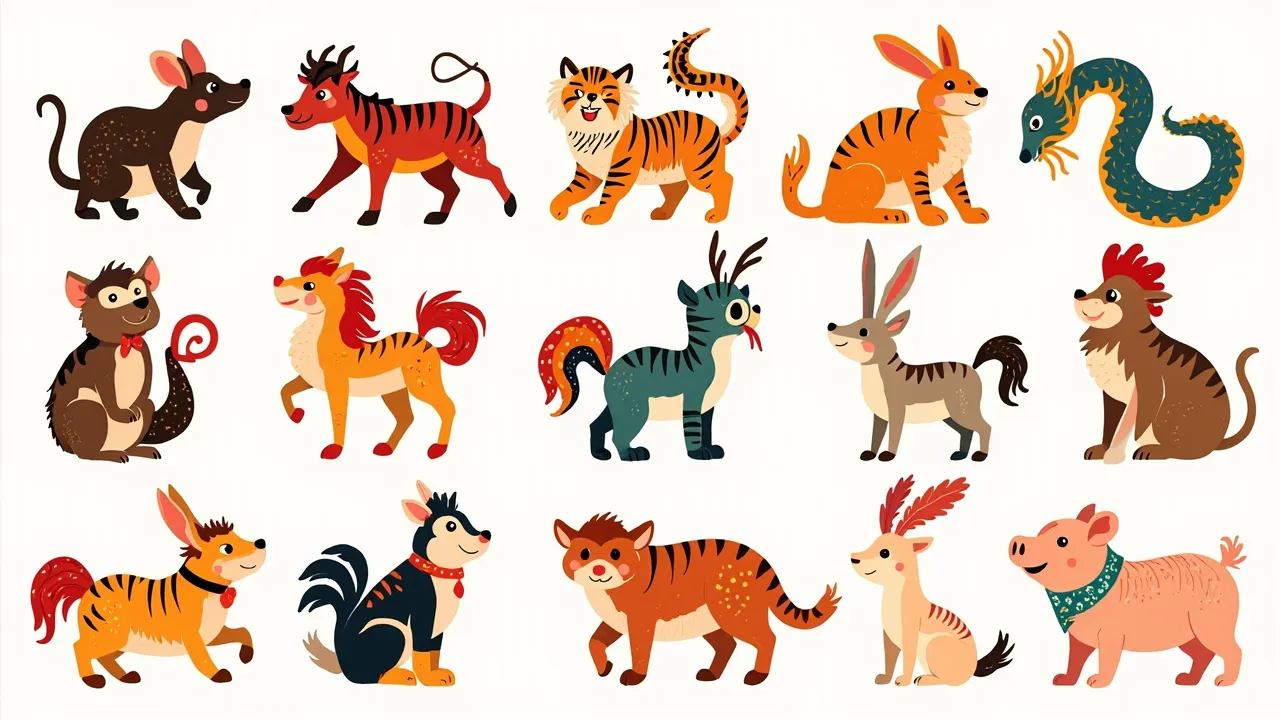
Have you ever wondered what animal defines your personality? In Western astrology, your birth month determines your zodiac sign—from ambitious Aries to diplomatic Libra. But in Chinese culture, the system works quite differently. Instead of constellations, the Chinese zodiac cycles through twelve animals, each representing a different year. Your animal sign depends on the year you were born, not the month.
The Chinese zodiac, known as “Sheng Xiao” (生肖) in Mandarin, is one of the oldest continuously practiced divination systems in the world. It shapes everything from business decisions to romantic relationships, and it’s impossible to ignore during celebrations like Chinese New Year. Whether you’re a quick-witted Monkey or a dependable Ox, understanding your zodiac animal can reveal surprising things about yourself.
Origins of the Chinese Zodiac
The Chinese zodiac dates back over two thousand years, with roots intertwined with Chinese astronomy, mythology, and philosophy. Unlike Western astrology, which has Greek and Babylonian origins, the Chinese system developed independently along the Yellow River valley.
The most popular legend behind the zodiac involves a great race organized by the Jade Emperor, the ruler of heaven in Chinese mythology. According to the story, the emperor invited all animals to cross a river, and the first twelve to arrive would earn a place on the zodiac calendar. The clever Rat hitched a ride on the Ox’s back, then jumped ahead at the last moment to finish first. The industrious Ox came second, followed by the Tiger, Rabbit, Dragon, Snake, Horse, Goat, Monkey, Rooster, Dog, and Pig—who arrived last after stopping to eat.
While this story makes for a delightful children’s tale, the actual origins of the zodiac are more grounded in astronomical observation. Ancient Chinese astronomers divided the year into twelve periods, each associated with one of twelve earthly branches (di zhi). These branches were later linked to the twelve animals we know today, combining cosmological beliefs with agricultural cycles and folk traditions.
The system also ties into traditional Chinese philosophy, particularly the concepts of yin and yang and the Five Elements (wood, fire, earth, metal, water). Every animal is associated with both a yin or yang quality and one of the five elements, adding layers of complexity that astrologers still study today.
The Twelve Animals and Their Traits
Each zodiac animal carries distinct personality traits that Chinese culture believes influence how people born in that year think, act, and relate to others. Here’s a closer look at all twelve animals.
Rat (1924, 1936, 1948, 1960, 1972, 1984, 1996, 2008, 2020)
People born under the Rat are often described as quick-witted, resourceful, and versatile. They’re known for their sharp minds and ability to adapt to changing situations. Rats tend to be generous with their time and money, though they can also be prone to worrying too much. In Chinese culture, the Rat is actually considered a symbol of wealth and surplus, making it a fortunate sign to be born under.
Ox (1925, 1937, 1949, 1961, 1973, 1985, 1997, 2009, 2021)
The Ox represents diligence, dependability, and strength. Those born in Ox years are often seen as reliable workers who stick with their commitments through thick and thin. They tend to be patient and methodical, though they can sometimes bestubborn. In Chinese culture, the Ox is highly respected for its farm work and contribution to agriculture, making it a symbol of prosperity.
Tiger (1926, 1938, 1950, 1962, 1974, 1986, 1998, 2010, 2022)
Tigers are known for their bravery, confidence, and competitive nature. People born under this sign often possess natural leadership abilities and aren’t afraid to take risks. They can be short-tempered at times, but their energy and enthusiasm are contagious. The Tiger is considered the king of all animals in Chinese folklore, representing power and authority.
Rabbit (1927, 1939, 1951, 1963, 1975, 1987, 1999, 2011, 2023)
Those born in Rabbit years are often gentle, kind, and creative. They’re known for their good taste and appreciation for beauty in all its forms. Rabbits tend to be diplomatic and avoid conflict when possible, though they can sometimes be seen as overly cautious. In Chinese culture, rabbits are associated with the Moon goddess Chang’e, adding a touch of magic to this sign.
Dragon (1928, 1940, 1952, 1964, 1976, 1988, 2000, 2012, 2024)
The Dragon is perhaps the most auspicious zodiac sign. People born under this sign are often seen as confident, ambitious, and charismatic. They tend to be natural leaders who inspire others with their vision. Dragons can be demanding and impatient at times, but their energy and determination are unmatched. In Chinese culture, Dragons symbolize luck, power, and good fortune.
Snake (1929, 1941, 1953, 1965, 1977, 1989, 2001, 2013, 2025)
Snakes are often described as wise, intuitive, and mysterious. People born under this sign tend to think deeply and analyze situations carefully before acting. They can be private and reserved, revealing their true selves only to those they trust completely. The Snake is considered a symbol of grace and intelligence in Chinese tradition.
Horse (1930, 1942, 1954, 1966, 1978, 1990, 2002, 2014, 2026)
Those born in Horse years are known for their energetic, outgoing personalities. They’re often the life of the party, bringing enthusiasm and excitement to any gathering. Horses value their independence and freedom, sometimes to a fault. In Chinese culture, the Horse represents success and a free spirit.
Goat (1931, 1943, 1955, 1967, 1979, 1991, 2003, 2015, 2027)
Goats, sometimes called Sheep or Ram in translations, are known for their gentle, compassionate natures. People born under this sign tend to be artistic, creative, and highly empathetic. They often prefer peaceful environments and may struggle with decision-making when faced with too many options. The Goat symbolizes peace and harmony in Chinese culture.
Monkey (1932, 1944, 1956, 1968, 1980, 1992, 2004, 2016, 2028)
Monkeys are clever, playful, and incredibly curious. Those born under this sign have sharp minds and love solving problems. They’re known for their sense of humor and ability to lighten any mood. Monkeys can be mischievous and easily bored, always looking for the next adventure. In Chinese tradition, the Monkey represents intelligence and wit.
Rooster (1933, 1945, 1957, 1969, 1981, 1993, 2005, 2017, 2029)
Roosters are often described as observant, courageous, and talented. People born under this sign tend to be hard workers who take pride in their abilities. They can be critical of themselves and others, but this attention to detail serves them well in many pursuits. The Rooster symbolizes fidelity and punctuality in Chinese culture.
Dog (1934, 1946, 1958, 1970, 1982, 1994, 2006, 2018, 2030)
Dogs are known for their loyalty, honesty, and protective nature. People born under this sign are often the friends you can count on in times of trouble. They tend to be straightforward and value authenticity above all else. Dogs can be anxious at times, worrying about those they love. In Chinese tradition, dogs symbolize loyalty and faithfulness.
Pig (1935, 1947, 1959, 1971, 1983, 1995, 2007, 2019, 2031)
Pigs are often misunderstood. In Chinese culture, they’re actually symbols of wealth, luck, and good fortune. People born under this sign tend to be sincere, generous, and enjoy life’s pleasures. They’re known for their hard work and determination, though they can sometimes be seen as naive. Pigs value their relationships and are known for their honesty.
Zodiac Compatibility
One of the most fascinating aspects of the Chinese zodiac is how it informs relationships. Many Chinese families consult zodiac compatibility before approving marriages, and people often check whether their zodiac signs align before starting serious relationships.
The Chinese zodiac divides animals into three groups based on the Chinese philosophical concept of the “three harmonies” (san he). Animals in the same group are said to be most compatible.
The first group includes Rat, Dragon, and Monkey—three intelligent, ambitious signs that bring out the best in each other. The second group consists of Ox, Snake, and Rooster, all of whom share practical, detail-oriented qualities. The third group brings together Tiger, Horse, and Dog, who share a sense of adventure and loyalty.
At the same time, certain animals are considered incompatible. For example, the traditional saying “Rat and Horse cannot live together” warns of conflict between these two signs. Similarly, Rabbit and Rooster are said to clash, as are Ox and Goat.
While these compatibility readings shouldn’t be taken as absolute truth, they offer an interesting lens through which to examine relationships. Many people find that understanding their zodiac dynamics helps them navigate conflicts and appreciate differences with partners, friends, and coworkers.
Chinese Zodiac in Modern Life
Despite living in an age of smartphones and artificial intelligence, millions of people around the world still consult the Chinese zodiac. Here’s how this ancient system shows up in modern life.
During Chinese New Year, the zodiac dominates public consciousness. Streets fill with decorations featuring the year’s animal, businesses close for celebrations, and families gather to honor traditions. The transition between zodiac years is a massive event, with billions of people worldwide celebrating the arrival of a new cycle.
In the business world, many Chinese companies consider zodiac timing when making major decisions. Opening a new office, launching a product, or signing an important contract—all might be scheduled around favorable zodiac dates. This isn’t mere superstition; it’s a cultural practice deeply embedded in business norms.
Dating apps and relationship websites in China often include zodiac compatibility in their profiles. Young people frequently check whether their potential matches are compatible according to zodiac principles before even starting a conversation.
The zodiac also influences naming conventions. Some parents choose given names based on their child’s zodiac element, hoping to balance any perceived deficiencies. For example, a child born under a weak Wood sign might receive a name with strong wood-associated characters.
In the West, the Chinese zodiac has gained significant popularity. Major brands release zodiac-themed collections each year, from luxury watches to fashion collaborations. Western celebrities have embraced zodiac jewelry and accessories. The zodiac has become a gateway for many Americans to explore Chinese culture more deeply.
Conclusion
The Chinese zodiac offers a window into over two thousand years of Chinese history, philosophy, and cultural practice. Whether you believe in astrology or simply enjoy the tradition, there’s no denying the impact these twelve animals have had on human civilization.
From the clever Rat who won the great race to the industrious Pig who finished last, each animal carries its own wisdom and symbolism. Your zodiac sign might reveal something about your natural strengths, your relationship style, or the challenges you face. But remember—this system is meant to inspire reflection, not limit your possibilities.
As we move through the zodiac cycle year after year, we’re participating in a tradition that connects us to generations of people who looked to the heavens for guidance and meaning. Whether you’re a fiery Dragon, a diplomatic Goat, or any of the other eleven animals, you belong to a rich cultural heritage that continues to shape our modern world.
The next time Chinese New Year rolls around, pay attention to the celebrations around you. You might just discover a new appreciation for this timeless system—and maybe learn something surprising about yourself in the process.