The Cold Food Festival: China’s Ancient Day of Mourning
The Story Behind the Festival
Every year, on the day before the Qingming Festival (Chinese Tomb-Sweeping Day), Chinese families observe the Cold Food Festival — a tradition so old that its original name has been largely forgotten. Today it’s called Hanshi Jie, and its customs are some of the most distinctive in the Chinese festival calendar.
The story goes back to the Spring and Autumn Period (770-476 BCE), to a small state called Jin. The lord of Jin was Duke Xian, a ambitious ruler who wanted to unify the various feudal states under his power. To do this, he needed allies, and he found one in the family of a loyal minister named Jie Zitui.
Jie Zitui was the kind of official that every ruler dreams of: brilliant, discreet, and utterly devoted. When Duke Xian was exiled and running for his life, Jie Zitui followed him into exile, sharing his food, his shelter, and his faith in the duke’s eventual return to power. For nineteen years, Jie Zitui served as cook, advisor, and bodyguard. He never complained. He never wavered.
When Duke Xian finally returned to power and established himself as the dominant ruler of the Jin state, he began rewarding those who had stood by him. But somehow — whether through bureaucracy, jealousy, or simple oversight — Jie Zitui was passed over. No title. No lands. No recognition.
What did Jie Zitui do? He said nothing. He simply took his elderly mother and withdrew to the mountains, living as a hermit. Years passed. Duke Xian, busy with his campaigns of unification, never noticed his former loyalist had gone.
The Fire and the Walnut Tree
Eventually, one of Duke Xian’s other ministers noticed Jie Zitui’s absence and told the duke the full story. Duke Xian was filled with remorse. He rode into the mountains to find Jie Zitui and beg his forgiveness.
He searched for days. Finally, he found Jie Zitui’s humble dwelling — but the hermit was nowhere to be found. Only his elderly mother answered the door. She said her son had gone deeper into the mountain, to a place called Mian Mountain.
Duke Xian followed. But mountains in winter are dangerous places, and the duke’s soldiers struggled through snow and ice. They searched everywhere but couldn’t find Jie Zitui. Some suggested he didn’t want to be found.
Then, someone had an idea: why not light a fire at the base of the mountain? The smoke would signal to Jie Zitui that the duke was looking for him. It was worth a try.
So they lit a fire. And immediately, disaster.
Jie Zitui had built his new home inside a hollow walnut tree. The fire — whether by accident or by the wind’s cruel twist — spread into the tree and consumed it entirely. Jie Zitui and his mother perished in the flames.
When the duke finally reached the site, he found only the charred remains of the great walnut tree and the bodies of his most loyal servant and his mother. The story says that Jie Zitui had known the duke was coming. He could have fled, but he didn’t want to seem like he was running after rewards. So he stayed, and when the fire came, he wrapped his mother in his own clothing and let the flames take them both rather than have her die fleeing through the snow.
Duke Xian wept. He mourned Jie Zitui for days. And then, in his grief and guilt, he made a decree: from now on, on the anniversary of Jie Zitui’s death, no one in the state of Jin would light fires. People would eat only cold food — raw vegetables, cold rice, anything that didn’t require cooking. The festival of Cold Food was born.
What Happens During the Festival
The original Cold Food Festival lasted for three days — the time it took for the fire to burn out completely and for the mountains to be searched. Later, this was condensed to a single day, one day before the Qingming Festival, usually falling in early April.
The customs have evolved over the centuries, but the core traditions remain:
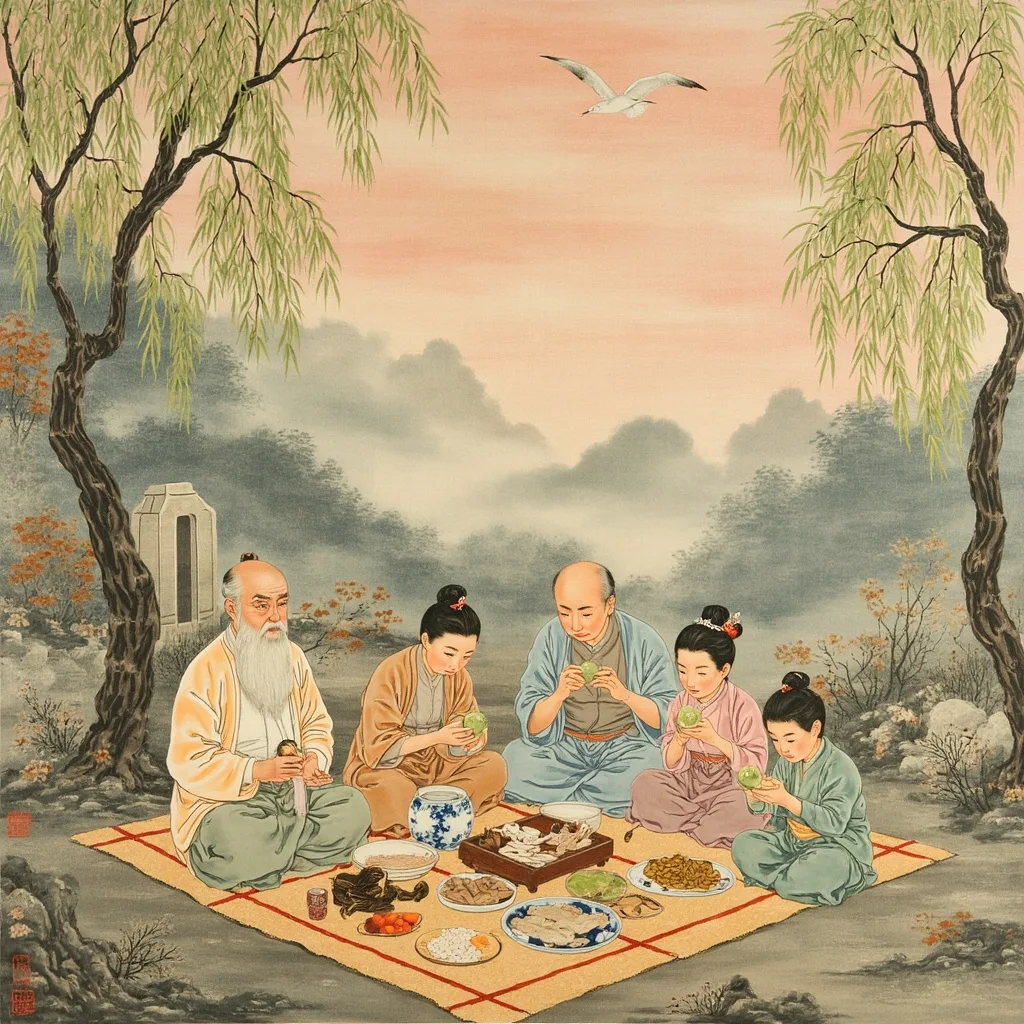
No fires, cold food only. In ancient times, this meant eating nothing cooked. Families would prepare cold dishes the day before: cold rice, pickled vegetables, dried fruit. Modern observances are less strict — you can have a warm meal if you really want to — but the tradition persists in spirit. Many families still eat only cold dishes on this day, or at least avoid cooking fires.
Visit ancestral graves. Like the Qingming Festival that follows, Hanshi Jie is a day for honoring the dead. But instead of sweeping graves and offering fresh flowers, families traditionally made offerings of cold food at the graveside. In some regions, people still observe this custom.
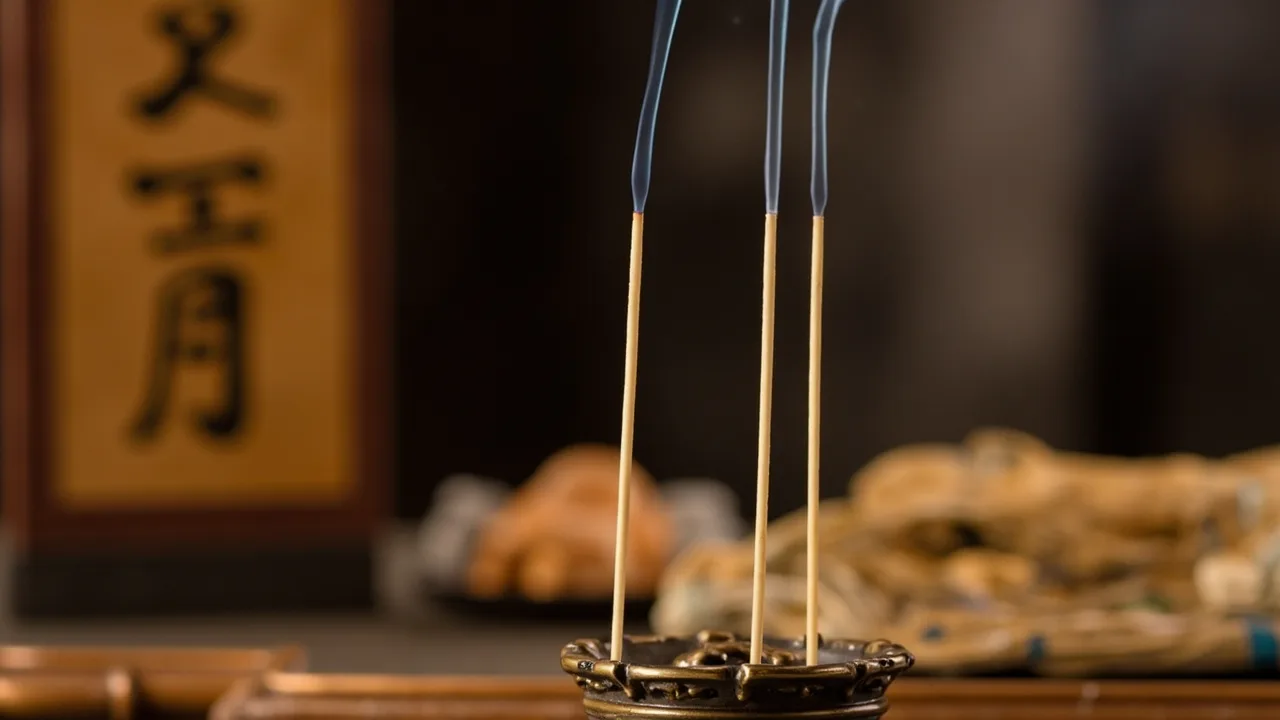
Burn nothing. Unlike other festivals where paper offerings (joss paper) are burned for the dead, the Cold Food Festival traditionally prohibits all burning. No incense, no paper money, no fireworks. The whole point is that fire is the enemy on this day.
Flying kites. One of the lighter customs associated with the festival is flying kites. No one is entirely sure how this tradition started, but it may have been a way to enjoy the spring weather without the dangers of fire. Kites are flown in all sizes and shapes, and in some regions, people cut the strings and let their kites drift away — symbolizing the release of grief and the letting go of sorrow.
How the Story Was Embodied in Place Names
One of the fascinating things about Chinese geography is how often place names preserve stories that have been forgotten elsewhere. The story of Jie Zitui is a perfect example.
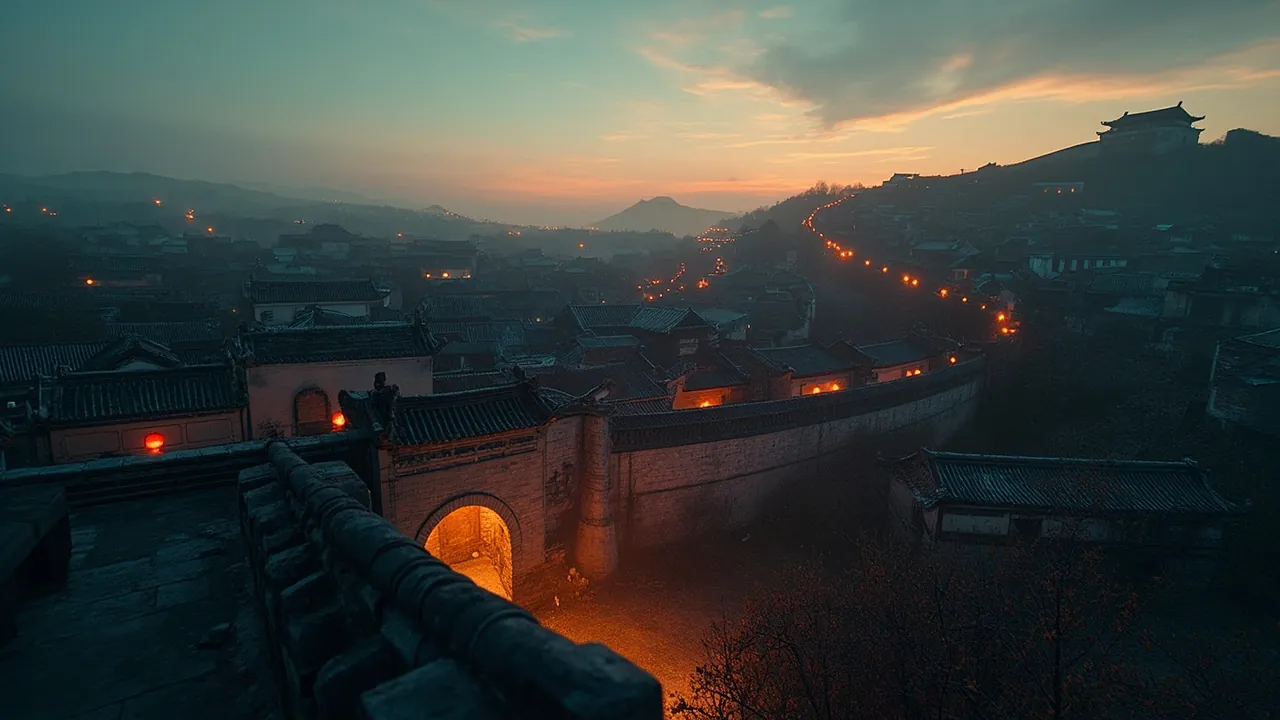
In Shanxi Province — the historical heartland of the Jin state — there is a famous mountain called Hengshan (or Mian Mountain, depending on the source). On this mountain stands a temple dedicated to Jie Zitui, one of the oldest temples in China. The temple has been rebuilt many times over the centuries, but it’s been a place of pilgrimage since at least the Han Dynasty (206 BCE – 220 CE).
The surrounding area is full of references to the story. There’s the “Walnut Tree of Loyalty” — or at least, the site where the original tree stood, now marked by a successor tree planted by later devotees. There’s a “Cold Food Spring” whose waters are said to never warm, a direct result of the duke’s decree. And there’s a network of paths and pavilions where pilgrims walk, retracing the steps of Duke Xian’s fruitless search.
The Shanxi Tourism Bureau has tried to promote this as a heritage site, but the story of Jie Zitui remains less known internationally than it deserves. It’s one of the most poignant stories in Chinese history — a tale of loyalty, loss, and the tragedy of good intentions.
Cold Food Festival and American Traditions
If this story feels familiar, it might be because it echoes several American traditions of mourning and remembrance. Consider the custom of “sitting Shivah” in Jewish tradition, where family members sit together for seven days after a death, abstaining from normal activities and sometimes from cooking. Or the Christian tradition of fasting before Easter, which in its most austere forms involves eating nothing warm.
But there’s another comparison worth making: the way Americans observe Memorial Day and Veterans Day. These holidays are fundamentally about fire — the eternal flame at the Tomb of the Unknown Soldier, the lighting of candles in memory, the fireworks that mark Independence Day. We use fire to honor, to celebrate, to remember.
The Cold Food Festival suggests a different approach. Instead of using fire to connect with the dead, you abstain from fire entirely. You experience the cold, the rawness of the world without the warmth of flame. You sit with that discomfort as a form of mourning.
It’s a more austere practice, and perhaps a more honest one. Grief is not comfortable. Loss is not warm. The Cold Food Festival says: don’t pretend otherwise. Don’t rush to fill the void with light and noise. Sit with the cold for one day, and let it do its work.
The Decline and Revival of the Festival
For most of Chinese history, the Cold Food Festival was a major observance — one of the most important festivals in the calendar, ranking alongside the Spring Festival and the Qingming Festival itself. In the Tang and Song dynasties, the emperor would issue formal edicts confirming the holiday, and government offices would close for the day.
But the festival began to decline in the Ming and Qing dynasties, partly because the authorities became suspicious of popular religious observances that weren’t under state control. It was also gradually absorbed into the Qingming Festival, which is now the primary day for tomb-sweeping. Most Chinese people celebrate Qingming without knowing that it was originally preceded by the even older Cold Food Festival.
In recent decades, there’s been a revival of interest in the holiday, driven partly by scholars researching pre-modern Chinese religion and partly by cultural organizations trying to preserve traditional customs. The Hanshi Jie Cultural Research Association in Shanxi has worked to promote awareness of the holiday and its history, and some cities now organize public observances.
But for most Chinese families, the festival remains a quiet affair — a day for remembering, for eating cold food, for thinking about loss and loyalty. If you happen to be in China on the day before Qingming and you notice that your hotel is serving only cold dishes, you’ll know why.
Why the Story Still Matters
What makes the story of Jie Zitui endure is not just its pathos but its moral complexity. Jie Zitui was a good man who was treated unfairly. Duke Xian was a powerful man who made a mistake and spent the rest of his life regretting it. Neither is a simple villain or hero. The story is about loyalty, but also about the limits of loyalty — about what happens when devotion is not reciprocated, and how the powerful can wound the faithful even without meaning to.
There’s also the image of Jie Zitui wrapping his mother in his own clothing as the fire approached. It’s one of the most poignant moments in Chinese literature — a son choosing to protect his mother even in death, even though he could have saved himself. It transforms a tragedy into an act of love.
The next time you eat a cold meal on a spring day — maybe a salad, maybe leftover rice straight from the fridge — you might think of Jie Zitui. You might think of a man who served faithfully for nineteen years, who asked for nothing, who received nothing, and who chose death over any compromise with a system that had failed him.
That’s worth remembering. Even without a fire.