In the world of strategic deception, there are few moments more instructive than the story of 暗渡陈仓. The phrase literally means “secretly crossing Chen Cang” — and it describes a maneuver so elegant, so perfectly executed, that it remains one of the most studied examples of military misdirection in Chinese history. But here’s what makes it genuinely remarkable: the people Han Xin was deceiving were not fools. They were experienced soldiers and commanders who knew exactly what to look for. They simply could not believe that anyone would try what Han Xin was about to attempt.
The story takes place in 206 BCE, in the immediate aftermath of the Qin Dynasty’s collapse, when the Chu-Han Contention was just beginning. Liu Bang had been forced to surrender his best general — a man named Han Xin — to Xiang Yu as a hostage or tribute of sorts. Han Xin, one of the greatest military minds in Chinese history, had ended up in Xiang Yu’s camp almost by accident, and Xiang Yu, for all his military genius, failed to recognize what he had. Han Xin spent months in Chu watching his talents go to waste, watching Xiang Yu make decision after decision that squandered the strategic advantages the Chu army possessed.
Eventually, Han Xin escaped. He made his way back to Liu Bang, who initially gave him a minor post. But through a series of events — including a famous middle-of-the-night conversation with Liu Bang’s advisor Xiao He — Han Xin was promoted to supreme commander of the Han forces. And his first major campaign would prove to be a masterclass in everything Xiang Yu was not: careful planning, attention to logistics, and a willingness to use deception as a weapon.
The Strategic Situation
To understand why 暗渡陈仓 was so audacious, you need to appreciate the geography of the region. The main route from Han territory into Chu ran along the slopes of the Qinling Mountains, a journey that followed a series of valley roads that were well-known, well-guarded, and very difficult to traverse quickly. Any army trying to move through this corridor would be funneled into chokepoints where an alert enemy could inflict serious casualties.
Xiang Yu had placed strong defensive forces along this route. He had also garrisoned the strategic city of Chen Cang, which controlled the main road and served as the key to the entire Hanzhong region. To all appearances, the path was blocked. Any Han advance would have to fight through a series of prepared positions, and the Chu forces were confident that they could hold the line indefinitely.
Han Xin understood the situation better than anyone. He had studied the maps, walked the terrain, and concluded that the obvious route was exactly the wrong one to take — not because it was too difficult, but because everyone expected it. His insight was simple but profound: the best path is not the one your enemy expects, but the one your enemy has forgotten exists.
The Misdirection
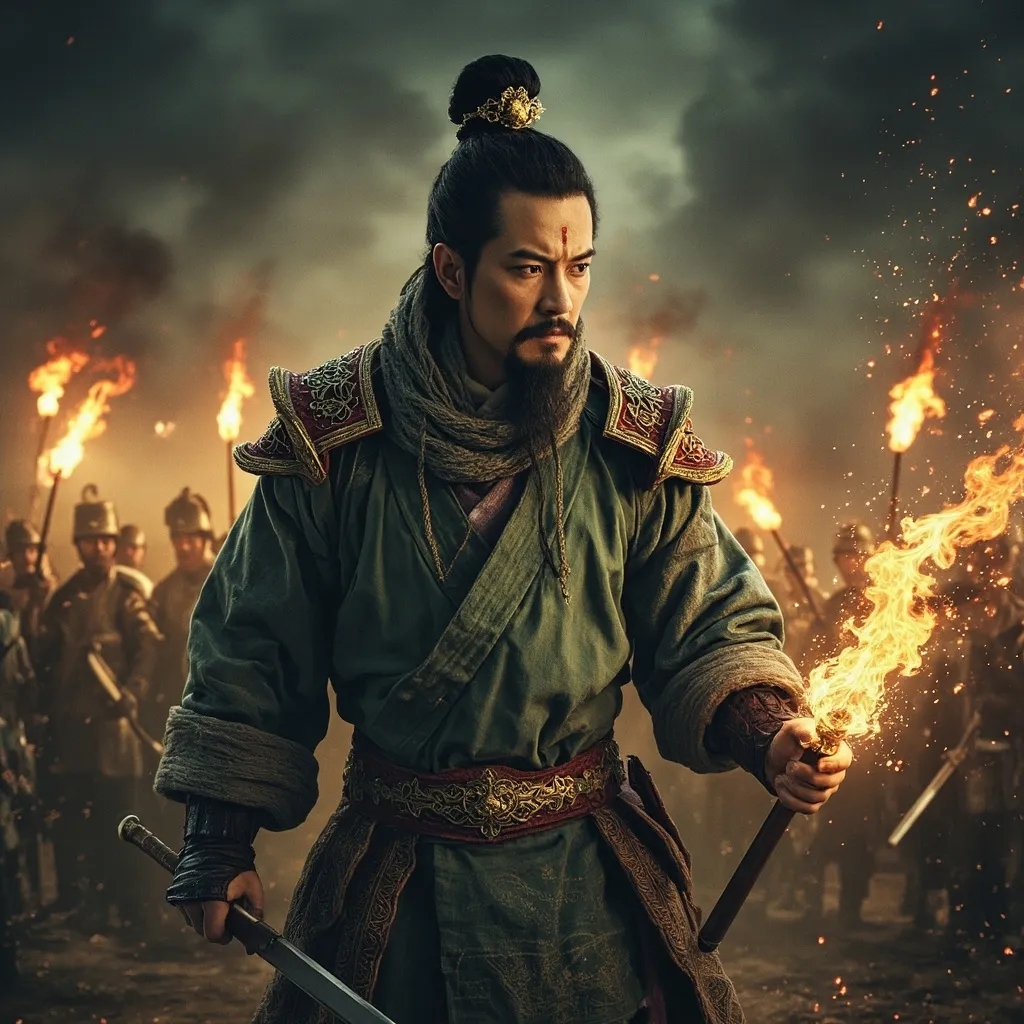
Han Xin’s plan had multiple layers, each designed to reinforce the others. The first step was the most visible: he ordered a portion of the Han army to make a very public, very obvious show of preparing to advance along the main route. Engineers were dispatched to repair roads. Supply depots were established. Soldiers were seen drilling and making noise. Every element of a conventional military buildup was present, and it was impossible to miss.
The Chu defenders took the bait completely. They reinforced their positions along the main route. They increased patrols. They prepared for a grinding, costly campaign that they were confident they could win. They had no reason to doubt what they were seeing — Han Xin was doing exactly what any competent general would do, advancing along the only viable path with the resources he had.
But Han Xin had no intention of following that route.
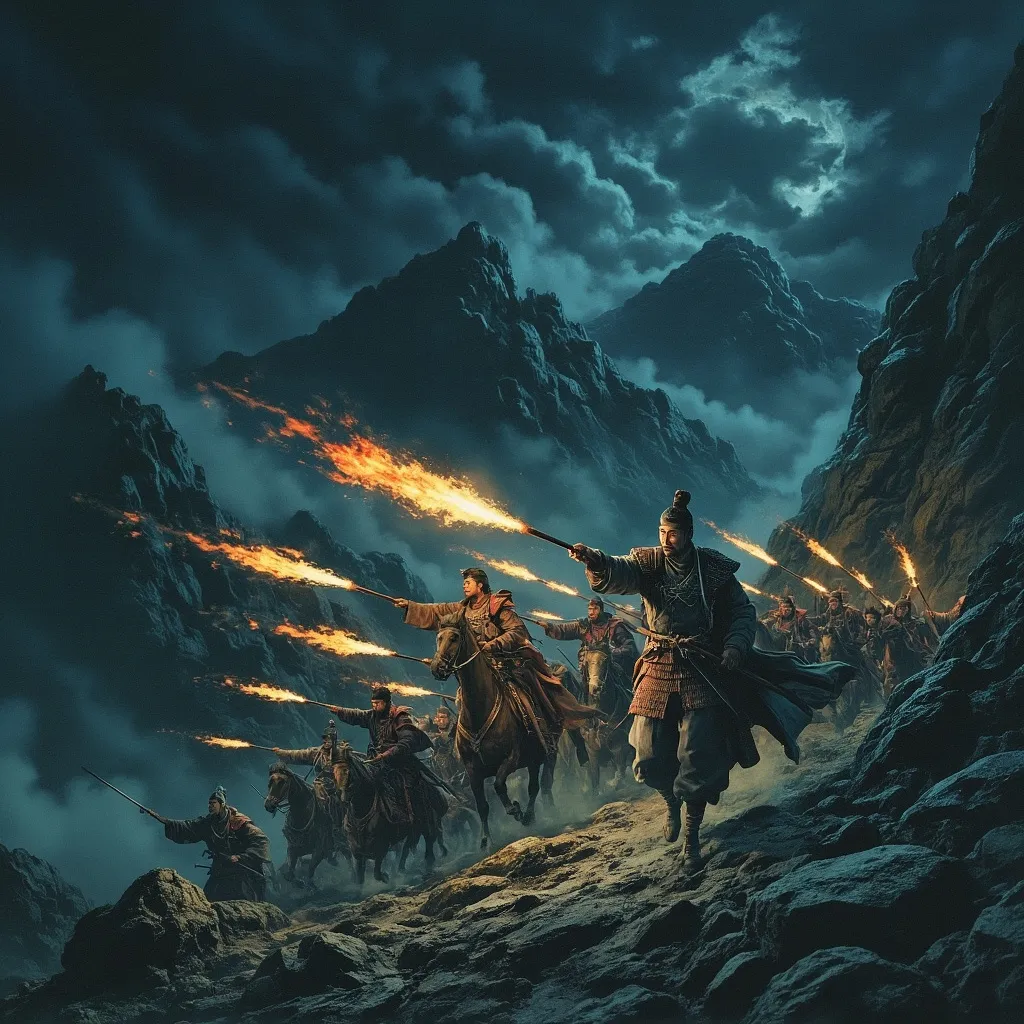
While the Chu forces focused on the obvious path, a second Han force — smaller, faster, and chosen specifically for its ability to move quietly — slipped away from the main camp under cover of darkness. They traveled not along the main road, but along a series of smaller paths that had fallen into disuse over the centuries. These were the old routes through the Qinling Mountains, the ones that predated the Qin road-building projects, the ones that most military planners had forgotten even existed.
This force moved through the night, covering difficult terrain that would have been impassable for a larger army. They carried minimal supplies, surviving on what they could forage, moving with a speed and secrecy that surprised even their own commanders. And they emerged, completely unexpectedly, behind the Chu positions at Chen Cang.
The Capture of Chen Cang
The attack on Chen Cang came as a complete surprise. The Chu garrison, which had been watching the main road for signs of a Han advance, suddenly found an enemy force appearing from a direction they had not prepared for. The confusion was total. Soldiers who had been eating dinner found themselves under attack before they could form proper defensive lines. Officers who had been monitoring the expected routes discovered that the real threat was coming from a completely different direction.
Chen Cang fell within hours. The strategic key to the Hanzhong region was in Han Xin’s hands.
What made this victory remarkable was not just the tactical success but the strategic consequences. With Chen Cang secured, the entire defensive architecture that Xiang Yu had constructed collapsed. The Chu forces on the main road found themselves cut off from supply lines and reinforcement. The Han army, which had been conducting its noisy preparations as a distraction, now advanced in force along the main route — and found that the Chu defenders, demoralized and confused, offered far less resistance than expected.
The overall effect was to flip the entire strategic situation in the Han-Xiang Yu conflict. Han Xin had not merely won a battle — he had fundamentally altered the balance of power by capturing the territory and resources he needed to sustain a prolonged campaign. And he had done it with a deception so clean that the enemy did not realize what was happening until it was far too late.
The Broader Strategic Genius
What strikes modern military historians about 暗渡陈仓 is not just the tactical success but the strategic clarity underlying it. Han Xin understood something that many brilliant tacticians miss: that deception only works when it is built on a foundation of genuine capability. The distraction along the main route was not mere theater — it was a real military operation that required real soldiers, real supplies, and real preparation. If the Chu forces had seen through it immediately and sent troops to investigate, Han Xin would have been forced to fight on two fronts simultaneously.
The plan worked because it respected the enemy’s intelligence. Han Xin assumed — correctly — that the Chu would be watching the main route, would be preparing for a conventional advance, and would draw reasonable conclusions from the evidence before them. He did not try to hide something impossible to hide. He simply created a second, less obvious path that his enemy had forgotten to watch.
This is the essence of good deception in warfare: not the attempt to convince your enemy of something absurd, but the exploitation of their reasonable assumptions about what is possible and probable. The Chu commanders were not stupid. They were doing exactly what good military logic dictated. Han Xin simply understood that the best plans account for what your enemy expects, and gives them more of exactly that — while accomplishing the real objective somewhere else entirely.
The Legacy of Han Xin’s Tactics
Han Xin would go on to become one of the most successful military commanders in Chinese history, winning battle after battle against Chu forces using a combination of speed, deception, and precise understanding of terrain. His campaigns against Xiang Yu systematically dismantled the Chu advantage, capturing territory, seizing supply lines, and turning Xiang Yu’s own allies against him. By the end of the Chu-Han Contention, it was Han Xin’s strategic framework that guided the Han forces more than any other single factor.
暗渡陈仓 became a model for subsequent Chinese military strategy. The phrase entered common usage to describe any situation where someone achieves a goal through indirect means while drawing an opponent’s attention elsewhere. In business, it might describe a company that distracts competitors with a flashy product announcement while quietly capturing market share in an unexpected segment. In personal relationships, it might describe a subtle redirection of conversation away from a sensitive topic. The applications are many, but the core insight is always the same: the most effective move is often the one nobody sees coming because everyone is watching somewhere else.
The story also serves as a meditation on the importance of recognizing talent. Han Xin spent months in Xiang Yu’s camp, unrecognized, underutilized, watching his potential employer make mistake after mistake. When he finally escaped and found a leader willing to trust him — Liu Bang, after some initial hesitation — he delivered results that changed the course of history. Xiang Yu, for all his personal military brilliance, never understood what he had lost. Han Xin, for all his strategic genius, needed someone to believe in him before he could prove himself.
This dynamic — the unrecognized genius, the leader who sees what others miss — is part of what makes 暗渡陈仓 more than just a military story. It is a story about potential, about the conditions under which extraordinary achievement becomes possible, and about the cost of failing to see what is right in front of you.
The Deeper Lesson
There is something oddly contemporary about Han Xin’s approach to problem-solving. He faced a seemingly insurmountable obstacle — a well-defended position along the only obvious route — and rather than attacking it directly or giving up, he asked himself a different question: what would make the obstacle irrelevant? The answer was not to fight harder but to find another way.
This is the kind of thinking that separates genuinely creative strategists from competent operators. The competent operator sees a blocked road and tries to find a way to break through. The creative strategist asks why the road is blocked, who is blocking it, and whether the block depends on assumptions that might not hold under closer examination.
Han Xin’s assumption was simple: the Chu forces were watching the main road because the main road was the only one they knew about. If he could find an alternative route that they had not prepared for, the entire defensive edifice would collapse. The assumption proved correct. But making that assumption required both knowledge of the terrain — Han Xin had studied the old routes carefully — and the courage to act on an insight that seemed almost too obvious to be true.
That combination of knowledge, preparation, and boldness is what makes 暗渡陈仓 enduring. It is not merely a story about a successful military deception. It is a story about what becomes possible when someone is willing to think differently about a problem that everyone else has accepted as unsolvable.
Recommended Reading & Products
Want to explore Han Xin’s military genius and the art of strategic deception further? Here are some resources to deepen your understanding of this pivotal period in Chinese military history:
The Art of War by Sun Tzu — The ancient Chinese text on military strategy that Han Xin would have studied extensively. Sun Tzu’s emphasis on deception, knowledge of the enemy, and the strategic use of terrain underpin every tactic Han Xin employed. This translation includes extensive commentary that connects Sun Tzu’s principles to historical examples.
Records of the Grand Historian: Biographies of the Han Dynasty Heroes — Sima Qian’s biographies of Han Xin, Xiao He, and the other key figures of the Chu-Han Contention. The definitive historical account of the events described in this article, written with narrative flair by China’s greatest historian.
Military Strategy in Ancient China: The Chu-Han Contention — A modern analysis of the strategic and tactical dimensions of the Chu-Han war, including detailed breakdowns of Han Xin’s major campaigns. Places 暗渡陈仓 in the context of broader patterns in ancient Chinese military thought.
Chinese Silk Map of the Chu-Han Region — A reproduction of an ancient-style map showing the terrain and routes that Han Xin would have studied before planning his movement through the Qinling Mountains. Helps visualize the geography that made the deception possible.
Total War: Three Kingdoms — Han Xin Campaign DLC — The strategy game lets you replay the Chu-Han Contention as Han Xin, executing his famous maneuvers against Xiang Yu’s forces. Particularly satisfying if you’ve ever wondered whether 暗渡陈仓 could have gone wrong — and how close the margins really were.