Dongba Script: China’s Last Living Pictographic Writing System
The monk sat cross-legged in the temple courtyard, brush in hand, painting characters that looked like nothing else on Earth. There were figures that resembled people dancing, animals mid-leap, clouds curling across mountains, rain falling in straight diagonal lines. Each symbol was not just a letter representing a sound — it was a picture of a thing itself, drawn with the same logic a child uses when they first try to write the word “bird” by drawing a bird. This is how human beings first learned to write, tens of thousands of years ago, before alphabets and character systems evolved to abstract away the image. And in a remote corner of southwest China, in the mountains of Yunnan Province, this ancient way of writing never stopped being alive.
Dongba script is the only pictographic writing system in the world that remains in active use today — not preserved as a curiosity in a museum, but actually read and written by people who use it to conduct religious rituals, record histories, and teach their children about the Naxi people and their traditions. The Naxi (纳西族) are an ethnic group of roughly 300,000 people who live primarily in the mountainous regions of northwestern Yunnan and southwestern Sichuan. Their culture is remarkable in many ways, but nothing draws more fascination from linguists, historians, and cultural tourists than the Dongba script — a writing system that offers an unbroken window into how human beings first learned to fix language into visible form.
What Is Dongba Script?
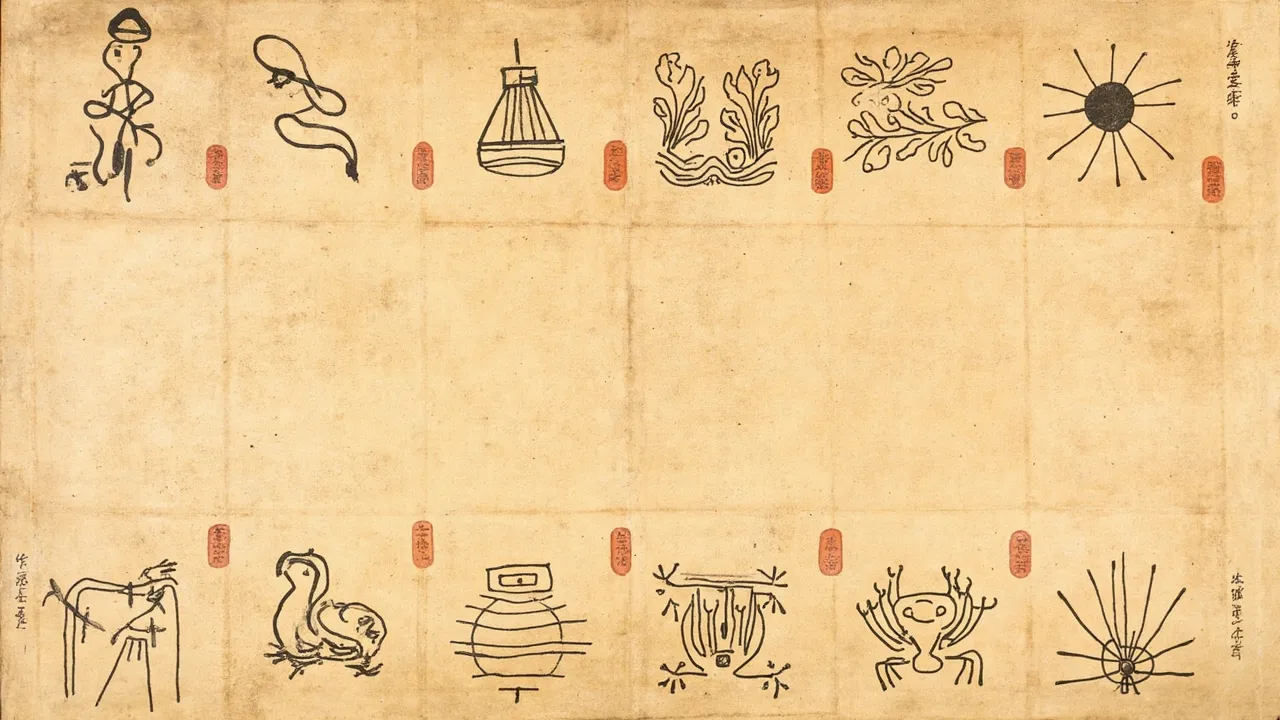
Dongba is a pictographic writing system — a set of visual symbols where each character represents a meaning directly, rather than representing a sound the way letters in an alphabet do. If you see a Dongba character that looks like a bird, it does not represent the sound “bird” in Naxi speech. It represents the concept of a bird, or the specific species of bird it depicts. This is called a logographic or ideographic system, and it is the oldest form of writing known to humanity. Every writing system that exists today — English, Chinese, Arabic, the Devanagari script of Hindi — evolved from pictographic beginnings, but most of them changed so much over centuries that the original pictures are completely unrecognizable. Dongba script is remarkable because it still looks, in many cases, very much like what it depicts.
There are approximately 1,400 Dongba symbols in the complete repertoire, though a skilled Dongba priest — the practitioners are called dongba in Naxi — typically uses between 500 and 1,000 in everyday writing and ritual practice. The symbols are written with a brush, using ink made from pine soot mixed with animal glue, on paper made from the bark of the dao tree (Trochetia). The writing surface is traditionally hand-crafted paper with a rough, fibrous texture quite different from the smooth Xuan paper used in Chinese calligraphy.
The symbols cover a wide range of meanings: concrete objects (animals, plants, tools, buildings), abstract concepts (love, death, time, direction), grammatical elements (verbs, prepositions, tense markers), and proper names. Because the system is ideographic rather than alphabetic, the same symbol can carry multiple related meanings depending on context — a picture of a human figure can mean “person,” “people,” “Naxi,” or “you,” depending on how it is used. Skilled readers learn to disambiguate through context, the same way we understand that “bank” can mean a financial institution or the edge of a river.
The Dongba Priests and Their Role
In Naxi society, Dongba script is not a general-purpose writing system used by ordinary people for everyday communication. It is primarily the domain of a specialized class of religious practitioners — the dongba priests — who serve as the keepers of Naxi religious knowledge, ritual specialists, healers, and cultural historians. The priests undergo years of training to memorize the vast body of ritual texts written in Dongba, which include creation myths, funeral rites, exorcism rituals,祭祀 (sacrifice) procedures, and chronicles of Naxi history and genealogy. These texts are not written in a casual, everyday style; they are sacred documents, and the act of writing and reading them is itself a religious act.
The training required to become a dongba priest is formidable. A would-be dongba must memorize thousands of Dongba symbols and their multiple meanings, learn to recite hundreds of ritual texts from memory, and develop the ability to improvise new ritual formulas when circumstances require. In the traditional Naxi worldview, the dongba is a bridge between the human world and the spirit world — they can communicate with deities, ghosts, and ancestors on behalf of ordinary people. The Dongba scriptures contain detailed descriptions of the Naxi cosmology: the structure of the spirit world, the names and attributes of hundreds of supernatural beings, the proper procedures for addressing them, and the consequences of getting the rituals wrong. This is knowledge that was accumulated and refined over many centuries, and the dongba priests are its living custodians.
The Naxi have two parallel religious traditions. One is the indigenous Dongba religion, which is the original Naxi faith and centers on the worship of nature deities, ancestor spirits, and a creator god called Saidrum. The other is Tibetan Buddhism, which spread into the region and with which many Naxi also identify. The dongba priests belong specifically to the indigenous tradition. In areas where Tibetan Buddhism predominated, the authority of the dongba diminished over time, but in parts of Yunnan where the Naxi maintained their indigenous practices more strongly, the dongba tradition survived with remarkable completeness into the modern era.
Origins and Historical Development
The origins of Dongba script are debated among scholars, but the most widely accepted view is that it developed organically within Naxi culture over roughly the last millennium, with some influences from Chinese characters and possibly from the even older Tibetan ‘Phags-pa script. What is clear is that by the Ming Dynasty (1368–1644), Dongba script was already a mature and well-established writing system. Historical records from that period describe Naxi priests using the script for religious texts, and archaeological evidence — including wooden tablets and paper documents from the Ming and Qing periods — confirms its use.
One of the most remarkable aspects of Dongba script’s history is that it was never displaced by Chinese characters, even as the Naxi came under increasing cultural and political influence from Han Chinese civilization. Chinese characters are the dominant script throughout most of Yunnan, and the Naxi language itself has been largely replaced by Mandarin Chinese in everyday speech. Yet Dongba script persisted in its sacred domain, precisely because it was associated with religion rather than everyday administration. As long as the dongba priests maintained their ritual authority, the script had a protected cultural niche that allowed it to survive pressures that erased or transformed most other minority writing systems in China.
In the 1950s and 1960s, the Chinese government implemented policies designed to simplify and standardize minority languages and scripts. Some minority writing systems were deliberately replaced with new scripts based on the Latin alphabet, designed to make literacy more accessible. Dongba script was partially suppressed during this period, as the government viewed it as archaic and inefficient. Several dongba priests were pressured to stop practicing, and some Dongba texts were destroyed. However, the Cultural Revolution (1966–1976) was the most devastating blow: many Dongba priests were persecuted, and enormous numbers of Dongba manuscripts were burned, hidden, or otherwise lost.
After the Cultural Revolution ended, the Chinese government reversed course and began treating Dongba script as a valuable cultural heritage to be preserved rather than suppressed. In 1999, the government designated Dongba as a national intangible cultural heritage item. In 2003, UNESCO included Dongba script on its List of Intangible Cultural Heritage in Need of Urgent Safeguarding, recognizing that the tradition was in critical decline and required international attention to survive.
Dongba Texts and What They Tell Us
The surviving Dongba manuscripts — estimates suggest there are between 20,000 and 30,000 texts in existence, held in libraries and museums around the world as well as in private Naxi collections — constitute one of the most important bodies of pre-modern literature in China. They cover every aspect of Naxi religious and cultural life, but three categories are particularly significant.
The first is the creation mythology. The Naxi have an elaborate cosmogonic narrative, recorded in the Dongba scriptures, that describes the creation of the world from primordial chaos, the emergence of the first humans, and the establishment of the social and ritual order that governs Naxi life. This narrative shares some structural similarities with creation myths from other cultures but contains distinctive Naxi elements — a particular emphasis on the relationship between humans and the natural world, and a complex system of taboos and ritual obligations that connect everyday life to the supernatural order.
The second major category is funeral rites. In traditional Naxi belief, death is a dangerous and complex transition that requires careful ritual management to ensure the soul of the deceased reaches the afterlife safely and does not become a harmful ghost. The Dongba funeral texts provide detailed instructions for every stage of the funeral process: the preparation of the body, the selection of the burial site, the construction of the coffin, the sequence of rituals, the offerings to be made, the songs to be sung, and the symbolic objects to be placed with the deceased. The texts are used by dongba priests to guide the family through a multi-day funeral ceremony that can involve dozens of participants and elaborate symbolic performances.
The third category is divination and healing. Dongba priests are sought out to diagnose illness (which is often attributed to spirit interference or witchcraft), to perform rituals to expel malignant spirits, and to divine the causes of misfortune. The divination texts contain complex symbolic systems for interpreting signs and omens, and the healing rituals involve a combination of recitation, offerings, and physical actions that the dongba performs on behalf of the patient.
The Threat of Extinction and Preservation Efforts
The UNESCO designation of Dongba as heritage “in need of urgent safeguarding” reflects a grim reality: the tradition is dying. The number of trained dongba priests has dwindled dramatically. In the 1950s, there were believed to be several thousand dongba active in Naxi communities. By the early 2000s, estimates put the number at fewer than a hundred, most of them elderly. The youngest generation of Naxi shows little interest in the years-long training required to become a dongba, especially when that training offers no reliable income in a modern economy. The knowledge accumulated over centuries in the Dongba texts is in real danger of being lost entirely within a generation or two.
Several preservation initiatives are underway. The Yunnan Provincial Museum and the Institute of Dongba Culture at Lijiang (in the heart of Naxi territory) have been collecting, cataloguing, and digitizing Dongba manuscripts. Several comprehensive dictionaries of Dongba script have been published, using both the original pictographic symbols and transliterations into Latin Naxi script and Chinese characters to make the content accessible to scholars who cannot read the pictographs directly. Academic researchers from China, Japan, Europe, and the United States have studied the script and the texts, building a scholarly literature that at least preserves the information even if it cannot fully preserve the living tradition.
One of the most hopeful developments is the establishment of Dongba language classes for Naxi children, taught by surviving dongba priests. These programs, supported by both government cultural heritage funds and private organizations, teach children to read and write basic Dongba symbols, introducing them to their cultural heritage in a way that is accessible and engaging. Whether these programs can reverse the decline of the tradition remains to be seen, but they represent a genuine attempt to create new generations of people who can engage with the script, even if they do not become full dongba priests.
Visiting Naxi Country and Experiencing Dongba Culture
For travelers interested in experiencing Naxi culture and Dongba script directly, the best destination is Lijiang — a beautifully preserved old town in northwestern Yunnan that has been a UNESCO World Heritage Site since 1997. Lijiang was the historical center of Naxi political and cultural life, and it remains the cultural heart of the Naxi world. The old town is famous for its canal system, its traditional Naxi architecture (characterized by wooden structures with black tiled roofs and elaborate screen walls), and its vibrant street life.
Within Lijiang, the best starting point for understanding Dongba script is the Dongba Cultural Museum, which houses an extensive collection of Dongba manuscripts, ritual objects, and audiovisual materials documenting the dongba tradition. The museum employs several dongba priests who demonstrate traditional rituals, explain the meaning of the symbols, and answer questions from visitors — a rare opportunity to interact directly with living practitioners of one of the world’s oldest writing traditions.
Nearby, the Jade Dragon Snow Mountain (Yulong Xue Shan) rises dramatically above the Lijiang plain and is considered sacred by the Naxi people. The mountain is associated with the Naxi creation narrative, and several dongba rituals are performed at its base throughout the year. Visiting the mountain with a knowledgeable local guide who can explain the Naxi cultural and religious significance of the landscape adds a dimension to the experience that goes far beyond ordinary tourism.
For those who want to take a deeper interest in Dongba script, the Dongba Cultural Research Institute in Lijiang occasionally offers workshops for foreign visitors, taught by senior dongba priests, that introduce the basics of the script, its history, and its cultural context. These workshops fill quickly and are not available year-round, but they represent one of the most meaningful ways to engage with this remarkable tradition. Visitors with serious scholarly interest can apply to access the Dongba manuscript collections held at the Lijiang Library, which houses some of the most significant surviving texts.
Why Dongba Matters
There is something almost paradoxically modern about the urgency we feel in preserving Dongba script. Here is a writing system that looks, to our eyes, like something from the very dawn of human civilization — pictures of things, drawn to communicate — yet it is alive, or was until very recently, in the hands of real people living real lives. It survived for a thousand years in the mountains of Yunnan, passed from master to student in an unbroken chain of knowledge, carrying the accumulated wisdom and spiritual insight of the Naxi people. And now that chain is in danger of breaking.
Understanding Dongba script is not just an academic exercise. It is a way of reminding ourselves that the history of human communication is not a straight line from primitive picture-writing to sophisticated alphabet. Different forms of writing can coexist, can serve different social functions, can carry different kinds of meaning. The Naxi used Chinese characters for administrative purposes while maintaining their own sacred pictographic script for religious and cultural purposes — a bilingualism that parallels, in some ways, the way medieval European scholars used Latin for religion and their native tongues for everyday life.
Dongba is also a reminder that preserving cultural diversity is not merely about protecting interesting customs for the amusement of outsiders. It is about recognizing that different cultures contain different ways of being human, different ways of understanding the relationship between the individual and the cosmos, different accumulated wisdoms that cannot be replaced or replicated. When a living tradition dies, something irreplaceable is lost — not just information, but a way of experiencing the world that has been refined and deepened over centuries of practice.
Recommended Products for Exploring Dongba Script and Naxi Culture
1. Dongba Pictographs Dictionary — Comprehensive English reference of Dongba symbols with pronunciation, meaning, and ritual context for serious students. A comprehensive dictionary of Dongba symbols, organized by theme, with each character accompanied by its pronunciation in Naxi, its meaning in English, and context notes explaining how it is used in ritual texts. Edited by leading Naxi cultural scholars, this is the most authoritative reference work available in English for serious students of Dongba script. Includes a detailed introduction to the history and cultural context of the tradition.
2. Naxi Dongba Symbols Textile Wall Hanging — Hand-woven Naxi textile with traditional Dongba motifs, produced by Naxi artisan cooperatives in Lijiang. Hand-woven Naxi textiles featuring traditional geometric patterns that incorporate Dongba symbolic motifs. These textiles were historically used in Dongba rituals and remain an important expression of Naxi cultural identity. This wall hanging, produced by Naxi artisan cooperatives in Lijiang, makes a striking decorative piece while directly supporting the artisans who keep Naxi textile traditions alive. Each piece is unique and comes with a card explaining the Dongba symbols depicted.
3. Lijiang Naxi Cultural Heritage Tour — 4-day small-group tour of Dongba museum, Naxi villages, Jade Dragon Snow Mountain, led by Naxi cultural experts. A curated cultural tour of Lijiang and the surrounding Naxi heartland, led by Naxi cultural experts. The itinerary includes visits to the Dongba Cultural Museum, traditional Naxi villages in the mountain country outside Lijiang, live demonstrations by dongba priests, and a full-day hike in the Jade Dragon Snow Mountain area with commentary on Naxi sacred geography. Accommodations are in traditional Naxi courtyard guesthouses. Small group sizes (maximum 8 participants) ensure meaningful access to guides and communities.
4. Naxi Dongba Art Print Set — Five museum-quality reproductions of Dongba ritual paintings, creation myths and deity scenes, on archival paper. High-quality reproductions of traditional Dongba ritual paintings from the collection of the Yunnan Provincial Museum, printed on archival paper using fade-resistant inks. The set includes examples of the major categories of Dongba religious art: creation mythology scenes, deity illustrations, funeral ritual imagery, and protective talismans. Each print includes an explanatory card with the Dongba symbols visible in the painting and their meanings. An ideal gift for anyone interested in ancient writing systems, Asian art, or religious iconography.
5. Traditional Dongba Handmade Paper Set — Three sheets of dao-tree bark paper used by Dongba priests for ritual texts, in warm off-white color. The same rough, fibrous paper that Dongba priests use for writing ritual texts, made from the bark of the dao tree using traditional methods passed down through generations of Naxi papermakers. This paper has a distinctive texture and color — a warm, natural off-white — that is quite different from modern papermaking. Suitable for calligraphy practice, art projects, or spiritual purposes. The set includes three sheets, each approximately 40x60cm, along with a brief description of the papermaking tradition and its connection to Dongba culture.
Disclosure: This article contains affiliate links. We earn a commission on qualifying purchases.