There is a kind of loyalty that operates in the space between what is required and what is possible. Most people fulfill their obligations adequately — they do what they agreed to do, nothing more, and consider that a satisfactory performance. Then there are those rare individuals who pour everything they have into their commitments, holding nothing back, accepting no compromise with their own limitations. Zhuge Liang was one of those individuals, and the phrase that describes his level of dedication — 鞠躬尽瘁 — has been used for nearly two thousand years to describe the highest standard of faithful service.
The phrase literally means “to bow and exhaust all efforts” or, in its more familiar English rendering, “to exhaust oneself in service unto death.” The 鞠躬 — the bowing — evokes a posture of humility, of placing oneself below the task rather than above it. The 尽瘁 — exhausting all weariness — suggests not merely working hard but working until every ounce of energy is spent, until the body itself demands rest and is refused. This is not a casual expression. It describes a quality of commitment that most people can admire but few are willing to actually live.
Zhuge Liang lived it. And the story of how he came to embody this principle is one of the most poignant in Chinese historical memory.
The Weight of a Promise
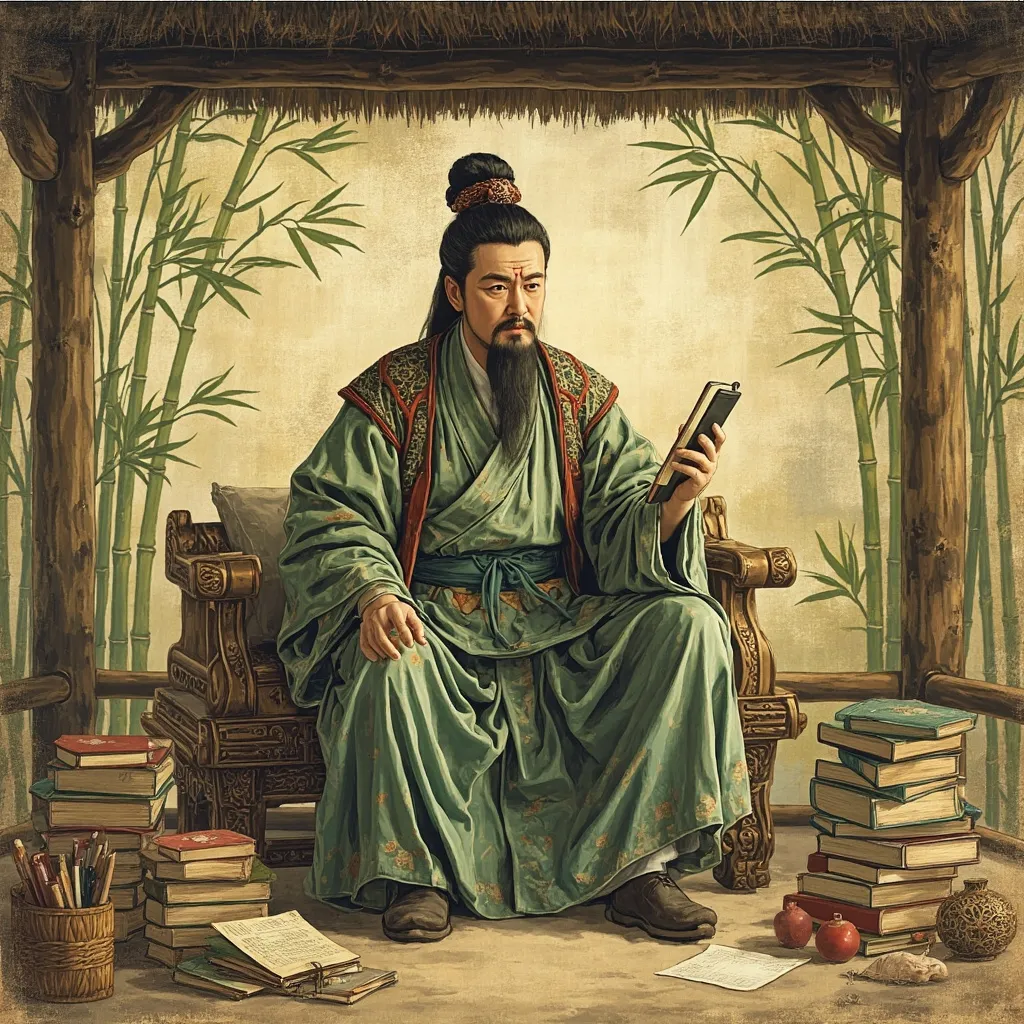
When Liu Bei died in the spring of 223 CE, he died with unfinished business — a kingdom he had spent decades building, an army he had assembled through enormous sacrifice, and a vision of restoring the Han Dynasty that had never been realized. He also died with something else: a promise that Zhuge Liang had made years earlier, during their first serious conversation at the Longzhong cottage, when the two men had first established the partnership that would reshape the political map of China.
That promise, often called the Longzhong Appointment or 隆中对, was essentially a contract of mutual commitment. Liu Bei promised to give Zhuge Liang full authority over strategic planning and military operations. Zhuge Liang promised to give Liu Bei everything he had — his intelligence, his creativity, his energy, and his complete personal loyalty. The two men had understood each other in a way that is rare between leaders and advisors, and that understanding had produced one of the most effective partnerships in Chinese history.
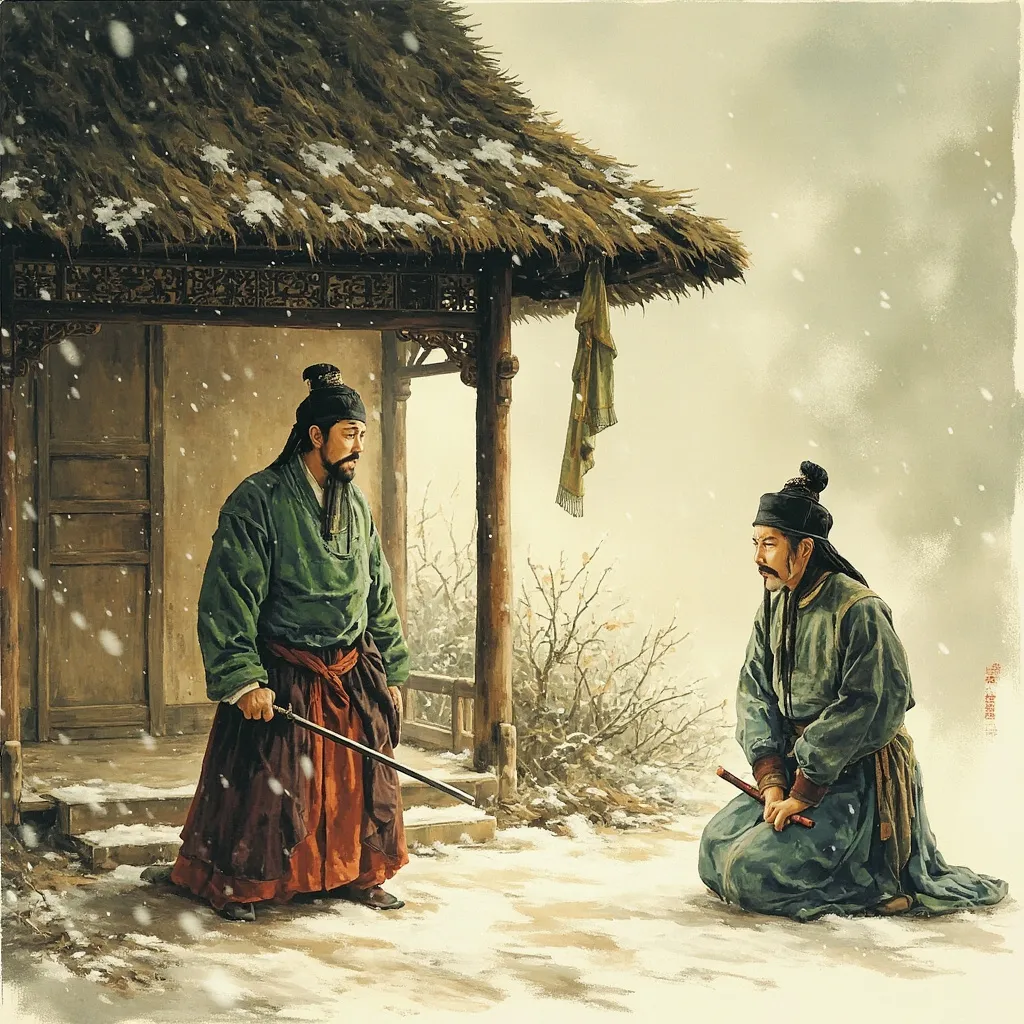
When Liu Bei lay dying at his camp in Ba Commandery, far from the Shu capital of Chengdu, he sent for Zhuge Liang. The conversation that followed was brief but momentous. Liu Bei acknowledged that Zhuge Liang’s abilities far exceeded his own son’s capacity to utilize them. He gave explicit permission for Zhuge Liang to take over the kingdom entirely if that was what was required to preserve it — effectively offering him the throne. And he issued a final, personal request: that Zhuge Liang would guide Liu Bei’s son Liu Shan, help him become a capable ruler, and never abandon the kingdom that Liu Bei had built.
Zhuge Liang’s response was a vow that he would honor this trust with his entire being. “I will do my utmost,” he said, “to serve the country and uphold loyalty until the end of my days.” This was not diplomatic language. He meant it in the most literal sense.
The Regent and the Burden
What followed was one of the most demanding periods of service in Chinese historical memory. Liu Shan was a decent young man but lacked the qualities required to lead a kingdom that was surrounded by powerful enemies and perpetually on the verge of collapse. The actual governance of the Shu kingdom fell almost entirely to Zhuge Liang, who assumed the role of regent — holding the state together while simultaneously preparing for the wars that he knew were inevitable.
Cao Wei, the northern state that had emerged as the dominant power in China after the Battle of Red Cliffs, was far larger, far wealthier, and far more populated than Shu. The only path to victory for Liu Bei’s heirs was through a series of carefully planned military campaigns that would gradually weaken the northern enemy and create opportunities for expansion. Zhuge Liang understood this better than anyone, and he spent years preparing the logistics, the training, and the strategic frameworks that such campaigns would require.
The period between Liu Bei’s death and Zhuge Liang’s own death was a decade of almost constant activity. He personally oversaw the administration of the kingdom’s civil affairs, managing taxation, legal cases, appointments, and the countless small decisions that keep a government functioning. He personally reviewed military plans, inspected troops, and participated directly in the training of officers and soldiers. He traveled constantly between the capital and the frontier, always pushing himself beyond what any reasonable person would consider a sustainable pace.
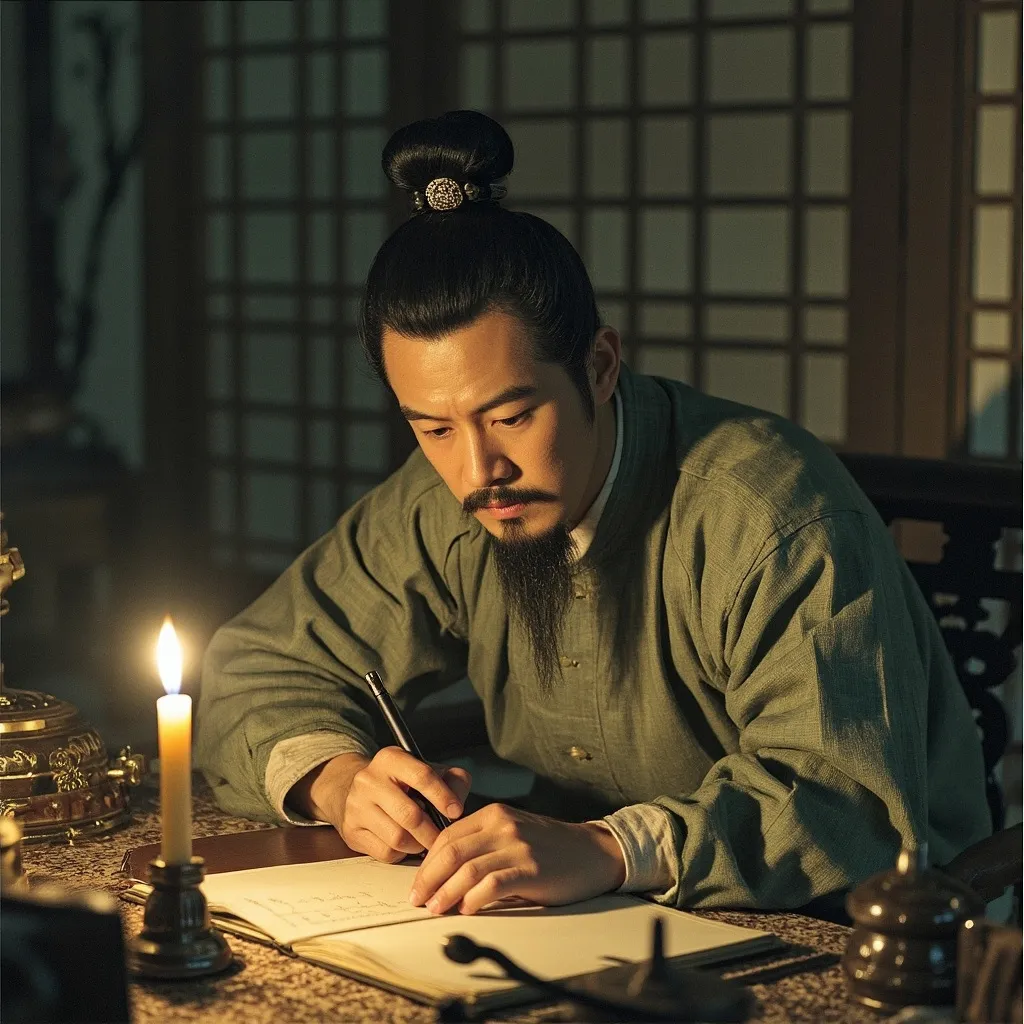
Contemporary accounts describe him working late into the night, sleeping only a few hours, eating sparingly, and refusing to delegate tasks that he felt required his personal attention. He had made a promise, and he intended to keep it regardless of what it cost him physically. The exhaustion was not a problem to be solved. It was the price of the commitment he had made.
The Northern Campaigns
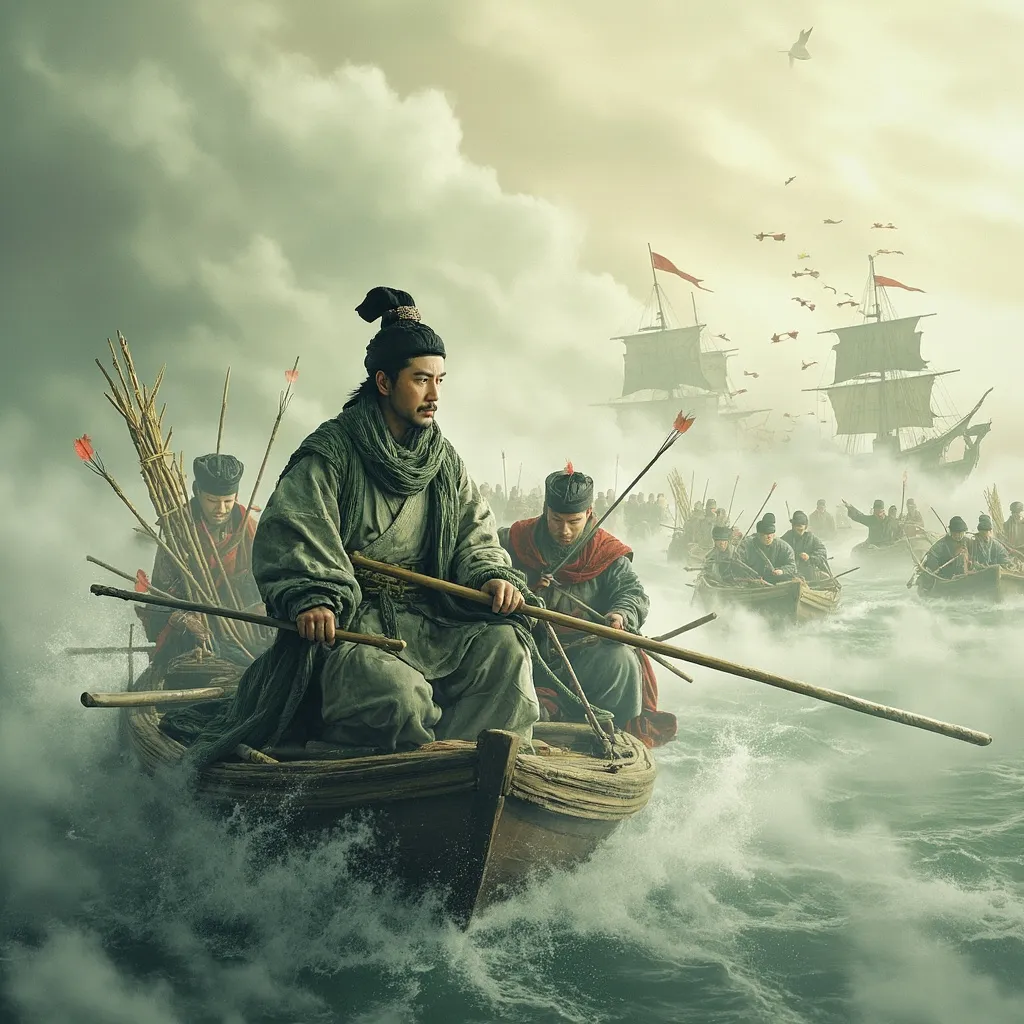
Zhuge Liang launched a total of five military campaigns against Cao Wei during his regency — known in Chinese history as the 北伐 or “Northern Expeditions.” Each campaign was a massive undertaking that required moving tens of thousands of soldiers and enormous quantities of supplies across difficult terrain, through mountain passes, and into territory controlled by a far more powerful enemy. The campaigns produced some remarkable tactical achievements, including several victories against numerically superior Wei forces, but none of them achieved the decisive breakthrough that would have changed the course of history.
The failure of the first campaign, which ended in defeat at the Battle of Jicheng despite initial successes, affected Zhuge Liang deeply. He had prepared for years, had personally trained the forces, had designed the overall strategy — and the result was a significant loss of life and a retreat that left Shu in a weaker position than before. The historian records that he wept openly after this defeat, not for himself but for the soldiers who had died following his plans. This was the weight of command: the decisions were his, and so was the grief.
Subsequent campaigns produced mixed results. Zhuge Liang’s military genius was undeniable — he developed new formations, improved the training of infantry, and consistently found ways to compensate for Shu’s numerical disadvantage through superior tactics. But the fundamental problem remained: Cao Wei was too large, too rich, and too well-positioned to be defeated by a smaller state operating at the end of a long and vulnerable supply line. Zhuge Liang understood this, but he also understood that doing nothing meant eventual defeat anyway. The campaigns were the only path that offered any hope, however slim.
The Final Campaign and the Final Night
Zhuge Liang’s fifth and final campaign, launched in the autumn of his life, began with genuine hope. The new Wei emperor was young and inexperienced. Shu’s forces were well-prepared. The strategy was sound. Everything pointed toward a real possibility of success.
Then, as the Shu army was encamped at Wuzhang Plains, preparing for what might be the decisive engagement, Zhuge Liang fell ill. The exact nature of the illness is not recorded with certainty — ancient sources mention a variety of possible causes, including exhaustion, infection, and the accumulated effects of years of overwork. What is certain is that he was unable to recover. His condition worsened steadily, and despite the best efforts of the physicians who attended him, he knew that the end was approaching.
In his final days, Zhuge Liang continued working. He reviewed the disposition of troops. He met with generals to discuss contingency plans for every possible scenario after his death. He wrote letters to the court in Chengdu, giving advice on civil governance and the treatment of Liu Shan. He composed a formal testament that laid out the principles that should guide Shu’s policies going forward. He did all of this while physically weakened, often in pain, and fully aware that he was dying.
The final night, according to the account that has been passed down through generations, he was carried out to view his camp from a hillside. He looked out at the tens of thousands of soldiers who were sleeping under the stars, men who had followed him into enemy territory because they trusted his judgment and his honor. He knew that he would not see the outcome of the campaign. He knew that the work would end with him, and that the kingdom he had devoted his life to protecting would eventually fall to its enemies. But he also knew that he had kept his word. He had given everything he had.
He died at the age of fifty-three, still in his tent, still working until the very end. The soldiers who served under him wept openly when the news was announced. The campaigns ended, the army retreated, and Shu continued for several more decades — but the spirit that Zhuge Liang had embodied had left with him.
What 鞠躬尽瘁 Means for Us
The phrase 鞠躬尽瘁 entered the Chinese language not as an abstract ideal but as a lived reality. When people use it today, they invoke the image of a man who made a promise and refused to let anything — not fatigue, not difficulty, not the impossibility of the ultimate goal — prevent him from keeping it. It is used to describe extraordinary commitment in contexts ranging from national service to personal relationships. But its core meaning remains anchored to the historical figure who gave it its emotional weight.
What makes Zhuge Liang’s example so powerful is not that he was superhuman. He was not. He was a brilliant man who recognized that his own limitations were exactly the obstacles he needed to overcome. He could have rested more. He could have delegated more. He could have accepted that the northern campaigns were doomed and conserved his energy for a more limited role. He did none of these things because he had made a commitment, and to him, a commitment meant something.
This is the harder lesson embedded in 鞠躬尽瘁. Most people understand that hard work is necessary for great achievements. Fewer understand that the highest forms of dedication sometimes require accepting that you will not see the results of your efforts — that you work not for the outcome but for the integrity of the effort itself. Zhuge Liang did not campaign against Cao Wei because he was confident of victory. He campaigned because the campaign was the right thing to do given his promise. The outcome was secondary to the commitment.
Tools for the Devoted Mind and Spirit
The spirit of 鞠躬尽瘁 is not just about working hard — it’s about working with purpose, intention, and the right tools to sustain effort over the long term. Whether you’re pursuing a years-long project, building a business, or simply trying to maintain focus on demanding goals, the following items embody the resourceful determination that Zhuge Liang exemplified:
1. Japanese High-Quality Fountain Pen Set — Zhuge Liang wrote thousands of letters, reports, and strategic documents during his years of service. A fine pen makes the act of writing a pleasure rather than a chore, encouraging the kind of sustained effort that great achievements require.
2. Ergonomic Desk Chair — Long hours of strategic planning demand proper support. This chair’s lumbar and spinal design helps maintain focus and comfort through extended work sessions, embodying the sustainable endurance that dedicated service requires.
3. Premium Green Tea — Longjing Dragon Well — The scholar-officials of ancient China relied on tea to maintain alertness during marathon planning sessions. Longjing tea, famously associated with the Hangzhou region that Zhuge Liang knew well, offers a smooth, focused energy without the crash of coffee.
4. Leather Journal with Bound Pages — Keeping records of plans, strategies, and reflections was essential to Zhuge Liang’s method. This leather-bound journal provides a permanent, elegant record of your own strategic thinking and daily commitments.
5. Adjustable Standing Desk Converter — Sometimes the best thinking happens on your feet. This converter lets you shift positions during long work sessions, maintaining the energy and circulation that sustained intellectual effort demands.
The Candle That Burns to the End
In the famous poem that Zhuge Liang composed near the end of his life — later set to music and widely known as 出师表, or “Memorial on the Northern Campaign” — he wrote about his own sense of obligation and the impossibility of explaining it fully to those who had not lived it. “I have received your kindness,” he wrote to Liu Shan, “and I dare not rest despite the approaching exhaustion.” The phrase captures exactly the spirit of 鞠躬尽瘁: the awareness that one has been given a trust, and the corresponding awareness that the trust demands everything.
The candle does not complain that it is burning down to its base. It burns because that is what candles do, and the light it provides is worth the wax it consumes. Zhuge Liang understood this, and in understanding it, he gave himself to his purpose with a completeness that continues to inspire centuries later. The idiom remains — a standard against which we measure our own commitment, and a reminder that the greatest achievements often come from those who refused, in the end, to do anything less than everything.