Feng Shui: The Ancient Art of Creating Harmony Through Space
Walk into some offices or homes, and something just feels right. The space seems welcoming, energizing, perhaps успокаивающий (calming). You might not be able to explain why, but the arrangement of furniture, the flow of light, the placement of objects creates an atmosphere that affects your mood and energy. The ancient Chinese practice of Feng Shui attempts to understand and harness these effects deliberately. What began as sacred knowledge for emperors and burial site selection has evolved into a worldwide phenomenon influencing everyone from Fortune 500 companies to first-time homeowners. Understanding Feng Shui reveals something fundamental about how human beings relate to their environments—and offers practical tools for creating spaces that support wellbeing.
Origins and Philosophy: Reading the Energy of the Land
Feng Shui, which literally means “wind and water,” developed over three thousand years ago in ancient China. The earliest practitioners focused on selecting appropriate sites for important structures—palaces, tombs, cities. They observed natural landscapes, tracked the movement of water, noted how wind interacted with hills and valleys, and developed systems for identifying locations with positive energy, what Chinese traditions call qi (often translated as “life force” or “energy flow”).
The philosophical foundation of Feng Shui rests on several interlocking concepts. Qi flows through everything, invisible but real, carrying the patterns of the cosmos into every location. The quality of qi in any given place affects everyone who enters or dwells there. The landscape itself—whether mountains, rivers, roads, or buildings—channels and modifies this energy. By understanding these patterns, one can choose or arrange spaces to optimize the qi that surrounds and penetrates them.
Two complementary forces, yin and yang, govern all natural processes, including the flow of qi. Yin represents feminine, receptive, cool, still qualities. Yang represents masculine, active, warm, dynamic qualities. Successful spaces balance these forces, neither overwhelming yin with excessive yang nor vice versa. A space that’s too yang—too bright, too active, too stimulating—exhausts its inhabitants. A space that’s too yin—too dark, too still, too damp—depresses energy and motivation. The art of Feng Shui involves finding the appropriate balance for each situation.
The Five Elements—wood, fire, earth, metal, and water—provide another organizing framework. Each element has specific relationships with the others: it generates (creates) and controls (overcomes) other elements. In Feng Shui, different directions, colors, shapes, and materials associate with each element. A space lacking a particular element can be corrected by introducing objects or colors representing that element. This system allows practitioners to diagnose energy imbalances and prescribe specific remedies.
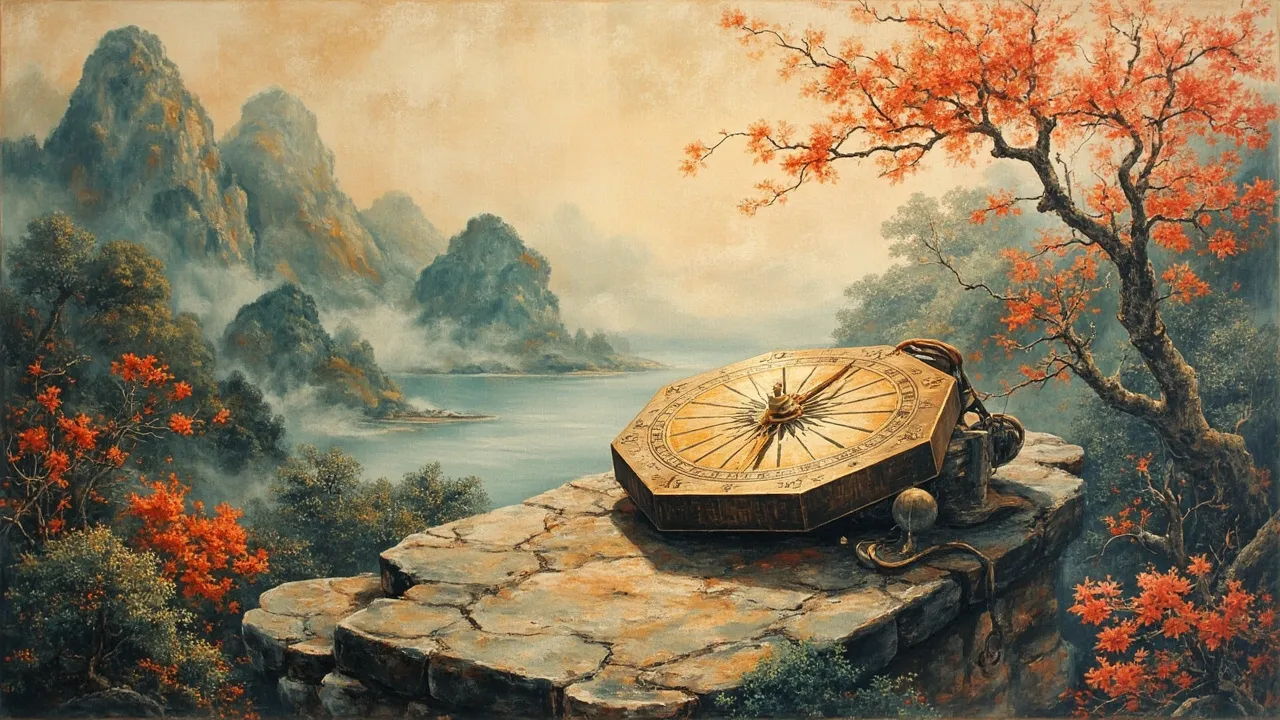
Classical Feng Shui developed several distinct schools, each with its own methods and emphases. The Form School, oldest and most fundamental, analyzes the shape and features of landscape—the “dragon” (mountain ranges), “water” (rivers, roads), and overall topography—to assess a site’s quality. The Compass School uses a luopan (magnetic compass) to measure precise orientations and apply detailed formulas determining how different directions and their associated energies affect the space. Later developments included the Flying Star School, which analyzes time cycles alongside spatial relationships. Each school offers valuable tools, and many contemporary practitioners draw from multiple traditions.
The Bagua Map: Your Blueprint for Energy Mapping
Perhaps the most recognizable tool in Feng Shui practice is the bagua (also spelled pakua), an octagonal map that divides any space into nine areas, each associated with specific life circumstances. This framework allows systematic analysis of how different parts of your environment affect different aspects of your life.
The bagua’s nine areas correspond to the trigrams of the ancient I Ching (Book of Changes), each trigram consisting of three lines that are either broken (yin) or unbroken (yang). These trigrams combine with compass directions to create associations: Career and Life Path in the north, Wisdom and Self-Cultivation in the northeast, Family in the east, Wealth and Abundance in the southeast, Fame and Reputation in the south, Romance and Relationships in the southwest, Children and Creativity in the west, Helpful People and Travel in the northwest, and Center (health, grounding) in the middle.
Using the bagua to analyze your home or office involves overlaying the map onto your floor plan, aligning the Career area (north) with the actual north direction according to your building’s orientation. Many people find this process revelatory—discovering, for instance, that their career area contains a clutter-filled closet or a broken appliance, which might correspond to career difficulties they’ve experienced. The bagua doesn’t predict fate, but it provides a lens for understanding how environmental patterns might support or undermine different life areas.
Different Feng Shui traditions vary in how they apply the bagua. Some practitioners use the “front door method,” aligning the map so that the entrance falls in one particular area, reflecting that the front door is where energy enters the space. Others prefer the “compass method,” orienting the bagua to actual compass directions regardless of where doors or windows are located. Both approaches have merit, and experienced practitioners often use multiple methods to cross-check their analyses.
The bagua also provides remedies when problem areas are identified. If the wealth area of your home contains a water leak (water drains energy associated with abundance), solving the leak becomes a priority. If the relationship area lacks warm colors, adding coral, pink, or red might help. If the knowledge area is dark and cramped, improving lighting and clearing clutter could support personal growth. These adjustments don’t involve superstition so much as practical attention to environmental psychology—creating spaces that actually support the activities and states of mind we value.
Common Feng Shui Principles: Practical Applications
While professional Feng Shui consultation can be expensive and complex, several core principles can guide anyone wanting to improve their space’s energy. These aren’t mystical secrets but accumulated wisdom about how physical environments affect human wellbeing.
The command position represents perhaps the most important Feng Shui principle for any room or building. This refers to being able to see the entrance while not being directly in line with it. In a home, the best position for your bed or desk allows you to see who enters the room without being in the direct path of the door’s energy flow. People in command positions feel more secure and in control. Those who sleep with their feet pointing toward the door (called “coffin position” in Feng Shui) often report restless sleep and anxiety. Adjusting bed position can significantly affect how you feel in your bedroom.
Clutter accumulates stagnant energy. In Feng Shui thinking, piles of unneeded items trap qi, creating dead zones that drain vitality from the space and its inhabitants. The famous Feng Shui recommendation to clear clutter isn’t just about tidiness—it’s about allowing energy to flow freely through your environment. Regular clearing of unused items, organized storage of things you want to keep, and open surfaces that allow energy movement all contribute to healthy qi flow. This principle aligns with contemporary research on how cluttered environments stress the brain and reduce productivity.
The quality of light significantly affects energy. Natural light, in particular, brings vibrant, Yang energy that animates spaces. Heavy curtains that block windows, dark rooms, and reliance on artificial illumination create darker, more Yin environments that can feel depressing over time. Positioning workspaces near windows, using full-spectrum lighting, and choosing bright but not harsh artificial light all support positive energy. Mirrors can also distribute light to darker areas, though placement matters—they shouldn’t reflect clutter or direct energy out of the space.
Color choices affect energy in specific ways. Red, associated with the fire element, stimulates passion, excitement, and activity—excellent for social spaces but potentially overwhelming for bedrooms. Green, associated with wood, represents growth and renewal, supporting creative and family areas. Yellow, associated with earth, grounds and stabilizes, helpful for center spaces and areas requiring concentration. Blue, associated with water, calms and inspires contemplation, suitable for meditation spaces but potentially depressing in excess. Understanding these associations helps when choosing paint, furniture, or decorative accents.
The balance of elements through materials and shapes supports comprehensive energy health. Wood brings growth energy through wooden furniture and plants. Fire elements include triangular shapes, the color red, and candles. Earth appears in ceramic pottery, square shapes, and earth tones. Metal manifests through metal furniture, circular shapes, and white or metallic colors. Water features, actual or represented, bring flow and abundance. A space that incorporates all five elements typically feels complete and supportive, though the emphasis should suit the space’s primary purpose.
Feng Shui in Modern Life: From Ancient Palaces to Contemporary Offices
Feng Shui’s journey from imperial China to global business and homeowner practice illustrates both its adaptability and the universal human desire to create environments that support flourishing. Understanding how Feng Shui applies today reveals both continuities with tradition and creative adaptations to modern contexts.
Corporate America discovered Feng Shui in the 1990s, with major companies including Apple, Microsoft, and Goldman Sachs consulting Feng Shui practitioners when designing or renovating offices. The logic isn’t difficult to understand: employers spend significant resources on workspace, and they’d like that investment to support employee productivity, wellbeing, and satisfaction. Whether one accepts the traditional cosmological framework or interprets these principles in more psychological terms, many Feng Shui recommendations align with what research shows about effective workplace design—good lighting, clutter-free spaces, clear sightlines, and areas that support different types of work.
Home applications remain the most common context for Feng Shui practice. People seek help with apartment selection, furniture arrangement, color selection, and decorative choices. The underlying desire is the same as it was for emperors building palaces: create a home that supports health, happiness, and success for those who live there. The democratization of Feng Shui knowledge through books, websites, and apps means that anyone can apply basic principles without expensive consultants, though complex situations often benefit from professional assessment.
Critics of Feng Shui fairly note that it originated in a pre-scientific worldview that included beliefs about energy (qi) that modern science doesn’t validate. The mechanisms proposed in traditional Feng Shui—how exactly qi flows, how compass directions affect human affairs—don’t have clear physical explanations. Skeptics reasonably suggest that what’s called Feng Shui effect might simply be good design principles expressed through mystical language, or perhaps the placebo effect of believing that one’s environment supports flourishing.
The honest response to such criticism acknowledges its validity while recognizing that Feng Shui practitioners have always emphasized practical results over theoretical explanations. If rearranging furniture according to Feng Shui principles helps someone sleep better, feel more energized at work, or experience improved relationships, does it matter whether the mechanism involves invisible qi or simply better environmental psychology? Many Feng Shui recommendations—maximize natural light, reduce clutter, create comfortable groupings for conversation—represent sound design advice regardless of their traditional justifications.
Applying Feng Shui: Getting Started
For Americans interested in experimenting with Feng Shui, several starting points offer accessible entry into this ancient practice.
Begin with a basic assessment of your front door, the entry point where energy enters your home. The door should be well-lit, in good repair, and not obscured by obstacles. Plants or bright colors near the entrance welcome energy. The area immediately inside the door should feel open and inviting, not cramped or cluttered—these first moments set the tone for everything that follows.
Assess your bedroom with the command position in mind. Can you see the door without being directly in line with it? Is your bed supported by a solid headboard (representing the mountain that protects)? Are electronic devices and work materials minimized in this space devoted to rest? The bedroom’s energy directly affects sleep quality and, according to Feng Shui thinking, the partnerships and relationships that restful sleep supports.
Evaluate clutter throughout your space. Be honest: do you have items you no longer use, love, or need? If so, consider whether retaining them serves you. Feng Shui isn’t minimalism for its own sake, but it does emphasize that stagnant energy accumulates around unused possessions. A space cleared of genuine clutter feels more alive and supports clearer thinking.
Observe how different areas of your home connect to life areas using the bagua. You don’t need to rearrange everything immediately, but notice whether problem areas in your life correspond to problem areas in your space. Sometimes simple adjustments—adding a plant to the creative area, improving lighting in the knowledge area—make meaningful differences. Pay attention to how you feel in different parts of your home; this intuition often reveals what Feng Shui analysis would confirm.
Consider consulting a professional for significant decisions—choosing a new home, major renovations, or business locations. While basic principles can be applied independently, experienced practitioners catch nuances that novices miss. Look for practitioners who emphasize practical results over complex symbolic systems, who explain their reasoning clearly, and whose recommendations feel reasonable to your own judgment.
Feng Shui ultimately invites us to take environmental consciousness seriously. The ancient Chinese recognized that we don’t exist in isolation from our surroundings—we’re constantly affected by the spaces we inhabit, whether we pay attention to that fact or not. Taking Feng Shui seriously means paying attention, making thoughtful choices, and creating environments that support the life we want to live. Whether one accepts the traditional metaphysical framework or interprets these principles in more contemporary terms, that environmental awareness represents a valuable contribution to living well.