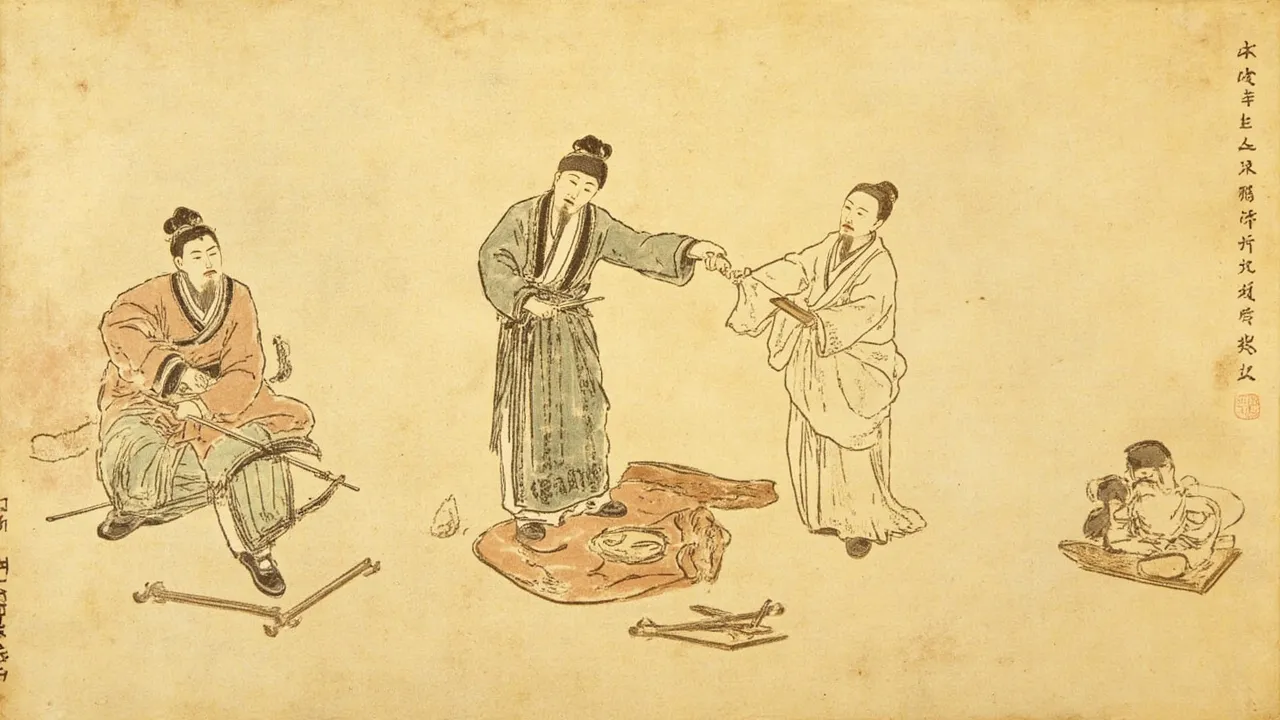
The Four Great Inventions of China: Ancient Genius That Shaped Our World
Look around your daily life and you’ll find yourself surrounded by inventions that began in ancient China. The book you’re reading was made possible by paper and printing—two Chinese innovations. The navigation app that guided you here depends on the compass—the third invention. And the fireworks you enjoyed last Fourth of July? Those trace their origins to Chinese alchemists seeking immortality. These four breakthroughs—known collectively as the Four Great Inventions—fundamentally transformed human civilization, and they all came from China.
For Americans, understanding these inventions offers a window into Chinese technological achievement that often goes unrecognized in Western education. The story of paper, printing, gunpowder, and the compass is the story of how ancient Chinese ingenuity shaped the modern world in ways we’re still living with today.
Paper: Making Knowledge Portable
Before paper, writing surfaces were heavy, expensive, and hard to produce in quantity. The ancient Egyptians wrote on papyrus (made from plant stems), the Romans used expensive parchment (prepared animal skins), and earlier Chinese wrote on bamboo strips or silk. Each had serious limitations—bamboo was heavy, silk was prohibitively expensive, and papyrus didn’t travel well to humid climates.
Chinese paper makers developed their craft gradually, with evidence of true paper dating to the 2nd century CE. The traditional account credits a court official named Cai Lun with standardizing papermaking techniques around 105 CE, though archaeologists have found paper fragments slightly older than his alleged invention. Whatever the precise origin, Chinese papermakers had developed sophisticated techniques by the Han Dynasty.
The Chinese papermaking process began with soaking and pounding plant fibers—traditionally including mulberry bark, hemp, and rags—into a watery pulp. This pulp was then poured onto a screen, where the fibers intermingled and dried into sheets. The resulting paper was strong, relatively inexpensive, and excellent for writing.
Paper spread gradually across China, replacing bamboo and silk for most purposes by the 3rd century. Buddhist monks, seeking cheap materials for copying scriptures, proved crucial in spreading paper use. The technology then began its long journey westward. According to historical accounts, Chinese papermakers were captured during the Battle of Talas in 751, and paper-making knowledge began flowing into the Islamic world. From there, it reached Europe several centuries later.
The impact of paper cannot be overstated. It made books affordable, enabling the spread of literacy and education. It made record-keeping practical for governments and businesses. It created the material foundation for the later explosion of printed knowledge. Without Chinese papermaking, the Renaissance, the Reformation, and the Scientific Revolution would have proceeded very differently.
Printing: Multiplying Knowledge
While paper made writing practical, printing made mass reproduction possible. And printing, like paper, began in China.
The earliest Chinese printing used wooden blocks. A carver would carve the entire page in relief on a wooden block, ink the raised surface, and then press paper against it to create a print. This woodblock printing dates to at least the 7th century, and possibly earlier, with Buddhist sutras being among the earliest printed texts. A surviving Diamond Sutra, printed in 868 CE, is the oldest dated printed book in existence.
Woodblock printing was efficient for long runs of identical texts, but it had limitations. Each new text required carving a new block, which was expensive and time-consuming. The process was also inflexible—you couldn’t easily correct errors or modify texts.
The breakthrough came with movable type, invented in China during the 11th century. Bi Sheng (990-1051), a Chinese craftsman, developed the first known movable type system, using baked clay characters that could be arranged, used, and then rearranged for other texts. Later, metal movable type was developed, and by the 13th century, Chinese printers were using sophisticated movable type systems.
Here’s a fascinating historical wrinkle: the Chinese invented movable type centuries before Gutenberg developed his famous press in Europe (around 1440). Yet Chinese printing never fully replaced woodblock printing, while European movable type rapidly became the dominant technology. Why? Partly because Chinese characters are logographic—each word has its own character, meaning Chinese requires thousands of distinct types versus the relatively few letters in European alphabets. Woodblock printing remained practical for the massive Chinese text corpus.
When printing technology spread to Europe, it arrived via the Islamic world, which had learned of Chinese woodblock printing and begun experimenting with their own versions. Gutenberg’s metal movable type, developed in the 1450s, drew on these earlier influences while introducing innovations like oil-based ink and the screw press. The printing revolution that followed transformed European culture, fueling the Renaissance, the Protestant Reformation, and the scientific revolution.
Gunpowder: The Force That Reshaped Warfare
Of all Chinese inventions, gunpowder has the most dramatic impact on human history—and the most mixed legacy. This chemical discovery revolutionized warfare, toppled feudal systems, and continues to shape global politics today.
Gunpowder’s origins lie in Chinese alchemy. Seeking elixirs of immortality, Tang Dynasty (618-907) Taoist chemists experimented with various substances, including sulfur, charcoal, and saltpeter (potassium nitrate). These alchemists discovered that certain mixtures of these substances burned exceptionally well—and sometimes exploded. The formula for “fire medicine” (huo yao) was first recorded in the 9th century.
Early Chinese uses for gunpowder were largely ceremonial and recreational. Fireworks became a central part of Chinese celebrations, and their use for religious and festive purposes continues today. The Chinese also developed “fire lances”—bamboo tubes that projected flames and projectiles—which can be considered early predecessors of firearms.
The military applications developed gradually. By the 10th century, Chinese military texts describe bombs and explosive grenades. The 13th century saw the development of true gunpowder weapons: metal-barreled cannons, rockets, and hand grenades. These weapons gave China’s Song Dynasty armies significant battlefield advantages.
Here’s where the story takes a global turn. During the Mongol conquests of the 13th century, gunpowder weapons and the knowledge of how to make them spread across Eurasia. The Mongols used Chinese-style cannons in their European campaigns, and European observers quickly recognized the military implications. By the 14th century, European armies were developing their own gunpowder weapons.
The consequences were immense. Gunpowder made fortifications obsolete, ending the era of the castle and the knight. It enabled European maritime empires to project power globally—the guns that armed Portuguese and Spanish ships let relatively small European forces defeat larger local armies. The military balance of power shifted permanently.
In China itself, gunpowder led to the development of incredibly sophisticated fireworks and the famous “firecrackers” that remain central to Chinese New Year celebrations. But some historians argue that China’s relatively stable imperial political system meant that gunpowder, despite being invented there, had more revolutionary effect in the more fragmented political landscape of Europe.
The Compass: Finding Your Way
The magnetic compass, China’s fourth great invention, quite literally opened the world. Navigation enabled by the compass made the Age of Exploration possible, connecting continents and reshaping global civilization.
Chinese compass technology developed from a tradition of magnetic现象 observation. The Chinese discovered that lodestone (magnetite, a naturally magnetic mineral) could be magnetized and that a magnetized needle, when floated on water or suspended, would point toward the north. The earliest compasses, dating to the Han Dynasty (206 BCE – 220 CE), were devices for divination rather than navigation—the famous “south-pointing spoon” that would always reorient itself toward the south.
True magnetic compasses for navigation appeared during the Song Dynasty (960-1277). Chinese sailors began using compass navigation by the 11th or 12th century, giving them significant advantages in open-water sailing. These early compasses used magnetized needles suspended in water, providing reliable direction-finding even when skies were overcast or landmarks invisible.
The compass reached Europe through multiple channels. Islamic traders likely carried compass knowledge to the Mediterranean, with European references to the device appearing by the 12th century. The combination of the compass with Portuguese and Spanish shipbuilding innovations created the conditions for the great voyages of discovery—Columbus’s 1492 voyage, Vasco da Gama’s route to India, Magellan’s circumnavigation.
The consequences were staggering. Global trade networks emerged that connected all inhabited continents. European colonial empires extended across oceans. The exchange of plants, animals, ideas, and peoples that followed reshaped every continent. The modern world, in which we can instantly communicate across oceans and travel around the globe in hours, traces its foundations to those early compass-guided voyages.
Why These Four Inventions Matter
The Four Great Inventions aren’t simply interesting historical trivia—they represent fundamental technological achievements that transformed human capability. Understanding why these particular innovations emerged from China offers insight into Chinese civilization’s distinctive characteristics.
Chinese civilization’s emphasis on written communication created conditions that favored paper and printing. With a writing system that required extensive documentation for governance across a vast empire, and a culture that valued learning and literacy, China provided fertile ground for innovations in writing technology.
The Chinese imperial system’s need for centralized control drove military innovation, including gunpowder weapons. And the Chinese maritime tradition, with its extensive coastal trade and naval activity, created practical demand for navigation technology.
These inventions also reflect broader characteristics of Chinese technological development. Chinese innovation traditionally emphasized practical applications—technologies that could be implemented and used rather than purely theoretical advances. The Four Great Inventions all fit this pattern: they addressed real needs and quickly found practical use.
Contemporary scholars sometimes note that these inventions, while originating in China, had their greatest transformative impact elsewhere. Paper and printing fueled European Renaissance and Reformation. Gunpowder enabled European military superiority. The compass made European global expansion possible. This observation has prompted important discussions about why technological innovation sometimes flourishes in one context but not another—a question that remains relevant today.
The Legacy Continues
The Four Great Inventions remain vibrant in Chinese cultural consciousness. They’re celebrated in museums, textbooks, and official discourse as evidence of Chinese civilization’s contribution to human progress. Modern China explicitly invokes this heritage in discussions of national achievement and contemporary innovation.
For Americans, understanding these inventions offers several rewards. First, they provide concrete evidence of Chinese technological sophistication—a corrective to simplistic views of Chinese history as merely dynastic cycling without technological progress. Second, they help explain the modern world—our printing-based information society, our gunpowder-dependent military balance, our globally connected civilization all trace roots to these Chinese innovations. Third, they offer a perspective on innovation itself—how technologies develop, spread, and transform societies in unexpected ways.
The Four Great Inventions connect us to a shared human story of creativity and discovery. They remind us that the ancient world was far more interconnected than we sometimes assume—that ideas, technologies, and goods flowed across continents long before the modern era. And they challenge us to recognize that human ingenuity isn’t limited to any single civilization—it emerges wherever people face problems and seek solutions.
The next time you read a book, watch fireworks, use a compass app, or simply enjoy the benefits of printed information, you can thank Chinese inventors whose innovations, made over a thousand years ago, made our modern world possible.