Fuxi and the Eight Trigrams: The Divine Origins of Chinese Philosophy
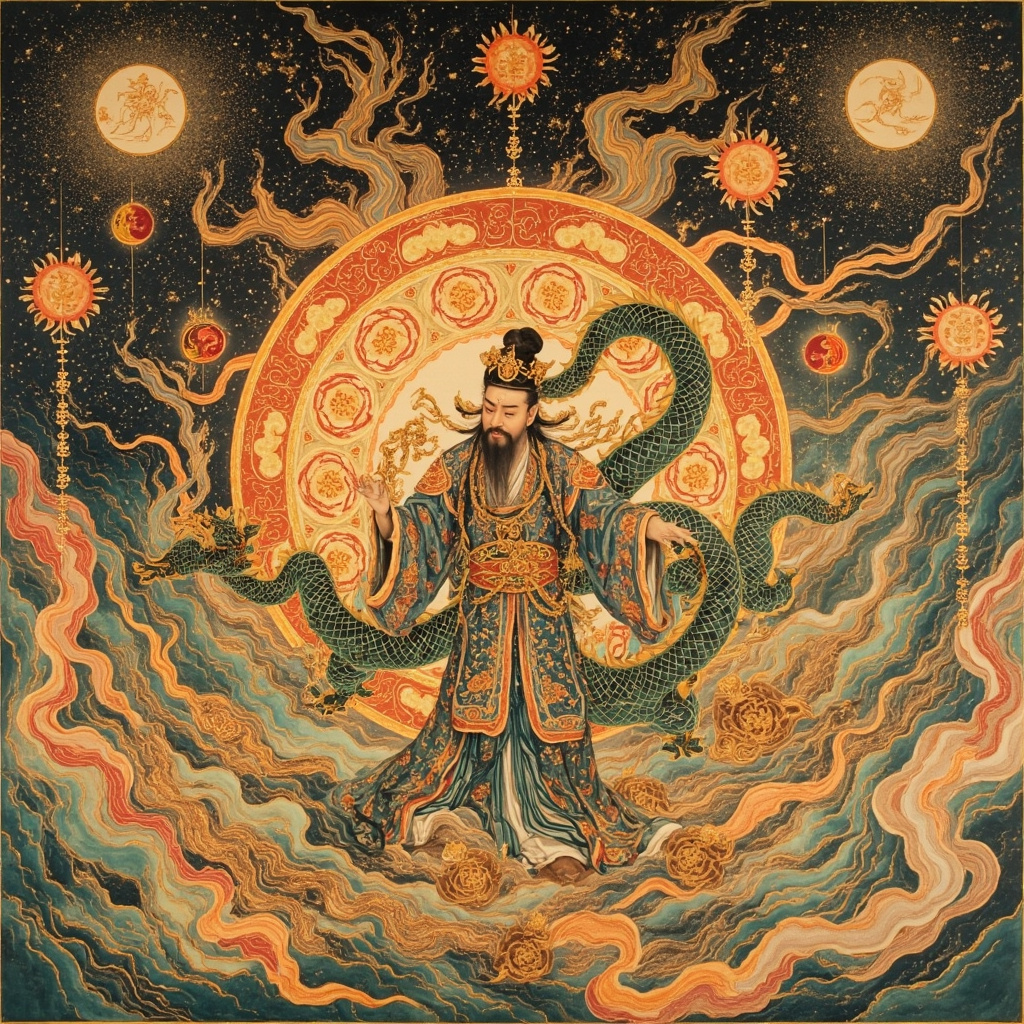
In the misty depths of Chinese prehistory, when the boundaries between the mortal world and the divine realm seemed thinner than they are today, a figure emerged from legend who would shape the intellectual foundations of an entire civilization. Fuxi, one of the legendary Three Sovereigns of ancient Chinese mythology, is credited with receiving the Eight Trigrams through a moment of divine inspiration. These eight simple symbols—three lines each, some broken, some unbroken—would go on to become the most influential philosophical framework in Chinese history, underlying everything from martial arts to medicine, from architecture to art, from military strategy to meditation practices.
The story of how Fuxi received the Ba Gua, or Eight Trigrams, is not merely a mythological anecdote. It represents something profound about how ancient Chinese civilization understood the relationship between humanity, nature, and the cosmic order. To appreciate the depth of this story, we need to journey back to a time when philosophy and spirituality were not separate domains, when understanding the patterns of nature was considered essential to living a good and successful life.