The Great Wall of China: Defending an Empire
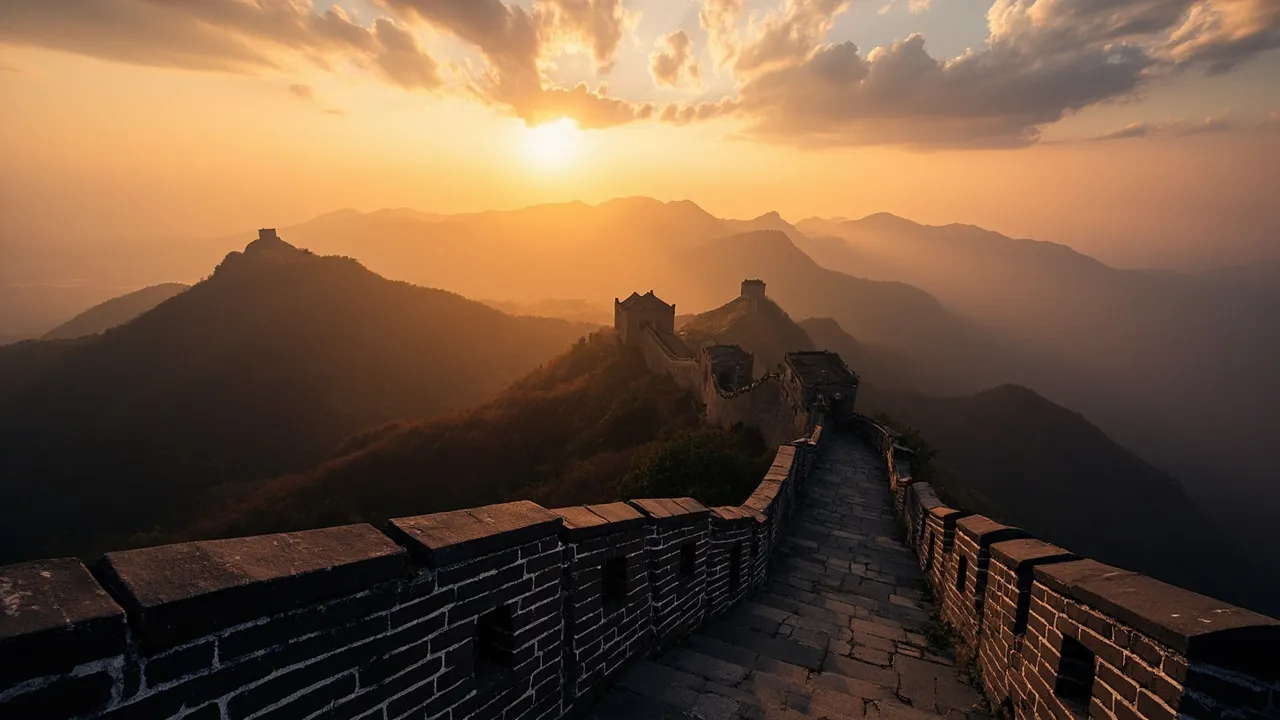
The image is instantly recognizable across the entire world — a serpentine ribbon of stone and brick snaking its way over mountain peaks, disappearing into distant valleys, and reappearing again on the horizon like a ancient dragon resting on the spine of China. The Great Wall is not merely a structure; it’s a statement, a testament to human determination, and a window into thousands of years of Chinese history that continues to captivate travelers and historians alike.
For American readers dreaming of walking where emperors once walked, understanding the story behind this incredible feat of human effort enriches every step you might one day take along its ancient battlements. The Great Wall is far more than a tourist attraction or a photograph opportunity — it’s a living monument to the ambitions, fears, and extraordinary capabilities of ancient civilizations.
Origins and Construction
The story of the Great Wall begins with a fundamental problem that troubled Chinese rulers for centuries: how do you protect your empire from the nomadic warriors who roamed the vast northern grasslands? These horsemen, from groups the Chinese called the Xiongnu and later the Mongols, possessed a military advantage that troubled every emperor. They were fast, mobile, and experts at hit-and-run tactics that the more settled Chinese armies struggled to counter. Chinese generals found themselves chasing shadows across the endless grasslands, always a day too late.
The first walls that would eventually become the Great Wall began taking shape during the Warring States period, roughly between 475 and 221 BCE. During this chaotic era, various Chinese states fought constantly against each other and against the northern nomadic threats. Several northern states, including Qi, Zhao, and particularly Qin, began building walls of rammed earth along their northern borders. These were not the massive stone structures we picture today — they were relatively modest earthen embankments.
The man who would transform these scattered walls into something resembling the Great Wall we know today was Qin Shi Huang, the same first emperor who later ordered the creation of the Terracotta Army. After unifying China in 221 BCE and becoming the first emperor of a united Chinese empire, Qin Shi Huang faced a persistent problem along his northern frontier. The Xiongnu nomads posed a constant threat, launching raids and disappearing back into the grasslands.
Qin Shi Huang made a decision that would shape Chinese history for the next two thousand years. He ordered the connection and extension of the existing walls into a single continuous defense system. The legendary general Meng Tian was put in charge of this massive project, overseeing construction of what might be called the first true Great Wall — a network of walls stretching over 5,000 miles across the northern frontier.
The construction methods of this early wall were remarkably sophisticated. Workers used a technique called “terraming” or “cut-tamped” earth construction, where layers of earth were placed in wooden frames and compacted repeatedly until the wall became incredibly hard and solid. This method produced walls that have survived thousands of years.
The human cost of these early construction projects was staggering. Hundreds of thousands of workers — soldiers, peasants, and forced laborers — were conscripted to work on the walls. Many died from the brutal conditions, the backbreaking labor, and the harsh northern winters. Legend has it that the dead were sometimes buried within the wall itself, giving rise to the Chinese saying that you can still hear the ghosts of the workers crying out on windy nights.
The Walls That Spanned Dynasties
The Great Wall we see today is not the product of a single era or a single dynasty. It’s more accurate to think of it as a series of construction projects spanning over two thousand years, with different emperors adding to, rebuilding, and sometimes letting sections fall into disrepair. Each dynasty that worked on the Wall left its own mark, its own architectural style, and its own section of wall for future generations to explore. The Wall is essentially a living history textbook written in stone and brick, with each dynasty contributing a new chapter to the ongoing story of Chinese civilization’s struggle to secure its northern frontier.
After the Qin dynasty collapsed in 206 BCE, the Han dynasty took over and recognized the strategic importance of the northern fortifications. Emperor Wu, who ruled from 141 to 87 BCE, undertook massive expansion and reconstruction projects. Under his direction, the Wall was extended far to the west, reaching into what is today Gansu Province and creating the famous Jade Gate (Yumen) pass that marked the western terminus of Chinese civilization. The Han dynasty also improved the wall’s design, adding watchtowers at regular intervals and establishing a system of signal fires that could transmit messages across hundreds of miles in just a few hours — a kind of ancient telegraph system that allowed rapid communication of enemy movements. This innovation alone transformed the Wall from a passive barrier into an active defense network capable of mobilizing defenders across vast distances within hours rather than days.
The Han period also saw the Wall becoming more than just a military structure — it became the foundation of an entire economic and social system. The famous Silk Road trade routes, which connected China to the Roman Empire and the civilizations of Central Asia, passed through the Wall’s passes and required constant protection. Merchants traveling these routes relied on the Wall’s garrison towns for safety and supplies, creating a network of trade settlements that grew into thriving cities. Dunhuang, for example, began as a military outpost protecting the Wall’s western terminus and grew into a major center of Buddhist learning and art, home to the famous Mogao Caves that still inspire visitors today with their ancient murals and sculptures.
The Wall went through periods of neglect and renewal over the centuries. During times of peace with the northern nomads, emperors sometimes saw little value in maintaining the expensive fortifications, and sections would fall into ruin. During times of conflict, however, the Wall became a priority once again, and new construction would begin. The Sui dynasty (581-618 CE) undertook major repairs after centuries of neglect, rebuilding sections that had crumbled and restoring the signal tower system. The Tang dynasty (618-907 CE) focused more on diplomacy and trade with the nomads, and the Wall saw less military emphasis during this period of relative peace and cultural flourishing.
The most significant transformation came during the Ming dynasty, which ruled China from 1368 to 1644. The Ming emperors, facing constant threats from Mongol and later Manchu armies, undertook the most extensive reconstruction project in the Wall’s history. Unlike earlier walls that were primarily made oframmed earth, the Ming construction featured stone and brick facing that gave the Wall its iconic appearance. Watchtowers were built larger and more elaborate, and the Wall was strengthened with hundreds of reinforced sections specifically designed to withstand artillery fire. The Ming also added a sophisticated system of gates, each one a mini-fortress with multiple defensive positions, trap areas, and accommodation for large garrison forces.
The Ming Wall is the one most visitors see today when they walk the Great Wall. It’s the most complete and best-preserved section, featuring the distinctive crenellated battlements that we associate with the Wall in photographs. The construction techniques had been refined over centuries, and the Ming engineers had access to better materials and more sophisticated building methods. The result is the enduring image of the Great Wall that inspires travelers from around the world. Each Ming watchtower was a small fortress in itself, often featuring multiple levels, internal stairs, and firing ports designed for different types of weapons. The towers could house dozens of soldiers and store weeks of supplies, allowing them to sustain prolonged sieges if necessary.
Interestingly, the Great Wall never actually succeeded in keeping out the northern nomads entirely. The Mongols conquered China in the 13th century, establishing the Yuan dynasty, and they did so not by breaching the Wall but by finding ways around it or simply negotiating passage. In fact, Genghis Khan’s grandson, Kublai Khan, actually used the Wall’s passes to move his armies southward, bribing or persuading the garrison commanders rather than attacking directly. The Wall was more effective as a psychological barrier and a symbol of imperial power than as an impenetrable military fortification. Still, its strategic value was undeniable — it slowed enemy advances, provided early warning of attacks, and allowed Chinese armies to concentrate their forces at key defensive points. The psychological impact was perhaps even greater than the military one — the Wall announced to all who saw it that this was a unified, powerful empire that had invested enormous resources in its defense.
The Wall also played a crucial role in shaping Chinese identity and culture. It became the most visible symbol of Chinese civilization’s boundary with the outside world, a literal line between the ordered agricultural world of the Chinese heartland and the wild, free-roaming world of the nomads beyond. This cultural significance transcended its military function and helped define Chinese concepts of civilization versus barbarism, order versus chaos, and the ordered empire versus the chaotic frontier.
Engineering Marvels
Looking at the Great Wall today, it’s easy to underestimate the engineering genius that went into its construction. The Wall wasn’t simply thrown up as an obstacle — it was a sophisticated defensive system that incorporated multiple layers of protection and represented cutting-edge military engineering for its time. The ancient Chinese builders understood terrain, materials, gravity, water flow, and human psychology in ways that still impress modern engineers who study their work. Every decision, from the choice of route to the materials used to the design of individual watchtowers, reflected centuries of accumulated knowledge about construction and defense.
The most visually striking elements are the watchtowers, which punctuate the Wall at regular intervals like the vertebrae of some massive stone creature. These towers served multiple purposes that went far beyond simple observation. Soldiers stationed in the towers could spot enemy movements from miles away, thanks to the elevated position. The towers provided shelter from weather and enemy attack for the troops stationed along the Wall. They served as storage facilities for food, weapons, and ammunition. And critically, they formed part of the signal fire system that allowed rapid communication across vast distances. Each tower was strategically positioned to provide maximum visibility while also serving as a strong point that could resist attack even if the Wall itself was breached at some other location.
The signal fire system was particularly ingenious. At the first sign of enemy approach, soldiers in a watchtower would light a fire and send up a burst of smoke during the day or launch fireworks at night. The next tower along the line would see this signal and repeat it, passing the message down the line at remarkable speed. Historians estimate that a signal could travel the entire length of the Wall — thousands of miles — in a single day. This gave the defending armies time to mobilize and respond to threats long before the enemies could reach the more populated southern regions. The system used a sophisticated code that could communicate not just the fact of an attack but its approximate size and direction — information that would determine how many troops should be dispatched to respond.
The Wall’s path was carefully chosen by ancient engineers who understood the terrain in ways that still impress modern surveyors. Rather than taking the easiest route through valleys and plains, the Wall follows the crest of mountain ranges, taking advantage of natural defensive positions. This meant that any attacking army would have to approach uphill, through difficult terrain, making them vulnerable to defenders on the walls above. The engineers also took advantage of natural obstacles like rivers and cliffs, incorporating them into the defensive system rather than trying to build around them. In many places, the Wall uses the natural rock of the mountain itself as part of its structure, with built elements filling in the gaps and creating a continuous barrier.
The construction materials varied depending on what was locally available, but the Ming dynasty brickwork represents perhaps the most impressive engineering achievement. The bricks were carefully manufactured to consistent standards, with smooth faces that fit together precisely. The mortar between the bricks was mixed to exact specifications, creating a bond that has remained strong for centuries. In some sections, the engineers even built the wall with a slight inward slope, making it more stable and harder to undermine. The brick-making process itself was highly organized, with kilns set up near construction sites to produce the millions of bricks needed for major projects. Each brick was stamped with information about when and where it was made, allowing quality control inspectors to trace any defects back to their source.
Perhaps most impressive of all are the “mountain walls” — sections built on such steep slopes that they seem impossible. In these areas, the Wall doesn’t simply run along the ridge but actually climbs vertical cliff faces, using a combination of natural rock and built structures to create an almost impassable barrier. Walking these sections today gives visitors a genuine appreciation for what the ancient builders accomplished with hand tools, simple machines, and sheer human determination. The Chinese called these sections “wall-climbing dragons” because they appeared to crawl up and over the most difficult terrain as if guided by some supernatural intelligence. Workers had to be lowered by ropes to work on cliff faces, placing stones and mortar in positions that seem to defy gravity.
The Wall also incorporated sophisticated drainage systems to prevent water damage. Throughout the structure, engineers built channels and gutters that allowed rainwater to drain away rather than pooling and causing erosion. These systems are still functional in many places, continuing to protect the Wall over 500 years after they were built. The drainage design was particularly important in a region that experiences heavy seasonal rains — without proper drainage, the Wall would have washed away centuries ago. The engineers also built the wall with a slight slope away from the outer edge, ensuring that water would run off the top rather than soaking into the structure and weakening it from within.
Another remarkable engineering feature was the use of natural limestone as a foundation material in many sections. Where the Wall crossed rocky terrain, builders carved away the tops of ridges to create a smooth, level surface for the wall’s foundation. This technique, called “cutting the ridge,” eliminated the need for extensive foundation work while also making the wall more stable. The rock was often used as building material as well, with large blocks fitted together without mortar in a technique that allowed for some flexibility during earthquakes while still maintaining the wall’s structural integrity.
The garrison system that supported the Wall was itself an engineering achievement of a different kind. Along the Wall, the Ming dynasty built entire cities designed to house and support the soldiers who defended it. These garrison towns included sophisticated water supply systems, granaries capable of storing months of food, armories, training grounds, and even small factories for producing weapons and equipment. The largest of these garrison cities, Jiayuguan in the west, was home to over 30,000 soldiers and included a complete walled city with its own internal defenses — a mini-version of the Great Wall system itself.
Walking the Wall Today
For American travelers, walking the Great Wall of China is an experience that ranks among the most memorable of any journey. Standing on the ancient battlements, looking out over the mountains that stretch to the horizon, creates a tangible connection to history that few other places can match. But planning a visit requires some knowledge to make the most of the experience, and understanding a bit about the different sections can help you choose the perfect adventure for your interests and fitness level.
The most visited section by far is Badaling, located about 50 miles northwest of Beijing. This section is the most easily accessible and has been extensively restored, making it suitable for visitors of all fitness levels. The Badaling section features wide walkways, sturdy handrails, and even escalators in some areas — making it arguably the most accessible section for visitors with mobility concerns. There are also museums and restaurants at the base.
The downside is that Badaling can be extremely crowded, particularly during Chinese holidays and summer months. If you visit during peak season, expect to share the Wall with thousands of other tourists. Many experienced travelers advise skipping Badaling entirely and heading to one of the less-visited sections instead — but for those with limited time or mobility concerns, it remains a viable option.
For travelers seeking a more adventurous and less crowded experience, several other sections are well worth considering. Mutianyu, located about 70 miles from Beijing, offers a beautifully preserved section with fewer crowds and the option of a toboggan ride down the mountain — a unique thrill that kids and adults absolutely love. The Mutianyu section features 22 watchtowers and follows a particularly dramatic ridge with sweeping views.
Jinshanling, further to the northeast, is popular among hikers and photographers for its dramatic scenery and partially restored sections that retain a more rugged, authentic character. The contrast between the restored and unrestored sections at Jinshanling is particularly striking. Many hiking tours combine Jinshanling with Simatai, offering a multi-day trek that covers some of the most spectacular terrain.
The most challenging but rewarding option is Simatai, which maintains a more wild and unrestored character. Hiking the Simatai section feels like stepping back in time, with crumbling towers and uneven steps. The Simatai section is also open for evening visits, when the Wall is illuminated with colored lights. Walking the Wall at sunset creates memories that will last a lifetime.
Huanghuacheng is another excellent option for those seeking a quieter experience. This section is less known to international tourists but well-loved by Chinese visitors, and it offers a unique feature: the Wall actually runs alongside a lake, creating beautiful reflections.
The best time to visit the Great Wall depends on what you’re looking for. Spring and fall offer the most comfortable temperatures and beautiful scenery. Summers can be brutally hot and crowded, while winters bring cold temperatures and fewer visitors, but also a unique beauty when snow coats the ancient stones.
Regardless of which section you choose, wear comfortable hiking shoes with good ankle support. The stairs are often steep and uneven, and you’ll be walking for several hours. Bring plenty of water, especially in warm weather, and don’t forget sun protection. If you’re planning to visit the more remote sections, consider hiring a local guide who can help navigate the trails.
One thing that surprises many first-time visitors is the sheer scale of the Wall. The Wall extends over 13,000 miles when you include all its branches and variations — that’s longer than the entire width of the United States. If you’re an experienced hiker, consider tackling one of the multi-day treks, sleeping in watchtowers along the way.
For those interested in deepening their Great Wall experience beyond the physical walk, consider visiting the museums in the area. The Great Wall Museum at Badaling provides excellent context for understanding the Wall’s history and construction.
The town of Simatai has developed a charming overnight experience where visitors can stay in traditional courtyard houses and explore the Wall at sunrise and sunset. These guesthouses allow you to experience the Wall in relative solitude before the tour buses arrive.
American visitors should also be aware of some practical considerations. A Chinese visa is required for entry. The best way to reach the Great Wall from Beijing is either by booking a tour or by using the efficient public bus system. English is not widely spoken outside major hotels and tourist areas, so having a translation app can be helpful.
Conclusion
The Great Wall of China stands as one of humanity’s most extraordinary achievements — a construction project that spanned centuries, involved millions of workers, and fundamentally shaped the history of an entire civilization. More than just a defensive fortification, it represents the accumulated dreams, fears, and ambitions of dozens of emperors and countless generations of Chinese people who built, maintained, and sometimes let fall into disrepair this incredible monument to human determination.
Walking the Great Wall today is more than a tourist activity — it’s a journey through time, a physical connection to the past, and an opportunity to reflect on what humans can accomplish when they commit their collective efforts to a grand vision. The Wall reminds us that great achievements often come at great cost, that empires rise and fall, and that the desire to protect what we’ve built is a fundamental part of human nature.
For American travelers considering this destination, the Great Wall offers something that few other places on Earth can provide — the chance to walk in the footsteps of ancient soldiers, to see what emperors saw, and to experience a piece of history that has endured for over two thousand years. Whether you choose a restored section with modern amenities or a wild, unrestored path that tests your hiking skills, the experience will leave you with a profound appreciation for what humans can achieve when they work together toward a common goal.
The Great Wall awaits. It’s time to discover it for yourself.