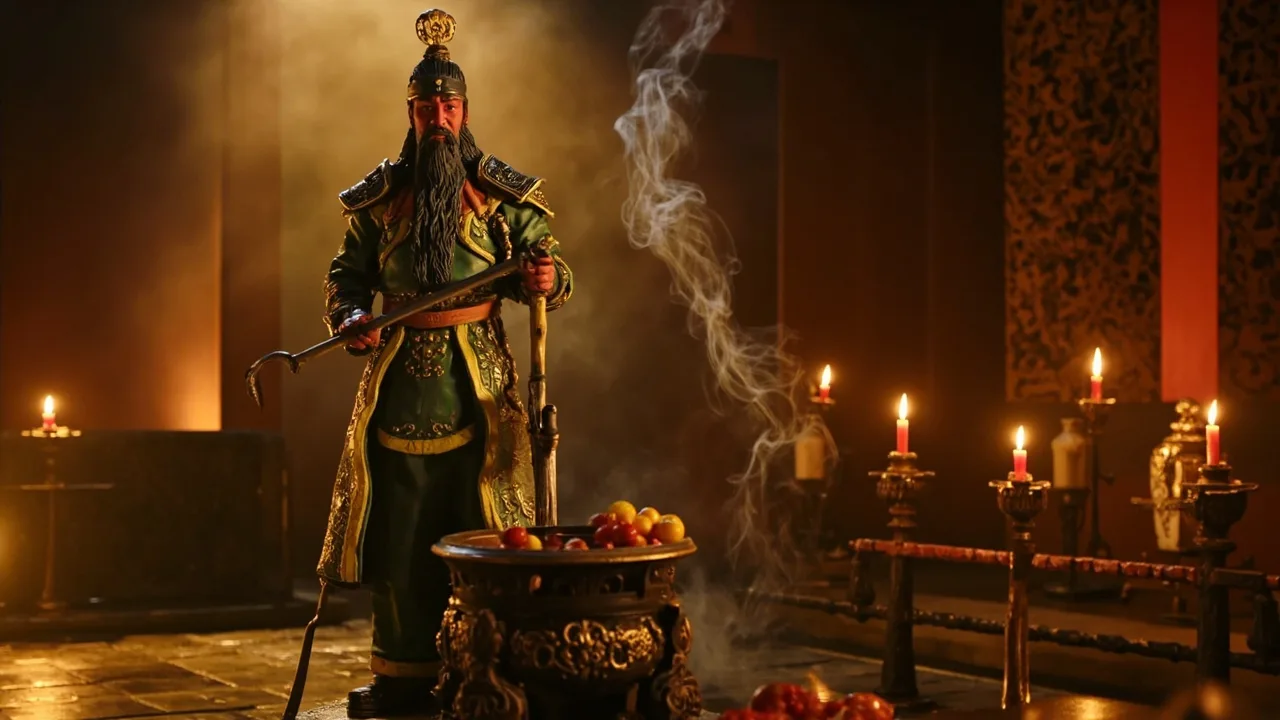
If you’ve ever walked through a Chinatown and noticed a small altar tucked behind a noodle shop counter, you might have seen him without realizing it: a red-faced warrior in green robes, black beard flowing to his chest, hand resting on a crescent moon blade. He’s Guan Yu (关羽), and depending on who you ask, he was a third-century general, a Buddhist guardian, a Confucian saint, the patron of cops, or simply the boss of your favorite dim sum restaurant. Few figures in Chinese culture wear as many hats — or carry as much weight — as this one man.
The thing is, Guan Yu is unusual among Chinese deities. Most gods were always gods, or became gods through myth and slow folk accretion. Guan Yu was a real person, with a verifiable biography and a known death. He lived, fought, lost his head, and then spent the next fifteen centuries being progressively elevated from war hero to divine protector to something close to a national mascot. Understanding that journey tells you a lot about how Chinese religion actually works — and why a shop owner in Kuala Lumpur or Vancouver might still burn incense for a man who died in 219 CE.
The Real Guan Yu of Three Kingdoms
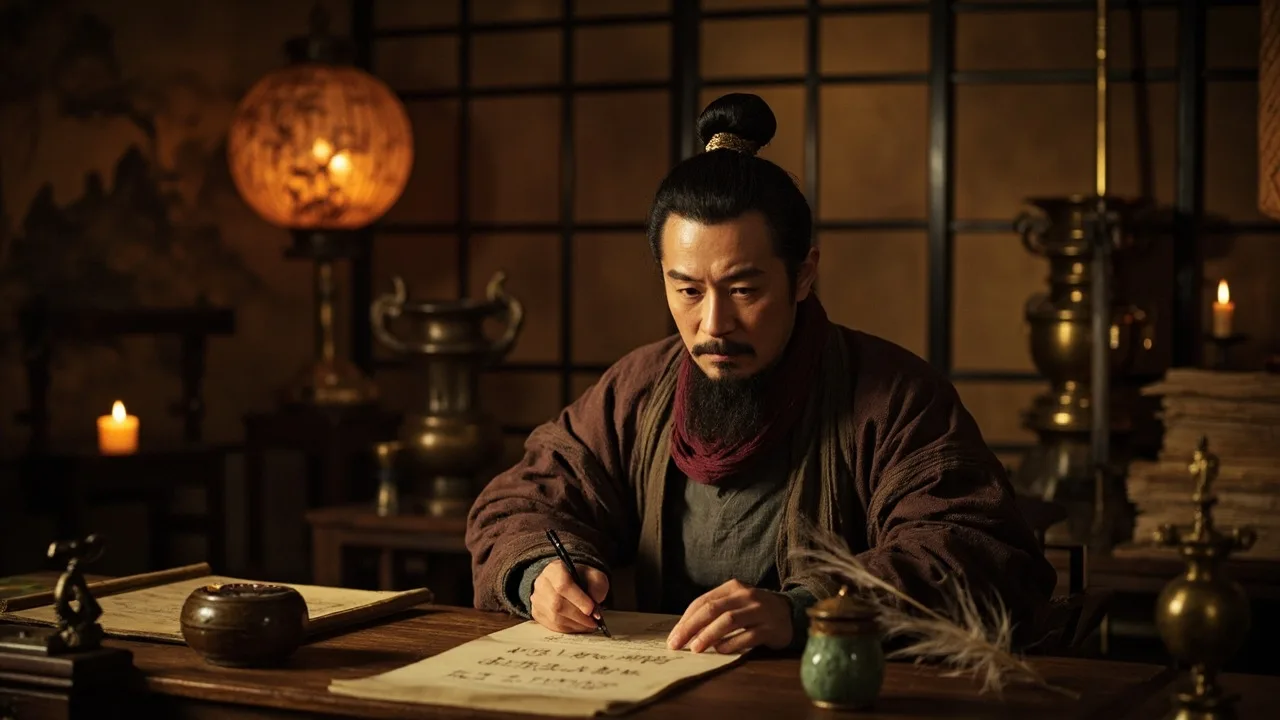
Guan Yu was born around 160 CE in what is now Shanxi Province, during the dying years of the Han dynasty. He grew up in a period when the Han empire was collapsing under its own weight — a time of famine, banditry, and warlord ambition that would eventually produce the Three Kingdoms era. We don’t have reliable portraits of him, and most of what we know comes from the historical record Records of the Three Kingdoms (三国志) compiled by Chen Shou in the third century, with later commentary by Pei Songzhi.
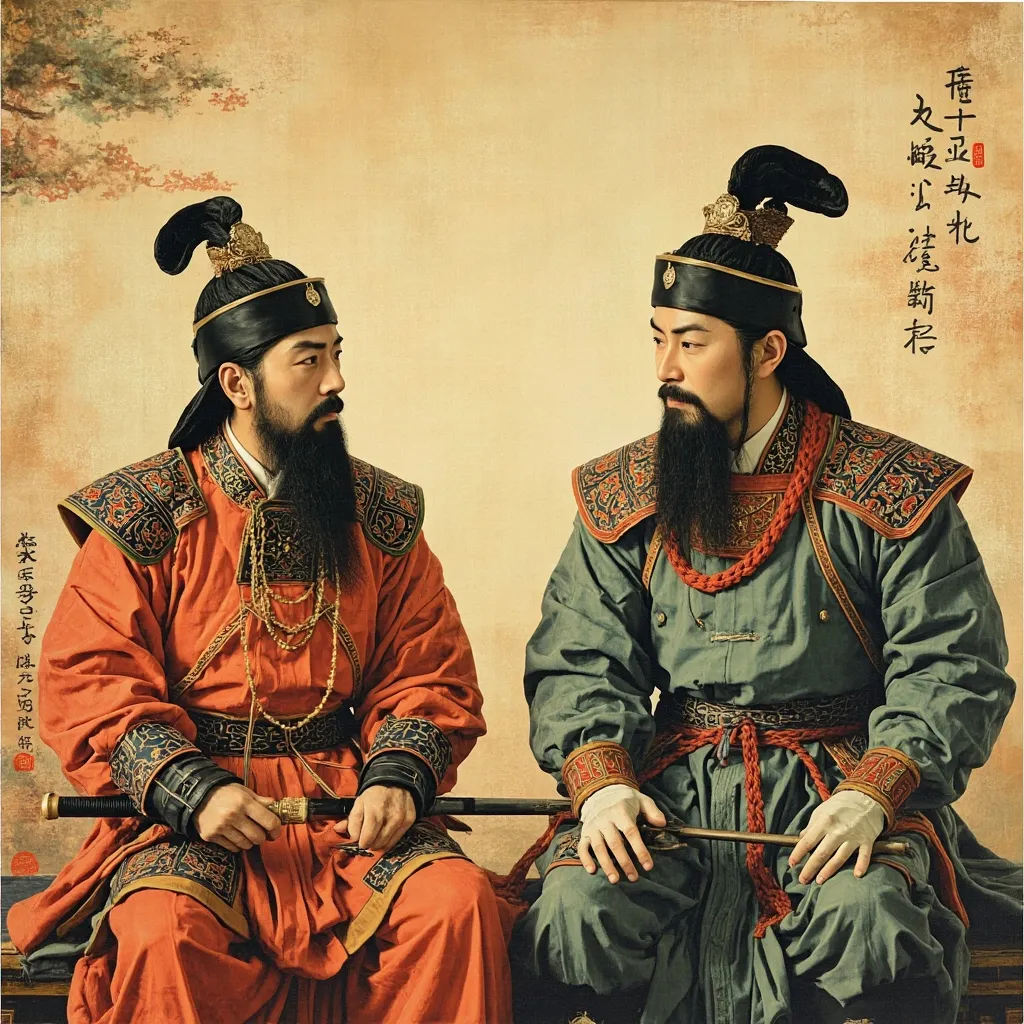
What we do know: he was a strong, tall man with a long beard — already unusual, since most Han men shaved or trimmed close. He served the warlord Liu Bei, and the two formed a sworn-brotherhood pact along with Zhang Fei, in the famous Oath of the Peach Garden. That oath — to die and live together, to preserve the Han — became the central moral event of his life, and arguably of his entire legend. In a chaotic age, Guan Yu’s defining trait was loyalty (义, yì) to his lord. He wasn’t the smartest general, he wasn’t always the most successful, but he didn’t switch sides, and in the Three Kingdoms that mattered.
His military career peaked in the early 200s CE, when he held Jing Province for Liu Bei against Cao Cao’s northern forces. He was ultimately defeated, captured, and executed by the warlord Sun Quan in 219 CE. The manner of his death — refusing to kneel even when offered his life — already had the feel of a saint’s martyrdom. By the time of his death, the historical Guan Yu was already larger than the man himself.
How a General Became a God: Deification Across Dynasties
Guan Yu’s transformation from man to deity unfolded over centuries, and the layering is striking. In life he was loyal; soon after his death, the folk began to call him a spirit of loyalty. By the Sui and early Tang, Buddhist monks had begun incorporating him into temple iconography as a protector (伽蓝菩萨, Qielan Pusa, “Sangharama Bodhisattva”) who guarded Buddhist monasteries and Dharma from demons. Buddhism, always pragmatic about local gods, found room for a fierce warrior who already had a following.
The Song dynasty pushed him further up. In 1102, Emperor Huizong formally conferred on him the title “Zhongxian Junwang” — roughly “Loyal and Manifest Lord-King.” By the Ming dynasty under the Wanli Emperor, he was elevated all the way to “Sacred Emperor Guan, Great Saint Whose Might Subdues Demons in the Three Realms” (三界伏魔大帝神威远镇天尊关圣帝君). That’s right: a man became an emperor, then a god, then a cosmic deity. The trajectory is unmistakable — Guan Yu’s cult climbed with each dynasty that wanted a virtuous military symbol.
But the deification wasn’t just political. It also fit the moral economy of Chinese folk religion. You could pray to Guanyin for mercy, pray to the City God for local safety, pray to Mazu for safe voyages — but who do you pray to when you need someone to keep a promise? When you need to settle a business dispute fairly, or protect a brotherhood pact, or just hold the line in a tough fight? Guan Yu filled that niche, because he was, in his historical life, the guy who never broke his word. The deification simply extrapolated what was already there.
Symbolism: The Red Face, The Blade, The Horse
If you’ve seen Guan Yu in a temple or on a poster, you already know the visual code. The red face isn’t historical — in real life, he probably looked like anyone else — but the color signals loyalty and courage the same way a red uniform signals a football team. Red-faced figures in Chinese opera are unambiguously righteous; white faces are treacherous (Cao Cao wears white in the Romance of the Three Kingdoms opera tradition, for example). So the red face is a moral signal, painted loud.
The weapon is the Green Dragon Crescent Blade (青龙偃月刀, Qinglong Yanyue Dao), a heavy single-edged polearm that in practice would have been impossible to wield on horseback in real combat. But it’s gorgeous on stage and in statues, and the name alone — green dragon, crescent moon — does the work of myth. Most historical Three Kingdoms soldiers used spears or halberds, not this blade, but the Romance of the Three Kingdoms novel gave Guan Yu his dramatic weapon, and tradition has kept it ever since.
The horse is Red Hare (赤兔马, Chitu Ma), another Romance invention that grew into legend. Red Hare was said to be able to travel a thousand li in a day, and to share its master’s moral character — refusing to be ridden by lesser men after Guan Yu’s death. The horse’s loyalty becomes a metaphor for the loyalty of followers, and you still see toy Red Hare figurines sold near Guan Di temples.
Then there’s the robe. Guan Yu is almost always shown in green or green-and-gold, the color of righteousness, often with the imperial yellow trim he didn’t technically deserve. The beard is non-negotiable — it’s the most consistent feature across all his depictions, from Ming opera costumes to modern altar statues. A Guan Yu without a long, flowing black beard simply isn’t Guan Yu.
Guan Di Temples: Chinatowns, Police Stations, and Fortune Tellers
Walk through any major Chinatown — San Francisco, Yokohama, Bangkok, Manila, London’s Gerrard Street — and you’ll find a Guan Di temple. They’re usually small, sometimes no bigger than a closet, with a single red statue behind incense burners and a permanent smell of sandalwood. They’re also some of the most active religious spaces in the diaspora, because Guan Yu’s portable: he doesn’t need a big temple, just an altar, a bowl of oranges, and someone willing to light a stick of incense.
In mainland China and Taiwan, the temples are larger and more elaborate. The most famous is probably the Guan Di temple in Xiezhou, Shanxi — claimed to be his birthplace — but you’ll find substantial temples in almost every prefecture. The annual worship cycle peaks around his birthday (农历六月廿四) and his death anniversary (农历五月十三), and many towns hold processions, opera performances, and feasts around those dates.
What people pray for has shifted over time. Historically, Guan Yu was invoked for victory in war and loyalty in service — he became the patron of the military during the Song and Ming. In the twentieth century he picked up new devotees: the police. Hong Kong’s police force adopted him as a patron in the colonial era, partly because of his reputation for justice and partly because he could be trusted to keep order, and the practice spread to mainland police and to many overseas Chinese police associations. Police lodges still visit Guan Di temples for blessings before major operations.
But the most visible audience today is the business community. Small shop owners from noodle stalls to jewelry dealers keep a Guan Yu statue behind the counter. He’ll watch over honest dealings, settle disputes between partners, and reward hard work. If you’ve ever wondered why so many Chinese restaurants have a small red-faced figure behind the register, now you know.
Historical Guan Yu vs. Romance Guan Yu: Two Different Men
Here’s where it gets tricky. Most English-speaking readers know Guan Yu through the Romance of the Three Kingdoms (三国演义) by Luo Guanzhong, a fourteenth-century novel that elevated real Three Kingdoms events into an operatic moral drama. The Guan Yu of Romance is more impressive than the historical figure: he crosses five passes and slays six generals (过五关斩六将), he attends a solo dinner with Cao Cao without flinching, and he performs impossible feats of arms.
The historical Guan Yu was a competent general but not a superhero. He lost Jing Province through a tactical mistake — letting Sun Quan’s forces take his southern flank — and that single failure is what got him killed. Romance swept this under the rug to preserve the moral purity of his character. The result is that popular Guan Yu is essentially a saint in general’s clothing, untouchable, undoubting.
In recent years there’s been a thoughtful push in Chinese cultural discourse to honor Guan Yu respectfully — to depict him, quote him, and reference him in ways that respect the gravity of what he’s come to represent. Some controversies have arisen over trivialization in games, advertising, or comedy sketches, and authorities have occasionally pushed back against disrespectful treatments. It’s a sign that the image still carries weight, even in a much more secular society than the one that first deified him.
There’s another layer that matters here, and that’s the brotherhood piece. The Oath of the Peach Garden between Guan Yu, Liu Bei, and Zhang Fei is treated almost like a sacred scripture in modern Chinese business culture. People who’ve sworn similar pacts — founding partners, lifelong friends, sworn siblings — sometimes make offerings to Guan Yu on the anniversary of their oath, asking the war god to witness the bond and to punish betrayal. In Hong Kong and Macau, triad organizations also appropriated his image, ironically, since Guan Yu stood for the very loyalty they so often violated. It’s a dark footnote, but worth knowing: even corrupt brotherhoods invoke him, which says something about how completely loyalty has been fused to his name.
If you want to read him today without believing in him, the Romance of the Three Kingdoms is still the gateway text. Moss Roberts’ English translation is the standard academic version, and it gives you the full operatic arc — the oath, the battles, the death, the apotheosis. For a tighter historical read, try Rafe de Crespigny’s commentary on the Records of the Three Kingdoms. And if you’re in a Chinatown with a Guan Di temple, take a moment to step in, light a stick of incense if the mood strikes you, and watch what happens around you. You’ll see an old man praying for his small business to survive the quarter. You’ll see a young couple thanking the deity for a healthy child. You’ll see cops in plain clothes bowing before going on patrol. It’s not museum religion — it’s working religion, in real time.
The takeaway: Guan Yu’s legend works because it merges the historical and the literary. The man gave the idea; the novel gave the drama; the dynasties gave the titles; the temples gave the ritual; and the diaspora gave him a global passport. He’s not just a god of loyalty — he’s a case study in how Chinese religion absorbs heroes, and how heroes, once absorbed, never quite leave. And if you ever find yourself negotiating a deal that you suspect the other party might break, you might just understand why a small red-faced man watches over the cash register.