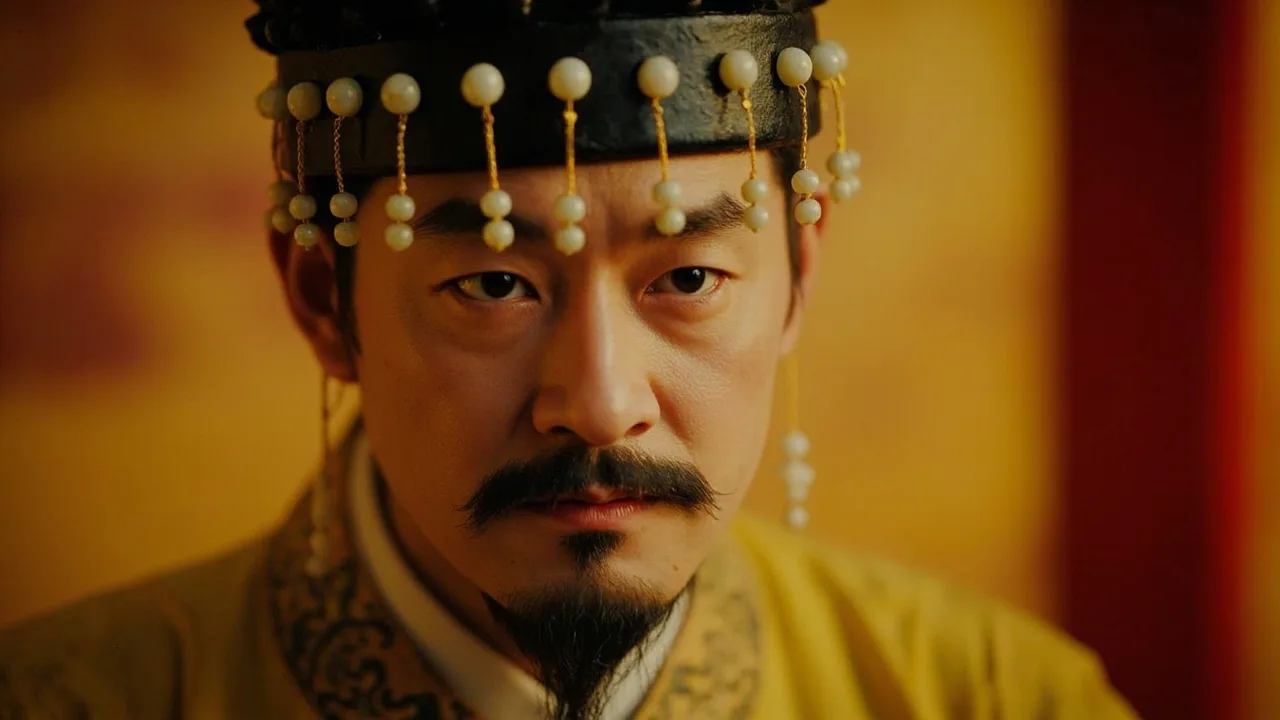
Emperor Wu of Han (Han Wudi, 156–87 BCE) reigned for fifty-four years — the longest reign in Chinese imperial history until the eighteenth century. He took a prosperous, well-governed regional kingdom and turned it into the largest, most powerful state in the world. He opened the Silk Road. He expanded Han territory from Korea to the Pamir Mountains and from Vietnam to Inner Mongolia. He made Confucianism the official ideology of the Chinese state, a position it would hold for two thousand years. He also, by the end of his reign, spent the entire fiscal reserve his predecessors had built up, drove the peasantry into widespread debt and flight, executed or ruined most of his own sons, and left the dynasty facing a serious succession crisis.
He is, depending on whom you ask, the greatest Han emperor or one of the worst. He’s also the most interesting.
Most Chinese dynasties have one or two figures who define the imperial ideal. The Han has Wu. The Tang has Taizong. The Song has Taizu. The Qing has Kangxi. Each of them did something the dynasty is remembered for. Wu’s contribution was to show that the Chinese empire, properly directed, could compete with any peer on the Eurasian landmass and could set the institutional template for every dynasty that followed. He was not, by most accounts, a nice man. But he was effective, and he was consequential.
What follows is an attempt to make sense of him.
A Kingdom That Was Ready to Grow
When Emperor Wu came to the throne in 141 BCE, the Han Dynasty was already thirty-six years old. The founder, Liu Bang, had reunified China in 202 BCE after the fall of the Qin. His successors — emperors Hui, Wen, and Jing — had spent the next sixty years consolidating the realm, lightening the tax burden, reducing the military footprint, and stockpiling reserves. The general policy of the early Han, summarized in the Huang-Lao Daoist doctrine of doing-nothing government, was restraint.
By 141 BCE, the result was an empire with a healthy treasury, a relatively contented peasantry, a recently suppressed feudal aristocracy, and a long-running problem on the northern border. The Xiongnu — a confederation of nomadic peoples living in the eastern Eurasian steppe, often identified (imperfectly) with the Huns of late antiquity — had been raiding Han frontier settlements for decades. The early Han had tried to deal with this through heqin, a system of marriage alliances and tribute payments in which the Han sent princesses, silk, and grain to the Xiongnu in exchange for nominal peace. The heqin policy had worked, sort of, but it had been humiliating. The Xiongnu treated the Han like a wealthy tributary, not an equal.
Wu was determined to change that.
The thing to understand about Emperor Wu is that he did not arrive as a conqueror by accident. He was raised for the job. He had been crown prince for twenty-nine years before his accession. He had watched his grandfather Emperor Wen and his father Emperor Jing manage the empire through the long stretch of peace. He had time to study. He had time to think. By the time he was emperor, he knew exactly what he wanted: a Han empire that would dominate its neighbors, a military that could stand up to the Xiongnu on the steppe, a state ideology to match the new scale, and a treasury capable of sustaining all of it.
He also had the temperament. Wu was energetic, ambitious, suspicious, proud, and willing to take big bets. He didn’t have the early-Han instinct for restraint. He didn’t have the Confucian instinct for moderation either — Confucianism wasn’t yet the state ideology, and Wu himself was more interested in power than in moral example. He had the instinct of a conqueror.
For readers who want to engage with the primary source, the [product_affiliate: Records of the Grand Historian covering Emperor Wu’s reign translated] is the central source.
The Wars, the Generals, and the Silk Road
The first and largest project of Wu’s reign was the war against the Xiongnu. It lasted, on and off, for more than forty years. The cost, by the end, was staggering. The result was the effective destruction of the Xiongnu confederation as a coherent military power.
The military leadership came from one family: the Huo. Huo Zhonghe, the emperor’s brother-in-law, served as a senior commander. His son Huo Qubing (140–117 BCE) became one of the most extraordinary cavalry commanders in Chinese history. Huo Qubing was given his first independent command at eighteen. By the time he was twenty-one, he had led three deep-range cavalry raids into the Xiongnu heartland, killed or captured several of the Xiongnu ruling elite, and forced the Xiongnu Chanyu (supreme leader) to retreat north of the Gobi. He died young, at twenty-three, but he had already done enough to be remembered as a hero. The Chinese still name a distinguished military academy after him.
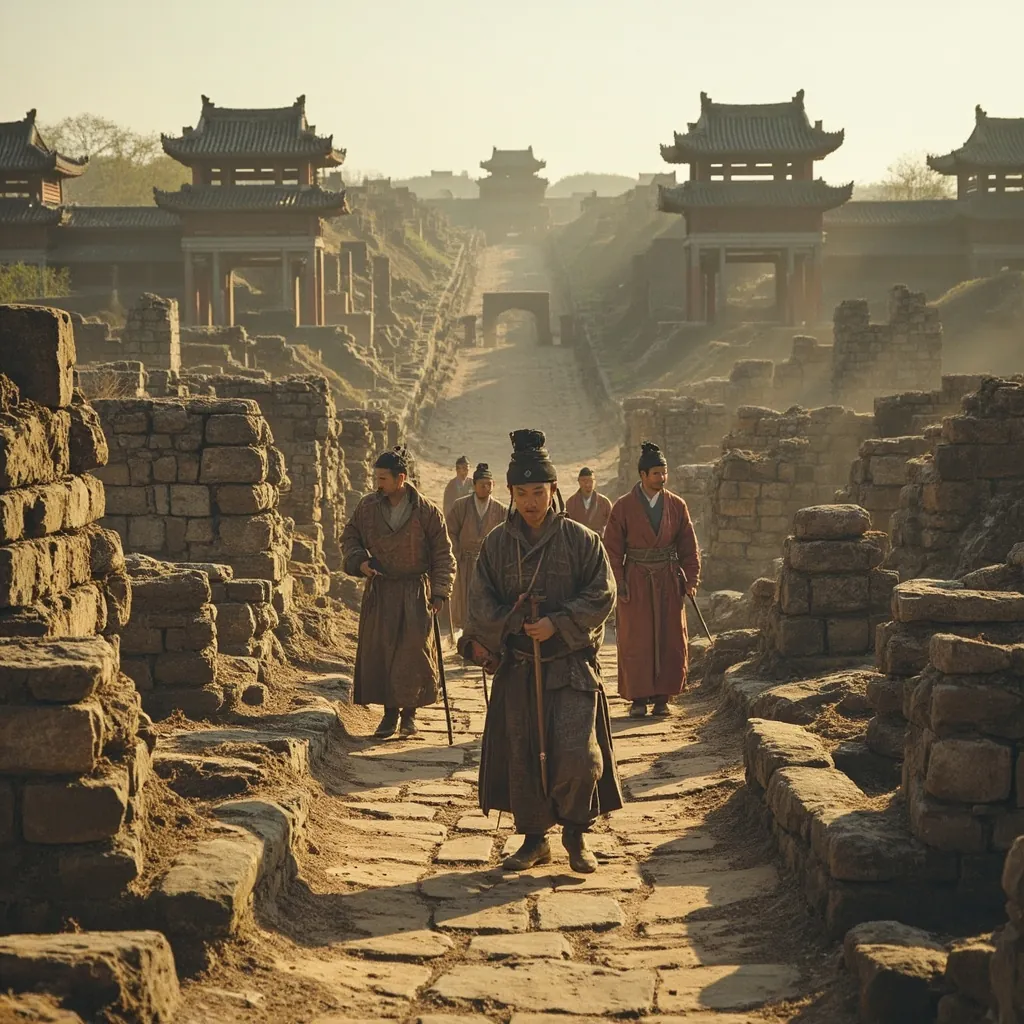
Alongside Huo Qubing, the general Wei Qing (Huo Qubing’s uncle) conducted a longer, more methodical campaign. Wei Qing was a former stable hand who had risen through the sister-marriage connection to the imperial family. He was not the most brilliant tactical mind, but he was patient, reliable, and politically careful. Between roughly 133 and 119 BCE, the Huo-Wei campaigns drove the Xiongnu from the Ordos region, opened the Hexi Corridor (the narrow strip of Gansu province that would become the main route of the Silk Road), and forced the Xiongnu into two main groups: a southern faction that eventually submitted to Han and a northern faction that retreated deep into the steppe.
The military expansion was not confined to the north. Wu sent armies south into what is now Vietnam, north into Korea, and southwest into Yunnan. By the late 120s BCE, the Han empire covered roughly the same territory as the modern People’s Republic of China, plus Korea, plus significant holdings in Central Asia. The expansion was rapid, brutal, and exhausting.
The most consequential single act of Wu’s reign, in the long run, was not a battle. It was an embassy. In 139 BCE, Wu sent a court official named Zhang Qian westward through the Xiongnu territory toward the kingdom of Yuezhi, in what is now northern Afghanistan, in the hope of forging an alliance against the Xiongnu. Zhang Qian was captured almost immediately and held prisoner for ten years. He escaped, continued his mission, reached the Yuezhi, failed to make the alliance, came back through Xiongnu territory, was captured again, and finally returned to Han in 126 BCE with a confused but detailed account of the lands and peoples to the west.
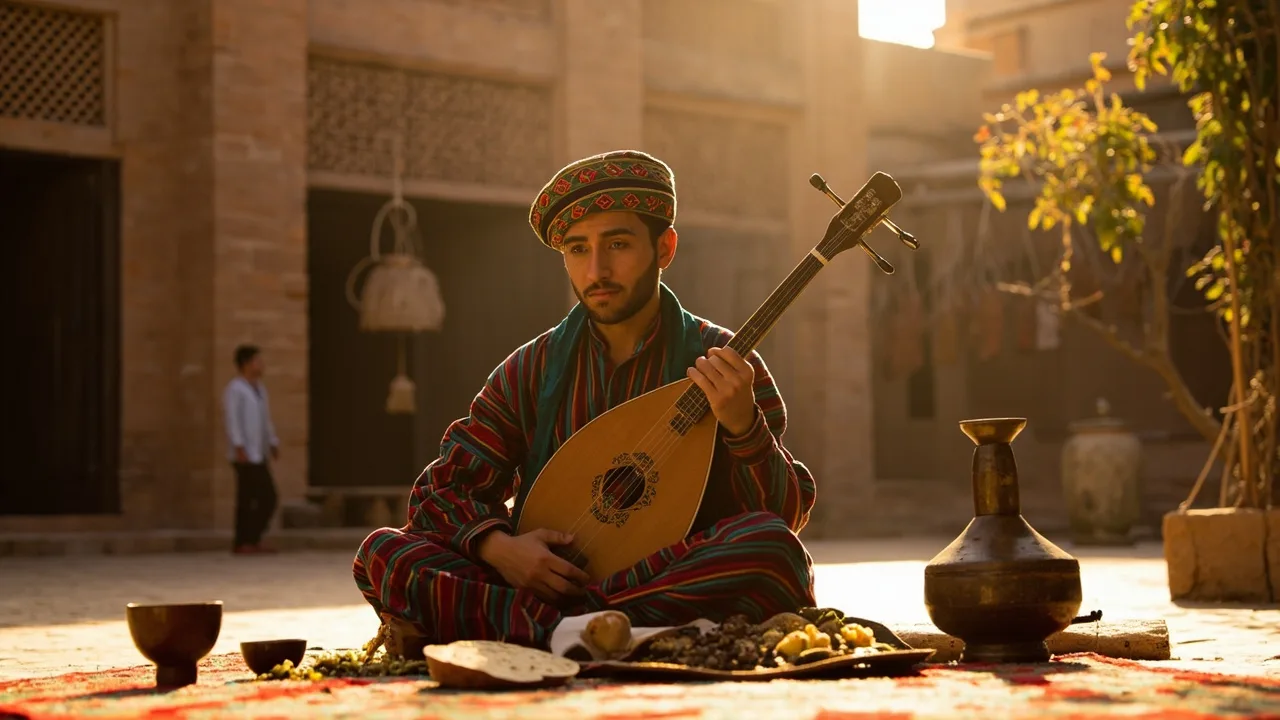
Zhang Qian had not achieved his mission. He had, however, opened the Chinese imperial imagination to a world it had barely known existed. The kingdoms of Central Asia, the Ferghana horses, the markets of the Indus, the trade goods that flowed through the oases of the Taklamakan — all of this was now on the map. Within a generation, Han China was sending embassies and trading missions all the way to the Parthian Empire and, by rumor, to the Roman world. The Silk Road — actually a network of multiple routes, not a single road — became a permanent feature of Eurasian commerce, and it remained so for fifteen centuries.
The Silk Road was not just a trade route. It was a vector for the spread of Buddhism into China, the introduction of new agricultural crops (grapes, alfalfa, pomegranates), the flow of metal and gemstone technology, and the slow diffusion of ideas about government, medicine, and astronomy. None of this would have happened at scale without Wu’s political will. The Zhang Qian expedition was the catalyst. For a tactile sense of what the Silk Road carried, the [product_affiliate: Han Dynasty silk fabric replica including brocade and embroidery patterns] is a beautiful way to see what the empire was selling.
Confucianism as State Ideology
The other big project of Wu’s reign was ideological. In 136 BCE, on the recommendation of the scholar Dong Zhongshu, Wu issued an imperial decree suppressing all the philosophical schools except Confucianism. Confucianism became the state ideology of the Han, and the position held — with one brief interruption — until the end of the imperial era in 1912.
The decision is often described as Wu “converting” to Confucianism, which is misleading. Wu had no personal interest in Confucian moral teachings. He famously said, in old age, that he had been misled in his youth by bad advisers and that, looking back, half of what he had done was the work of demons. What he wanted from Confucianism was a state ideology that would work — one that could provide trained officials, ritual frameworks, and a moral vocabulary for the empire he was building. The Legalist system that had powered the Qin was too brutal to sustain a dynasty. The Daoist passivity of the early Han was too soft to sustain an expansionist state. Confucianism was the middle path: serious about order, comfortable with hierarchy, and flexible enough to absorb a wide range of practical policies.
The policy, technically known as ju ren wei xiu (“dismiss the hundred, venerate the single”), was implemented through the establishment of the Imperial Academy (taixue), where promising young men were trained in the Confucian classics. Wu founded the academy with fifty students. By the end of the dynasty, it had over 30,000. The civil service examination system, in embryonic form, was beginning to take shape.
The cost of this was that Confucianism became, in practice, an official orthodoxy. Unorthodox thinkers were sidelined. Independent scholarship was discouraged. The state became a kind of religious establishment, with the emperor as both political sovereign and cosmic figure (the Son of Heaven, the pivot of the moral order). That synthesis of political and moral authority was, in many ways, the Han’s most enduring contribution to Chinese civilization — and it is one of the reasons that Chinese imperial government felt so different from its Roman, Persian, or Indian counterparts.
For readers who want to understand the Confucian state from the inside, the [product_affiliate: Analects of Confucius with Han Dynasty commentary translated] is the central text.
The Price of Empire
By the late 110s BCE, the empire Wu had built was showing serious strain. The fiscal reserves accumulated by his predecessors were gone. The tax burden on peasants was high and growing. The state monopolies on salt and iron had created a class of wealthy merchants and a class of desperate poor. The military was engaged on multiple fronts and the long supply lines were stretching the logistical system to its limits.
In 91 BCE, an incident occurred that has come to symbolize the late Wu reign: the Lianzhu Massacre. Crown Prince Liu Ju, alarmed by what he saw as a dangerous clique around his father (notably the sorcerer Jiang Chong and the general Li Guangli), attempted a coup that failed. The emperor ordered the suppression of the rebellion. Liu Ju was killed, along with his wife, his children, and an estimated tens of thousands of people associated with the incident. The emperor was devastated. He later issued an edict admitting that the whole episode had been a mistake. But the damage was done. The designated heir was dead. The succession had to be re-engineered. Two of Wu’s remaining sons died suspiciously. A grandson eventually succeeded as Emperor Zhao, but only after years of uncertainty and infighting.
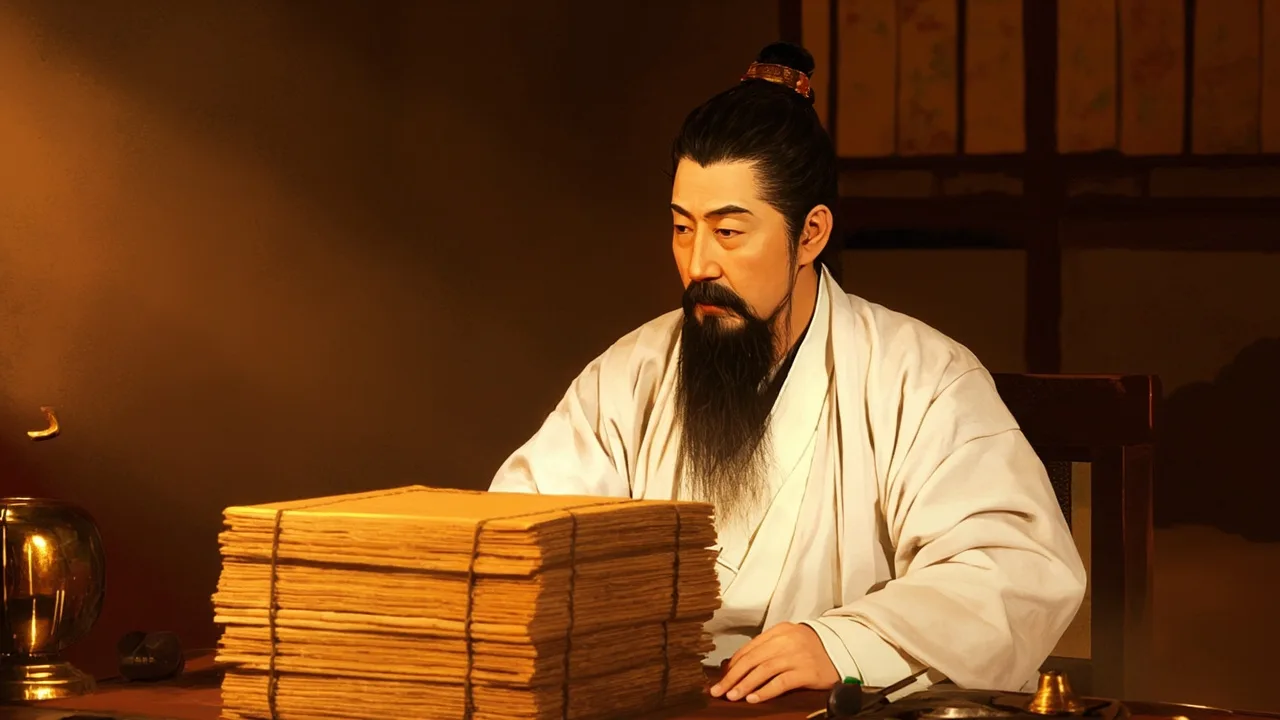
The massacre is the moment when the most famous criticism of Wu crystallized. Sima Qian, who served the emperor as Grand Historian, treated him harshly in the Shiji. The portrait that emerges is of a man who began as a brilliant administrator and ended as a paranoid despot, willing to kill his own family to preserve a system that had already begun to fail. Modern Chinese historians are more sympathetic. They note that the empire Wu left behind, whatever its problems, was the largest and most powerful in the world. They note that the institutional framework he created — the Imperial Academy, the state monopolies, the centralized bureaucracy — outlasted the dynasty by two thousand years. They note that the Silk Road, the Confucian ideology, and the basic administrative template of the Chinese state all date to his reign.
What Emperor Wu Left Behind
The full measure of Emperor Wu is hard to take. He was the most consequential Chinese ruler between Qin Shi Huang and the Tang emperors. He is also one of the most contradictory. He built a powerful state and bankrupted it. He opened China to the world and terrorized his own family. He made Confucianism the official ideology of the empire and was himself, by Confucian standards, a fairly bad Confucian. He ended the Xiongnu threat and created the conditions for the social crisis of the next generation.
What he did not do, and what is sometimes said of him, is finish the work of unification in a way that held. The Han Dynasty lasted another century and a half after his death, and then collapsed in 220 CE. But the imperial system that Wu had created — centralized bureaucracy, Confucian ideology, command economy on the margins, frontier expansion — became the operating system of every subsequent Chinese dynasty down to the Qing. The Roman Empire left administrative templates. The Han Empire under Wu left a state. For the cultural legacy, a [product_affiliate: Han Dynasty terracotta figurine replica set including warriors and horses] is a direct connection to the imperial projects of the period, and the [product_affiliate: Han Dynasty gold and silver artifact replicas including horse bit and buckle] gives you the refined metalwork that wealthy officials of Wu’s court would have worn.
That, more than any single battle, is the reason he matters. He did not just expand an empire. He defined the shape of the Chinese state for the next two thousand years. Every emperor who came after him, including those who hated him, was operating inside a system he had built.
You don’t have to admire Emperor Wu to be impressed by him. You just have to understand that almost every Chinese ruler who came afterward, in some way, was him.