Most of us have pulled an all-nighter at some point. Maybe you drank too much coffee, splashed water on your face, or took a cold shower to push through exhaustion. Nothing fun, but you got through it. Now imagine using a rope tied to the ceiling and a sharp awl pressed against your own leg — not once, but every single night. That was the reality for one ancient Chinese scholar whose extreme dedication to study gave us one of the most powerful idioms in the Chinese language.
悬梁刺股 (xuán liáng cì gǔ) literally means “hang from the beam and pierce the thigh.” It describes the most extreme measures imaginable to stay awake and keep studying. The idiom combines two separate stories from ancient China, each involving a scholar who found a brutally creative solution to the universal problem of falling asleep while trying to learn. Together, they represent the absolute peak of academic dedication — the kind of commitment that transforms ordinary people into extraordinary achievers.
The First Story: Su Qu (悬梁)
The “悬梁” part of the idiom comes from the story of Su Qu, who lived during the Warring States period (475–221 BCE). Su Qu was a scholar of the Zou (Zhou) school of philosophy — a tradition that emphasized rigorous debate, logical reasoning, and deep knowledge of ritual and governance. He was known for his intellectual abilities, but he had a problem: he struggled to stay awake while studying at night.
In Su Qu’s era, the imperial examination system that would later dominate Chinese education hadn’t been developed yet. Instead, scholars studied in private academies or under individual mentors, and much of the learning was done through reading, memorizing, and discussing texts that were expensive to produce and difficult to acquire. There were no smartphones, no energy drinks, no standing desks. There was just a scholar, a book, and the relentless pull of exhaustion after a long day of study.
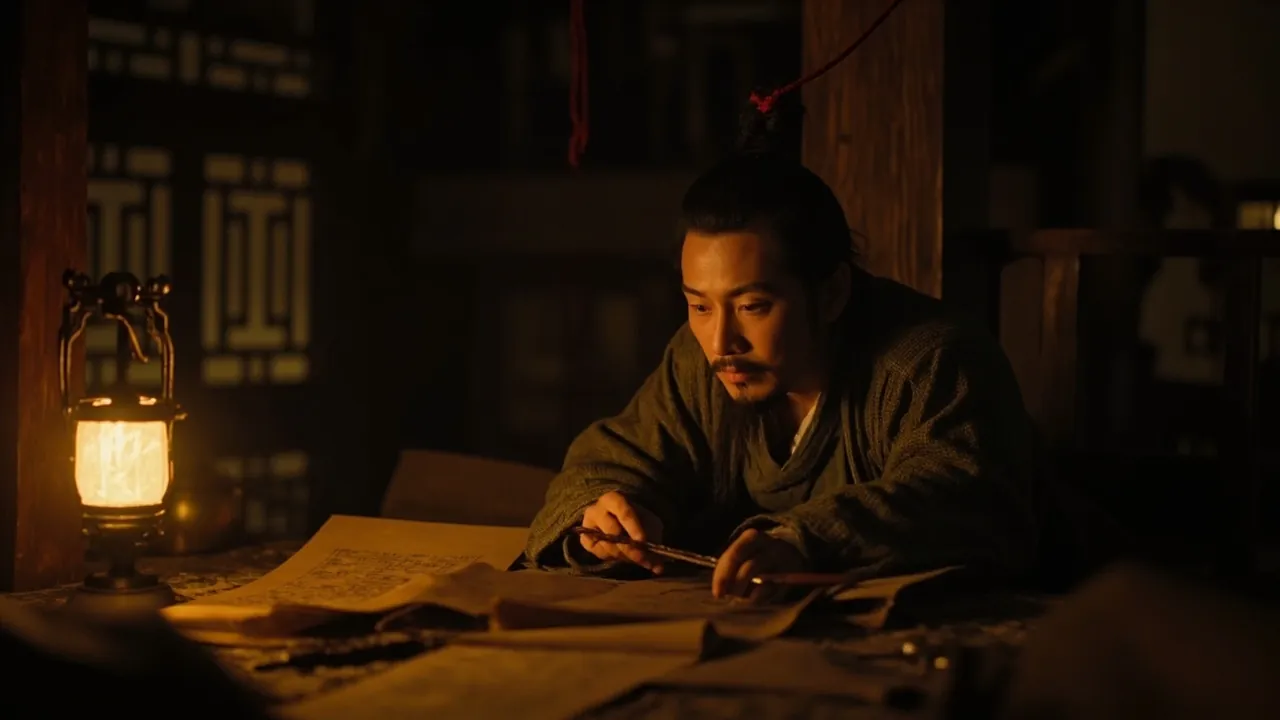
Su Qu tried everything to keep himself awake. Walking around helped, but eventually his legs gave out. Splashing cold water on his face worked briefly, but the numbness wore off quickly. He needed something more permanent, more dramatic. What he eventually did was tie a rope to the beam of his ceiling and attach the other end to his hair. Whenever he felt himself drifting toward sleep, his head would jerk upward as the slack ran out — literally hanging him from the ceiling by his hair. The sharp pain would jolt him back to alertness, and he’d return to his studies.
The image is almost comical when you picture it — a grown man dangling from his ceiling by his hair — but the intent was deadly serious. Su Qu was willing to endure genuine physical discomfort and humiliation to squeeze every possible hour of study into his life. He understood something that many people miss: excellence isn’t just about the hours you put in when you feel like it. It’s about finding ways to put in the hours even when you don’t.
Su Qu eventually became a renowned scholar and was invited to serve at the court of King Wei of Qi, one of the most powerful rulers of the Warring States period. He went on to hold important positions and became known for his eloquence and wisdom. But he never forgot the extremes he’d had to go through to get there, and the story of his rope-and-beam trick became legendary among future generations of students.
The Second Story: Su Min (刺股)
The “刺股” part of the idiom comes from a different scholar, Su Min, who lived during the Han Dynasty (206 BCE – 220 CE). Su Min was studying to become a government official through the imperial examination system, which by his era had become the primary path to social advancement in China. Passing the exams meant a life of prestige, power, and security. Failing meant returning to obscurity, often in poverty. The stakes couldn’t have been higher.
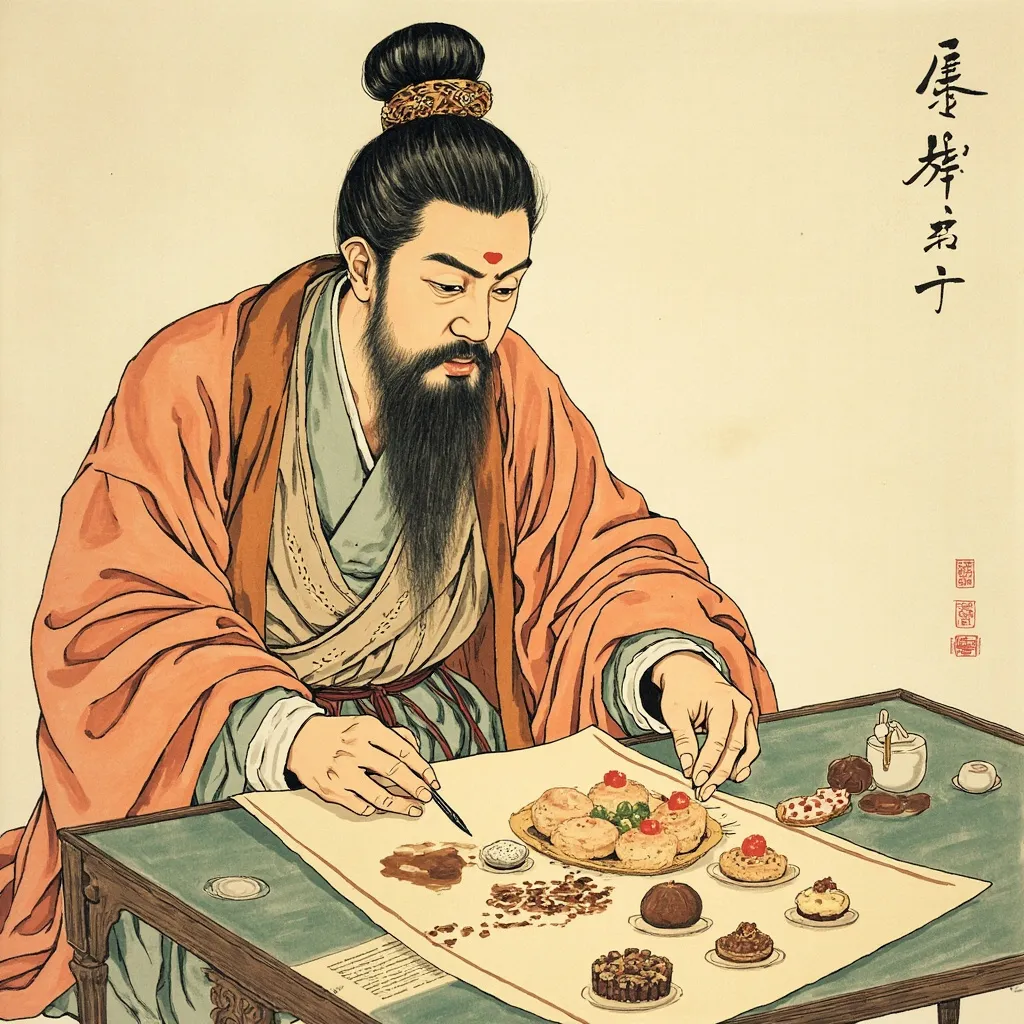
Like Su Qu, Su Min found himself fighting a nightly battle against sleep. But where Su Qu used his hair, Su Min chose a different approach: he kept an awl — a sharp, pointed tool used for boring holes in wood and leather — next to his desk. Whenever drowsiness threatened to overtake him, he would take the awl and drive it into his own thigh. The pain was immediate, sharp, and impossible to ignore. Sleep vanished instantly.
The method sounds brutal, and it was. But Su Min understood something important about the relationship between pain and alertness. The physiological response to sudden pain — the spike in adrenaline, the heightened senses, the immediate mental clarity — was exactly what he needed to get back to his books. The pain was a tool, a switch that he could flip whenever his body tried to betray him.
The critical difference between Su Min’s approach and simple masochism was purpose. Every time Su Min stabbed himself with the awl, he did so to serve a specific goal: he needed to be awake to read one more page, to memorize one more passage, to understand one more concept. The pain was in service of learning, not pain for its own sake. And it worked. Su Min eventually passed his examinations and rose to become a successful official.
The two stories complement each other perfectly. Su Qu’s rope-and-beam method relied on jerking himself awake through the force of gravity; Su Min’s awl method relied on the body’s own pain response. One was dramatic and slightly absurd; the other was coldly practical. But both represented the same underlying philosophy: if you want to achieve something extraordinary, you cannot let your own body’s limitations define the boundaries of your effort.
Why Pain Became a Metaphor for Study
The two Su stories became linked over time because they shared a fundamental truth about human achievement. The idiom 悬梁刺股 captures something that many high achievers recognize: sustained excellence requires sustained sacrifice. The easy path almost never leads to remarkable results.
This was particularly understood in the context of the imperial examination system, which was brutally competitive. During the height of the system in the Ming and Qing dynasties, hundreds of thousands of candidates would compete for a few thousand positions each year. The exams tested not just knowledge but character — the ability to endure hardship, to delay gratification, to maintain focus under pressure. The scholars who created the idiom understood that the pain they endured in their youth was training for the larger pains of governance, diplomacy, and leadership that awaited them in their careers.
The idiom also served as a warning. Pain for its own sake is just masochism. The key to Su Qu and Su Min’s methods was that the pain was purposeful — it was always in service of a specific, achievable goal. Su Qu didn’t just enjoy dangling from his ceiling; he did it because he had texts to read and needed to stay awake to read them. Su Min didn’t stab himself out of some twisted love of pain; he did it because he had a future to build and sleep was in the way. The discipline mattered because the goal mattered.
The Modern Take: Hard Work vs. Smart Work
Today, 悬梁刺股 is used somewhat cautiously. Most people recognize the dedication it represents, but there’s also an awareness that the specific methods — hanging from ceilings, stabbing yourself with awls — aren’t exactly healthy role models. The idiom is often invoked when someone works extremely hard, sometimes to the point of self-destruction, but the tone is usually a mix of admiration and concern.
In contemporary Chinese usage, the idiom appears in contexts ranging from motivational speeches to casual conversations about a friend who’s “studying too hard.” It’s commonly used in reference to students preparing for important exams — the gaokao (college entrance exam) in particular — where the pressure is intense and the hours are long. Parents might tell their children about Su Qu and Su Min not to encourage them to literally stab themselves, but to emphasize that success requires sacrifice.
The more interesting modern conversation is about the balance between hard work and smart work. Su Qu and Su Min lived in an era without electric lighting, without coffee shops, without any of the tools modern students have to extend their study hours. The pain they endured was partly a product of their circumstances. A modern student with a laptop and unlimited coffee has fewer excuses for falling asleep — but also has tools that ancient scholars couldn’t have imagined.
That said, the underlying principle remains relevant. Whatever tools you have, the willingness to push past comfort is part of what separates good from great. The rope and the awl were Su Qu and Su Min’s tools; the principle they embody is timeless.
What 悬梁刺股 Teaches Us
The idiom offers several lessons that transcend its ancient origins.
First, sacrifice must be purposeful. Su Qu and Su Min didn’t suffer for suffering’s sake. They suffered to serve a specific goal that they had chosen deliberately and that they believed was worth the cost. Before you embrace hardship, make sure the hardship is in service of something that actually matters to you.
Second, comfort is the enemy of growth. This isn’t a comfortable message, but it’s a true one. The moments when you’re growing the most are almost never the moments when you’re comfortable. If everything in your life feels easy and manageable, you might be coasting rather than growing.
Third, the stakes shape the effort. Su Qu and Su Min worked as hard as they did because the stakes were genuinely high. Passing the imperial examinations meant escaping poverty and gaining power; failing meant a lifetime of obscurity. When the stakes are real, people find resources within themselves they didn’t know existed. When the stakes are low, it’s easy to convince yourself that tonight’s study session can wait until tomorrow.
Finally, sustainable excellence requires sustainable habits. Here’s where the ancient scholars’ methods fall short: what they did was extreme and effective in the short term, but it wasn’t sustainable. Su Qu hanging from his ceiling every night for years would have done some damage to his scalp at minimum. Su Min’s repeated self-stabbing carried real risk of infection. The principle of pushing past comfort is valuable; the specific methods of extreme pain are not the only way to do it.
The Legacy of Two Ancient Scholars
The two scholars whose stories make up 悬梁刺股 never met — they lived centuries apart. But together, their stories form one of the most recognizable idioms in the Chinese language, a phrase that instantly communicates the idea of extreme academic dedication.
Su Qu’s rope-and-beam trick became a symbol of the lengths to which a scholar would go to master his craft. Su Min’s awl became a symbol of cold, practical determination — the willingness to do what was necessary, regardless of how unpleasant it was. Together, they represent the ideal of the scholar who lets nothing stand between himself and his studies.
The idiom has outlasted the specific methods it describes. Today, when someone calls you a 悬梁刺股 type of person, they’re paying you a compliment — acknowledging that you take your work seriously enough to make sacrifices for it. The rope and the awl are long gone, but the principle they embodied lives on in every student who chooses to study late into the night when they could be sleeping, in every professional who puts in the extra hour when they could clock out, in every person who decides that the goal is worth the cost of comfort.
That’s a principle that doesn’t need a beam or an awl to work. It just needs a decision — made fresh every day — that tonight, the work comes first.