There’s an old Chinese expression that goes: if you want to be like the ancient scholars, you have to hang your head from the ceiling beam and stab your thigh with an awl. Most people today would read that and think it sounds like a scene from a horror film. But in ancient China, it was a badge of honor — a description of the lengths to which serious students were expected to go in pursuit of mastery.
头悬梁锥刺股 (tóu xuán liáng zhuī cì gǔ) is a more emphatic version of the better-known idiom 悬梁刺股. Where the shorter version drops the 头 and uses 刺 for the awl, this fuller version specifies 头 (head) and uses 锥 (awl) — a slightly larger, more deliberately painful tool. The effect is the same, but the emphasis is different: this is the idiom at maximum intensity, a phrase designed to leave no doubt about the suffering involved in serious study.
The two idioms share the same origin stories. But 头悬梁锥刺股 is used when you want to emphasize just how extreme — how relentless, how merciless — the pursuit of knowledge was expected to be. This is not study as casual hobby. This is study as war against your own body’s limitations.
Why the Head Gets Special Emphasis
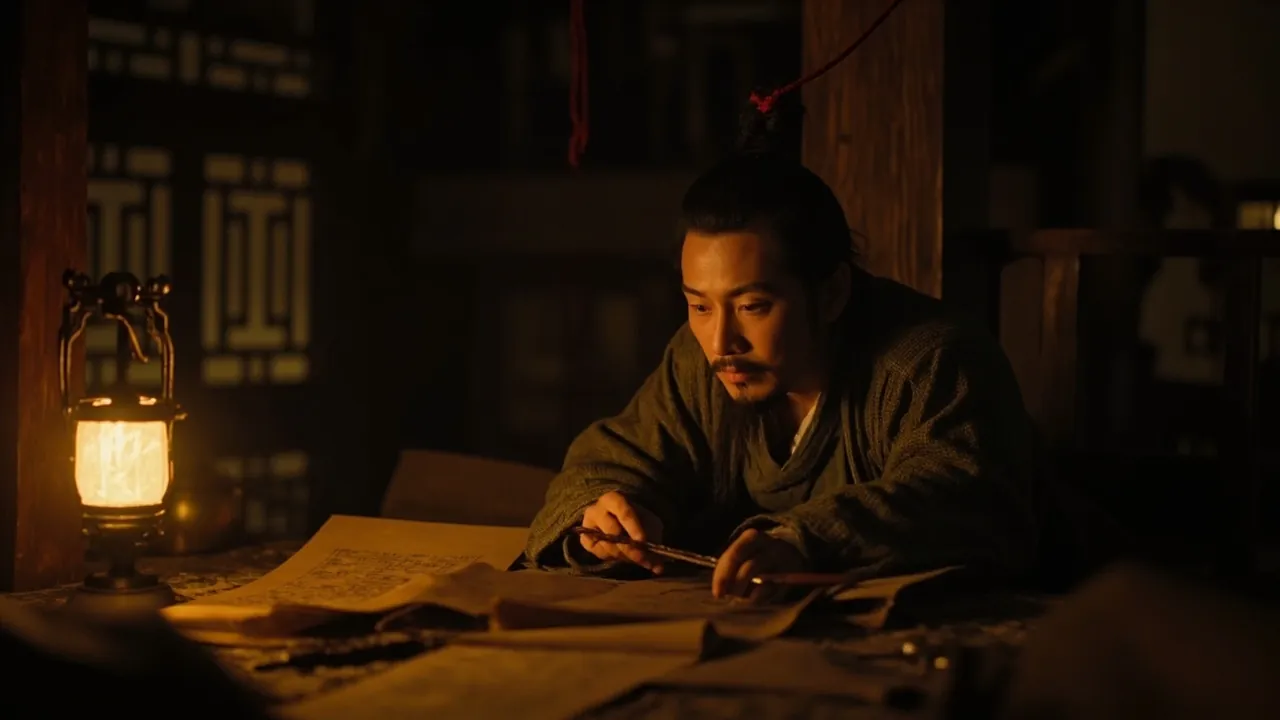
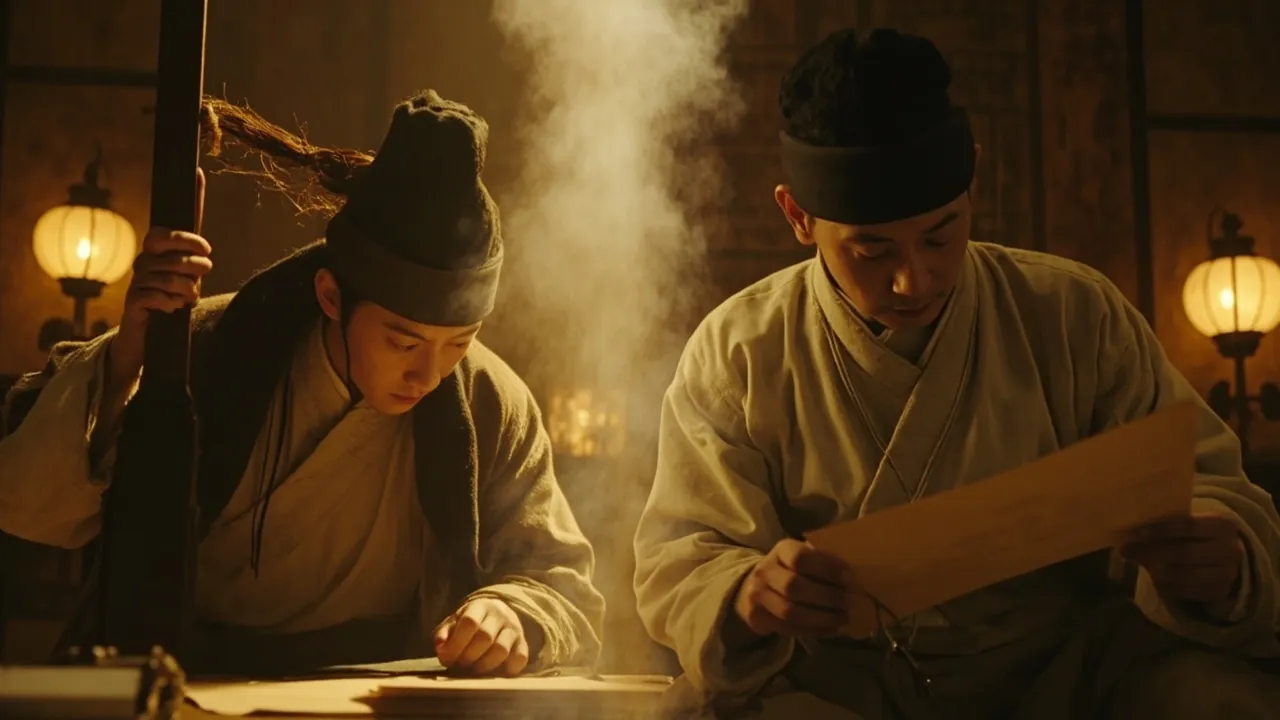
The original story behind 悬梁 comes from Su Qu of the Warring States period, who tied a rope to the ceiling beam and attached the other end to his hair so that whenever he fell asleep while studying, the tug would wake him up. The phrase 头悬梁 adds the character 头 (head) to make it explicit: your head hangs from the beam. It’s a slightly more vivid image than just “hanging from the beam” — it specifies the part of the body being used as the anchor.
The choice of 头 (head) also carries symbolic weight. In ancient Chinese thought, the head was associated with the mind, with reason, with the qualities that separated humans from animals. Hanging your head from a beam — literally suspending the seat of your consciousness in midair — is a powerful image of self-discipline imposed on the most essential part of the self. You’re not punishing your foot or your hand. You’re punishing your head, the place where thought happens.
The Awl Versus the General Piercing
The second part of the idiom uses 锥 (awl) rather than just 刺 (pierce/sting). The awl is a specific tool — a metal spike with a sharp point, used for boring holes in wood, leather, and other materials. It’s not a needle or a pin; it’s a serious tool that requires genuine force to use. When Su Min pressed an awl into his own thigh to stay awake, he wasn’t making a tiny prick. He was driving a metal spike into his flesh.
The choice of 锥 over a generic “pierce” verb is deliberate. It specifies the exact instrument of pain, making the story more concrete and more disturbing. An awl is what craftsmen used. Su Min was treating his own body like material to be worked — drilling into it whenever it failed to cooperate.
The thigh (股) is also significant. The thigh is a large muscle mass — hitting it with an awl would produce severe pain but wouldn’t cause the kind of bleeding or injury that striking a major artery or organ might. It’s pain without catastrophic damage, a calculated trade-off: maximum alertness for minimum permanent harm.
The Combined Image: Total War Against Sleep
When you put the two halves together, 头悬梁锥刺股 paints a picture of a scholar at war with his own body. His head dangles from the ceiling, jerking him awake whenever exhaustion tries to pull him under. In his hand, he holds an awl, ready to drive it into his thigh the moment his focus wavers. He is simultaneously punishing his body for needing rest and engineering systems to prevent that need from interrupting his work.
This is a picture of something almost superhuman. Normal people sleep when they’re tired. The scholars who embody 头悬梁锥刺股 refused to accept this limitation. They treated sleep not as a natural biological need but as an obstacle to be overcome — and they overcame it through violence against themselves.
The idiom captures something that high achievers in any era will recognize: the sense that your body is an adversary that must be constantly managed, coerced, or forced into compliance. The Roman orator Cicero was said to practice speeches in front of a mirror, sometimes for hours without stopping. Benjamin Franklin famously structured his days around rigorous self-discipline schedules. The specifics vary, but the underlying impulse is the same: the refusal to let comfort define the boundaries of effort.
The Deeper Logic: Why Pain Produces Alertness
There’s a physiological logic behind what Su Min was doing, even if the specific method seems extreme. The human body’s response to sudden pain involves a cascade of neurochemical events: adrenaline surges, cortisol spikes, the fight-or-flight system activates, and mental alertness increases dramatically. Pain is one of the most powerful anti-sleep mechanisms available. When your body detects genuine danger, sleep becomes physiologically impossible until the threat is resolved.
Su Min was essentially triggering this response artificially, on demand. He couldn’t control when he felt sleepy any more than a normal person could, but he could control his response to that sleepiness. By creating a threat (the awl), he switched his nervous system from “rest and recover” mode to “danger and survive” mode. The drowsiness vanished instantly.
The psychological dimension was equally important. Pain focuses attention like almost nothing else. When you’re in pain, you can’t think about anything except the pain — and you can’t think about sleep when you’re thinking about pain. Su Min was using pain as a override switch for his entire nervous system, a way of seizing control of his consciousness from the part of his brain that wanted rest.
When Determination Becomes Self-Destruction
Here’s where we need to acknowledge the tension at the heart of 头悬梁锥刺股. The dedication these scholars showed is genuinely admirable in some ways. The commitment to learning, the refusal to let obstacles — even obstacles built into your own body — define the limits of your achievement, is a quality that produces extraordinary results. Many of history’s greatest minds achieved what they did precisely because they were willing to work when working was hard.
But there’s a dark side to this kind of determination. The scholars who stabbed themselves with awls were, by modern standards, engaging in serious self-harm. The methods that enabled their academic achievements also damaged their bodies — and not just in minor ways. Repeated trauma to the thigh with a metal spike would have caused scarring, nerve damage, and potential infection. Su Min was essentially sacrificing his physical health for his intellectual development.
This tension is one that modern psychology and medicine have grappled with extensively. The concept of “maladaptive coping” describes behaviors that provide short-term benefits (staying awake, achieving goals) while causing long-term damage. The student who pulls an all-nighter to pass an exam might succeed in the short term but damage their sleep architecture in ways that impair future performance. The professional who works 80-hour weeks for years might achieve extraordinary success before burning out catastrophically.
The scholars who embody 头悬梁锥刺股 were, in their own way, early practitioners of this kind of short-term sacrifice for long-term gain. Whether the trade-off was worth it depends on what they achieved and what it cost them — a calculation that varies for each individual.
Modern Alternatives to Ancient Methods
One of the reasons 头悬梁锥刺股 feels so alien to modern sensibilities is that we have alternatives that ancient scholars didn’t. Caffeine provides a fraction of the alertness boost that pain does, without the tissue damage. Alarm clocks do the job that the rope-and-beam trick was attempting, without the daily scalp trauma. White noise machines, standing desks, cold water on the face, exercise breaks — these are all tools for managing the sleep drive that don’t require permanent self-harm.
But the underlying principle survives. Modern high achievers still talk about the need to “push through” exhaustion, to “find a way” when circumstances are difficult, to refuse the path of least resistance. The specific tools have changed; the fundamental disposition has not.
The question each person has to answer is where to draw the line between productive determination and self-destructive obsession. The scholars who embodied 头悬梁锥刺股 were at the extreme end of that spectrum — and it’s worth asking whether the results they achieved required the extreme methods, or whether they simply didn’t know any other way.
The Lasting Resonance of Extreme Dedication
Despite its extremes, 头悬梁锥刺股 remains a living idiom in Chinese — a phrase that’s used, in various forms, to describe anyone who pursues knowledge or achievement with a willingness to sacrifice comfort and even safety for the sake of the goal. The specific methods have become less culturally relevant (fewer people are literally stabbing themselves with awls to study), but the underlying value — the prioritization of serious learning over passive comfort — retains its power.
The idiom serves as a reminder that the knowledge we take for granted — the books on our shelves, the skills we’ve mastered, the understanding we’ve built — was often purchased at the price of extraordinary effort by people who refused to accept the limitations others accepted without question. Whether or not we choose to emulate their specific methods, there’s something in their example worth remembering: the recognition that some things are worth staying awake for.