History of Chinese Ceramics: From Neolithic Pottery to Imperial Porcelain
There’s something almost magical about holding a piece of Chinese porcelain. The weight feels right in your hand—not too heavy, not too light. The surface is impossibly smooth, almost glassy, yet warm to the touch. And if you look closely at the glaze, you can see subtle variations in color, tiny cracks that form the characteristic “ice crack” pattern, a depth that seems to go beyond the mere surface.
Chinese ceramics have been admired and collected for thousands of years. Emperors competed to possess the finest pieces. Foreign dignitaries requested them as diplomatic gifts. Pirates sank ships trying to capture them. Today, antique Chinese ceramics sell for millions at auction, and museum collections dedicated to Chinese pottery rank among the most visited galleries in the world.
But this remarkable artistic tradition didn’t appear overnight. It evolved over millennia, with each generation of potters building on the achievements of those who came before, adding new techniques, new glazes, new forms, and new aesthetic sensibilities. The story of Chinese ceramics is, in many ways, the story of Chinese civilization itself.
The Ancient Foundations: Neolithic Pottery
Long before China produced the exquisite porcelain that would eventually grace European dining tables, Chinese craftspeople were creating pottery that demonstrated remarkable technical skill and artistic sensibility.
Archaeologists have found pottery fragments at sites throughout China dating back over 20,000 years, making China one of the earliest centers of ceramic production in the world. But it was during the Neolithic period, around 7000-5000 BC, that Chinese pottery truly came into its own.
The most famous early Chinese pottery comes from the Yangshao culture, which flourished along the Yellow River around 5000-3000 BC. Yangshao potters developed a distinctive red-brown pottery with geometric patterns painted in black. These painted ceramics, found in large quantities at archaeological sites, feature intricate designs of spirals, triangles, and stylized figures that suggest an early symbolic language.
Perhaps even more impressive were the black pottery traditions of the Longshan culture, which developed around 3000-1900 BC. Longshan pottery was thin-walled, precisely made, and often decorated with delicate carved or incised designs. The famous “black egg-shell” pottery of the Late Longshan period achieved walls as thin as 2-3 millimeters, demonstrating technical skill that wouldn’t be matched for thousands of years.
These early potters worked without wheels, shaping their vessels by coiling ropes of clay and then smoothing them by hand. They fired their pieces in simple kilns dug into the ground, achieving temperatures that, while impressive by contemporary standards, fell far short of the high-fire temperatures needed for true porcelain.
The Rise of Stoneware: The Han Through Tang Dynasties
True porcelain—high-fired, translucent, white-bodied ceramic—wouldn’t appear until much later. In the meantime, Chinese potters developed stoneware, a dense, high-fired ceramic that represented a significant technical advancement.
During the Han Dynasty (206 BC - 220 AD), Chinese potters began producing glazed stoneware in large quantities. The glazes, typically greenish due to the presence of iron, created a glassy surface that was both beautiful and practical—it sealed the pottery, making it waterproof and easy to clean. This glazed stoneware, ancestor of the later celadon tradition, became one of China’s most important ceramic exports, prized throughout East Asia and eventually reaching the Middle East.
The Tang Dynasty (618-907 AD) marked a golden age for Chinese ceramics. Tang potters experimented with new forms, new glazes, and new decorative techniques. They developed the famous sancai, or “three-color,” glazing technique, which created stunning effects by combining amber, green, and brown glazes in swirling patterns. Sancai vessels, often shaped as horses or figures, became iconic of the Tang aesthetic.
Tang ceramics also reflect China’s cosmopolitan nature during this period of cultural openness. Influences from Persia, Central Asia, and even Rome appeared in ceramic forms and decorative motifs. Foreign merchants in Chinese port cities created demand for ceramics with unfamiliar shapes and designs, and Chinese potters obliged with increasingly diverse products.
The Tang period also saw the development of early porcelain—high-fired whiteware that approached true porcelain in its translucency and whiteness. The famous “邢窑” (Xing kilns) in Hebei Province produced white porcelain of remarkable quality, and archaeological finds suggest these pieces were already being exported to foreign markets during the Tang Dynasty.
The Age of Refinement: Song Dynasty Ceramics
If the Tang Dynasty represented Chinese ceramics coming of age, the Song Dynasty (960-1279 AD) was its period of greatest refinement. Song ceramics are often considered the pinnacle of Chinese ceramic achievement—subtle, refined, and deeply expressive in ways that later periods would never quite match.
The Song period saw the development of several distinct regional kiln traditions, each producing characteristic wares. The Ru kilns, located near Kaifeng, produced what many consider the finest Song ceramics—celadon pieces with a distinctive pale green glaze that seemed to glow from within. Ru ware is incredibly rare today, with only about sixty-seven known surviving pieces, most of which are in Taiwanese collections.
The Guan kilns, which served the imperial court, produced official wares with beautiful jade-like glazes that often displayed crackle patterns. These imperial ceramics were not sold commercially; they were produced exclusively for the emperor and his court, making surviving examples exceptionally valuable.
The Jun kilns, located in Henan Province, produced powerful blue-green glazed bowls and vases that showed a more robust, less refined aesthetic than the court-focused Ru and Guan wares. The glaze often featured “flambé” effects—runs and pools of color that created dramatic, unpredictable patterns.
Perhaps most distinctive were the Ding kilns, which produced white porcelain of extraordinary quality. Ding ware is prized for its pure white body and subtle, elegant forms. The famous “egg-shell” porcelain of the Ding kilns achieved walls of remarkable thinness, sometimes as thin as one millimeter. These pieces often featured incised or carved decoration visible through the translucent glaze.
Song ceramics also included the distinctive “ge” ware, which featured distinctive crackle patterns created through a deliberate controlled cooling process. The thin black lines of the crackle against a milky glaze created an effect that was both visually striking and technically demanding to achieve.
What distinguished Song ceramics from earlier and later periods was their aesthetic restraint. Where Tang ceramics often featured bold, colorful glazes and sculptural forms, Song potters preferred subtle colors, quiet forms, and surfaces that rewarded close, careful examination. The Song aesthetic emphasized understatement, refinement, and a kind of spiritual calm that reflected the philosophical concerns of the literati class.
The Blue and White Revolution: Ming Dynasty
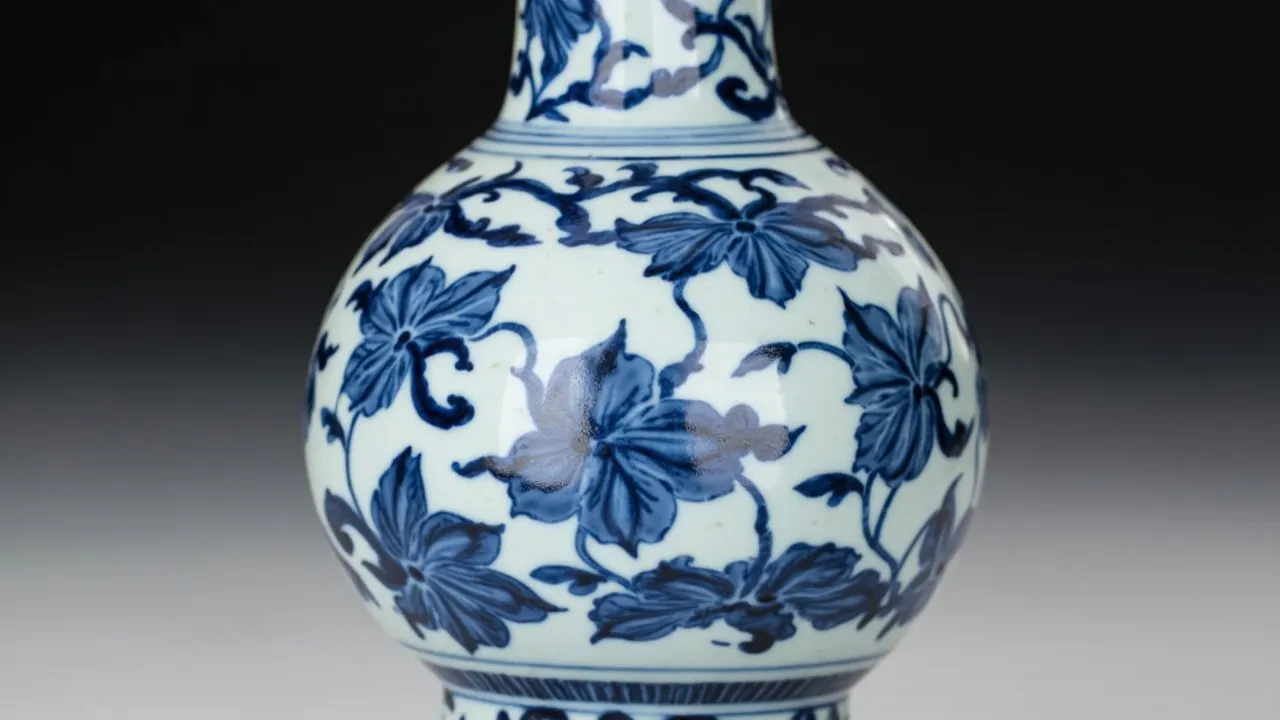
The Ming Dynasty (1368-1644) brought a revolution in Chinese ceramics that would have lasting impact worldwide—the development and perfection of blue and white porcelain.
Blue and white porcelain was not a Chinese invention—it was inspired by imported Persian cobalt blue pigments and Middle Eastern forms and designs that reached China through the trade networks of the Mongol period. But Chinese potters quickly made the technique their own, transforming imported ideas into something distinctly Chinese.
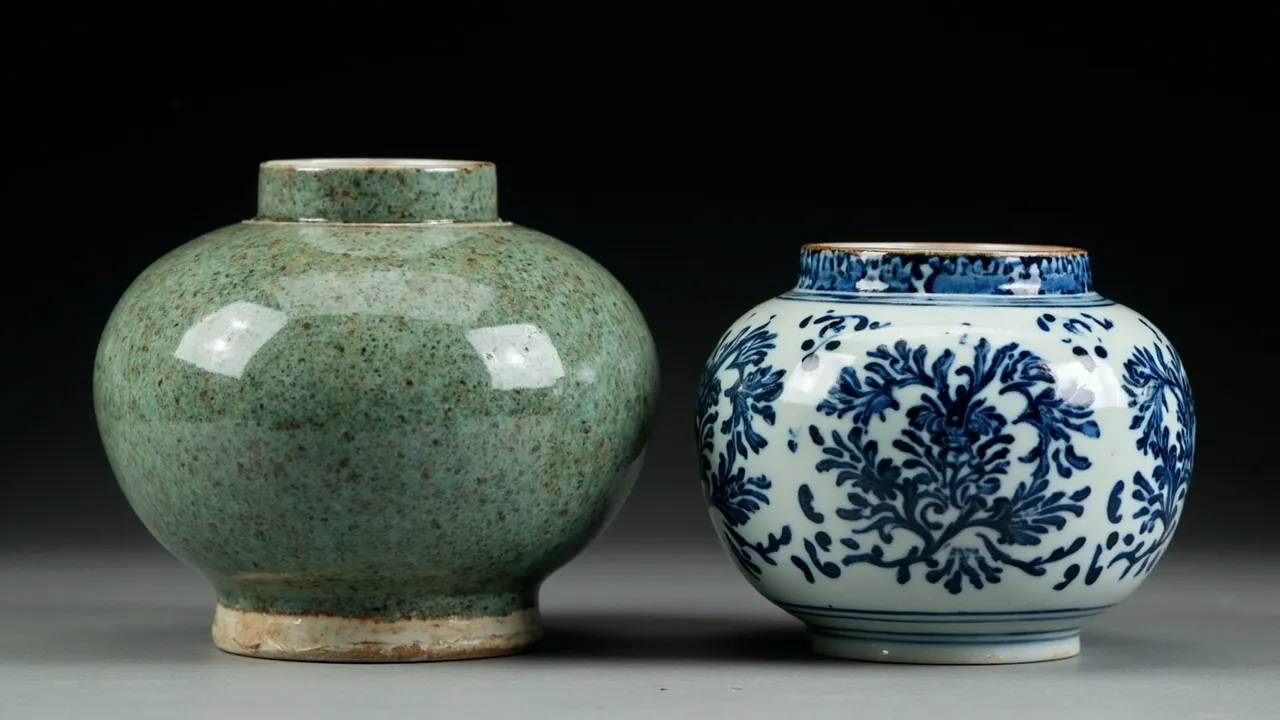
The key technical breakthrough was the use of cobalt blue pigment painted on white porcelain bodies, covered with a transparent glaze, and fired at temperatures high enough to fuse the glaze into a glassy, protective surface. The cobalt, imported primarily from Persia (and later from China itself after deposits were discovered in Jiangxi), produced a vivid blue color that contrasted beautifully with the white porcelain body.
Ming blue and white porcelain quickly became the most famous Chinese ceramic style in the world. The distinctive cobalt-blue on white design became synonymous with Chinese export ceramics, filling the holds of ships bound for Southeast Asia, the Middle East, and eventually Europe. The Portuguese, Dutch, and English trading companies all competed to acquire Chinese blue and white porcelain for European markets.
Different periods of Ming production are distinguished by their characteristic styles. Early Ming pieces, from the Yongle and Xuande reigns (1403-1435), featured bold designs with dense decoration. The cobalt used during these reigns was often imported from the Middle East and produced a deep, somewhat purplish blue. The middle Ming period saw a more restrained aesthetic emerge, with cleaner compositions and more careful attention to balance.
The late Ming, particularly the Wanli reign (1573-1620), saw a dramatic increase in production for export, often with designs created specifically for foreign markets. European customers commissioned pieces with Western patterns and religious motifs, creating hybrid works that blended Chinese technique with European aesthetics.
Ming potters also developed other notable ceramic types. The colorful wucai, or “five-color,” technique combined underglaze blue with overglaze enamels for spectacular polychrome effects. The famous “chicken cups”—small wine cups painted with roosters and hens amid flowers—exemplify the Ming taste for intimate, naturalistic scenes.
The Culmination: Qing Dynasty Perfection
The Qing Dynasty (1644-1912) represented both the culmination of Chinese ceramic achievement and the beginning of its transformation into a global commodity. Qing emperors, particularly the Kangxi Emperor (reigned 1661-1722), took a personal interest in ceramic production, and imperial kilns reached unprecedented levels of technical sophistication.
Qing potters perfected techniques that had been developing for centuries while also introducing new innovations. The famille rose palette—enamels with a pinkish tone created using gold chloride—produced colors of extraordinary range and subtlety. These new enamels allowed for softer, more naturalistic color gradations than the bolder colors of earlier periods.
The Kangxi period saw the production of some of the most technically accomplished Chinese ceramics ever made. Pieces featured perfectly matched colors, precisely executed designs, and flawless glaze surfaces. The imperial kilns at Jingdezhen, which had been producing ceramics for over a thousand years, reached their peak of production during this period. Kangxi-era ceramics include the famous “flambé” glazes with their dramatic color variations, as well as highly detailed painted pieces featuring complex scenes.
The Yongzheng Emperor (1723-1735) continued the tradition of excellence while introducing more restrained, elegant designs. Yongzheng ceramics are often characterized by their delicate colors and refined compositions. The period also saw the production of “garniture” sets—matching vases, jars, and decorative objects designed to be displayed together on mantelpieces or shelves.
The Qianlong Emperor (1736-1795), perhaps the greatest patron of the arts in Chinese history, oversaw a period of tremendous stylistic diversity. Qianlong ceramics ranged from faithful reproductions of earlier styles to innovative new designs that blended Chinese and Western influences. The emperor was personally involved in ceramic production, and the imperial kilns produced numerous experimental pieces for his approval.
Qing dynasty also saw the rise of “Chinese export porcelain”—ceramics specifically designed for foreign markets, particularly Europe and America. These pieces often featured Western shapes, European decorative motifs, and even portraits and scenes requested by foreign customers. The combination of Chinese technical expertise with Western design sensibilities created a unique hybrid tradition.
The Enduring Legacy
Today, Chinese ceramics occupy a unique position in the world of art and collecting. Museum collections devoted to Chinese pottery rank among the most visited in major institutions worldwide. Auction houses regularly sell antique Chinese ceramics for millions of dollars. And contemporary Chinese ceramic artists continue to draw on centuries of tradition while pushing the medium in new directions.
The enduring appeal of Chinese ceramics lies partly in their remarkable technical achievement—the high-fired porcelain, the sophisticated glazes, the precise forms. But it also lies in the depth of cultural meaning embedded in these objects. Chinese ceramics reflect philosophical ideals of harmony, balance, and refinement. They encode symbolic meanings in their decorative motifs—dragons for power, peonies for wealth, bamboo for integrity. They represent not just a craft tradition but a civilization’s aesthetic values.
For collectors, Chinese ceramics offer an entry point into centuries of history. Each piece tells a story—of the potters who shaped it, the kiln that fired it, the hands that decorated it, and the owners who treasured it. Whether you’re examining a humble Neolithic pottery shard or a magnificent Qing imperial vase, you’re touching a direct connection to Chinese history.