Huaiyang Cuisine: China’s Most Refined Flavor
If Shandong cuisine is the grandfather of Chinese cooking and Sichuan its fiery showman, then Huaiyang cuisine is the elegant aristocrat—the cuisine of scholars, emperors, and anyone who appreciates the art of subtle perfection. Known as淮扬菜 (Huái yáng cài) in Chinese, this refined cooking style comes from the region around the Huai River and Yangtze River in eastern China, primarily centered in Yangzhou,淮阴 (Huaiyin), and other cities in Jiangsu Province. For centuries, it has been the cuisine of choice for Chinese imperial courts, and today it remains the gold standard for technical precision and delicate flavor in Chinese gastronomy.
There’s a reason Huaiyang cuisine is often called the “queen of Chinese cuisines.” Where other regional styles might wow you with bold spices or complex sauces, Huaiyang cooking seduces you with subtlety. Each dish is a masterwork of balance—never too salty, never too sweet, never overwhelming in any direction. The flavors are clean, the textures refined, and the presentation beautiful enough to belong in an art gallery. Learning to appreciate Huaiyang cuisine is learning to appreciate a different kind of delicious: one that whispers rather than shouts, that rewards patience and attention with revelations of delicate complexity.
The Art of Delicate Simplicity
The hallmark of Huaiyang cuisine is its pursuit of what Chinese chefs call “delicate and light” (清淡, qīng dàn). This doesn’t mean bland or boring—it means flavors that are pure, clean, and perfectly balanced. Achieving this simplicity is actually extraordinarily difficult, because there’s nowhere to hide. If a Sichuan dish has too much chili, the other flavors can compensate. If a Huaiyang dish is off, there’s nothing to mask it.
The key to this delicate flavor profile lies in the ingredients and techniques. Huaiyang cooking emphasizes freshness above all else—vegetables must be newly harvested, fish must be swimming, meats must be at their peak. The cooking techniques themselves are chosen to preserve rather than transform: steaming rather than frying, quick stir-frying over high heat rather than long braising, light braising that adds flavor without heaviness.
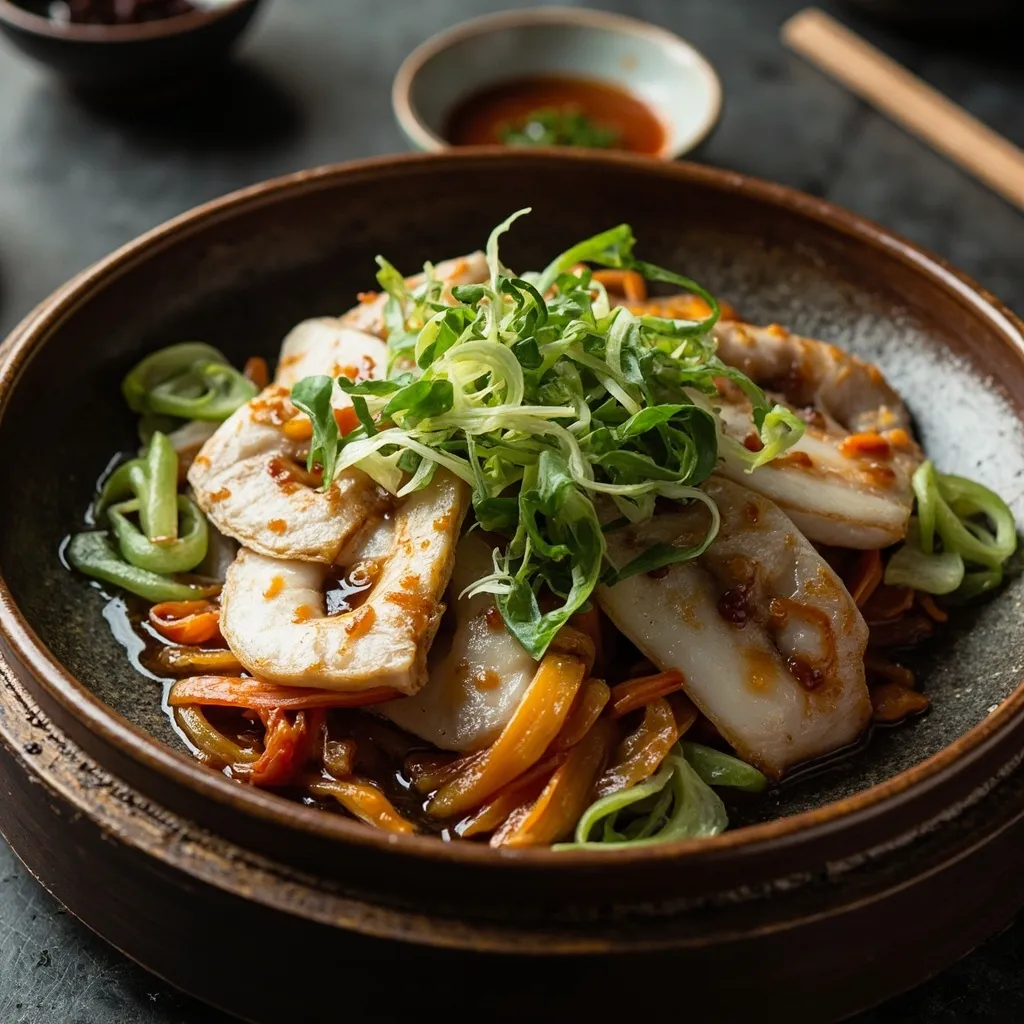
Steaming is the quintessential Huaiyang technique. A perfect steamed fish (清蒸鱼, qīng zhēng yú) is considered the ultimate test of a Huaiyang chef’s skill. The fish must be absolutely fresh—usually sea bass or Chinese perch—and it must be cooked just until the flesh turns opaque and flakes easily. This means knowing exactly how long to steam based on the fish’s size and the temperature of your ingredients. A minute too long and the fish becomes dry and overcooked. A minute too short and it’s raw in the center. The best Huaiyang chefs can judge this by the smell alone, without even needing to check.
Knife Skills That Border on Art
If there’s one thing that truly distinguishes Huaiyang cuisine, it’s the extraordinary knife work. Chinese chefs in general are known for their precise cutting techniques, but Huaiyang cooks take this to another level entirely. The “three cuts and three slicing” (三切三片) technique is legendary—experts can transform a single block of tofu into thousands of fine strands that look like angel hair pasta, or carve a melon into a hollowed-out container with intricately carved decorations.
The most famous demonstration of Huaiyang knife skills is the whipped egg white dish (芙蓉, fú róng). Using only a Chinese cleaver, Huaiyang chefs can beat egg whites into a frothy, cloud-like consistency—without any mechanical assistance. They achieve this by rapidly tapping the cleaver against the egg whites, thousands of times, creating air bubbles that transform the liquid into a light, fluffy mass. This technique takes years to master and represents the pinnacle of what human hands can achieve with simple tools.
This obsession with knife skills extends to every aspect of food preparation. Vegetables are cut to exact specifications—not roughly chopped but precisely measured, so they cook evenly and look beautiful. Meat is trimmed and portioned with meticulous care. Even the way ingredients are arranged on the plate follows strict aesthetic principles, with colors and shapes balanced in ways that please the eye as much as the palate.
Signature Dishes That Define the Cuisine
Huaiyang cuisine has produced dozens of beloved dishes that have become famous throughout China and beyond. These are the dishes that showcase the cuisine’s technical brilliance and refined flavors.
Yangzhou Fried Rice (扬州炒饭, Yángzhōu chǎo fàn) is perhaps the most famous Huaiyang dish worldwide—and also the most often botched. The authentic version is a masterwork of balance: each grain of rice should be separate, lightly coated with egg, and studded with carefully diced vegetables and meat. The key is wok hei (镬气), that elusive “breath of the wok” that comes from extremely high heat and quick, constant movement. The rice should be smoky from the wok, slightly crispy at the edges, but never burnt. In skilled hands, the entire dish comes together in under two minutes, the ingredients added in precise sequence to ensure everything cooks perfectly.
Lion’s Head Meatballs (狮子头, shī zi tóu) have already appeared in our discussion of Shandong cuisine, but the Huaiyang version is notably different. While Shandong lion’s head are massive, braised spheres, the Huaiyang version is smaller, lighter, and often served in a delicate broth with crab meat. The meatballs themselves are made from finely ground pork with a small amount of crab meat mixed in, giving them an incredible tenderness and subtle sweetness. They’re often steamed rather than braised, which preserves their delicate texture and lets the natural flavors shine through.
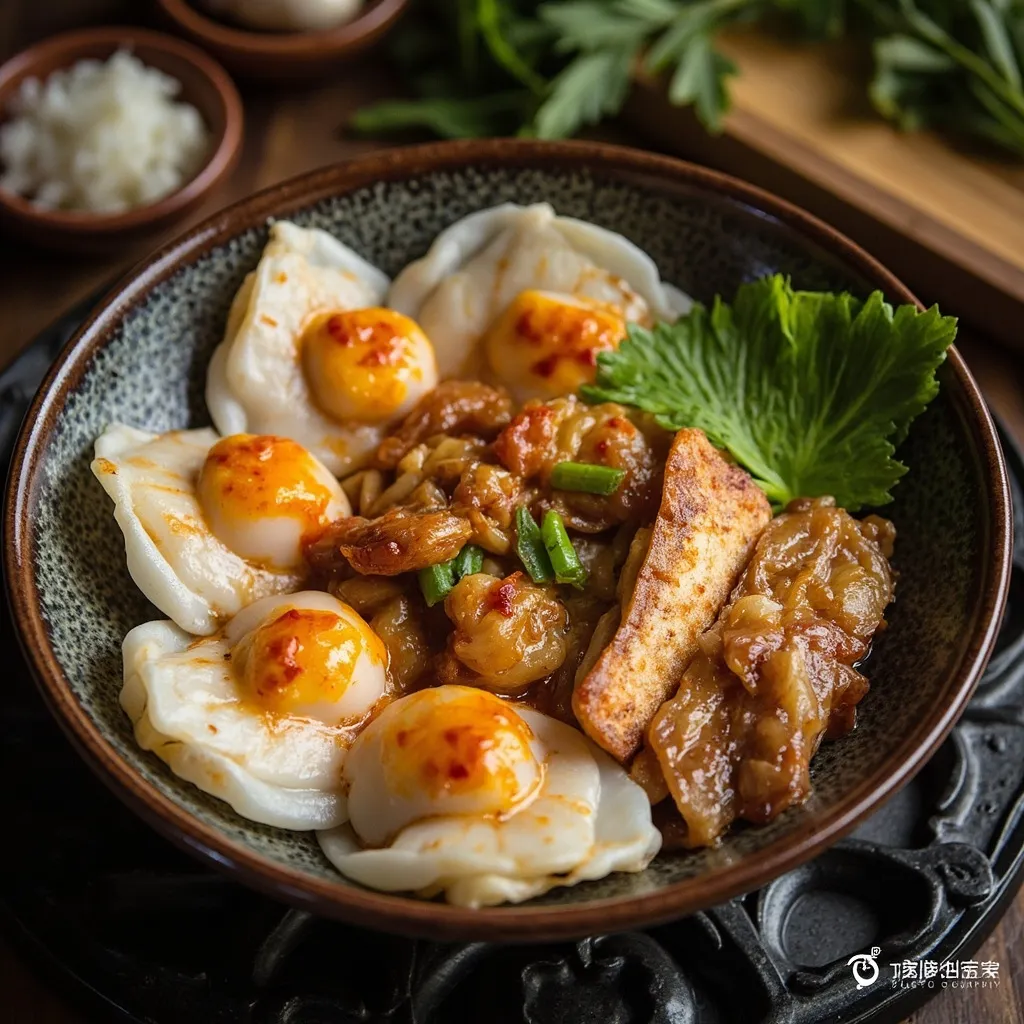
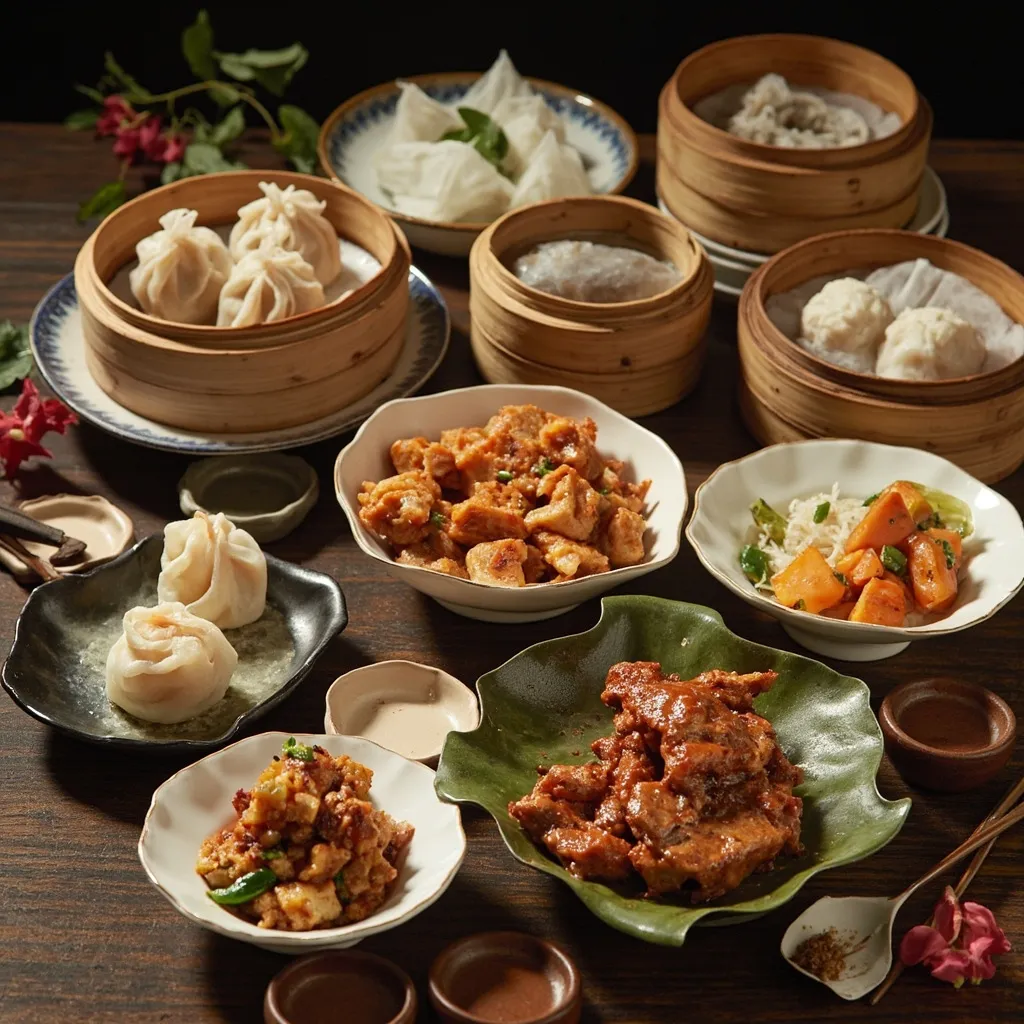
Soup Dumplings (汤包, tāng bāo) are perhaps the ultimate Huaiyang specialty—little pockets of heaven that are as much about the experience of eating them as the flavor. These delicate dumplings are filled with a mixture of meat and aspic, so when they’re steamed, the aspic melts into a rich, savory soup that fills the dumpling. You eat them by first biting off the top (or sucking out the soup carefully), then dipping the remaining dumpling in a mixture of vinegar and ginger. The broth inside is so rich and flavorful that it’s considered a delicacy in its own right. The technique of making soup dumplings requires enormous skill—the ratio of filling to aspic, the thickness of the wrapper, the way it’s pleated all affect the final result.
Crystal Pork (水晶肘子, shuǐjǐng zhǒuzi) is a cold appetizer that demonstrates Huaiyang precision. The pork hock is slowly braised until the connective tissue breaks down completely, turning the meat into a silky, gelatinous mass. When chilled, the broth becomes translucent—hence “crystal”—creating a dish that’s as beautiful to look at as it is delicious to eat. The pork is sliced thin and served with a simple dipping sauce, the tender, wobbly meat practically melting on your tongue.
The Elegance of Soup and Broth
If there’s one element that truly defines Huaiyang cuisine, it’s the use of soup. These aren’t the simple broths you might throw together at home—Huaiyang soups are complex, carefully crafted creations that can take days to prepare.
The foundation of many Huaiyang dishes is superior broth (高汤, gāo tāng), a stock made from carefully selected ingredients simmered for extended periods. A superior broth might include chicken, pork bones, ham, and dried seafood, all simmered for eight or more hours until the liquid becomes rich, cloudy, and deeply flavorful. This broth becomes the base for countless dishes—from braised vegetables to noodle soups to the broth that accompanies steamed fish.
The most famous Huaiyang soup dish is Egg White with Crab (芙蓉蟹粉, fú róng xié fěn). Despite its name, “egg white” here refers not to actual egg whites but to the whipped egg white technique mentioned earlier—the delicate, cloud-like foam that’s created through that extraordinary knife work. This foam is combined with crab meat and a rich crab broth, creating a dish that’s light as air but intensely flavored with sweet, briny crab. It’s the kind of dish that makes you understand why Chinese emperors kept Huaiyang chefs in their courts.
Mastering Huaiyang at Home
Bringing Huaiyang precision into your home kitchen is challenging but rewarding. The key is embracing the philosophy of “delicate and light”—using the best ingredients you can find, cooking them just enough, and letting natural flavors speak for themselves.
Start with the basics. Superior chicken stock is the foundation of Huaiyang cooking, and learning to make a proper one will transform your cooking. Use good chicken, a few pork bones if you have them, and plenty of water. Simmer for at least four hours, skimming any foam that rises to the surface. The resulting stock should be golden, rich, and deeply flavorful—far better than anything you can buy in a container.
Invest in a good steamer. Whether a bamboo steamer that fits over your largest pot or a dedicated metal steamer, the ability to steam properly is essential for Huaiyang cooking. The gentle, moist heat of steaming preserves delicate flavors and textures in ways that other cooking methods can’t match.
Practice your knife skills. You don’t need to master the whipped egg white technique (it takes years), but you should get comfortable cutting vegetables into uniform, precise pieces. A rough chop will cook unevenly and look sloppy. Take the time to cut things properly—it makes a genuine difference in both texture and presentation.
The Tea That Pairs With Huaiyang
Huaiyang cuisine’s delicate flavors call for equally refined tea. The traditional choice is 碧螺春 (Bì luó chūn), a spring-harvested green tea from Jiangsu Province with a famously floral aroma. The name means “螺春” and refers to the way the rolled leaves spiral like snail shells. This tea is picked only for a few weeks each spring, when the leaves are at their most tender and fragrant.
The brewing method matters as much as the tea itself. For the finest碧螺春, use glassware so you can watch the leaves unfurl. Water should be around 175°F (80°C)—never boiling, which would burn the delicate leaves. The first steep is for rinsing, the second for drinking. The tea should be pale green, powerfully aromatic, and clean-tasting in a way that complements the subtlety of Huaiyang dishes.
Other good choices include Dragon Well (龙井, lóng jǐng) from Zhejiang Province, another famous green tea with a mellow, chestnut-like flavor, and ** jasmine tea** (茉莉花茶) for those who prefer something slightly more aromatic.
A Different Kind of Delicious
Huaiyang cuisine offers something that no other Chinese regional style quite matches: a dining experience that’s as much about aesthetics and technique as it is about flavor. Every element is considered—the cut of the vegetables, the temperature of the broth, the angle at which the dish is presented. It’s cuisine that demands attention and rewards it with layer upon layer of subtle, sophisticated pleasure.
For American readers, approaching Huaiyang cuisine requires a shift in mindset. We’re used to bold flavors that hit you immediately—the chili heat of Sichuan, the sweet-savory punch of Cantonese roast meats, the garlic punch of Vietnamese food. Huaiyang asks you to slow down, to pay attention, to let the flavors unfold gradually rather than announce themselves all at once. It might take a few meals to adjust. But once your palate adapts to this more refined approach, you may find yourself craving the clean, bright, delicate pleasures of淮扬 more than any other Chinese cuisine.
The next time you encounter a steamed fish done perfectly, a soup dumpling with its burst of rich broth, or a simple bowl of superior broth noodles, you’re experiencing the legacy of Huaiyang’s ancient kitchens. This is food that has fed emperors and scholars, that has been refined over centuries, that represents the highest aspirations of Chinese culinary art. Take your time with it. Savor every bite. This is cuisine meant to be lingered over, not rushed through.