Ask who founded China, and the question immediately becomes complicated. China was not established on one afternoon by a single person signing a declaration. Its civilization emerged through many Neolithic communities, regional cultures, migrations, conflicts, alliances, technologies, and states. Yet Chinese tradition does offer a founding ancestor: Huangdi, the Yellow Emperor.
He is said to have ruled in deep antiquity, conventionally from 2697 to 2597 BCE or by other chronologies around the twenty-seventh century BCE. He defeated rivals, unified tribes, ordered the world, and inspired the basic tools of civilized life. Later generations credited his court with writing, medicine, music, the calendar, boats, carts, clothing, and silk production. It is an impossible résumé for one historical ruler. That is part of the point.
Huangdi is not merely a person preserved by memory. He is a cultural container into which communities placed ideas about origin, authority, invention, ancestry, and belonging. Stories about him tell us less about one remote reign than about how Chinese people in different eras imagined the beginnings of their world.
For American readers, a loose comparison might be to combining George Washington, Prometheus, King Arthur, and a biblical patriarch. Even that falls short. Huangdi has served as legendary king, immortal seeker, medical authority, Daoist figure, imperial model, national ancestor, and symbol of a civilization larger than any one dynasty.
Who Was the Yellow Emperor?
The name Huangdi is written with characters meaning “Yellow Thearch” or “Yellow Emperor.” Di originally carried sacred and supreme associations before becoming the standard title translated as emperor. “Yellow” connects Huangdi with the earth in the Chinese system of Five Phases—wood, fire, earth, metal, and water—and with the central direction. It does not refer to skin color, despite misleading racial interpretations that appeared in modern times.
The fullest influential ancient biography appears in Sima Qian’s Records of the Grand Historian, completed around the first century BCE. Sima Qian begins his sweeping history with Huangdi, presenting him as the first of the Five Emperors, a group of sage rulers before the historically documented dynasties. Huangdi has the personal name Xuanyuan and is associated with the Youxiong clan. He grows up remarkably perceptive, speaks early, matures wisely, and brings order to a fractious age.
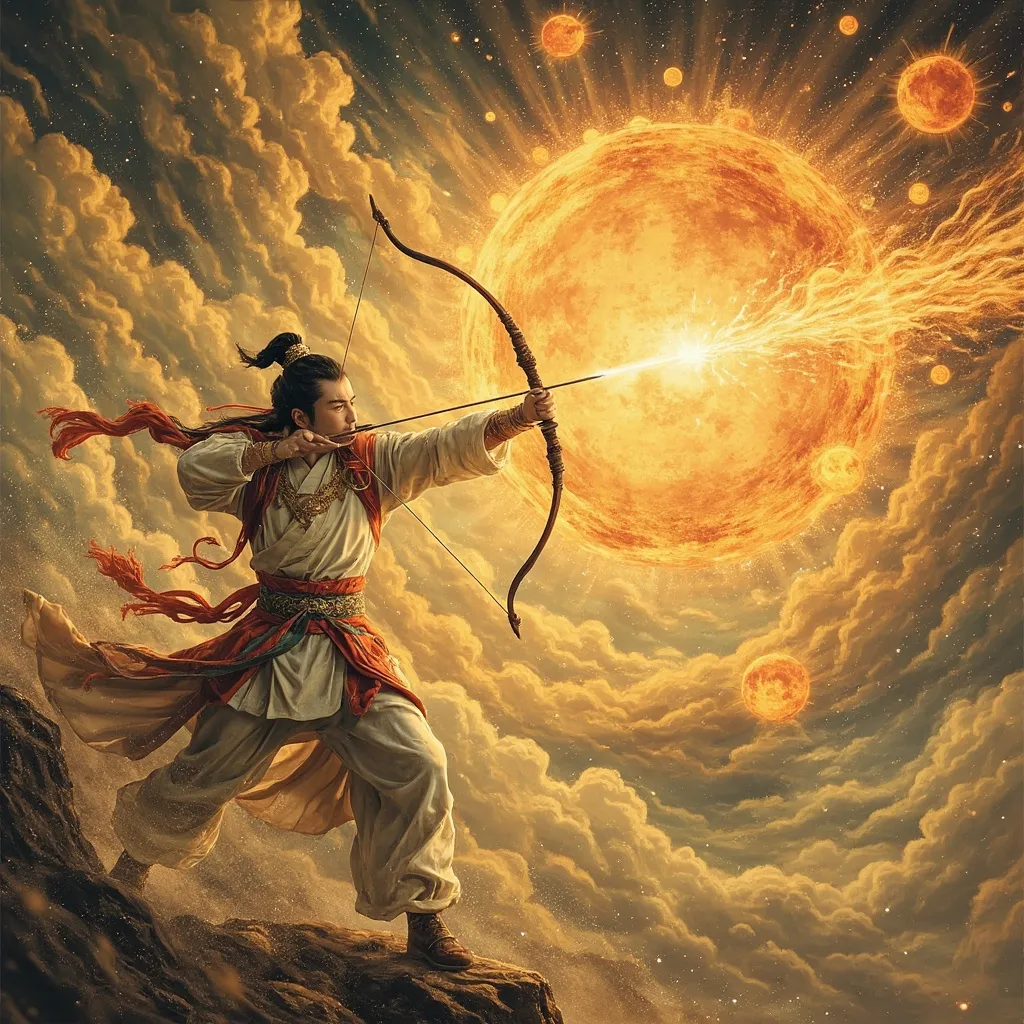
His major opponents are Yandi, the Flame Emperor, and Chiyou, a formidable warrior leader. Huangdi defeats Yandi at the battle of Banquan and later overcomes Chiyou at Zhuolu. Versions multiply in later sources. Fog envelops armies; a south-pointing device helps Huangdi navigate; supernatural beings join the fighting; Chiyou acquires a bronze head, iron forehead, multiple limbs, or command over wind and rain. These are mythic battles, not reliable campaign reports.
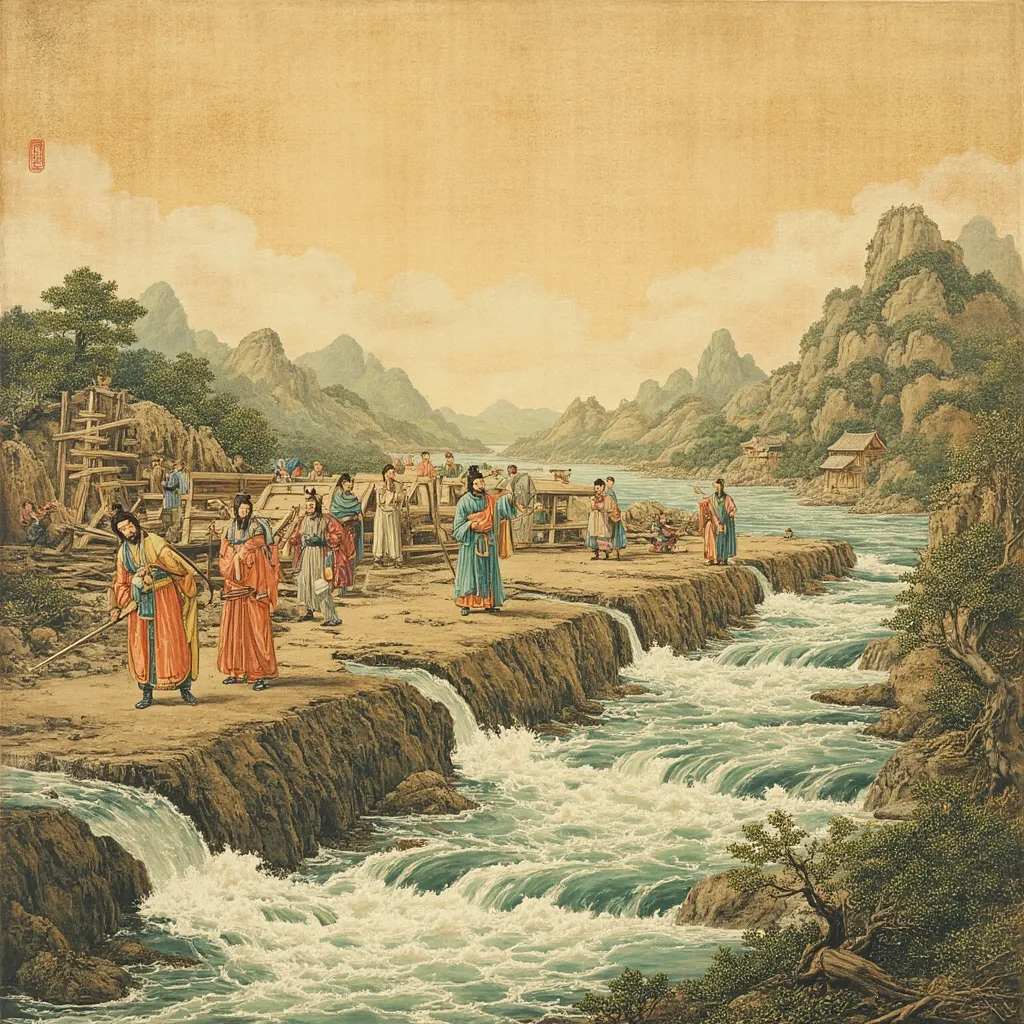
After victory, Huangdi is portrayed as establishing order among previously divided groups. He travels widely, clears roads, observes seasonal changes, appoints officials, and conducts sacrifices. His reign becomes a model of coordinated rule. At the end of his life, some accounts say a dragon descends and carries him to heaven, leaving mourners clutching his dropped bow and beard hairs. Other traditions focus on his tomb and earthly death.
Archaeologists have not discovered a plaque saying “Huangdi lived here.” The period assigned to him predates Chinese writing as we know it. Excavations have, however, transformed our understanding of the era. Rather than one uniform civilization spreading from a single center, late Neolithic China contained interacting regional societies. Longshan communities in the Yellow River basin built walled settlements and produced refined black pottery. Liangzhu culture flourished far to the southeast with spectacular jade and complex social hierarchy. Other cultures developed across today’s China.
This archaeological picture does not “disprove” Huangdi in the way one might disprove a fake modern document. It changes the type of question we ask. Perhaps memories of leaders, clans, migrations, and conflicts contributed to the legends. Perhaps the stories condensed centuries of development into a family tree and heroic reign. We cannot securely extract a historical biography. We can study how the figure was constructed and why that construction mattered.
Huangdi belongs to the borderland between myth and history—a border that ancient Chinese writers did not police in the same way modern academic departments do. Sima Qian was a serious historian, but he worked with inherited texts, court archives, oral traditions, and sacred geography. Beginning with Huangdi linked known political history to a morally meaningful cosmic past.
The Inventions of a Civilization
One entertaining feature of Huangdi’s legend is how crowded his court becomes with inventors. Cangjie creates writing after observing animal tracks, and grain allegedly rains from heaven when the secret is revealed. Ling Lun cuts bamboo pipes to establish musical pitches, listening to the calls of phoenixes. The emperor’s wife Leizu, also called Xiling Shi, discovers or teaches sericulture—the raising of silkworms and production of silk. Other ministers devise arithmetic, calendars, boats, carts, wells, weapons, and clothing.
No single court invented all these things. Writing developed gradually, with the earliest surviving mature Chinese script appearing on Shang oracle bones more than a millennium after Huangdi’s conventional dates. Silk production is much older than some literary accounts and emerged through generations of technical knowledge. Wheeled vehicles arrived in East Asia through complex processes. Calendrical observation did not begin with one meeting.
Why assign inventions to named culture heroes? A technology becomes easier to remember when attached to a person. Attribution also gives social practices an honorable pedigree. If writing, medicine, clothing, and ritual date back to a sage founder, they become parts of a coherent civilizational inheritance rather than isolated conveniences.
Huangdi’s association with medicine is especially durable. The foundational medical classic known as the Huangdi Neijing, or Yellow Emperor’s Inner Canon, takes the form of dialogues between Huangdi and learned physicians, especially Qibo. The text reached its received shape over a long period, largely during the late Warring States and Han eras—far later than the legendary ruler.
In these conversations, Huangdi asks about the body, illness, seasonal influence, diagnosis, acupuncture, and the circulation of qi, the vital processes or energies that animate life. Giving Huangdi the questions lends the work authority, but it also makes him an ideal student. He is wise enough to ask clearly and humble enough to consult specialists. The sovereign’s job is not to know everything at birth; it is to gather and organize knowledge.
Daoist traditions developed another Huangdi. In texts associated with “Huang-Lao” thought, a combination of teachings connected to Huangdi and the philosopher Laozi, he could represent rulership aligned with the Dao, the underlying Way of nature. Later tales described his search for immortality, encounters with transcendent teachers, alchemical practices, and ascent to heaven. Temples honored him not only as ancestral king but as a divine being.
The Yellow Emperor’s many faces do not fit into a single creed. Confucian writers valued sage kings who created moral and ritual order. Daoist communities explored his cultivation and transcendence. Physicians used him as a voice in canonical dialogue. Rulers traced genealogies to him. Each tradition made a different selection from the shared archive.
There is a familiar human habit here. We like beginnings to look intentional. The messy emergence of a civilization is hard to narrate at the dinner table; “the Yellow Emperor’s minister invented writing” is easy. The story is not a substitute for archaeological evidence, but it shows how people gave cultural memory a cast of characters.
Ancestor of Huaxia—and the Politics of Belonging
Huangdi is often called an ancestor of the Huaxia, an ancient term associated with the cultural communities that eventually formed a core of Chinese civilization. Together with Yandi, he appears in the phrase Yan Huang zisun, “descendants of Yandi and Huangdi.” Modern English translations sometimes render this as “descendants of the Yan and Yellow Emperors.” It is a statement of cultural kinship, not a scientifically verifiable family tree.
Ancient genealogies linked ruling houses and notable lineages to legendary ancestors. Such descent gave political order a deep pedigree. Over centuries, Huangdi’s family expanded on paper until later rulers, peoples, and institutions could locate themselves within it. Genealogy here worked symbolically, knitting varied communities into a shared history.
That knitting became especially important in the late nineteenth and early twentieth centuries. China faced imperialist pressure, internal upheaval, and debates over how to replace the Qing dynasty. Reformers and revolutionaries recast Huangdi as a national ancestor. Some used him to rally Han Chinese nationalism against Manchu Qing rule. Publications dated years from his supposed birth or reign, offering a native chronology as an alternative to imperial reign years and the Western calendar.
After the 1911 Revolution, national meanings continued to shift. Huangdi could represent the historical unity of a diverse Chinese nation rather than only Han ancestry. Ceremonies at the reputed Yellow Emperor Mausoleum in Shaanxi became occasions for political leaders and diaspora communities to express civilizational connection. Both the People’s Republic of China and the Republic of China on Taiwan have invoked shared descent in different contexts.
This history calls for care. “Chinese” may describe citizenship, ethnicity, language, culture, ancestry, or some combination. China officially recognizes 56 ethnic groups, and their traditions cannot all be reduced to one Yellow River ancestor. Even “Han” identity formed historically through migration, intermarriage, state institutions, and cultural change. A single descent story can inspire solidarity, but it can also flatten difference.
The most generous reading treats Huangdi as an adopted cultural ancestor. Americans do something comparable when citizens with no biological link call the nation’s eighteenth-century leaders “the Founders.” The metaphor establishes participation in a political tradition. Yet unlike those documented figures, Huangdi stands in legendary time, and his symbolic family extends across several thousand years.
The battles against Yandi and Chiyou have also been reread. Older accounts often cast Chiyou as a rebel or monster. Some modern communities honor him as an ancestor, and tourism sites celebrate multiple founding figures. This is a useful reminder that myths do not belong only to victors forever. Groups can recover a defeated character, reinterpret an old conflict, or create a more plural account of beginnings.
When someone says Chinese people are “descendants of the dragon” or “descendants of Yan and Huang,” the language is usually poetic and cultural. It expresses continuity, pride, and belonging. Taking it as literal genetics misses what origin language does. Challenging it as exclusive, however, can be reasonable when it is used to define who counts and who does not.
Places, Rituals, and the Living Legend
Several locations claim ties to Huangdi. The best-known tomb complex, the Yellow Emperor Mausoleum, lies in Huangling County, Shaanxi. Set amid old cypress trees, it has long attracted official sacrifices and visitors. Tradition says Huangdi was buried there, though no archaeological evidence establishes the occupant as the legendary ruler.
A site can be culturally authentic even when its literal claim remains unverified. Generations of ceremonies create their own history. Officials, soldiers, scholars, overseas Chinese delegations, and tourists have visited, offered flowers or incense, read inscriptions, and posed beneath monumental gates. The mausoleum is a landscape of memory: people go there because others went before them.
Xinzheng in Henan, traditionally regarded as Huangdi’s birthplace, hosts large ancestor-honoring ceremonies. Participants may process through ceremonial spaces, sound drums, present baskets of flowers, and recite tributes. The events mix ritual forms, tourism, local identity, media production, and state-supported cultural messaging. To an outsider, they can look ancient. Much of their present scale and choreography is thoroughly modern.
That mixture is not evidence of insincerity. Thanksgiving has a national myth, inherited recipes, family habits, retail campaigns, and televised spectacle all at once. Living traditions rarely stay in one category. A Huangdi ceremony can be personal for a diaspora visitor, commercially valuable for a city, and politically useful for an institution on the same day.
If you visit such a site, resist asking only, “Is this where he really stood?” A richer set of questions follows. When was this temple or monument built? Who repaired it? Which historical governments sponsored ceremonies here? What language do inscriptions use? Who attends now, and what do they say the ritual means? Those questions make the site more interesting, not less sacred.
Museums provide another path. Neolithic pottery, jade, settlement plans, and agricultural tools reveal the people who lived during the broad era later assigned to Huangdi. They will not illustrate his biography. Instead, they restore complexity to the legendary setting. You can see regional styles, specialized labor, long-distance exchange, warfare, ritual practice, and growing social distinctions.
I find the contrast moving. A polished jade object sits quietly in a case, made by an unnamed craftsperson whose world we barely understand. Across centuries, storytellers gave that world a named emperor and a court full of inventors. Archaeology preserves material without names; myth preserves names without verifiable material. Chinese antiquity reaches us through both kinds of fragment.
Reading Huangdi Without Choosing “Fact or Fiction”
The least satisfying debate asks whether Huangdi was real and allows only yes or no. There may have been leaders whose memories contributed to the composite. There is no evidence for the detailed life described by later texts. Those statements can coexist.
A legend has consequences even when it is not a transcript of events. Huangdi shaped medical literature, imperial genealogy, religious practice, nationalist calendars, public monuments, school lessons, and modern heritage tourism. In that historical sense, he is undeniably real. People organized ideas and actions around him.
Read the stories in layers. First comes the narrative: battles, inventions, journeys, and ascent. Then ask when a surviving version was written and what its author needed from the past. Finally, notice later reinterpretations. Sima Qian’s sage monarch, a Daoist seeker, an anti-Qing national ancestor, and a contemporary symbol of cultural unity are related but not identical.
Huangdi remains powerful because he makes enormous time feel familial. Civilization becomes a household inheritance; technologies become gifts from ancestors; a vast population becomes a body of descendants. That vision can be warm, mobilizing, and sometimes politically sharp. Knowing its history lets us appreciate the warmth without ignoring the sharp edges.
Continue Exploring Chinese Culture
For a different legendary creature tied to virtuous government, read Fenghuang and Phoenix Mythology. Dragon and Phoenix Symbolism explains how imperial emblems entered wedding and household art. To move from legendary antiquity into a documented historical life, meet Li Bai, China’s Poetry Immortal. And for material evidence of China’s later global reach, explore Ming Blue-and-White Porcelain.